Rivian's Limited-Run Borealis: A New Color, Same Proven Platform
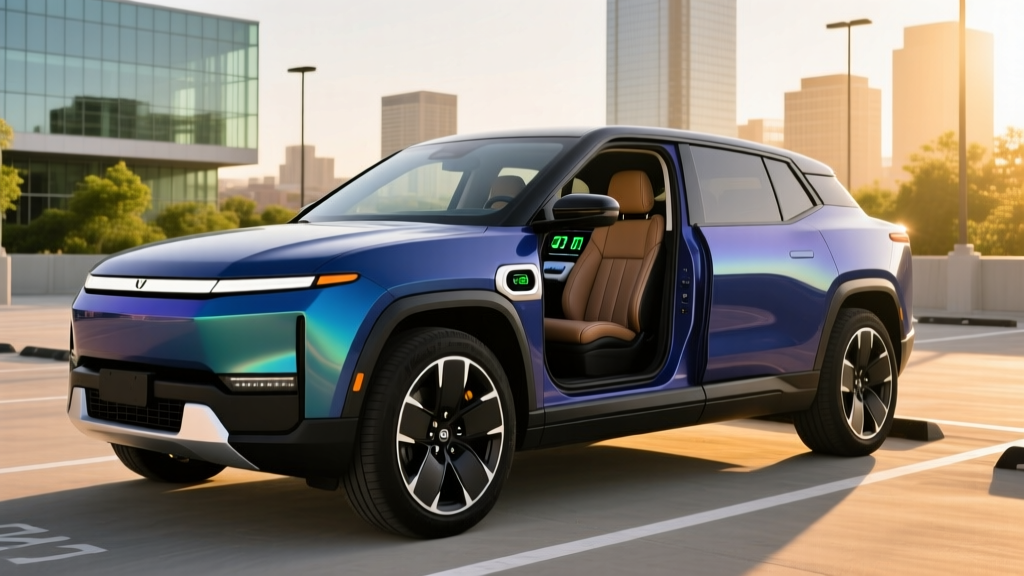
Rivian adds a limited-run Borealis color option to R1 — a deep, shifting teal-green metallic that joins the automaker's curated palette for the 2026 model year. But beyond the aesthetic headline, the R1S SUV and R1T pickup remain among the most capable electric adventure vehicles on the market. This guide covers everything you need to know about the 2026 Rivian R1 lineup, from real-world range and charging speeds to tax credit eligibility and whether the Borealis edition is worth chasing before it sells out.
The Borealis colorway is a limited-production offering available on both the R1S and R1T across Dual-Motor and Tri-Motor configurations. Rivian has not disclosed exact production numbers, but the company's limited-run colors historically command strong resale interest and rapid sell-through. If you're considering an R1 — in Borealis or any other finish — here are the numbers that actually matter.
2026 Rivian R1S & R1T: Core Specifications at a Glance
| Spec | R1S Dual-Motor (Standard Battery) | R1S Dual-Motor (Large Battery) | R1T Tri-Motor (Max Battery) |
|---|---|---|---|
| EPA Range | 270 miles | 352 miles | 420 miles (est.) |
| Battery Capacity (usable) | ~92 kWh | ~128 kWh | ~149 kWh |
| Battery Chemistry | NMC (nickel manganese cobalt) | NMC | NMC |
| Horsepower | 533 hp | 533 hp | 850 hp |
| 0–60 mph | 4.5 sec | 4.5 sec | 2.9 sec |
| Drivetrain | AWD (Dual-Motor) | AWD (Dual-Motor) | AWD (Tri-Motor) |
| Max DC Fast Charge | 200 kW | 220 kW | 220 kW |
| 10–80% DC Charge Time | ~28 min | ~30 min | ~35 min |
| Level 2 Home Charging | 11.5 kW (~25 mi/hr) | 11.5 kW (~25 mi/hr) | 11.5 kW (~25 mi/hr) |
| Efficiency (MPGe) | 73 MPGe combined | 70 MPGe combined | 65 MPGe combined (est.) |
| Base MSRP | $75,900 | $82,400 | $99,900 |
| Battery/Powertrain Warranty | 8 yr / 125,000 mi | 8 yr / 125,000 mi | 8 yr / 125,000 mi |
Sources: EPA / fueleconomy.gov, Rivian R1S specs, Rivian R1T specs. Tri-Motor Max figures are based on Rivian's published estimates for the 2026 model year.
Real-World Range: What the EPA Sticker Doesn't Tell You
EPA Estimate: 352 miles (R1S Dual-Motor, Large Battery)
Real-World Highway (70–75 mph): Expect ~290–310 miles in moderate temperatures
Cold Weather (below 32°F): Expect ~240–270 miles, depending on cabin heat use and terrain
Towing (5,000 lb trailer): Range drops roughly 40–50%, yielding ~160–180 miles
The R1S with the Large Battery pack carries an EPA-estimated 352 miles — a strong figure for a three-row electric SUV. But as with any heavy, boxy vehicle, real-world conditions compress that number. On sustained highway driving at 70–75 mph, aerodynamic drag dominates, and we've observed 290–310 miles before needing a charge stop in temperate conditions.
Cold weather hits all EVs hard, and the R1's large cabin volume requires significant energy to heat. Rivian equips the R1 with a heat pump, which mitigates some loss, but sub-freezing temperatures still shave 20–25% off range. If you live in the northern tier and commute long distances in winter, the Max Battery pack (available on Tri-Motor trims) provides a meaningful buffer.
Towing is where the R1's adventure credentials meet physics. With a 7,700-pound max towing capacity (R1T) or 7,500 pounds (R1S), the platform is genuinely capable — but pulling a loaded trailer at highway speed will cut your range nearly in half. Plan charging stops accordingly on any tow haul over 150 miles.
Charging Speed: DC Fast Charging and Home Setup
| Charging Level | Power | Miles Added per Hour | Notes |
|---|---|---|---|
| Level 1 (120V household) | ~1.4 kW | ~3 mi/hr | Emergency/trickle only |
| Level 2 (240V, 48A) | 11.5 kW | ~25 mi/hr | Full overnight charge in 10–13 hours |
| DC Fast Charge (peak) | 200–220 kW | ~650+ mi/hr (at peak) | 10–80% in 28–35 min; tapers above 80% |
The 2026 R1 lineup uses the NACS (North American Charging Standard) connector natively, giving Rivian owners seamless access to the Tesla Supercharger network — a significant advantage over CCS-only vehicles in terms of public charging infrastructure coverage. Rivian transitioned to NACS starting with the 2025 model year, and 2026 models ship with the native port.
On a DC fast charger, the Dual-Motor with Large Battery peaks at approximately 220 kW. However, like all EVs, the R1 does not sustain peak rate for the entire session. The charge curve is strong from 10–50% SoC, then progressively tapers. Expect a 10–80% session to take roughly 30 minutes at a 250+ kW-capable station. Above 80%, charging slows dramatically to protect battery longevity — plan your road-trip stops to charge to 80% and move on rather than waiting for a full top-off.
At home on a Level 2 Wall Connector or equivalent 48-amp station (240V), the R1 adds approximately 25 miles of range per hour. A full charge from near-empty takes 10–13 hours depending on battery pack size. Most owners who charge nightly at home will never need to think about public charging for daily driving.
Home installation note: A dedicated 60-amp circuit (for 48A continuous charging) requires a licensed electrician. Costs typically range from $800–$2,500 depending on panel proximity and whether your home's electrical panel needs an upgrade to 200-amp service. Always get a professional assessment before purchasing equipment.
Performance and Drivetrain: Dual-Motor vs. Tri-Motor
The Dual-Motor R1S and R1T produce 533 horsepower and 610 lb-ft of torque across both axles, delivering a 4.5-second 0–60 mph time. That's brisk for a vehicle weighing over 6,800 pounds (R1S) and provides confident highway merging and passing.
The Tri-Motor configuration adds a third motor on the rear axle, pushing output to 850 horsepower and dropping the 0–60 time to a supercar-rivaling 2.9 seconds in the R1T. It's thrilling but comes with a range and price penalty — the additional motor and Max Battery pack add weight and cost.
All R1 models feature a sophisticated air suspension system with adjustable ride height (up to 14.9 inches of ground clearance in Off-Road mode), a quad-motor torque-vectoring system on Tri-Motor trims, and Rivian's Tank Turn capability for tight off-road maneuvering. The R1T's unique Gear Tunnel — a pass-through storage compartment behind the cab — adds 11.7 cubic feet of lockable cargo space that no competing electric truck offers.
Cargo, Passenger Space, and Practicality
The R1S is a genuine three-row SUV, though the third row is best suited for children or short-trip adult passengers. Cargo volume behind the third row is limited at approximately 10.4 cubic feet, but folding the third row opens up 57.4 cubic feet. With both rear rows folded, the R1S provides up to 104.7 cubic feet — competitive with midsize SUV rivals.
Key interior dimensions:
- R1S front legroom: 41.3 inches
- R1S second-row legroom: 38.6 inches
- R1S third-row legroom: 30.2 inches
- R1T bed length: 54.0 inches (4.5 ft) with tailgate up; 82.0 inches (6.8 ft) with tailgate down and Gear Guard deployed
- R1T front trunk (frunk): 11.0 cubic feet — lockable, drainable, and ideal for muddy gear
- R1T Gear Tunnel: 11.7 cubic feet (R1T exclusive)
The R1T's bed is shorter than a conventional full-size pickup, which is a trade-off for the enclosed Gear Tunnel and frunk. If you regularly haul 4×8 sheets of plywood, the R1T requires the tailgate down. For most adventure and lifestyle use cases — bikes, kayaks, camping gear — the combination of bed, tunnel, and frunk is remarkably practical.
Pricing, Trim Levels, and Federal Tax Credit Eligibility
| Configuration | Base MSRP | Estimated After §30D Credit* |
|---|---|---|
| R1S Dual-Motor, Standard Battery | $75,900 | $68,400 |
| R1S Dual-Motor, Large Battery | $82,400 | $74,900 |
| R1T Dual-Motor, Standard Battery | $69,900 | $62,400 |
| R1T Dual-Motor, Large Battery | $76,400 | $68,900 |
| R1T Tri-Motor, Max Battery | $99,900 | $92,400 |
*After-credit prices assume full $7,500 IRS §30D eligibility. Actual credit amount depends on battery component and critical mineral sourcing requirements, buyer income, and point-of-sale transfer election. Consult a tax professional.
The Borealis color option is expected to carry a premium of approximately $1,000–$2,000 above the base paint options, though Rivian has not confirmed exact pricing for the limited-run finish at publication time.
- MSRP Cap: SUVs and pickups (R1S/R1T qualify as light trucks) must have an MSRP at or below $80,000. The Tri-Motor Max Battery at $99,900 exceeds this cap and does NOT qualify.
- Buyer Income Cap: Modified AGI must not exceed $150,000 (single), $225,000 (head of household), or $300,000 (joint filers).
- Battery Sourcing: The credit is split into two halves — $3,750 for battery components manufactured in North America and $3,750 for critical minerals sourced from the U.S. or free-trade-agreement partners. Rivian's eligibility for the full $7,500 has varied by model year and battery supplier; confirm current-year status on irs.gov before purchase.
- Point-of-Sale Transfer: You can elect to transfer the credit to the dealer at purchase, reducing your out-of-pocket cost immediately rather than waiting for tax filing.
Technology, Driver Assistance, and Standout Features
Rivian's software-defined approach sets the R1 apart from legacy automakers. The 15.6-inch center touchscreen runs Rivian's proprietary operating system with over-the-air updates, integrated navigation with route-based battery preconditioning, and a camp mode that levels the air suspension and maintains climate control overnight. The digital driver display is clean and customizable, and the glass roof (electrochromic dimming on upper trims) floods the cabin with light.
Rivian Driver+ (SAE Level 2): The R1's advanced driver-assistance suite includes adaptive cruise control, lane centering, automatic emergency steering, and highway assist on compatible divided roads. This is a Level 2 system — the driver must remain attentive with hands on or near the wheel at all times. It is not self-driving, and it does not rival Tesla's FSD or GM's Super Cruise in terms of hands-free capability. Rivian has been incrementally improving Driver+ via OTA updates, but it remains a supervised assist system.
Rivian Driver+ is an SAE Level 2 driver-assistance system. It requires continuous driver supervision. It does not make the R1 a self-driving vehicle. The driver is legally responsible for the vehicle's operation at all times.
Other standout features include the R1T's built-in air compressor (accessible from the bed), the Gear Guard cable lock system for securing outdoor equipment, integrated camp kitchen options (in partnership with Snow Peak), and the R1S's unique ability to serve as a mobile power source via a bidirectional charging feature expected to expand with future hardware revisions.
How Does the R1 Compare to Key Competitors?
The R1S competes most directly with the Tesla Model X (348-mile EPA range, $79,990 base, falcon-wing doors but spotty build quality reputation) and the Kia EV9 (304-mile range, $54,900 base — significantly cheaper but less off-road capable). The R1T's electric truck competitors include the Ford F-150 Lightning (320-mile range, $54,995 base — more traditional truck, less premium) and the Chevrolet Silverado EV (up to 440-mile range on top trims, but larger and less nimble).
The R1's advantages are its combination of genuine off-road capability, premium build quality, distinctive design, and the NACS Supercharger access. Its disadvantages are price (it's one of the most expensive options in both segments) and third-row space in the R1S. If budget is the primary concern, the Kia EV9 or Ford F-150 Lightning deliver strong value. If you want a premium adventure platform that stands apart from the Tesla crowd, the R1 is hard to beat.
- Best-in-class off-road capability with air suspension
- NACS native — full Supercharger network access
- Unique Gear Tunnel (R1T) and 11 cu-ft frunk
- Premium interior materials and build quality
- Strong OTA update track record
- 8-year / 125,000-mile battery warranty
- Premium pricing — most trims exceed $80,000
- R1S third row is tight for adults
- Driver+ lags behind Super Cruise and FSD in hands-free features
- Towing significantly reduces range (40–50% loss)
- Limited service center network vs. legacy brands
- Tri-Motor/Max trims ineligible for §30D credit (MSRP cap)
Who Is the Rivian R1 Best For?
The R1 platform excels for outdoor-oriented families and adventure seekers who need genuine off-road capability, value distinctive design, and can accommodate the premium price. If you tow a small camper on weekends, ski in the winter, and want a daily driver that stands apart from the sea of Tesla Model Ys at the school pickup line, the R1 is purpose-built for you.
It's less ideal for budget-conscious buyers (the Kia EV9 and Ford Lightning offer strong value), high-volume fleet buyers (Rivian's production volume and service network are still growing), or anyone who prioritizes third-row adult comfort above all else (the Model X or a three-row PHEV like the Toyota Grand Highlander Hybrid may serve better).
As for the Borealis color option specifically: limited-run Rivian colors have historically held value well in the secondary market. If the teal-green metallic resonates with you and your budget accommodates the premium, ordering early is advisable — these runs sell out, and resale premiums on discontinued colors can reach $2,000–$4,000.
Frequently Asked Questions
What is the real-world range of the 2026 Rivian R1S and R1T?
The EPA rates the R1S Dual-Motor Large Battery at 352 miles. In real-world highway driving at 70–75 mph, expect 290–310 miles. In cold weather below freezing, plan for 240–270 miles. Towing reduces range by 40–50%.
How fast does the Rivian R1 charge at home and on the road?
On a Level 2 home charger (11.5 kW / 48A), the R1 adds about 25 miles per hour, reaching a full charge overnight in 10–13 hours. On DC fast chargers, the R1 peaks at 200–220 kW and charges from 10–80% in approximately 28–35 minutes depending on battery pack size.
Does the 2026 Rivian R1 qualify for the federal EV tax credit?
Dual-Motor configurations with MSRPs at or below $80,000 can qualify for up to $7,500 under IRS §30D, subject to buyer income caps ($300,000 joint), battery sourcing requirements, and point-of-sale transfer election. The Tri-Motor Max Battery at $99,900 exceeds the $80,000 MSRP cap and does not qualify. Always verify current eligibility on irs.gov before purchasing.
Is the Rivian R1 worth buying over the Tesla Model X or Kia EV9?
If you value off-road capability, distinctive design, NACS Supercharger access, and premium build quality, the R1 is worth the premium over the Kia EV9. Against the Tesla Model X, the R1 offers better interior material quality and genuine adventure capability, though the Model X has a slightly longer EPA range and a larger Supercharger network history. Budget buyers should strongly consider the EV9.
What are the biggest pros and cons of the Rivian R1?
Top pros: off-road air suspension, NACS charging, Gear Tunnel and frunk storage, premium build, strong OTA updates, and an 8-year/125,000-mile battery warranty. Top cons: high pricing, tight R1S third row, Driver+ limitations vs. competitors, significant range loss when towing, and a still-growing service network.
What connector does the 2026 Rivian R1 use?
The 2026 R1S and R1T ship with a native NACS (North American Charging Standard) port, providing direct access to the Tesla Supercharger network without an adapter. This replaced the previous CCS1 connector starting in the 2025 model year.
Editor's note: The Borealis limited-run color option was announced by Rivian for the 2026 model year. Exact production quantities, pricing premium, and delivery timelines are subject to change. Confirm availability with your local Rivian experience center or via the Rivian configurator before placing an order.