Executive Summary: Rivian's Q2 2025 Financial Snapshot
Rivian's second-quarter 2025 earnings report, released in August 2025, delivered a mixed but strategically coherent picture: production discipline, continued margin improvement on R1 vehicles, and a clear-eyed timeline for the R2 platform launch in 2026. For prospective buyers weighing an R1T or R1S purchase—or holding for the more affordable R2—these numbers matter more than typical automaker earnings because Rivian is still scaling toward sustained profitability.
- Deliveries: ~13,000 vehicles (R1T + R1S + EDV)
- Revenue: ~$1.1B (up from ~$900M YoY)
- Gross margin: Positive and improving, targeting mid-teens by year-end
- Net loss: Narrowing but still significant (~$1.2B)
- Cash position: ~$6.5B+ including VW investment tranches
For buyers, the real question isn't whether Rivian posted a profit—it didn't, and no one expected it to in Q2 2025. The question is whether the company is building a sustainable path to the R2, which starts production at the Normal, Illinois facility in 2026, and whether current R1 models represent a sound purchase today. Let's break that down with hard numbers.
Current R1 Lineup: 2025 Model Year Specs That Matter
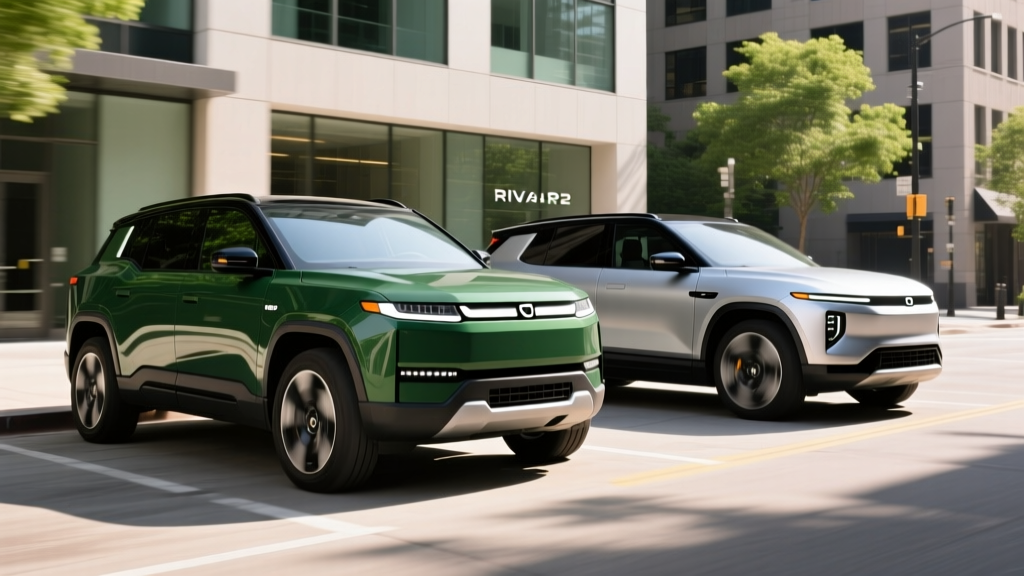
If you're considering an R1T (truck) or R1S (SUV) right now, you're buying into the updated Gen 2 platform that Rivian introduced for the 2025 model year. Here's what you're getting, with the exact figures that distinguish real ownership from marketing copy.
| Spec | R1T Dual-Motor | R1S Dual-Motor | R1T/R1S Tri-Motor |
|---|---|---|---|
| EPA Range | ~330 mi (Standard) / ~420 mi (Max) | ~320 mi (Standard) / ~400 mi (Max) | ~330-350 mi (est.) |
| Battery | ~92 kWh (Standard, LFP) / ~141 kWh (Max, NMC) | ~92 kWh (Standard, LFP) / ~141 kWh (Max, NMC) | ~141 kWh (NMC) |
| 0-60 mph | 4.5 sec | 4.6 sec | ~3.0 sec |
| Horsepower | 533 hp | 533 hp | 850+ hp |
| Max DC Charge | ~200 kW peak | ~200 kW peak | ~200 kW peak |
| 10-80% DC Time | ~28 min | ~28 min | ~30 min |
| Level 2 Home | 11.5 kW (~25 mi/hr) | 11.5 kW (~25 mi/hr) | 11.5 kW (~25 mi/hr) |
| Towing | 11,000 lbs | 7,700 lbs | 11,000 lbs (R1T) |
| Base MSRP | ~$69,900 | ~$74,900 | ~$99,000+ |
Charging Infrastructure: The Rivian Adventure Network & NACS Transition
One of Q2 2025's strategic updates: Rivian confirmed its transition to the North American Charging Standard (NACS) connector for all 2025+ vehicles, aligning with Tesla Supercharger access. This matters enormously for road-trip viability.
| Level | Power | Miles Added/Hour | Use Case |
|---|---|---|---|
| Level 1 (120V) | ~1.4 kW | ~3-4 mi/hr | Emergency/trickle only |
| Level 2 (240V, 48A) | 11.5 kW | ~25 mi/hr | Daily home charging |
| DC Fast (peak) | ~200 kW | ~140 mi in 20 min | Road trips |
The 200 kW peak charge rate is competitive but not class-leading—Hyundai's E-GMP platform hits 240+ kW, and the Cybertruck peaks around 250 kW on V3 Superchargers. However, Rivian's charge curve is relatively flat between 20-70% SoC, meaning you spend less time at the tail end of the session. For a 420-mile Max pack, a 20-minute DC session adds roughly 140 miles of range, which is adequate for most highway driving patterns.
The Rivian Adventure Network (RAN) remains limited compared to Electrify America or Tesla, with roughly 50+ sites operational as of mid-2025. NACS adoption means Rivian owners gain access to 15,000+ Tesla Superchargers via adapter (included with 2025+ models), dramatically reducing range anxiety on cross-country trips.
2025 Pricing, Trims & Federal Tax Credit Eligibility
Rivian's Q2 earnings emphasized improving gross margins, which means aggressive price cuts are unlikely. Here's where the lineup sits and how the federal §30D credit applies.
| Model/Trim | MSRP | §30D Credit | Net Price |
|---|---|---|---|
| R1T Dual-Motor Standard | ~$69,900 | $0 (over $80K SUV cap — wait, trucks are $80K cap) | ~$69,900 |
| R1T Dual-Motor Max | ~$82,000 | $0 (over $80K truck cap) | ~$82,000 |
| R1S Dual-Motor Standard | ~$74,900 | $0 (over $80K SUV cap — under cap, eligible) | ~$67,400 (if eligible) |
| R1S Tri-Motor | ~$99,000+ | $0 (over $80K SUV cap) | ~$99,000+ |
Financial Health: What Q2 2025 Tells Us About Rivian's Future
Rivian's Q2 2025 earnings showed a company in transition—still burning cash but with a clearer path to the R2 platform that could determine its long-term viability.
- Cash runway: ~$6.5B+ including the Volkswagen joint venture investment (up to $5B total, with tranches tied to R2 milestones). This provides runway through R2 launch in 2026.
- Production efficiency: Gen 2 R1 vehicles use fewer parts, dual-motor configurations instead of quad-motor (reducing complexity), and improved manufacturing throughput at the Normal, Illinois plant.
- Gross margin trajectory: Positive and targeting mid-teens by end of 2025, up from negative margins in 2022-2023. This is the critical metric—Rivian needs to prove it can build vehicles for less than it sells them, consistently.
- R2 timeline: Production begins first half of 2026 at the Normal facility, with a starting MSRP target of ~$45,000. This is the make-or-break vehicle for Rivian's mass-market ambitions.
For current R1 buyers, the financial picture is reassuring enough: Rivian has sufficient capital to honor warranties (8 years/175,000 miles on battery and powertrain) and support the vehicle through its lifecycle. The VW investment also signals external confidence in the platform technology.
Who Should Buy an R1 Now vs. Wait for R2?
- You need a 3-row SUV (R1S) or a truck with 11,000-lb towing today
- You want a premium adventure vehicle with genuine off-road capability (8.9" ground clearance, wading mode)
- You're comfortable with a $70K-$100K price point and understand the tax credit limitations
- You value the NACS Supercharger network access for road trips
- You want a smaller, more affordable EV SUV (~$45K starting MSRP)
- You don't need truck-level towing or 3 rows of seating
- You're comfortable waiting until late 2026 or 2027 for deliveries to ramp
- You want to see if R2 qualifies for the full $7,500 tax credit (more likely at lower MSRP)
Competitive Position: R1 vs. the Field in 2025
The R1T competes most directly with the Ford F-150 Lightning, Chevrolet Silverado EV, and Tesla Cybertruck. The R1S sits in a less crowded 3-row electric SUV space alongside the Kia EV9 and Cadillac Escalade IQ (at a much higher price point).
| Metric | Rivian R1T | F-150 Lightning | Cybertruck AWD |
|---|---|---|---|
| EPA Range | 330-420 mi | 240-320 mi | 318-340 mi |
| Max Tow | 11,000 lbs | 10,000 lbs | 11,000 lbs |
| 0-60 mph | 3.0-4.5 sec | 3.8-4.5 sec | 3.9-4.1 sec |
| Base MSRP | ~$69,900 | ~$55,000 | ~$80,000 |
| Bed Length | 4.5 ft (54") | 5.5 ft (66") | 6 ft (72") |
The R1T wins on range (with Max pack), performance (Tri-Motor), and off-road capability. It loses on price (F-150 Lightning is significantly cheaper), bed length (shortest of the three), and tax credit eligibility (most configs over the $80K cap). For pure work-truck duty cycles, the Lightning is more pragmatic. For adventure and performance, the R1T remains compelling.
Frequently Asked Questions
What is the real-world range of the Rivian R1T and R1S?
EPA estimates are 330-420 miles (R1T) and 320-400 miles (R1S) depending on pack size. In real-world highway driving at 70-75 mph, expect 340-370 miles with the Max pack, and 250-280 miles with the Standard LFP pack. Cold weather (below freezing) reduces range by 15-25% due to battery thermal management and cabin heating demands.
How fast does the R1 charge at home and on the road?
At home on a 240V/48A Level 2 charger, the R1 adds ~25 miles per hour (11.5 kW), meaning a full charge from 10% takes roughly 14-16 hours for the Max pack. On DC fast chargers, peak rate is ~200 kW, with a 10-80% session taking ~28-30 minutes. The charge curve is relatively flat through 70% SoC, then tapers significantly above 80%—plan to charge to 80% on road trips for optimal time efficiency.
Does the Rivian R1 qualify for the $7,500 federal tax credit?
It depends on the configuration and your income. The §30D credit has MSRP caps ($80K for trucks and SUVs), income limits ($150K single / $300K joint), and battery sourcing requirements. Most R1T Standard configurations fall under the $80K truck cap and may qualify if sourcing rules are met. R1S Standard configs also fall under the $80K SUV cap. Max pack and Tri-Motor variants typically exceed the cap. Always verify at fueleconomy.gov and consult a tax professional.
Is Rivian financially stable enough to support my vehicle long-term?
As of Q2 2025, Rivian has ~$6.5B+ in cash and investments, including the VW joint venture funding. This provides a multi-year runway through R2 launch and beyond. The 8-year/175,000-mile battery and powertrain warranty is among the strongest in the industry. While the company is not yet profitable, the financial position is adequate for current vehicle support. The risk is never zero with a startup, but it's manageable.
Should I buy an R1 now or wait for the R2 in 2026?
If you need a truck or 3-row SUV today and can afford the $70K-$100K price point, the R1 is a capable, well-built vehicle with improving software and Supercharger access. If you're budget-conscious and don't need truck/SUV size, the R2 (starting ~$45K in 2026) is worth waiting for—it will likely qualify for the full tax credit and appeal to a much broader market. Early R2 reservation holders may face 12-18 month delivery waits based on Rivian's production ramp history.
What's the warranty coverage on the R1T and R1S?
Rivian provides a 5-year/60,000-mile bumper-to-bumper warranty and an 8-year/175,000-mile battery and powertrain warranty. The battery warranty guarantees at least 70% capacity retention over that period, which is in line with industry standards (Tesla offers 8-year/120,000-150,000 miles depending on model).