Why Rivian's Q1 2026 Earnings Matter to EV Buyers
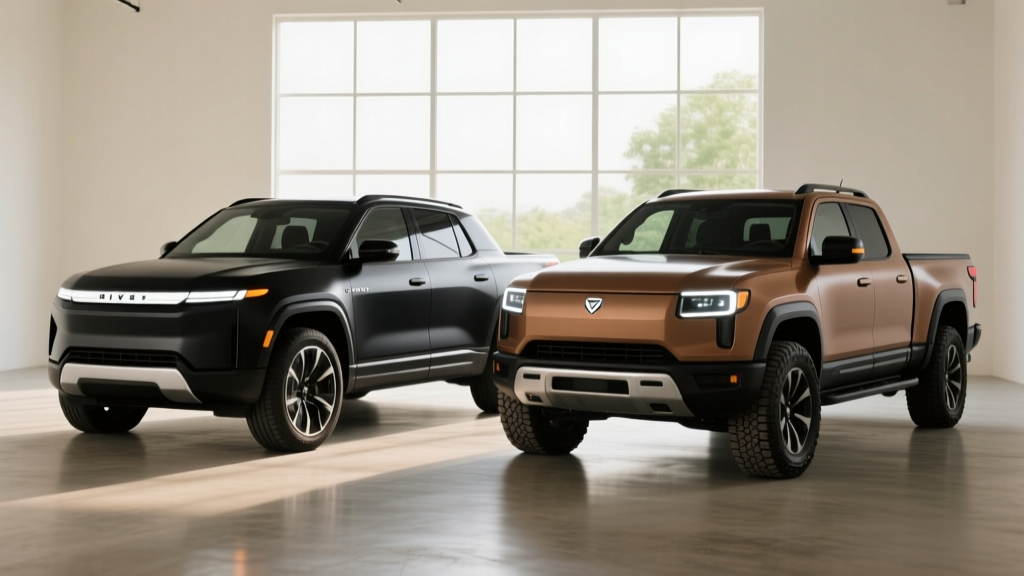
When an automaker posts quarterly results, most buyers skip the financials and head straight to the configurator. That's a mistake — especially with Rivian. The company's Q1 2026 earnings report reveals production cadence, margin trajectory, and capital allocation that directly affect build times, pricing stability, and long-term service support for the R1S SUV and R1T pickup. This analysis translates the investor-deck numbers into practical ownership implications, paired with a full spec breakdown of the current Gen 2 R1 platform.
Rivian reported Q1 2026 revenue of approximately $1.28 billion, delivering roughly 13,600 vehicles across R1, EDV (Amazon delivery vans), and RCV (Rivian Commercial Van) lines. Gross margin improved to the low single digits — a meaningful step toward the sustained positive gross margin the company has targeted since late 2024. Cash and equivalents stood near $6.1 billion entering Q2, providing a runway for the upcoming R2 mid-size platform launch expected in 2026 at the new Georgia production facility.
For current R1 shoppers, the takeaway is twofold: Rivian's financial position is stabilizing (reducing the "will they be around?" concern), and Gen 2 production efficiencies are beginning to shorten build-to-delivery timelines. Let's dig into what you're actually buying.
2026 Rivian R1S & R1T: Core Specifications
The 2026 model year carries over the Gen 2 architecture introduced for MY2025, featuring a redesigned interior, revised thermal management, and the tri-motor option. Below are the key figures for the most-configured R1S Dual-Motor and Tri-Motor builds.
| Specification | Dual-Motor (Standard) | Dual-Motor (Max) | Tri-Motor (Max) |
|---|---|---|---|
| EPA Range | ~270 mi | ~352 mi | ~321 mi |
| Battery (usable) | ~95 kWh (NMC) | ~141 kWh (NMC) | ~141 kWh (NMC) |
| Horsepower | 533 hp | 533 hp | 850 hp |
| 0–60 mph | 4.5 sec | 4.5 sec | 2.9 sec |
| Drivetrain | AWD (dual-motor) | AWD (dual-motor) | AWD (tri-motor) |
| Max DC Fast Charge | ~200 kW | ~220 kW | ~220 kW |
| 10–80% DCFC Time | ~28 min | ~38 min | ~38 min |
| Level 2 Rate (11.5 kW) | ~16 mi/hr | ~25 mi/hr | ~25 mi/hr |
| MPGe (combined) | ~73 MPGe | ~69 MPGe | ~65 MPGe |
| Towing Capacity | 7,700 lb | 7,700 lb | 7,700 lb |
| Base MSRP (R1S) | $75,900 | $82,400 | $99,900 |
R1T pickup variants carry nearly identical powertrain specs with slightly lower range due to aerodynamics. Pricing for R1T starts ~$2,000 below equivalent R1S trims. Source: Rivian R1S specs, fueleconomy.gov.
Real-World Range: What the EPA Sticker Doesn't Tell You
- City/suburban mixed driving (65–75°F): Expect 320–345 miles. The R1 platform's regen and low-speed efficiency shine here.
- Highway sustained (75 mph, 70°F): ~270–295 miles. The R1S's boxy SUV profile and 5,800+ lb curb weight penalize high-speed efficiency.
- Cold weather (20–30°F, highway): ~220–250 miles. NMC chemistry loses 20–30% in freezing temps despite the heat pump.
- Towing a 5,000-lb trailer: ~150–180 miles. Plan charging stops accordingly.
Rivian's thermal management system is among the better implementations in the segment — the heat pump and battery preconditioning help — but physics is physics. A 141 kWh Max pack pushing a large SUV at 75 mph in January will not deliver 352 miles. Buyers in northern climates should spec the Max battery and budget 20–25% off EPA for winter planning. The Standard pack's ~270-mile EPA range drops to a real-world ~200–220 miles in cold highway conditions, which may require mid-trip charging on longer routes.
Charging Speed: DC Fast and Home Level 2
| Charging Level | Power / Rate | Practical Result |
|---|---|---|
| Level 1 (120V, 12A) | ~1.4 kW | ~2 mi/hr — emergency/trickle only |
| Level 2 (240V, 48A) | 11.5 kW | ~16–25 mi/hr — overnight full charge in 8–12 hr |
| DC Fast (CCS/NACS) | Peak ~220 kW (Max pack) | 10–80% in ~38 min; tapers sharply above 80% |
| DC Fast (Standard pack) | Peak ~200 kW | 10–80% in ~28 min; smaller pack = faster SoC % gain |
Rivian's Gen 2 platform charges at competitive but not class-leading speeds. For context, Hyundai/Kia's E-GMP vehicles peak around 240–350 kW on 800V architecture, and Tesla's Model X peaks around 250 kW. The R1's 400V architecture limits peak rate, but the large Max pack means you're adding meaningful miles even at moderate C-rates. On a 350 kW Electrify America or Tesla Supercharger (with NACS adapter), expect the R1S Max to sustain ~150–180 kW through the 20–60% SoC window before tapering.
Home charging reality: A Level 2 Wall Connector or Rivian Wall Charger at 48A / 11.5 kW will replenish the Max pack from 10% to full in roughly 11–12 hours — fine for overnight. Ensure your electrician installs a 60A circuit (80% continuous load rule). Panel upgrades (200A service) add $1,500–$3,500 if your home lacks capacity.
Pricing, Trims, and Federal Tax Credit Eligibility
| Trim / Config | Base MSRP | §30D Credit Eligible? | Effective Price (if eligible) |
|---|---|---|---|
| R1S Dual-Motor Standard | $75,900 | ❌ Exceeds $80K SUV cap | $75,900 |
| R1S Dual-Motor Max | $82,400 | ❌ Exceeds $80K SUV cap | $82,400 |
| R1S Tri-Motor Max | $99,900 | ❌ Exceeds $80K SUV cap | $99,900 |
| R1T Dual-Motor Standard | $69,900 | ✅ Under $80K truck cap* | ~$62,400 |
| R1T Dual-Motor Max | $76,400 | ✅ Under $80K truck cap* | ~$68,900 |
*Under IRS §30D rules, the MSRP cap is $80,000 for trucks/SUVs and $55,000 for sedans. However, battery component and critical mineral sourcing requirements, plus buyer income caps ($300K MFJ / $150K single), must also be met. Point-of-sale transfer is available for qualified buyers. Always verify current eligibility at IRS.gov §30D and consult a tax professional. As of early 2026, Rivian's US-built R1 vehicles with North American battery sourcing generally meet the requirements for the R1T, while R1S pricing often exceeds the cap at most trims.
The Q1 2026 earnings call confirmed Rivian is actively working to reduce bill-of-materials costs on Gen 2, which may allow future price adjustments. For now, R1T buyers are the ones who benefit from the federal credit; R1S buyers should plan full MSRP and explore state-level incentives (which vary widely — check your state energy office).
Cargo, Passenger Space, and Daily Practicality
The R1S offers three rows of seating (7 passengers) with the following interior dimensions:
- Cargo behind 3rd row: ~10.6 cu ft
- Cargo behind 2nd row (3rd folded): ~46.7 cu ft
- Max cargo (all rear rows folded): ~88.2 cu ft
- Front legroom: ~41.3 in
- 2nd-row legroom: ~38.5 in
- 3rd-row legroom: ~30.2 in (best for children or short trips)
The R1T pickup offers a 4.5-foot bed with the innovative Gear Tunnel (lockable, pass-through storage behind the cab, ~11.7 cu ft) and a front trunk (frunk) of ~11.1 cu ft — one of the largest in any EV. The R1T's bed is shorter than a traditional full-size truck, but the combined enclosed storage (bed + tunnel + frunk) is genuinely useful for gear-heavy buyers.
Driver Assistance, Tech, and the Rivian Driver+ System
Rivian's Driver+ system is a Level 2 driver-assistance feature. It combines adaptive cruise control, lane centering, and lane-change assist on divided highways. The driver must remain fully engaged — hands on or near the wheel, eyes on the road. This is not autonomous or "self-driving" capability. Only Level 4 services like Waymo operate without a human driver in defined areas.
Driver+ works competently on well-marked interstates but does not match the hands-free capability of GM's Super Cruise or Ford's BlueCruise on approved roads. Rivian has signaled future camera-and-radar upgrades for a hands-free highway system, but as of the 2026 model year, expect a hands-on experience.
The 15.6-inch center touchscreen runs Rivian's in-house OS — responsive, with native navigation, Spotify/Apple Music integration, and over-the-air updates. A notable quirk: no Apple CarPlay or Android Auto. Rivian insists its native stack provides deeper vehicle integration, but buyers who rely on phone projection should test-drive with their daily apps before committing.
Warranty and Long-Term Ownership
- Basic vehicle warranty: 5 years / 60,000 miles
- Battery & powertrain: 8 years / 175,000 miles (retains ≥70% capacity)
- Roadside assistance: 5 years / 60,000 miles
Rivian's 175,000-mile battery warranty is among the most generous in the segment (Tesla covers 8yr/120K–150K depending on model). The 70% capacity retention threshold is industry standard. Gen 2's NMC cells from Samsung SDI have shown promising cycle-life data in early fleet usage, though long-term degradation curves (8–10 years) remain to be fully validated.
Who Should Buy the 2026 R1S or R1T?
- You need 3-row seating and premium SUV refinement for family use
- You prioritize build quality and adventure capability over lowest cost
- You have home Level 2 charging and don't regularly exceed 250 miles between stops
- You want a lifestyle pickup with genuine off-road chops and innovative storage
- You want §30D tax credit eligibility (under $80K truck cap)
- You tow occasionally (7,700 lb) but not daily heavy-duty loads
- You need 400+ mile EPA range (consider Lucid Air or Tesla Model S for sedans)
- You require hands-free highway driving (GM Super Cruise / Ford BlueCruise)
- You need Apple CarPlay/Android Auto integration
Pros and Cons at a Glance
- Class-leading build quality and fit/finish in the adventure-EV segment
- Excellent off-road capability with quad-/tri-motor torque vectoring
- Massive Gear Tunnel (R1T) and frunk for enclosed storage
- 175,000-mile battery warranty exceeds most competitors
- R1T qualifies for $7,500 §30D credit (subject to income/sourcing rules)
- OTA updates continuously add features and refine driving dynamics
- R1S MSRP exceeds $80K cap — no federal tax credit for most trims
- No Apple CarPlay or Android Auto
- DC fast charging peaks at ~220 kW — slower than 800V competitors
- Driver+ is competent but not hands-free; lags Super Cruise/BlueCruise
- Real-world highway/cold-weather range drops 20–30% from EPA
- Service center network still expanding; rural owners may face long tow distances
What Rivian's Q1 2026 Financials Mean for Your Purchase Decision
The Q1 2026 earnings report signals a company moving toward operational maturity — not hypergrowth. Gross margin improvement, disciplined capex ahead of R2 production, and a $6.1B cash position reduce the existential risk that early Rivian buyers shouldered. Production cadence for R1 has stabilized, meaning build-to-delivery windows are more predictable than the 2022–2023 backlogs.
For buyers on the fence: Rivian is no longer a speculative startup. It's a low-volume premium automaker with a viable path to scale (R2 in 2026–2027). If the R1S or R1T fits your use case and budget, the financial risk of buying has materially decreased. Just plan your charging, understand the real-world range tradeoffs, and verify your tax credit eligibility before signing.
Frequently Asked Questions
What is the real-world range of the 2026 Rivian R1S?
The R1S Dual-Motor Max achieves 352 miles EPA, but expect ~270–295 miles at sustained highway speeds and ~220–250 miles in freezing temperatures. Standard pack variants (~270 mi EPA) deliver ~200–220 miles in cold-weather highway use.
How fast does the R1S/R1T charge at home and on DC fast chargers?
On a Level 2 home charger at 11.5 kW, the Max pack adds ~25 miles per hour (full charge in ~11–12 hours). On DC fast chargers, peak rate is ~220 kW with a 10–80% time of ~38 minutes for the Max pack and ~28 minutes for the Standard pack.
Does the 2026 Rivian R1S or R1T qualify for the $7,500 federal EV tax credit?
The R1T generally qualifies under the $80,000 truck MSRP cap (Dual-Motor Standard at $69,900 and Dual-Motor Max at $76,400). Most R1S trims exceed the $80,000 SUV cap and do not qualify. All buyers must meet income caps ($300K MFJ / $150K single) and battery sourcing requirements per IRS §30D rules. Consult a tax professional.
Is Rivian financially stable enough to support long-term ownership?
Rivian entered Q2 2026 with ~$6.1B in cash and improving gross margins. The company has Amazon van revenue as a stabilizer and the R2 launch as a growth catalyst. While not yet profitable, the financial position is substantially stronger than 2023–2024 lows. Service network expansion continues.
How does the R1S compare to the Tesla Model X or BMW iX?
The R1S offers superior off-road capability, more adventure-oriented storage, and better 3rd-row usability than the Model X. The BMW iX is more refined on-road with faster charging (up to 200+ kW on a lighter platform) but lacks 3-row seating and off-road chops. The Model X offers Supercharger network access (though Rivian now has NACS adapter compatibility) and a longer-range option. Choose R1S for adventure/family versatility; iX for on-road luxury; Model X for range and charging infrastructure.
What's the biggest drawback of owning a Rivian R1?
Charging speed relative to 800V competitors, the lack of Apple CarPlay/Android Auto, and the R1S's tax-credit ineligibility due to MSRP caps are the most-cited owner complaints. Service availability in rural areas also remains a consideration, though Rivian's mobile service fleet helps mitigate this.