The Real Picture of Rivian Ownership in 2026
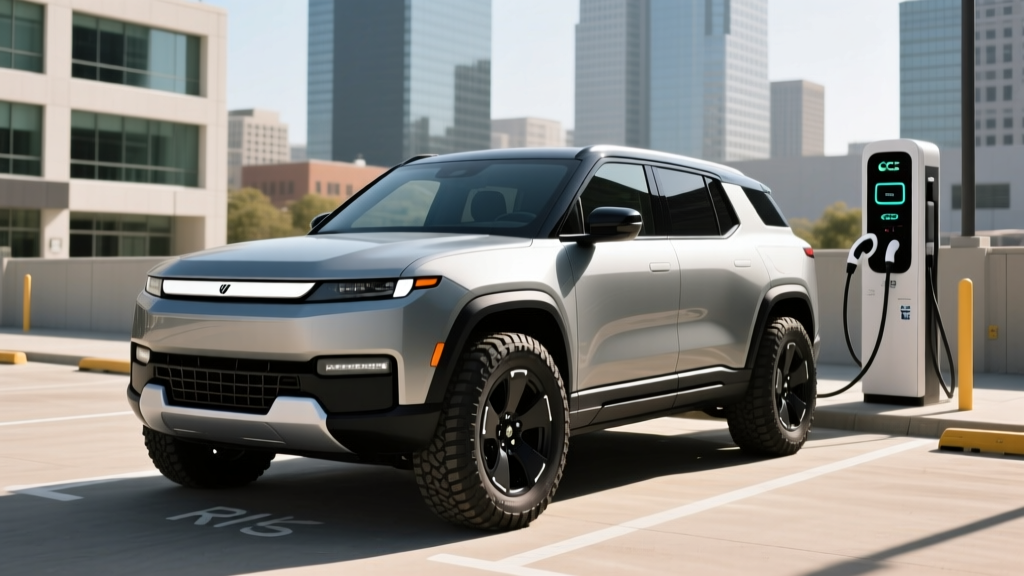
Rivian has matured from a startup into one of the most recognizable names in the electric truck and SUV segment. The second-generation R1T pickup and R1S three-row SUV, introduced for the 2025 model year and carried into 2026, brought a redesigned battery pack, updated motors, and the move to the NACS (Tesla-style) charge port. But the question prospective buyers ask most isn't about specs — it's about what daily life with a Rivian actually looks like once the honeymoon ends.
This guide breaks down the 2026 R1T and R1S on the metrics that matter for long-term ownership: real-world range versus the EPA sticker, charging speeds across DC and home Level 2, total cost after federal incentives, and the practical trade-offs that separate a happy Rivian owner from a regretful one.
Specs at a Glance: 2026 R1T and R1S Lineup
| Spec | R1T Dual-Motor (Standard Pack) | R1T Dual-Motor (Large Pack) | R1T Tri-Motor (Max Pack) | R1S Dual-Motor (Large Pack) |
|---|---|---|---|---|
| EPA Range | 270 mi | 352 mi | 420 mi (est.) | 352 mi |
| Battery (usable) | ~95 kWh (LFP) | ~115 kWh (NMC) | ~141 kWh (NMC) | ~115 kWh (NMC) |
| Horsepower | 533 hp | 533 hp | 850 hp | 533 hp |
| 0-60 mph | 4.5 sec | 4.5 sec | 2.9 sec | 4.5 sec |
| Drivetrain | AWD (dual-motor) | AWD (dual-motor) | AWD (tri-motor) | AWD (dual-motor) |
| Max DC Charge | ~200 kW | ~220 kW | ~220 kW | ~220 kW |
| 10-80% DC Time | ~28 min | ~30 min | ~41 min | ~30 min |
| Level 2 (11.5 kW) | ~16 mi/hr | ~20 mi/hr | ~20 mi/hr | ~20 mi/hr |
| Towing Capacity | 11,000 lb | 11,000 lb | 11,000 lb | 7,700 lb |
| Base MSRP | $69,900 | $75,900 | $99,900 | $75,900 |
Source: Rivian official specs and fueleconomy.gov. Tri-Motor Max Pack range is manufacturer-estimated pending final EPA certification.
Real-World Range: Highway, Cold Weather, and Towing Reality
The Large Pack Dual-Motor R1T posts an EPA-estimated 352 miles. In real-world mixed driving at 70 mph on flat terrain, expect ~280–310 miles. In sub-freezing temperatures (20–30°F), highway range typically drops to ~240–270 miles. Towing a 5,000 lb trailer can cut range nearly in half — plan for 150–180 miles before needing a charge stop.
Rivian's second-gen aero improvements and the heat pump (standard on 2025+ models) help mitigate cold-weather losses compared to the original R1T, but physics is physics — a boxy, 7,000-lb truck pushing air at 75 mph on I-70 in January will burn electrons quickly. The Standard Pack with its LFP chemistry is the most range-sensitive; LFP cells have slightly lower energy density, which is why the Standard Pack gives up roughly 80 miles of EPA range versus the Large.
For context, the R1S (three-row SUV) shares the Large Pack platform and returns nearly identical range figures, with a slight 5–10 mile penalty due to its longer wheelbase and marginally higher curb weight.
Charging Speed: DC Fast, Home Level 2, and the NACS Transition
For 2026, all new Rivians ship with the NACS (Tesla-style) charge port, ending the CCS1 era for the brand. This is arguably the single biggest ownership-experience improvement Rivian has made — it opens direct access to the Tesla Supercharger network without an adapter.
| Charging Level | Power | Speed (Large Pack) | Notes |
|---|---|---|---|
| Level 1 (120V) | ~1.4 kW | ~3 mi/hr | Emergency/top-up only |
| Level 2 (240V, 48A) | 11.5 kW | ~20 mi/hr | Overnight full charge in ~6-7 hrs |
| DC Fast (peak) | ~220 kW | 10-80% in ~30 min | Curve tapers hard above 80% |
| DC Fast (average 10-80%) | ~150 kW sustained | ~180 mi in 30 min | Realistic road-trip expectation |
A critical nuance for road-trippers: the 220 kW peak on the Large and Max packs is a peak, not a sustained rate. The charge curve holds above 180 kW up to roughly 55–60% State of Charge, then tapers progressively. Charging from 80–100% on DC fast adds another 25–35 minutes — so on road trips, the optimal strategy is short 10–80% hops.
At home, Rivian's onboard charger supports up to 11.5 kW (48 amps on a 60-amp circuit). Most owners install a NACS wall connector or a hardwired Level 2 EVSE. A full overnight charge on the Large Pack takes about 6–7 hours, which is more than adequate for daily use. Expect to spend $800–$1,800 on a professional Level 2 installation depending on panel proximity and local permitting.
Pricing, Trims, and Federal Tax Credit Eligibility
Rivian's 2026 lineup is positioned as a premium product, and pricing reflects that. Here's how the numbers break down after accounting for the IRS §30D federal tax credit:
| Model / Trim | Base MSRP | §30D Eligible? | Effective Price (est.) |
|---|---|---|---|
| R1T Dual-Motor Standard | $69,900 | Yes (if under $80k MSRP cap) | ~$62,400 |
| R1T Dual-Motor Large | $75,900 | Yes (under $80k truck cap) | ~$68,400 |
| R1T Tri-Motor Max | $99,900 | No (exceeds $80k truck MSRP cap) | $99,900 |
| R1S Dual-Motor Large | $75,900 | Yes (under $80k SUV cap) | ~$68,400 |
- MSRP Cap: Trucks (R1T) must be under $80,000; SUVs (R1S) under $80,000. Tri-Motor trims exceed this.
- Buyer Income Cap: AGI must not exceed $150,000 (single), $225,000 (head of household), or $300,000 (joint).
- Battery Sourcing: Critical minerals and battery component requirements phase in annually. Verify current-year compliance on the IRS qualified vehicle list before purchase.
- Point-of-Sale Transfer: Eligible buyers can apply the credit as an immediate price reduction at the dealer, subject to IRS registration.
Always confirm eligibility with a tax professional and the latest IRS guidance. Rules change annually.
Ownership Costs: Efficiency, Insurance, and the 5-Year Picture
The Dual-Motor Large Pack R1T returns an EPA-rated 73 MPGe combined (roughly 46 kWh/100 mi). That's thirsty by EV standards — the Ford F-150 Lightning Extended Range posts 70 MPGe, and the Tesla Model X manages 102 MPGe. Rivian's aerodynamic profile and 7,000+ lb curb weight are the primary reasons.
At a national average electricity rate of $0.16/kWh, charging the R1T Large Pack costs roughly $7.36 per 100 miles at home. Compare that to a gas truck at 18 MPG and $3.40/gallon — $18.89 per 100 miles. The fuel savings are real, but insurance is where Rivian ownership bites: expect annual premiums in the $2,800–$4,200 range depending on your state and driving record, significantly above a comparable ICE truck.
Maintenance is minimal — no oil changes, no transmission fluid, fewer brake replacements thanks to aggressive regenerative braking. Rivian's mobile service fleet handles many repairs at your home or office, reducing dealership hassle.
Warranty, Battery Longevity, and Service Network
Rivian backs the 2026 R1T and R1S with:
- Battery & Drive Unit: 8 years / 175,000 miles (whichever comes first), with a capacity retention threshold of 70%.
- Limited Vehicle Warranty: 5 years / 60,000 miles.
- Corrosion: 5 years / unlimited miles.
The 175,000-mile battery warranty is among the best in the segment — Tesla covers 8 years / 120,000 miles on the Model X, and Ford covers 8 years / 100,000 miles on the F-150 Lightning. Real-world degradation data from early 2022–2024 Rivian owners suggests roughly 5–8% capacity loss at 50,000 miles for NMC packs, which is in line with industry norms. LFP packs (Standard Pack) are expected to degrade more slowly but have less total capacity to begin with.
Rivian's service model is hybrid: a growing network of physical service centers in major metros, supplemented by a mobile service fleet that handles tire rotations, software-related fixes, and minor hardware swaps at your driveway. Owners in rural areas may face longer wait times for major repairs — this is a real consideration if you live outside a top-30 metro.
Who Should Buy a Rivian (and Who Shouldn't)
- You need genuine truck capability (11,000-lb towing, 4.5-ft bed with gear tunnel) with zero tailpipe emissions.
- You want NACS-native Supercharger access without adapters for road trips.
- You value over-the-air updates that meaningfully add features (Rivian has shipped major capability upgrades post-delivery).
- You have home charging access — this is non-negotiable for satisfying Rivian ownership.
- You tow heavy trailers over long distances regularly — range drops to ~150 mi with a 5,000+ lb load.
- Your budget is under $65,000 — the Standard Pack R1T starts at $69,900 even before options.
- You live in a charging desert with no reliable DC fast-charging infrastructure and no home charging option.
- You prioritize efficiency (MPGe) over capability — the Hyundai Ioniq 5 or Tesla Model Y deliver far better efficiency.
Pros, Cons, and the Bottom Line
- Class-leading NACS charging network access (native, no adapter)
- Excellent build quality for a startup — panel gaps and fit/finish rival legacy OEMs
- Best-in-class battery warranty at 8 yr / 175,000 mi
- Genuine off-road capability with quad-motor torque vectoring (Tri-Motor)
- Unique gear tunnel storage (R1T) adds 11 cu ft of lockable space
- Strong OTA update cadence adding real features
- Efficiency is below segment average (73 MPGe vs. competitors at 85–100+)
- Insurance costs are high — $2,800–$4,200/year is common
- Service center footprint still limited outside major metros
- Tri-Motor pricing ($99,900+) eliminates tax credit eligibility
- Third-row seating in R1S is tight for adults (30.3" legroom)
- No Apple CarPlay or Android Auto — Rivian's native infotainment is the only option
Frequently Asked Questions
What is the real-world range of the Rivian R1T?
The EPA rates the Dual-Motor Large Pack R1T at 352 miles. In real-world highway driving at 70–75 mph, expect 280–310 miles. In cold weather (below 30°F), plan for 240–270 miles. Towing a trailer cuts range dramatically — to roughly 150–180 miles with a 5,000-lb load.
How fast does the Rivian charge at home and on the road?
At home on a 240V Level 2 charger (11.5 kW), the Large Pack adds about 20 miles of range per hour, fully charging in 6–7 hours. On DC fast chargers, it peaks at ~220 kW and charges 10–80% in approximately 30 minutes, though sustained average is closer to 150 kW.
Does the 2026 Rivian qualify for the $7,500 federal tax credit?
It depends on the trim. The R1T Dual-Motor Standard ($69,900) and Dual-Motor Large ($75,900) fall under the $80,000 truck MSRP cap and are eligible if you meet income requirements ($150k single / $300k joint). The Tri-Motor at $99,900 exceeds the cap and does not qualify. Battery sourcing rules also apply — verify on the IRS qualified vehicle list before purchasing.
Is Rivian ownership worth it vs. the Ford F-150 Lightning or Tesla Cybertruck?
Rivian wins on build quality, NACS-native charging access, and battery warranty. The F-150 Lightning is more affordable and has a larger dealer network for service. The Cybertruck offers more polarizing styling and similar performance but has a more limited service infrastructure. If you value premium fit-and-finish and road-trip charging convenience, Rivian is the strongest choice in the segment.
What's the biggest surprise cost of owning a Rivian?
Insurance. Most owners report annual premiums between $2,800 and $4,200, which is significantly higher than a comparable gas truck. Get a quote before purchasing. Electricity costs are low, but tire replacement (these trucks eat through rubber due to weight and instant torque) runs $1,200–$1,800 for a set of four all-terrains.
Does the Rivian have Apple CarPlay or Android Auto?
No. Rivian uses its own proprietary infotainment system. It supports Bluetooth audio streaming and phone integration for calls, but there is no smartphone mirroring. This is a dealbreaker for some buyers who rely on CarPlay for navigation or Spotify.