Rivian Where Is It From? The Short Answer
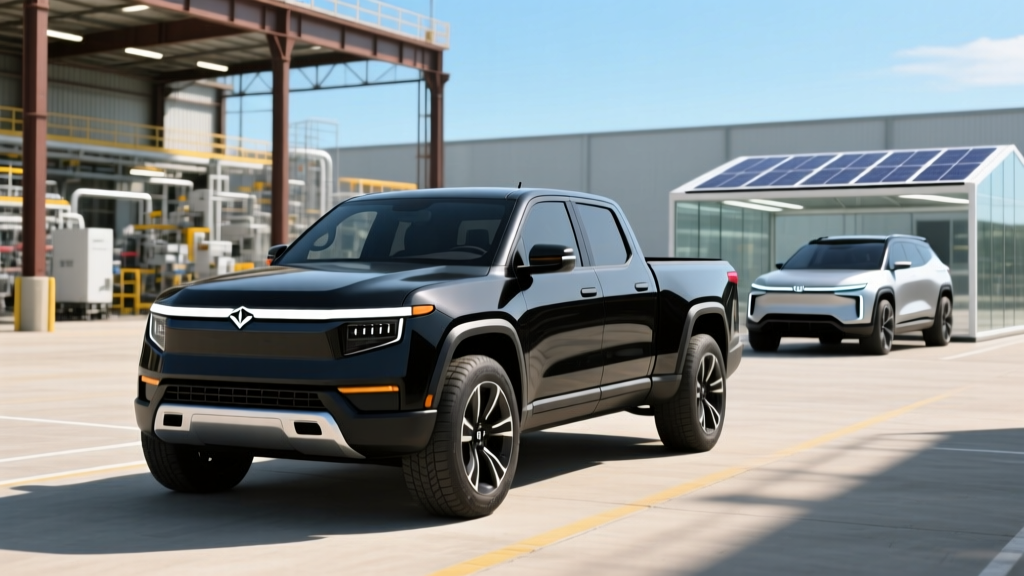
Rivian is an American electric-vehicle manufacturer headquartered in Irvine, California, with its sole production facility in Normal, Illinois — a converted Mitsubishi plant that the company purchased in 2017. Founded in 2009 by MIT-trained engineer RJ Scaringe, Rivian launched its first consumer vehicles, the R1T pickup and R1S SUV, in late 2021 and has since expanded to include the R2 (compact SUV, announced for 2026 production at a second Georgia plant) and the EDV commercial delivery van built for Amazon.
Every Rivian sold in the United States is assembled in Illinois, using a mix of domestic and globally sourced battery cells. That makes Rivian one of the few EV startups to design, engineer, and manufacture its vehicles entirely on U.S. soil — a fact that matters for buyers tracking §30D federal tax-credit battery-sourcing rules.
2026 Rivian Lineup at a Glance: R1S and R1T
For 2026, Rivian's consumer lineup centers on the refreshed R1S (three-row SUV) and R1T (four-door pickup), both riding the company's proprietary skateboard platform with dual-, tri-, or quad-motor configurations. The second-generation architecture introduced in mid-2024 brought a new electrical system, faster charging, and the company's in-house-developed drive units.
| Spec | R1S (SUV) | R1T (Pickup) |
|---|---|---|
| EPA Range (Standard Pack, ~92.5 kWh usable) | 270 mi | 270 mi |
| EPA Range (Max Pack, ~141 kWh usable) | 410 mi | 390 mi |
| Battery Chemistry | NMC (nickel manganese cobalt) — Standard/Max; LFP available on select Standard trims | |
| Max DC Fast Charge | Peak 225 kW (Standard); 200 kW (Max Pack) | |
| 10–80% DC Time | ~21 min (Standard); ~36 min (Max Pack) | |
| Level 2 Home Charge Rate | 11.5 kW (~25 mi/hr) | |
| 0–60 mph (Dual-Motor) | 4.5 sec | 4.5 sec |
| 0–60 mph (Tri-Motor) | 2.9 sec | 2.9 sec |
| Horsepower (Dual / Tri / Quad) | 533 hp / 850 hp / 1,025 hp | |
| Drivetrain | AWD standard (all configurations) | |
| MPGe (Dual-Motor, combined) | 73 MPGe | 70 MPGe |
| Efficiency (kWh/100 mi) | 46 kWh/100 mi | 48 kWh/100 mi |
| Cargo Volume (behind 3rd / 2nd / 1st row, R1S) | 21 / 57 / 104 cu ft | N/A |
| Bed + Gear Tunnel + Frunk (R1T) | N/A | 54 cu ft bed + 11 cu ft tunnel + 11 cu ft frunk |
| Towing Capacity | 7,700 lb | 11,000 lb |
| Base MSRP (Dual-Motor Standard) | $71,700 | $69,900 |
| As-Tested (Tri-Motor Max, Adventure) | ~$105,000 | ~$103,000 |
| Battery / Powertrain Warranty | 8 yr / 175,000 mi (battery); 8 yr / 175,000 mi (powertrain) | |
Real-World Range: What the EPA Sticker Doesn't Tell You
Real-World Expectation: ~230–250 mi highway in mild weather for the Standard Pack; ~350–380 mi highway for the Max Pack. In sustained sub-freezing temperatures, subtract 20–30% — expect ~175–200 mi from the Standard Pack on a cold winter road trip.
Rivian's boxy, truck-shaped body creates more aerodynamic drag than a sleek sedan, so highway efficiency drops noticeably above 70 mph. In mixed suburban driving with regen braking, owners routinely match or slightly beat EPA figures. The Max Pack's massive ~141 kWh battery provides a genuine safety net for towing and mountain driving, but its weight also means higher kWh/100 mi consumption. For buyers in the upper Midwest or Northeast, preconditioning the battery before DC fast charging is essential — Rivian's thermal-management system does this automatically when a charger is set in the navigation system.
Charging Speed: DC Fast, Level 2, and the NACS Transition
Starting with the 2025 model year, Rivian transitioned to the NACS (North American Charging Standard) port — the Tesla-style connector — giving R1S and R1T owners native access to Tesla Superchargers via Rivian's integrated adapter and network agreement. That eliminates the CCS-to-NACS dongle friction that early adopters dealt with.
| Charging Level | Power | Miles Added per Hour | Typical Use Case |
|---|---|---|---|
| Level 1 (120V) | ~1.4 kW | ~3 mi/hr | Emergency / trickle top-up |
| Level 2 (240V, 48A) | 11.5 kW | ~25 mi/hr | Home overnight charging |
| DC Fast (Standard Pack) | Peak 225 kW | ~140 mi in 10 min (peak) | Road trips, 10–80% in ~21 min |
| DC Fast (Max Pack) | Peak 200 kW | ~140 mi in 15 min (peak) | Road trips, 10–80% in ~36 min |
Real-world charging-curve note: the 225 kW peak on the Standard Pack is sustained roughly from 10% to 35% State of Charge, then tapers progressively. The Max Pack's larger thermal mass allows a flatter curve but at a slightly lower peak, which is why its 10–80% time is longer in absolute minutes despite holding more energy. On Electrify America and Rivian Adventure Network chargers, expect average session power closer to 130–160 kW for the Standard Pack.
Performance and Drivetrain: Tri-Motor Is the Sweet Spot
Every 2026 Rivian ships with all-wheel drive. The dual-motor setup (one front, one rear) delivers 533 hp and a 4.5-second 0–60 time — more than adequate for daily driving and merging. The tri-motor configuration (one front, two rear) pushes output to 850 hp and drops the 0–60 to 2.9 seconds, rivaling a Tesla Model X Plaid in a vehicle that can also tow 11,000 lb. The quad-motor, limited to early launch editions, produced 1,025 hp but has been deprioritized for 2026 in favor of the tri-motor as the performance flagship.
Rivian's air suspension provides up to 14.9 inches of ground clearance in Off-Road mode and can drop the vehicle 2 inches for highway efficiency. The R1T's unique Gear Tunnel — an 11-cubic-foot pass-through compartment behind the rear seats — remains a class-exclusive feature that competitors like the Ford F-150 Lightning and Chevrolet Silverado EV cannot match.
Pricing, Trims, and Federal Tax Credit Eligibility
Rivian offers three trim tiers for 2026: Adventure (base), Adventure with Ascend Package (premium interior/tech), and Tri-Motor Performance. Base MSRPs start at $69,900 for the R1T Dual-Motor Standard and $71,700 for the R1S. Loaded Tri-Motor Max Pack models cross $105,000 before options.
| Trim / Config | MSRP | §30D Credit Potential | Effective Price (if eligible) |
|---|---|---|---|
| R1T Dual-Motor Standard (Adventure) | $69,900 | Up to $7,500* | ~$62,400 |
| R1S Dual-Motor Standard (Adventure) | $71,700 | Up to $7,500* | ~$64,200 |
| R1S Tri-Motor Max (Ascend) | ~$105,000 | $0 (exceeds MSRP cap) | ~$105,000 |
*Federal §30D credit eligibility for Rivian is not guaranteed across all trims. Under current IRS rules:
- The MSRP cap for SUVs (R1S) is $80,000; for pickups (R1T) it is $80,000. Trims above this threshold are ineligible.
- Buyer AGI limits: $150,000 single / $225,000 head of household / $300,000 joint.
- Critical minerals and battery-component sourcing requirements phase in annually. Rivian's use of Samsung SDI and LG Energy Solution cells (some manufactured in the U.S., some abroad) means eligibility can shift yearly — always verify on IRS.gov's qualified vehicles list before purchase.
- The credit can now be transferred to the dealer at point of sale, reducing your out-of-pocket cost on delivery day.
Because rules change frequently, consult a tax professional and cross-reference fueleconomy.gov before finalizing a purchase.
Tech, Interior, and Driver Assistance
Rivian runs its own vertically integrated software stack — no Android Automotive, no Apple CarPlay (wireless or wired). The 15.6-inch center touchscreen and 12.3-inch digital cluster are snappy and over-the-air updateable. Standout features include:
- Rivian Driver+: Level 2 driver-assist with adaptive cruise, lane-centering, and automatic lane changes on divided highways. The driver must remain engaged — this is not a Level 4 autonomous system.
- Electric Camp Kitchen (optional): slide-out induction cooktop and sink integrated into the Gear Tunnel.
- Vehicle-to-Home (V2H) readiness: bidirectional charging capability (hardware-equipped, pending full utility integration rollout).
- Rivian Waypoints: built-in charging-aware navigation with battery preconditioning.
Notable drawbacks: the lack of Apple CarPlay/Android Auto frustrates some buyers; the panoramic glass roof lacks a physical shade (a retractable shade is now available as an accessory); and service-center density remains thinner than legacy automakers, though Rivian has expanded mobile-service coverage significantly since 2023.
Pros
- Class-leading off-road capability with air suspension and quad-/tri-motor torque vectoring
- Unique Gear Tunnel (R1T) and three-row seating (R1S) in a premium EV package
- Over-the-air updates continuously improve software, charging, and driver assists
- Native NACS port and Supercharger network access (2025+ models)
- Strong 8-year / 175,000-mile battery warranty
Cons
- High starting price — most trims exceed §30D MSRP cap
- No Apple CarPlay / Android Auto
- Real-world highway range drops significantly in cold weather and while towing
- Service-center network still growing; rural owners may rely on mobile service
- Efficiency (kWh/100 mi) trails lower-slung EVs due to truck aerodynamics
Who Should Buy a Rivian — And Who Shouldn't?
Look elsewhere if: Your priority is maximum efficiency and lowest cost per mile (consider a Hyundai Ioniq 5 or Tesla Model Y), you require Apple CarPlay, or your budget is below $65,000. For pure commuter duty without cargo needs, Rivian's size and weight are overkill.
Rivian vs. Key Competitors: Is It Worth It?
Against the Tesla Model X, the R1S offers more rugged capability, a more distinctive interior, and better off-road hardware, though the Model X wins on Supercharger ubiquity (pre-NACS Rivians) and efficiency. Against the Ford F-150 Lightning, the R1T is pricier but more technologically advanced, with superior range in Max Pack form and the Gear Tunnel advantage. The Chevrolet Silverado EV undercuts on price for fleet buyers but lacks Rivian's software polish. For adventure-oriented buyers who want a premium American-built EV, Rivian still occupies a unique niche that no competitor fully replicates.
Frequently Asked Questions
Is Rivian made in China?
No. Every Rivian consumer vehicle is manufactured in Normal, Illinois, USA. Some battery cells are sourced globally (Samsung SDI, LG Energy Solution), but final assembly is entirely domestic.
Does Rivian qualify for the $7,500 federal tax credit in 2026?
Eligibility depends on the specific trim's MSRP (must be ≤$80,000 for pickups and SUVs), the buyer's adjusted gross income, and the battery's critical-mineral and component sourcing for that model year. Always verify on the IRS qualified vehicles list before purchase.
Can Rivian use Tesla Superchargers?
Yes. 2025 and newer Rivians ship with a native NACS port and can plug directly into Tesla Superchargers. Pre-2025 models use a Rivian-provided CCS-to-NACS adapter.
How long does a Rivian battery last?
Rivian warranties its battery for 8 years / 175,000 miles, retaining at least 70% of original capacity. Real-world data from early 2022 owners shows ~3–5% degradation over the first 60,000 miles, consistent with NMC chemistry best practices.
Is Rivian's driver-assist self-driving?
No. Rivian Driver+ is an SAE Level 2 system, meaning the driver must remain attentive and keep hands on or near the wheel at all times. It is not a Level 4 autonomous system like Waymo's robotaxis.
Where is Rivian's second factory?
Rivian has announced a second production facility in Stanton, Georgia, intended for R2 compact SUV production. As of this writing, R2 timing and Georgia plant output remain subject to production ramp updates.