Rivian's Next-Gen Steering: Why It Matters for the R2 and Beyond
Rivian's first-generation R1T and R1S established the brand as a serious electric-adventure contender, but critics and owners alike pointed to the steering feel as an area ripe for improvement — heavy at low speeds, somewhat detached at highway pace, and occasionally inconsistent in its weighting. With the Rivian next-gen EV steering system debuting on the R2 platform (expected to begin deliveries in early 2026), the company has re-engineered its steering architecture from the rack up, and the implications extend well beyond a single model.
This article breaks down what we know about Rivian's updated steering technology, places it in the context of the R2's full spec sheet, and evaluates whether these changes address the most common owner complaints. Because the R2 is not yet in customer hands at the time of writing, all specifications below are based on Rivian's published preliminary data and may shift before production begins.
R2 Platform Overview and Steering Architecture
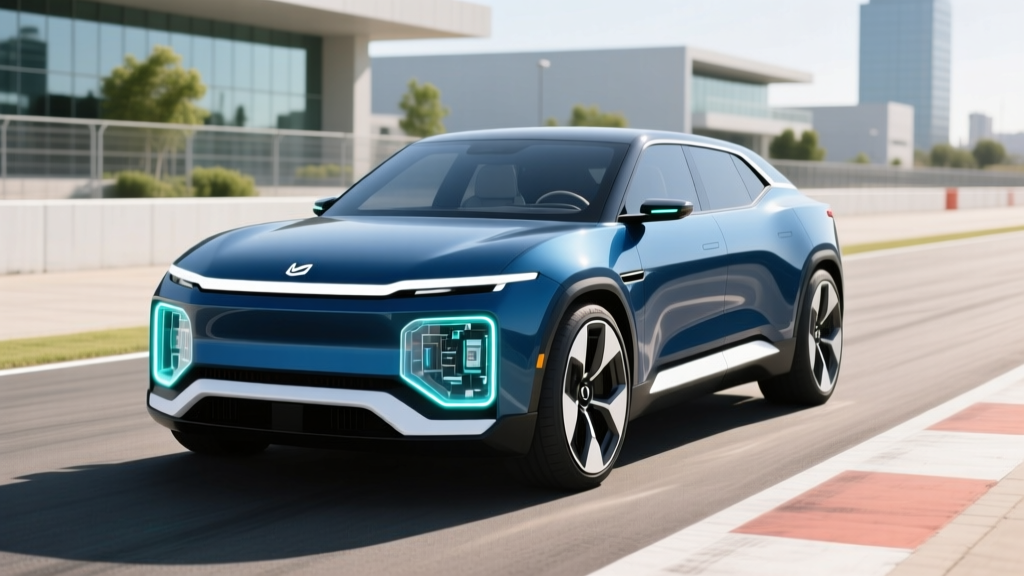
Rivian's second-generation vehicle platform is smaller, lighter, and designed for higher-volume manufacturing at the company's Normal, Illinois facility (and eventually a planned second plant in Georgia). The R2 SUV slots below the R1S in size and price, targeting the mainstream compact-electric-SUV segment occupied by the Tesla Model Y, Ford Mustang Mach-E, and Hyundai Ioniq 5.
What Changes in the Next-Gen Steering System
The R1T and R1S use a conventional electric power-assist steering (EPAS) rack with a fixed ratio. Owners have reported that the system requires frequent small corrections on the highway and feels overly heavy during parking maneuvers. Rivian's next-generation steering for the R2 introduces several hardware and software updates:
- Variable-ratio rack: A mechanically variable gear ratio reduces the number of lock-to-lock turns at low speeds (parking, trail maneuvering) while maintaining a stable, linear feel at highway velocities. This is similar in concept to the variable-ratio racks used by Porsche and Audi, adapted for EV weight distribution.
- Re-tuned assist mapping: Rivian's software team has recalibrated the assist curve to provide lighter effort below 15 mph and firmer, more communicative weighting above 45 mph. Early engineering-drive impressions suggest a more natural on-center feel.
- Integrated steer-by-wire readiness: While the R2 launches with a mechanical column, the platform architecture is designed to accommodate a future steer-by-wire system without structural modification — a move that would reduce weight, eliminate column intrusion, and enable fully customizable steering ratios via software.
- Reduced friction in the rack: New seal materials and bearing designs lower static friction, which Rivian claims improves both feel and energy efficiency marginally.
How This Compares to the R1T/R1S
The first-generation Rivian steering was competent but drew comparisons to early Tesla Model X steering — functional, but not confidence-inspiring. The R2's variable-ratio system should close the gap with class leaders like the Hyundai Ioniq 5 (which uses a well-regarded, linear EPAS) and the BMW iX (rack-and-pinion with speed-sensitive assist). Whether Rivian achieves this in practice will depend on final software calibration, which often evolves through over-the-air updates after launch.
Preliminary R2 Specifications
| Specification | Rivian R2 (Preliminary) |
|---|---|
| EPA Range (est.) | ~330 miles (Standard Battery); ~365 miles (Max Battery) |
| Battery Capacity | ~85 kWh usable (Standard); ~110 kWh usable (Max) |
| Battery Chemistry | LFP (Standard); NMC (Max) |
| Max DC Fast Charge | ~200 kW peak (Standard); ~250 kW peak (Max) |
| 10–80% DC Charge Time | ~25 min (Standard); ~22 min (Max) |
| Level 2 Home Charge Rate | 11.5 kW (~37 mi/hr added) |
| Drivetrain | Dual-motor AWD (standard); Tri-motor AWD (performance trim) |
| Horsepower | ~450 hp (Dual); ~600+ hp (Tri) |
| 0–60 mph | ~4.5 sec (Dual); ~3.0 sec (Tri) |
| Efficiency (est.) | ~110 MPGe / ~30 kWh/100 mi |
| Cargo Volume | ~35 cu ft (rear seats up); ~70 cu ft (rear seats folded); front trunk (frunk) ~10 cu ft |
| Seating | 5 passengers |
| Towing Capacity | ~4,500 lbs (est.) |
| Base MSRP | $45,000 (Standard Dual-Motor); $52,000 (Max Dual-Motor); ~$60,000+ (Tri-Motor) |
| Battery/Powertrain Warranty | 8 years / 100,000 miles (expected, matching R1T/R1S) |
Charging Performance and Curve Behavior
Charging speed is where the R2's next-gen platform should show meaningful gains over the R1T/R1S. The first-generation Rivians peak around 200 kW on DC fast chargers, but the charge curve tapers significantly above 60% state of charge (SoC), stretching the tail end of a charging session.
| Charging Level | Power / Rate | Miles Added per Hour | Notes |
|---|---|---|---|
| Level 1 (120V) | ~1.4 kW | ~3–4 mi/hr | Emergency/trickle only |
| Level 2 (240V, 48A) | 11.5 kW | ~37 mi/hr | Full overnight charge in ~9 hrs |
| DC Fast (Max Battery) | Peak ~250 kW | ~800+ mi/hr at peak | 10–80% in ~22 min; tapers above 80% |
| DC Fast (Standard Battery) | Peak ~200 kW | ~650+ mi/hr at peak | 10–80% in ~25 min; LFP chemistry allows frequent 100% charging |
Charge-curve reality check: The "peak 250 kW" figure is a maximum, not a sustained rate. In practice, expect the R2 Max Battery to sustain roughly 180–220 kW between 10–50% SoC, tapering to ~100 kW by 70% and ~50 kW by 90%. This is typical for NMC packs in this class. The LFP Standard Battery pack, however, can be charged to 100% regularly without the degradation concerns associated with NMC — a practical advantage for daily drivers who want full range every morning.
Rivian has confirmed the R2 will use the NACS (North American Charging Standard) connector natively, giving it direct access to Tesla's Supercharger network — currently the most reliable DC fast-charging infrastructure in the U.S. This eliminates the CCS-to-NACS adapter requirement that R1T/R1S owners currently deal with.
Pricing, Trims, and Federal Tax Credit Eligibility
Rivian has positioned the R2 to undercut the R1S significantly, targeting the high-volume $45,000–$60,000 segment. Here is the expected trim breakdown:
| Trim | Expected MSRP | §30D Credit Eligibility | Effective Price (if eligible) |
|---|---|---|---|
| Standard Dual-Motor | $45,000 | Eligible (under $80K SUV cap) | ~$37,500–$45,000* |
| Max Dual-Motor | $52,000 | Eligible (under $80K SUV cap) | ~$44,500–$52,000* |
| Tri-Motor Performance | ~$60,000+ | Eligible (under $80K SUV cap) | ~$52,500–$60,000+* |
*Effective price depends on full §30D eligibility. The federal EV tax credit under IRS §30D offers up to $7,500, but qualification depends on multiple factors that change annually.
- MSRP cap: SUVs must be priced at or below $80,000 — all announced R2 trims clear this threshold.
- Buyer income cap: Modified adjusted gross income (MAGI) must not exceed $150,000 (single), $225,000 (head of household), or $300,000 (joint filers).
- Battery sourcing: The credit is split into two halves — $3,750 for meeting critical-minerals requirements and $3,750 for meeting battery-component sourcing requirements. As of 2026, the sourcing rules are stringent, and many EVs qualify for only the partial $3,750 credit or none at all. Rivian has not yet confirmed the R2's battery supply chain compliance.
- Point-of-sale transfer: Eligible buyers can transfer the credit to the dealer at purchase, reducing the out-of-pocket price immediately rather than waiting for a tax refund.
- Final authority: Always verify current eligibility on fueleconomy.gov and consult a tax professional before relying on the credit in your purchase decision.
Interior, Technology, and Driver Assistance
Cabin and Cargo
The R2 is a compact two-row SUV, smaller than the three-row R1S but larger than a subcompact crossover. Rivian has emphasized a flat-floor architecture enabled by the skateboard platform, which should yield competitive interior volume:
- Rear legroom: ~38 inches (estimated), sufficient for adults on longer trips
- Cargo behind rear seats: ~35 cu ft, expanding to ~70 cu ft with seats folded
- Front trunk (frunk): ~10 cu ft — a Rivian signature, useful for charging cables, groceries, or gear you want separated from the main cabin
- Gear tunnel: Rivian has hinted at a smaller version of the R1T's signature gear tunnel, though this is unconfirmed for the R2 SUV body style
Infotainment and Software
Rivian's in-house developed software stack is one of the brand's strengths. Expect the R2 to ship with:
- A 15.6-inch center touchscreen running Rivian's latest OS iteration
- A compact digital instrument cluster behind the steering wheel
- Native navigation with integrated route planning that accounts for charging stops, elevation, and weather
- Over-the-air (OTA) update capability for steering calibration, powertrain tuning, and infotainment features — meaning the steering feel could improve post-delivery via software
- Wireless Apple CarPlay and Android Auto (Rivian added CarPlay support to the R1 series via OTA; expect it at launch on R2)
Driver Assistance (ADAS)
Rivian's driver-assistance suite, branded as Rivian Driver+, is expected to carry over to the R2 with hardware upgrades:
- Adaptive cruise control with stop-and-go
- Lane-centering assist with lane-change capability
- Automatic emergency braking, blind-spot monitoring, rear cross-traffic alert
- Highway assist (hands-on-wheel, SAE Level 2)
Driving Dynamics: Steering Feel in Context
The steering system doesn't operate in isolation — it's part of a dynamic package that includes suspension tuning, weight distribution, and tire selection. Here's what we expect from the R2's driving dynamics:
Weight and Balance
The R2 is expected to weigh between 4,800 and 5,400 lbs depending on trim and battery pack. That's 500–800 lbs lighter than the R1S, which should translate to more agile handling and less effort required from the steering system. The skateboard platform keeps the center of gravity low, and the dual-motor layout provides a near 50/50 front-rear weight distribution.
Suspension
Rivian has confirmed the R2 will use a multi-link rear suspension (replacing the R1's more complex hydraulic roll-control system with a simpler, lighter setup). The front suspension is expected to be a double-wishbone design. Air suspension may be available on higher trims, but the base model will likely use conventional coil springs to keep costs down.
Steering Modes
Rivian's drive-mode system is expected to offer steering-weight profiles (Comfort, Normal, Sport) that adjust the EPAS assist curve. The variable-ratio rack means that even in Comfort mode, the steering should feel direct at parking-lot speeds without becoming twitchy on the highway. This is a meaningful upgrade over the R1's single-ratio rack, which forced a compromise between low-speed effort and high-speed stability.
Competitive Comparison: R2 vs. Key Rivals
| Feature | Rivian R2 (Prelim.) | Tesla Model Y (2026) | Hyundai Ioniq 5 (2026) |
|---|---|---|---|
| EPA Range | ~330–365 mi | ~320–340 mi | ~305–325 mi |
| Peak DC Charge | ~200–250 kW | ~250 kW | ~240 kW (800V) |
| 10–80% Time | ~22–25 min | ~20 min | ~18 min |
| Base MSRP | $45,000 | ~$44,000 | ~$43,000 |
| Connector | NACS (native) | NACS (native) | CCS1 / NACS adapter |
| Steering System | Variable-ratio EPAS | Fixed-ratio EPAS | Fixed-ratio EPAS (R-MDPS) |
| Frunk | ~10 cu ft | ~4 cu ft | ~2 cu ft |
| Towing | ~4,500 lbs | ~3,500 lbs | ~2,300 lbs |
The R2's variable-ratio steering, if well-executed, would give it a handling-dynamics advantage over both the Model Y (whose steering is quick but often criticized for being numb) and the Ioniq 5 (linear and well-weighted, but fixed-ratio). The R2 also leads in frunk volume and estimated towing capacity, while the Ioniq 5's 800V architecture gives it a slight edge in 10–80% charge time.
Who Should Consider the R2 (and Who Should Wait)
- You want a compact electric SUV with genuine off-road capability and class-leading towing for the segment
- You value a large frunk and adventure-oriented design details
- You prefer Rivian's software ecosystem and OTA-driven improvement model
- You want native NACS access to Tesla Superchargers without an adapter
- Steering feel and driving dynamics matter to you, and the variable-ratio rack delivers on its promise
Consider competitors if:
- You need a vehicle now — the R2 is still in pre-production, and early reservation holders may face delays
- Maximum DC fast-charge speed is your top priority (the Ioniq 5's 800V system charges faster in the 10–80% window)
- You need three rows of seating (look at the R1S, Kia EV9, or Tesla Model X)
- You want the lowest possible entry price — the Ioniq 5 and Model Y start slightly below the R2's $45,000 base
Pros and Cons
- Variable-ratio steering addresses a known R1-series weakness
- Native NACS connector for seamless Supercharger access
- Large frunk (~10 cu ft) — best in compact EV SUV class
- LFP option for daily 100% charging without degradation worry
- Competitive range (330–365 mi) and strong towing (~4,500 lbs)
- Rivian's OTA platform enables post-delivery steering/software refinement
- All R2 trims fall under the $80K §30D MSRP cap
- Not yet available — early 2026 deliveries are a target, not a guarantee
- All specs are preliminary; final EPA range and charge rates may differ
- DC charge speed (~200–250 kW peak) trails the Ioniq 5's 800V system
- Base price ($45,000) is slightly above Model Y and Ioniq 5
- §30D credit eligibility depends on battery-sourcing rules Rivian hasn't fully confirmed
- Rivian's production ramp history (R1T/R1S delays) suggests patience may be needed
- No hands-free (Level 3+) driving system at launch
Frequently Asked Questions
What is the real-world range of the Rivian R2?
Based on the preliminary EPA estimate of 330–365 miles (depending on battery pack), real-world highway range at 70–75 mph should land around 270–330 miles. In cold weather below 30°F, expect a 20–30% reduction, bringing the Standard pack to roughly 230–260 miles and the Max pack to 250–290 miles. These are estimates; final EPA figures will be published before deliveries begin.
How fast does the R2 charge at home and on the road?
On a Level 2 home charger (240V, 48A), the R2 charges at up to 11.5 kW, adding roughly 37 miles of range per hour — a full charge overnight in about 9 hours. On DC fast chargers, the Max Battery pack peaks at approximately 250 kW, achieving a 10–80% charge in roughly 22 minutes. The Standard (LFP) pack peaks around 200 kW with a 10–80% time of about 25 minutes. Actual speeds vary based on battery temperature, SoC, and charger capability.
How much does the R2 cost after federal tax credits?
The base Standard Dual-Motor R2 is priced at an expected $45,000 MSRP. If you qualify for the full $7,500 §30D federal tax credit (subject to income caps, battery-sourcing requirements, and MSRP limits), the effective price drops to approximately $37,500. However, battery-sourcing rules are strict in 2026, and the R2 may qualify for only $3,750 or potentially none of the credit depending on its supply chain. Always verify on fueleconomy.gov and consult a tax professional.
Is the R2 worth buying versus the Tesla Model Y or Hyundai Ioniq 5?
It depends on your priorities. The R2 offers a larger frunk, higher estimated towing capacity, native NACS charging, and a novel variable-ratio steering system that could provide best-in-class driving dynamics. The Model Y wins on Supercharger network maturity and software polish; the Ioniq 5 wins on DC fast-charge speed (800V) and slightly lower starting price. If adventure capability, steering feel, and Rivian's brand ethos resonate with you, the R2 is a strong contender — but you'll need to wait for production and independent reviews.
What are the biggest pros and cons of the R2?
Top pros: variable-ratio steering upgrade, native NACS, large frunk, LFP battery option, competitive range, and strong towing for the class. Top cons: not yet available, preliminary specs may change, DC charge speed trails 800V competitors, base price is slightly above rivals, and §30D credit eligibility is uncertain pending battery-sourcing confirmation.
Does the Rivian R2 qualify for the federal EV tax credit?
All announced R2 trims fall under the $80,000 MSRP cap for SUVs, which is one requirement. However, full §30D credit eligibility also depends on buyer income limits ($150K/$225K/$300K MAGI thresholds), battery critical-minerals sourcing, and battery-component manufacturing requirements. As of this writing, Rivian has not confirmed the R2's battery supply-chain compliance with 2026 sourcing rules. Check the IRS clean vehicle credit page for the most current information.
How does the R2's steering compare to the R1T and R1S?
The R1T and R1S use a fixed-ratio EPAS rack that has drawn criticism for heavy low-speed effort and a somewhat detached highway feel. The R2's variable-ratio rack is designed to provide lighter, more maneuverable steering at low speeds and firmer, more communicative weighting at highway speeds. If Rivian's calibration is well-executed, this should be a noticeable improvement. Because the system is software-tunable, Rivian can also refine the feel via OTA updates after launch.
Sources: Rivian official specifications and press materials; fueleconomy.gov for EPA data and tax credit reference; IRS §30D clean vehicle credit guidelines. All R2 specifications are preliminary and subject to change before production.