Quick Verdict: Rivian's 2026 Lineup at a Glance
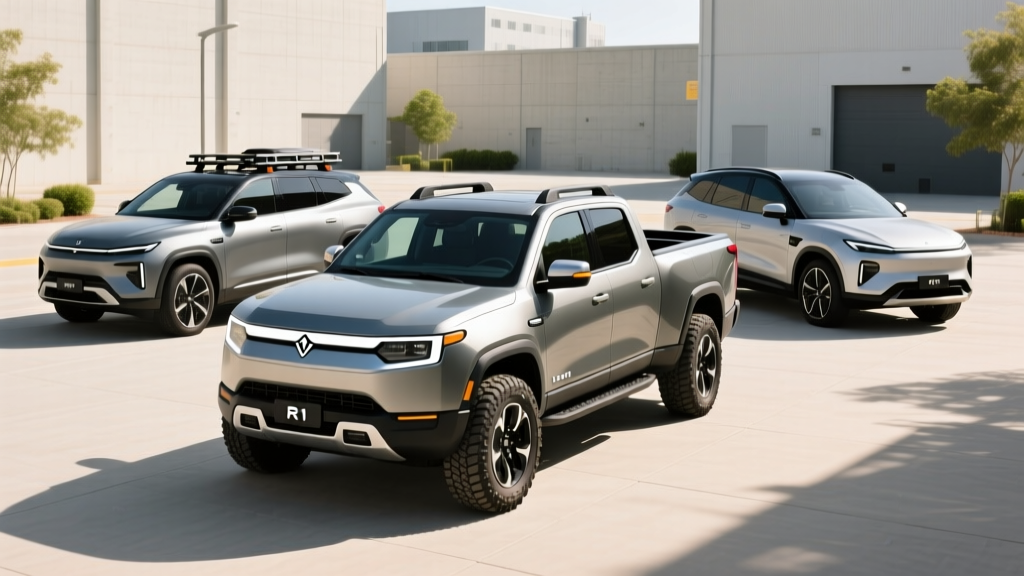
Rivian enters 2026 with a broadened portfolio that finally addresses the two biggest criticisms of its first-generation vehicles: price and charging speed. The second-generation R1T pickup and R1S SUV arrived in late 2024 with a new electrical architecture, faster DC charging, and a tri-motor performance variant. Meanwhile, the compact R2 crossover — announced for mid-2026 production at Rivian's Normal, Illinois plant — promises to bring the brand's adventure DNA to a $45,000 starting point. Here's a data-driven look at every Rivian new model you can buy (or reserve) right now.
| Spec | R1T Dual-Motor | R1T Tri-Motor | R1S Dual-Motor | R2 (Announced) |
|---|---|---|---|---|
| EPA Range (Max Pack) | 420 mi | 380 mi | 410 mi | ~330 mi (est.) |
| Battery (usable kWh) | 141 kWh (NMC) | 141 kWh (NMC) | 141 kWh (NMC) | ~85 kWh (NMC, est.) |
| Horsepower | 533 hp | 850 hp | 533 hp | TBD |
| 0-60 mph | 4.5 sec | 2.9 sec | 4.6 sec | TBD |
| Max DC Charge Rate | 220 kW | 220 kW | 220 kW | ~175 kW (est.) |
| 10-80% DCFC Time | ~42 min | ~42 min | ~42 min | TBD |
| Base MSRP | $69,900 | $99,900 | $74,900 | $45,000 (est.) |
Second-Generation R1T: The Flagship Pickup Refined
The 2026 R1T carries forward the Gen 2 platform introduced for the 2025 model year. The most consequential change isn't cosmetic — it's the 800-volt-class electrical architecture that enables DC fast charging at up to 220 kW, a meaningful jump from the Gen 1's ~200 kW ceiling. Rivian also consolidated its battery offerings: the Standard (92 kWh usable) and Large (128 kWh) packs remain, but the Max Pack at 141 kWh usable (NMC lithium-ion chemistry) is the range champion.
Real-World Range: R1T Max Pack
EPA Estimate: 420 miles
Real-World Highway (70-75 mph, 65°F): ~330-355 miles
Cold Weather (30°F, mixed driving): ~280-310 miles
Towing (5,000-lb trailer, flat terrain): ~190-220 miles
The 420-mile EPA figure is achieved in mixed city/highway driving at moderate temperatures. Pickup trucks suffer disproportionate aero drag at highway speeds — expect a 15-20% reduction on interstate road trips. Towing cuts range nearly in half, consistent with every electric pickup we've tested.
Charging Speed and Infrastructure
The R1T Gen 2 uses the NACS (Tesla-style) connector natively — no adapter needed for Tesla Superchargers. At a 250+ kW DC fast charger, the Max Pack peaks at 220 kW and sustains roughly 180-190 kW through 50% state of charge before tapering. The 10-80% charge takes approximately 42 minutes.
| Charging Level | Power (kW) | Rate (mi/hr added) | Notes |
|---|---|---|---|
| Level 1 (120V, 12A) | 1.4 kW | ~4 mi/hr | Emergency/trickle only |
| Level 2 (240V, 48A) | 11.5 kW | ~34 mi/hr | Full overnight charge in ~14 hrs (Max Pack) |
| DC Fast Charge | Up to 220 kW | ~650 mi/hr (peak) | 10-80% in ~42 min |
For home charging, the R1T accepts up to 11.5 kW on Level 2 (48 amps). A full Max Pack charge from empty on a home wall connector takes roughly 14 hours — plan for overnight sessions. Rivian's Wall Connector is a solid 48-amp unit, though third-party options like the ChargePoint Home Flex or Emporia Vue offer competitive pricing with smart features. Installation costs for a 240V/60A circuit typically run $800-$2,500 depending on panel proximity and local permit fees, though older homes may require a $2,000-$5,000 panel upgrade to support a 200-amp service.
Performance and Drivetrain
The Dual-Motor R1T produces 533 hp and 610 lb-ft of torque with standard all-wheel drive. The 0-60 mph time is 4.5 seconds — genuinely quick for a 7,100-lb vehicle. The Tri-Motor variant, introduced with Gen 2, adds a rear-axle motor for 850 hp and a 2.9-second 0-60 time, placing it among the fastest production pickups ever built. Both use a single-speed reduction gear (no multi-speed transmission), and regenerative braking offers multiple levels including a strong one-pedal driving mode.
Cargo, Towing, and Utility
The R1T's 4.5-foot bed is shorter than a traditional half-ton pickup, but the gear tunnel — a 11.7-cubic-foot pass-through compartment behind the cab — is a genuine differentiator for adventure gear. Total payload capacity is approximately 1,760 lbs, and max towing is rated at 11,000 lbs (Dual-Motor) or 10,000 lbs (Tri-Motor, due to added motor weight reducing payload). The front trunk (frunk) provides 11.1 cubic feet of sealed, drainable storage.
R1S SUV: Three Rows, Same Platform
The three-row R1S shares the R1T's Gen 2 architecture and powertrain options. With the Max Pack, the R1S achieves an EPA-estimated 410 miles of range (slightly less than the R1T due to a taller, less aero-efficient profile). Passenger space is generous: 41.4 inches of front legroom, 38.2 inches in the second row, and 32.3 inches in the third — the third row is best for children or short trips. Cargo volume behind the third row is 10.4 cu ft, expanding to 57.1 cu ft with the third row folded.
The R1S Dual-Motor starts at $74,900 for 2026, while the Tri-Motor Adventure trim reaches $104,900. The R1S competes directly with the Tesla Model X, BMW iX, and the upcoming three-row Hyundai Ioniq 9, but its body-on-frame construction and 7,700-lb tow rating give it genuine off-road and towing credibility that crossover-based SUVs can't match.
R2 Compact Crossover: The Volume Play (Announced)
R2 Status: Announced, Not Yet on Sale
The R2 is scheduled for production start in mid-2026 at Rivian's Normal, IL facility. All specifications below are preliminary estimates based on Rivian's public disclosures. Final EPA certification, pricing, and specs will be confirmed closer to launch. Reservations are open with a $1,000 deposit.
The R2 is the Rivian new model with the broadest market appeal. Targeting a starting MSRP of approximately $45,000, it's positioned against the Tesla Model Y, Ford Mustang Mach-E, and Hyundai Ioniq 5 in the compact electric crossover segment. Rivian has confirmed the R2 will use a unibody architecture (unlike the body-on-frame R1 vehicles), NACS charging, and a smaller NMC battery pack estimated at roughly 85 kWh usable. The target EPA range is approximately 330 miles.
Key announced features include:
- NACS charge port with estimated ~175 kW DC fast-charge capability
- Available dual-motor AWD and single-motor RWD configurations
- Five-passenger seating with a projected 25+ cu ft cargo area behind the second row
- Rivian's latest ADAS suite (Highway Assist with automatic lane changes)
- Vehicle-to-load (V2L) capability for powering accessories
Production timing and initial trim availability remain subject to manufacturing ramp. Early reservation holders are expected to receive Launch Edition trims first, with base configurations following in 2027.
Pricing, Tax Credits, and Ownership Costs
| Model / Trim | Base MSRP | As-Tested (Typical) | §30D Credit Eligible? | After Max Credit |
|---|---|---|---|---|
| R1T Dual-Motor Adventure | $69,900 | $76,500 | Yes (subject to rules) | ~$62,400* |
| R1T Tri-Motor Ascend | $99,900 | $108,000 | No (exceeds MSRP cap) | $99,900+ |
| R1S Dual-Motor Adventure | $74,900 | $82,000 | Yes (subject to rules) | ~$67,400* |
| R2 (est. base) | $45,000 | TBD | Likely yes | ~$37,500* |
*Assumes full $7,500 §30D credit. Eligibility depends on buyer income, battery sourcing, and MSRP caps. See details below.
Federal Tax Credit Rules (§30D) — What You Need to Know
Under current IRS §30D rules, the $7,500 federal tax credit for new EVs has multiple qualifying hurdles:
- MSRP Cap: Vans, SUVs, and pickups qualify up to $80,000 MSRP. The R1T Dual-Motor and R1S Dual-Motor fall under this cap; the Tri-Motor variants at $99,900+ do not qualify.
- Buyer Income Cap: Modified AGI must not exceed $150,000 (single), $225,000 (head of household), or $300,000 (married filing jointly).
- Battery Sourcing: The $7,500 credit splits into $3,750 for critical-minerals sourcing and $3,750 for battery-component manufacturing. Rivian has worked to shift its supply chain toward North American sourcing, but the exact credit amount ($3,750 or $7,500) can vary by production batch and model year. Always verify current eligibility at fueleconomy.gov before purchasing.
- Point-of-Sale Transfer: As of 2024, buyers can transfer the credit to the dealer at purchase, reducing the out-of-pocket cost immediately rather than waiting for tax filing.
State and local incentives may stack on top — check your state's EV rebate program for additional savings.
Five-Year Ownership Snapshot
Rivian's battery and powertrain warranty covers 8 years or 175,000 miles (whichever comes first), with a guaranteed capacity retention of at least 70% during that period. This is among the more generous mileage thresholds in the industry. The bumper-to-bumper warranty is 5 years / 60,000 miles. Insurance costs for the R1T and R1S tend to run 15-25% above comparable gas-powered trucks due to repair costs and vehicle price — budget $2,500-$4,000 annually depending on your state and driving record.
Efficiency and Running Costs
The R1T Dual-Motor with the Max Pack achieves an EPA-rated 73 MPGe combined (approximately 46 kWh per 100 miles). The Tri-Motor, with its added weight and power, drops to roughly 65 MPGe. For context, the Ford F-150 Lightning Extended Range achieves 70 MPGe, and the Tesla Cybertruck AWD is rated at 74 MPGe.
At a national average electricity rate of $0.16/kWh (EIA data), charging the R1T Max Pack at home costs approximately $22.56 for a full charge, translating to roughly $0.054 per mile. Compare that to a gas-powered F-150 at 20 MPG and $3.40/gallon: $0.17 per mile. Over 15,000 annual miles, the R1T saves approximately $1,740 in fuel costs per year — though DC fast charging on road trips at $0.35-$0.50/kWh narrows that gap.
Driver Assistance and Technology
Rivian's ADAS suite, branded as Rivian Highway Assist, is a SAE Level 2 driver-assistance system. It provides adaptive cruise control with stop-and-go, lane centering, and automatic lane changes on divided highways. This is not autonomous driving — the driver must keep hands on the wheel and eyes on the road at all times. Rivian does not currently offer a hands-free system comparable to GM's Super Cruise or Ford's BlueCruise, though the company has indicated future over-the-air updates will expand capabilities.
ADAS Limitation Notice
Rivian Highway Assist is an SAE Level 2 system. It does NOT make the vehicle self-driving. The driver is legally and operationally responsible for steering, braking, and situational awareness at all times. Hands-off detection is torque-based, and the system will issue escalating warnings before disengaging if no driver input is detected.
The infotainment system runs on a 15.6-inch center touchscreen with a clean, tile-based interface. Wireless Apple CarPlay and Android Auto are supported. A unique feature is the built-in camp kitchen option (R1T only), which integrates a two-burner induction cooktop and sink into the gear tunnel — a niche but genuinely innovative touch for overlanding enthusiasts.
Pros, Cons, and Who Should Buy
Pros
- Class-leading EPA range (420 mi Max Pack R1T)
- NACS native — full Supercharger network access
- Genuine off-road capability (8.9-14.9 in ground clearance)
- 11,000-lb towing capacity (Dual-Motor R1T)
- 8-yr / 175,000-mi battery warranty
- Innovative gear tunnel and frunk storage
- Strong OTA update track record
Cons
- Base pricing above $69,000 — Tri-Motor near $100K
- Highway range drops 15-20% from EPA sticker
- No hands-free driving system (Level 2 only)
- Insurance costs 15-25% above gas truck averages
- 4.5-ft bed shorter than most half-ton pickups
- Service center network still expanding in rural areas
Who the R1T / R1S Suits Best
Buy the R1T if: You need a capable electric pickup for weekend adventure use, light-to-moderate towing, and daily driving — and you can charge at home. The Max Pack's 420-mile range eliminates most range anxiety on road trips when paired with Supercharger access.
Buy the R1S if: You want a three-row electric SUV with real off-road chops and towing capacity. It's a strong fit for active families who tow boats or campers and need more utility than a Tesla Model X offers.
Wait for the R2 if: You want Rivian's design language and software experience at a mainstream price point, don't need a truck bed or three rows, and can wait for 2026-2027 production delivery.
Look elsewhere if: You need a work truck for daily heavy towing (range while towing is ~200 miles), you require a hands-free highway driving system, or your budget is under $60,000 for a new vehicle.
Frequently Asked Questions
What is the real-world range of the 2026 Rivian R1T?
The R1T Max Pack has an EPA-estimated 420 miles. In real-world highway driving at 70-75 mph in moderate temperatures, expect 330-355 miles. In cold weather (below 35°F), that drops to roughly 280-310 miles due to battery resistance and cabin heating loads. Towing a 5,000-lb trailer cuts range to approximately 190-220 miles.
How fast does the R1T charge at home and on the road?
On DC fast charging, the Gen 2 R1T peaks at 220 kW and charges from 10-80% in approximately 42 minutes. At home on a 48-amp Level 2 charger (11.5 kW), a full Max Pack charge takes about 14 hours, adding roughly 34 miles of range per hour. Level 1 (120V) charging adds only about 4 miles per hour and is suitable only for emergency or trickle use.
Does the Rivian R1T qualify for the $7,500 federal EV tax credit?
The R1T Dual-Motor (MSRP under $80,000) can qualify for up to $7,500 under IRS §30D, provided the buyer meets income caps ($150K single / $300K married filing jointly) and the vehicle's battery meets critical-mineral and component-sourcing requirements. The Tri-Motor variants exceed the $80,000 MSRP cap and do not qualify. Always verify current eligibility at fueleconomy.gov and consult a tax professional.
Is the Rivian R1T worth buying over the Ford F-150 Lightning or Tesla Cybertruck?
The R1T excels in range (420 mi vs. Lightning's 320 mi Extended Range), off-road capability, and adventure-oriented design. The F-150 Lightning offers a larger 5.5-ft bed, Pro Power Onboard, and a lower starting price (~$55,000). The Cybertruck undercuts on price at the base AWD trim and offers 430 lb-ft of torque-vectoring capability, but its polarizing design and panel-gap quality concerns are drawbacks. If range and off-road performance are priorities, the R1T is the strongest choice. If budget and bed length matter more, the Lightning is compelling.
When will the Rivian R2 be available to buy?
Rivian has targeted mid-2026 for the start of R2 production at its Normal, Illinois facility. Early reservation holders will likely receive Launch Edition vehicles first, with broader trim availability extending into 2027. The anticipated starting MSRP is approximately $45,000, though final EPA certification, pricing, and specs have not been confirmed as of this writing.
What is Rivian's battery warranty?
Rivian covers the R1T and R1S battery pack and electric drivetrain for 8 years or 175,000 miles, whichever comes first. The warranty guarantees at least 70% capacity retention during that period. The bumper-to-bumper limited warranty is 5 years / 60,000 miles. Out-of-warranty battery replacement costs are not published but industry estimates for a 141 kWh NMC pack suggest $18,000-$28,000 including labor — though real-world degradation data for Gen 2 packs is still limited.