The Rivian Adventure Network: What the Map Actually Shows
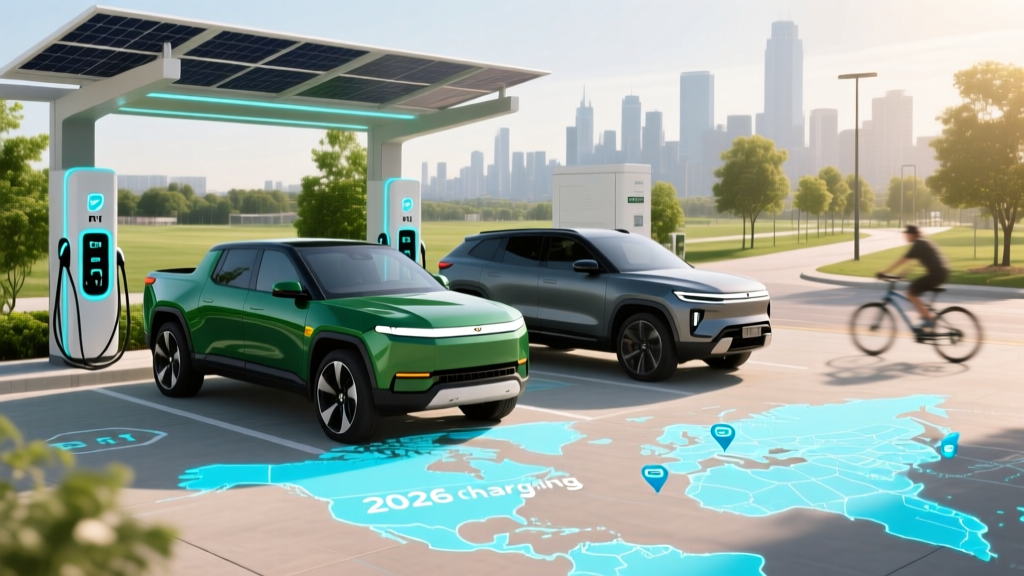
If you've searched for the Rivian network map recently, you've likely noticed it looks very different than it did two years ago. Rivian's proprietary Adventure Network — once planned as a coast-to-coast rival to Tesla's Supercharger network — has been strategically scaled back and reimagined. As of early 2026, Rivian operates a curated set of DC fast-charging stations near high-traffic adventure destinations (national parks, ski resorts, trailheads) while leaning heavily on the broader public charging ecosystem for highway corridors.
For R1T and R1S owners (and prospective buyers evaluating whether Rivian's charging ecosystem is sufficient), this guide breaks down exactly what the current network map covers, how the trucks charge on third-party networks, and what real-world range and charging speeds look like in practice.
EPA Estimated: 352 miles (R1S Dual-Motor Max Pack) / 328 miles (R1T Dual-Motor Large Pack)
Real-World Expectation: Plan for 260–290 miles at sustained 75 mph highway speeds; subtract another 15–25% in sub-freezing temperatures. Towing a 5,000-lb trailer cuts range roughly in half (~150–170 miles).
R1T and R1S 2026 Specifications at a Glance
| Spec | R1T Dual-Motor Large | R1S Dual-Motor Max |
|---|---|---|
| EPA Range | 328 mi | 352 mi |
| Battery (usable) | ~106 kWh (NMC) | ~141 kWh (NMC) |
| Peak DC Fast Charge | 200 kW | 200 kW |
| 10–80% DC Time | ~32 min | ~42 min |
| Level 2 Home Charging | 11.5 kW (~25 mi/hr) | 11.5 kW (~30 mi/hr) |
| 0–60 mph | 4.5 sec | 4.7 sec |
| Horsepower | 533 hp | 533 hp |
| Drivetrain | Dual-Motor AWD | Dual-Motor AWD |
| MPGe (combined) | 70 MPGe | 69 MPGe |
| Efficiency | 48 kWh/100mi | 49 kWh/100mi |
| Battery Warranty | 8 yr / 175,000 mi | 8 yr / 175,000 mi |
| Base MSRP | $69,900 | $83,900 |
Source: fueleconomy.gov, Rivian official specs. Tri-Motor and Quad-Motor trims carry different performance and range figures.
Inside the Rivian Network Map: Station Locations and Strategy
The 2026 Rivian Adventure Network map concentrates on roughly 50+ Rivian-exclusive charging sites, mostly positioned near outdoor recreation hubs rather than interstate corridors. Key clusters include:
- Mountain West: Stations near Moab, UT; Jackson Hole, WY; and Colorado ski corridors
- Pacific Coast: Select sites along California's Highway 1 and near Sequoia/Yosemite
- Northeast: Limited stations in the Adirondacks and New England trail networks
- Southeast: A handful near the Blue Ridge Parkway and Great Smoky Mountains
These stations typically feature 200 kW DC fast chargers with CCS connectors (Rivian vehicles transitioned to NACS ports for 2025 model-year production, but adapters are available for CCS infrastructure). The strategy is clear: Rivian positions its network as a lifestyle perk for adventure-oriented owners rather than attempting to blanket every highway corridor.
What This Means for Daily Charging
For routine commuting and road trips outside adventure zones, R1T and R1S owners rely on Electrify America, EVgo, ChargePoint, and — critically — Tesla Superchargers via the NACS adapter Rivian began shipping in mid-2024. The Supercharger network's 20,000+ stalls fill the corridor-charging gap the Adventure Network deliberately leaves open.
Charging Speeds: DC Fast, Level 2, and the Curve Reality
| Charging Level | Power (kW) | Miles Added per Hour | Typical Use Case |
|---|---|---|---|
| Level 1 (120V) | 1.4 kW | ~3 mi/hr | Emergency top-off only |
| Level 2 (240V home) | 11.5 kW | 25–30 mi/hr | Daily overnight charging |
| DC Fast (public) | Up to 200 kW | ~140 mi in 20 min | Road trips |
| Tesla Supercharger (NACS adapter) | Up to 200 kW | ~140 mi in 20 min | Corridor travel |
Charging curve reality: The 200 kW peak rate applies only between roughly 10–30% State of Charge (SoC). Above 50%, the charge rate tapers significantly — expect ~100 kW by 60% and ~50 kW above 80%. This is why the 10–80% time of 32–42 minutes is the meaningful metric, not the peak kW figure. On a road trip, plan stops around the 20–80% window for the fastest throughput.
Home charging note: The R1T and R1S accept up to 11.5 kW on Level 2, which requires a 60-amp dedicated circuit (hardwired Wall Connector or equivalent). A full overnight charge from 20% to 80% takes roughly 7–8 hours — perfectly adequate for daily use. If your electrical panel is near capacity (common in older homes), a panel upgrade adding $1,500–$3,000 may be necessary. Always consult a licensed electrician for final specifications.
Pricing, Trims, and Federal Tax Credit Eligibility
| Trim (R1T) | Base MSRP | Est. After §30D Credit |
|---|---|---|
| Dual-Motor Standard | $64,900 | ~$57,400* |
| Dual-Motor Large | $69,900 | ~$62,400* |
| Dual-Motor Max | $79,900 | ~$72,400* |
| Tri-Motor | $99,900 | Ineligible (over MSRP cap) |
*Tax credit estimates assume buyer meets all IRS §30D requirements. Eligibility is not guaranteed.
§30D Tax Credit Checklist for Rivian Buyers
- MSRP Cap: Trucks (R1T) must be under $80,000 MSRP; SUVs (R1S) under $80,000. Tri-Motor and some Max Pack configurations exceed this threshold.
- Income Limits: AGI must not exceed $300,000 (joint), $225,000 (head of household), or $150,000 (single).
- Battery Sourcing: Critical minerals and battery components must meet phased-in domestic/free-trade sourcing thresholds. Rivian's credit eligibility has fluctuated as supply chains shift — verify current status on fueleconomy.gov before purchasing.
- Point-of-Sale Transfer: Eligible buyers can transfer the credit to the dealer at purchase, reducing the purchase price directly rather than waiting for a tax refund.
- One Vehicle Per VIN: The credit applies once per vehicle, and the seller must report the transaction to the IRS.
Rules are current for the 2026 tax year and subject to legislative change. Consult a tax professional for your specific situation.
Interior, Cargo, and Tech: What Life With an R1T or R1S Is Actually Like
Cargo space: The R1T offers a 4.5-foot bed with ~11.1 cu ft of volume, supplemented by an 11-cu-ft front trunk (frunk) and a unique Gear Tunnel (available on certain configurations) providing 11.6 cu ft of lockable cross-cab storage. The R1S seats up to seven and provides 104.7 cu ft of cargo space with rear seats folded.
Passenger comfort: Front legroom is generous at 41.3 inches; rear legroom in the R1T is 38.2 inches — competitive with midsize trucks. The R1S third row is best suited for children or short trips.
Tech highlights: Rivian's in-house-developed infotainment runs on a 15.6-inch center display with no Apple CarPlay or Android Auto — a deliberate choice that draws mixed reactions. The system includes native navigation with integrated charging route planning (which factors in the Adventure Network map alongside third-party chargers). Over-the-air updates have meaningfully improved the system since launch.
Driver assistance: Rivian's Driver+ system provides highway lane centering and adaptive cruise control. This is an SAE Level 2 driver-assist system — the driver must remain fully engaged with hands on the wheel and eyes on the road at all times. It is not autonomous driving.
Rivian Driver+ is a Level 2 system. It assists with steering and speed but requires continuous driver supervision. Do not treat it as a substitute for attentive driving.
Pros, Cons, and the Verdict
- Class-leading adventure capability: wading depth, ground clearance, camp kitchen option
- 328–352 miles EPA range is exceptional for a truck/SUV this size
- NACS adapter unlocks Tesla Supercharger network for corridor travel
- 8-year/175,000-mile battery warranty exceeds most competitors
- Frunk + Gear Tunnel storage is uniquely practical
- OTA updates continue to improve vehicle post-purchase
- Adventure Network map is limited — mostly recreation destinations, not highway corridors
- 200 kW peak DC charging is slower than Hyundai/Kia's 800V architecture (240+ kW)
- No Apple CarPlay or Android Auto
- Tri-Motor and Max configurations exceed §30D MSRP cap
- Service center footprint still expanding — rural owners may face long drives for warranty work
- Insurance premiums run 15–25% higher than comparable ICE trucks
Who Should Buy a Rivian?
The R1T and R1S are best suited for buyers who need genuine truck/SUV utility (towing, cargo, off-road capability) combined with electric daily driving. If your routine involves weekend trips to trailheads, ski mountains, or campsites — especially in regions where the Adventure Network map has coverage — Rivian's ecosystem adds real value. Commuters who prioritize the fastest possible charging and widest station availability may find Hyundai Ioniq 5 or Tesla Model Y more practical for pure road-trip convenience.
Rivian vs. Key Competitors: Is It Worth the Price?
Against the Ford F-150 Lightning, the R1T offers more range, a more sophisticated suspension, and better off-road capability — but at a $10,000–$15,000 premium. The Lightning's Pro Power Onboard and broader dealer service network are practical advantages.
Against the Tesla Cybertruck, the R1T delivers a more conventional (and many would say more livable) interior, a real frunk, and proven build quality, though the Cybertruck's 48V architecture and stainless steel body appeal to a different buyer.
The R1S competes most directly with the Kia EV9 (lower price, less range, three rows) and the BMW iX (similar price, less cargo, no off-road pretension). For families who need three rows and electric range above 300 miles, the R1S occupies a nearly unique position.
Frequently Asked Questions
What is the real-world range of the Rivian R1T and R1S?
EPA estimates range from 270 miles (Standard Pack) to 410 miles (Max Pack R1S). In real-world highway driving at 75 mph, expect roughly 75–83% of the EPA sticker. Cold weather below 32°F can reduce range an additional 15–25%, and towing cuts range approximately in half.
How fast does a Rivian charge at home and on the road?
On DC fast chargers, the R1T and R1S peak at 200 kW, achieving a 10–80% charge in approximately 32–42 minutes depending on battery pack size. At home on a 240V Level 2 charger (11.5 kW), expect 25–30 miles of range added per hour, or a full overnight charge in 7–10 hours.
Does the Rivian R1T qualify for the $7,500 federal tax credit?
Eligibility depends on the specific trim's MSRP (must be under $80,000 for trucks), buyer income (AGI caps apply), and battery component/critical mineral sourcing requirements that change annually. Verify current eligibility on irs.gov before purchasing. Point-of-sale transfer is available for qualified buyers.
Can I use Tesla Superchargers with a Rivian?
Yes. Rivian began shipping NACS adapters in mid-2024, and 2025+ model-year Rivians come with native NACS ports. This gives R1T and R1S owners access to Tesla's 20,000+ Supercharger stalls, dramatically expanding the practical charging map beyond Rivian's own Adventure Network.
Is the Rivian Adventure Network growing?
Rivian has shifted strategy from building a massive proprietary network to maintaining curated destination chargers while relying on the NACS/Supercharger ecosystem and third-party networks for corridor charging. Expect modest additions to adventure-destination sites rather than a large-scale highway rollout.
What's the warranty coverage on a Rivian?
Rivian provides a 5-year/60,000-mile bumper-to-bumper warranty and an 8-year/175,000-mile battery and driveunit warranty, with a capacity retention threshold of 70% over the warranty period. This battery warranty is among the most generous in the EV truck segment.