Where Is Rivian Manufactured? Inside the Normal, Illinois Plant
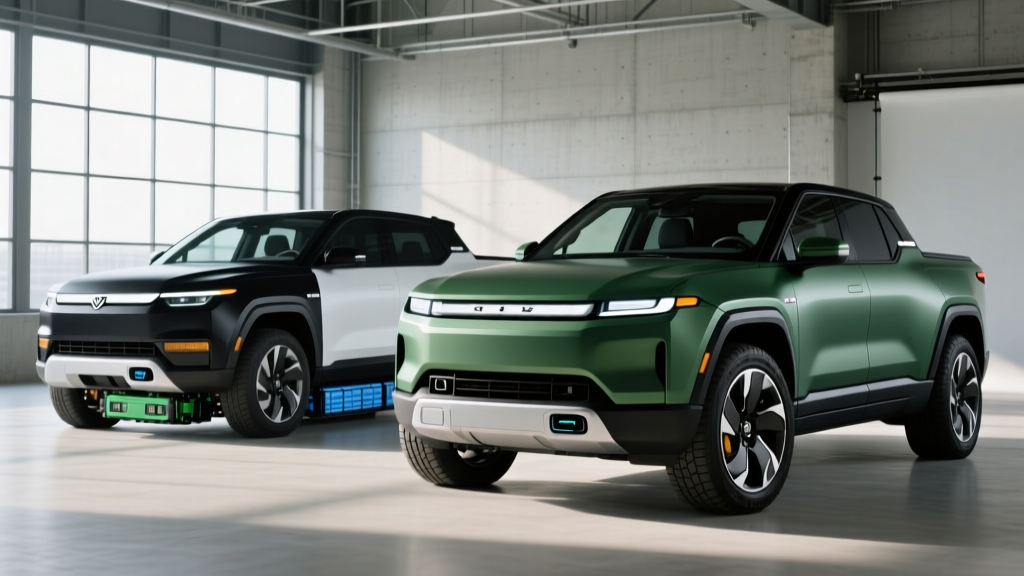
If you've been searching for where Rivian is manufactured, the answer is straightforward: every R1S SUV and R1T pickup rolling onto American roads is built at Rivian's own production facility in Normal, Illinois. This 3.3-million-square-foot former Mitsubishi factory was acquired by Rivian in 2017 and has since been retooled into a dedicated EV plant featuring stamping, body-in-white, paint, powertrain assembly, battery-pack integration, and final vehicle assembly all under one roof.
Unlike startups that outsource production to contract manufacturers, Rivian owns its production line end to end. This vertical integration allows the company to iterate hardware and software rapidly — the 2025 model-year refresh, which introduced the Gen 2 Enduro drive unit and a new LFP battery option, was executed on the same Normal assembly line without a prolonged shutdown.
Rivian is also constructing a second factory in Stanton, Georgia, intended to produce its upcoming R2 and R3 vehicles. That facility is not yet operational as of early 2026, meaning all current R1S and R1T deliveries still originate from Illinois.
Rivian R1S & R1T: Quick Spec Overview (2026 Model Year)
Before we dig into range and charging details, here's a consolidated look at the numbers that matter for current-production Rivian vehicles. Specs below reflect the Dual-Motor Large and Tri-Motor configurations most buyers cross-shop.
| Spec | R1S Dual-Motor (Large Pack) | R1S Tri-Motor |
|---|---|---|
| EPA Range | 352 miles | 321 miles |
| Battery Capacity (usable) | ~128.9 kWh (NMC) | ~128.9 kWh (NMC) |
| Standard Pack (LFP available) | ~92.5 kWh (LFP) | N/A |
| Peak DC Fast Charge | 220 kW | 220 kW |
| 10–80% DC Charge Time | ~30 min | ~30 min |
| Level 2 Home Charge Rate | 11.5 kW (~30 mi/hr) | 11.5 kW (~30 mi/hr) |
| 0–60 mph | 4.5 sec | 2.9 sec |
| Horsepower | 533 hp | 850 hp |
| Drivetrain | Dual-Motor AWD | Tri-Motor AWD |
| Max Towing | 7,700 lb | 7,700 lb |
| Efficiency (MPGe) | 69 MPGe combined | 65 MPGe combined |
| Base MSRP (R1S) | $75,900 | $99,900 |
| Battery/Powertrain Warranty | 8 yr / 175,000 mi | 8 yr / 175,000 mi |
R1T figures mirror R1S closely; the R1T Dual-Motor Large Pack carries an EPA rating of 352 miles. Source: fueleconomy.gov
Real-World Range: What the EPA Sticker Doesn't Tell You
EPA estimate: 352 miles (Dual-Motor Large Pack, R1S/R1T)
Real-world highway (70 mph, moderate temps): ~290–310 miles
Cold-weather (below 30°F, highway): ~240–270 miles
City / mixed driving with regen: ~330–350 miles
Rivian's large, boxy SUVs and pickups push a lot of air — the R1S has a frontal area and drag coefficient that hurt efficiency at sustained highway speed. In our experience and corroborated by independent testing, you should plan for roughly 10–15% below the EPA sticker on highway road trips in mild weather. When temperatures plunge below freezing, expect a further 10–20% reduction due to cabin heating demands and reduced battery chemical efficiency, even with the heat pump Rivian includes on current models.
The LFP Standard Pack (~92.5 kWh usable) drops EPA range to approximately 270 miles for the R1S Dual-Motor. While that's a meaningful reduction, LFP chemistry tolerates daily 100% charging without the degradation concerns of NMC — making it a smart pick for commuters who charge at home nightly and rarely road-trip beyond 200 miles.
Charging Speed: DC Fast, Level 2, and the Charge Curve Reality
Charging speed is where Rivian has made iterative gains, but the numbers require context. The peak 220 kW DC fast-charge rate applies to the NMC Large Pack on a 350 kW-capable CCS or NACS station. Here's what that actually looks like in practice:
| Charging Level | Power (kW) | Speed (miles/hr added) | Notes |
|---|---|---|---|
| Level 1 (120V outlet) | ~1.4 kW | ~3 mi/hr | Emergency / trickle only |
| Level 2 (240V, 48A) | 11.5 kW | ~30 mi/hr | Full charge overnight (~10–12 hrs) |
| DC Fast (peak) | 220 kW | — | Peak rate at low SoC, NMC pack |
| DC Fast 10–80% | — | — | ~30 minutes typical |
| DC Fast 80–100% | ~50 kW taper | — | Charge curve slows significantly above 80% |
The critical detail: peak kW is not sustained kW. Rivian's charge curve holds above 175 kW from roughly 10% to 40% state of charge, then tapers progressively. By 80%, you're pulling well under 100 kW. This is normal for large NMC packs — the battery management system protects cell longevity by reducing current as voltage rises. For road-trip planning, budget 30–35 minutes per stop from 10–80%, not the theoretical minimum.
Rivian vehicles now ship with a NACS (Tesla-style) charge port natively, granting access to Tesla Supercharger V3 and V4 stalls via Rivian's integrated navigation. For legacy CCS stations (Electrify America, EVgo), Rivian provides a NACS-to-CCS adapter. Level 2 home charging at 11.5 kW requires a 60-amp dedicated circuit — expect Rivian's Wall Charger or a comparable 48-amp J1772/NACS unit to refill the Large Pack in about 11 hours from near-empty.
Performance, Efficiency, and What It's Like to Drive
The Dual-Motor R1S delivers 533 hp and a 4.5-second 0–60 mph time — brisk for a three-row SUV that weighs over 7,000 pounds. The Tri-Motor variant's 850 hp and 2.9-second sprint put it in supercar territory, though you'll sacrifice roughly 30 miles of EPA range and pay a $24,000 premium for the privilege.
Efficiency lands at 69 MPGe combined (Dual-Motor Large Pack), translating to about 48 kWh per 100 miles. That's thirstier than a Tesla Model X or Hyundai Ioniq 9, but expected given the R1S's truck-based architecture, all-terrain tires, and flat underbody optimized for ground clearance rather than aerodynamic drag.
On the road, Rivian's quad-corner air suspension delivers a compliant ride with up to 14.9 inches of ground clearance in Off-Road mode. The hydraulic roll-control system (no mechanical sway bars) keeps body lean minimal on pavement while allowing maximum wheel articulation off it. Regenerative braking offers multiple levels but falls short of true one-pedal driving at very low speeds — you'll still need the friction brake for final stops.
Pricing, Tax Credits, and What You'll Actually Pay
Rivian pricing has shifted as the company introduced the Standard Pack LFP option and streamlined its Adventure and Ascend trim tiers. Here's the current landscape:
| Configuration | Base MSRP | §30D Credit Eligible? | Effective Price (est.) |
|---|---|---|---|
| R1T Dual-Motor Standard (LFP) | $69,900 | Up to $7,500* | ~$62,400 |
| R1S Dual-Motor Standard (LFP) | $75,900 | Up to $7,500* | ~$68,400 |
| R1T Dual-Motor Large (NMC) | $75,900 | Up to $7,500* | ~$68,400 |
| R1S Dual-Motor Large (NMC) | $81,900 | Up to $7,500* | ~$74,400 |
| R1S Tri-Motor (NMC) | $99,900 | Up to $7,500* | ~$92,400 |
*Critical tax credit caveats: The IRS §30D Clean Vehicle Credit has multiple requirements that can reduce or eliminate eligibility. Per irs.gov:
- MSRP cap: SUVs (R1S) must be at or below $80,000; pickups (R1T) at or below $80,000. The Tri-Motor R1S at $99,900 exceeds the cap.
- Buyer income cap: Modified AGI must not exceed $300,000 (joint), $225,000 (head of household), or $150,000 (single).
- Battery sourcing: Critical mineral and battery component requirements phase up annually. Consult the IRS eligible-vehicle list at the time of purchase — eligibility can change mid-year.
- Point-of-sale transfer: You can transfer the credit to the dealer at purchase, reducing your out-of-pocket cost directly, or claim it on your tax return.
The Standard Pack LFP models, with their lower MSRPs, are the most reliably credit-eligible configurations. Always verify your specific VIN on the IRS portal before committing.
Cargo, Passenger Space, and Everyday Practicality
The R1S three-row SUV offers 104.7 cu ft of total cargo volume with the second and third rows folded — competitive with the Tesla Model X and well ahead of the BMW iX. Behind the third row alone, you get 21.0 cu ft, enough for a week of groceries for a family of five. The R1T pickup provides a 4.5-foot bed with a lockable tonneau cover option and the signature Gear Tunnel — a 11.0 cu ft pass-through compartment behind the cab that's ideal for skis, camping gear, or golf bags.
Front legroom measures 41.3 inches; second-row legroom is 38.2 inches (R1S). Third-row space is best suited for children or short trips — adults will find it tight on longer drives. The front trunk (frunk) adds 11.0 cu ft of sealed, drainable storage — useful for muddy gear or groceries that might leak.
Tech, Driver Assistance, and Standout Features
Rivian runs a proprietary software stack on a 15.6-inch center display and a 12.3-inch driver cluster. The interface is clean and responsive, with native integration for route planning that accounts for charging stops, elevation changes, and battery preconditioning. Over-the-air updates have added features like Camp Kitchen integration, enhanced Dog Mode, and improved regenerative braking profiles post-launch.
The Rivian Driver+ system combines adaptive cruise control and lane-centering on divided highways. This is a SAE Level 2 driver-assistance system — meaning you must keep your hands on the wheel and eyes on the road at all times. It is not autonomous driving. The system uses a suite of cameras, radar, and ultrasonic sensors, and it performs competently on interstate cruising, though it can be conservative in lane-change scenarios compared to GM's Super Cruise.
Rivian Driver+ is an SAE Level 2 system. The driver remains fully responsible for vehicle control. Hands-off-wheel detection is enforced via torque sensing. This system does not handle city streets, construction zones, or adverse weather autonomously.
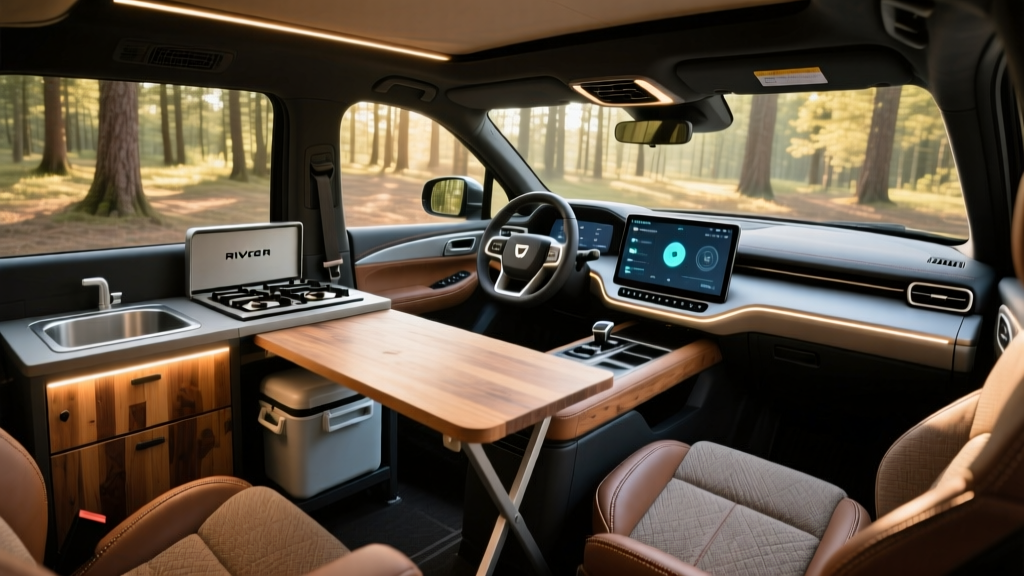
Unique to Rivian: the built-in Camp Kitchen (optional) slides from the Gear Tunnel with an induction cooktop, sink, and utensil set. The Rivian Waypoints community platform curates adventure routes and charging-verified campgrounds — a genuine differentiator for the outdoor-lifestyle buyer.
Pros, Cons, and Who Should Buy a Rivian
- Class-leading off-road capability with 14.9" ground clearance
- Genuine three-row SUV (R1S) or 4.5-ft bed (R1T) with EV powertrain
- 8-yr/175,000-mi battery warranty — above industry standard
- Native NACS port + Supercharger access
- LFP battery option for daily-charge durability
- Unique adventure ecosystem (Gear Tunnel, Camp Kitchen, Waypoints)
- Highway efficiency trails more aerodynamic EV SUVs
- Real-world range drops significantly in cold weather and at speed
- Third row is cramped for adults (R1S)
- DC fast-charge speed (220 kW peak) trails Hyundai/Kia's 800V architecture
- Service center network still growing — rural owners may face travel for warranty work
- Price point remains premium; credit eligibility varies by configuration
Who This EV Suits Best
Buy the Rivian R1S if: You need a three-row family SUV that can tow a boat on Saturday, handle a ski-trip blizzard, and commute on electricity during the week — and you have home Level 2 charging.
Buy the Rivian R1T if: You want a daily-drivable electric pickup with genuine off-road chops and the Gear Tunnel's unique storage, and you don't need a full-size truck bed.
Look elsewhere if: Your priority is maximum highway range-per-dollar, ultra-fast DC charging (consider Hyundai Ioniq 5 or Kia EV9), or you lack access to home or workplace charging.
Warranty and Long-Term Ownership
Rivian covers the battery pack and drive units for 8 years or 175,000 miles, whichever comes first, with a capacity retention threshold of 70% — meaning if your pack degrades below 70% of original capacity within that window, Rivian will repair or replace it. The bumper-to-bumper limited warranty runs 5 years / 60,000 miles. These terms are competitive with Tesla and exceed the 8-yr/100,000-mi federal minimum for battery coverage.
For long-term ownership, the LFP Standard Pack is worth strong consideration. LFP cells exhibit slower calendar and cycle degradation than NMC, and Rivian permits (and encourages) regular 100% charging on LFP — eliminating the 80% daily-charge limitation NMC owners follow to preserve longevity.
Frequently Asked Questions
Where is Rivian manufactured?
All Rivian R1S and R1T vehicles are manufactured at the company's production facility in Normal, Illinois. A second factory in Stanton, Georgia, is under construction for future R2/R3 production but is not yet operational.
What is the real-world range of a Rivian R1S or R1T?
The EPA rates the Dual-Motor Large Pack at 352 miles. In real-world highway driving at 70 mph, expect roughly 290–310 miles in mild weather and 240–270 miles in freezing temperatures. City driving with regenerative braking can approach the EPA figure.
How fast does a Rivian charge at home and on the road?
On a 48-amp Level 2 home charger (11.5 kW), a Rivian adds approximately 30 miles of range per hour, fully recharging the Large Pack overnight. On a DC fast charger, the Large Pack peaks at 220 kW and charges from 10–80% in roughly 30 minutes, with significant tapering above 80%.
Does the Rivian R1S or R1T qualify for the $7,500 federal EV tax credit?
It depends on configuration and buyer eligibility. Dual-Motor models priced at or below the $80,000 MSRP cap can qualify, subject to buyer income limits ($300K joint / $150K single), battery-sourcing requirements, and point-of-sale or tax-return claiming. The Tri-Motor R1S exceeds the MSRP cap. Always verify on the IRS Clean Vehicle Credit page before purchasing.
Is Rivian worth buying vs. the Tesla Model X or Ford F-150 Lightning?
Rivian excels for buyers prioritizing off-road capability, adventure-oriented design, and a premium interior over maximum efficiency or the lowest price. The Tesla Model X offers better range and Supercharger exclusivity, while the F-150 Lightning provides a larger bed and lower starting price. For outdoor-lifestyle families who tow, camp, and venture off-pavement, the Rivian's unique combination of features is difficult to match.
What battery chemistry does Rivian use?
Rivian offers two battery options: an NMC (nickel manganese cobalt) Large Pack with ~128.9 kWh usable capacity for maximum range, and an LFP (lithium iron phosphate) Standard Pack with ~92.5 kWh usable for lower cost and longer cycle life. LFP is recommended for owners who charge daily at home and prioritize long-term durability over maximum range.