Where Are Rivians Made? Inside the Normal, Illinois Factory
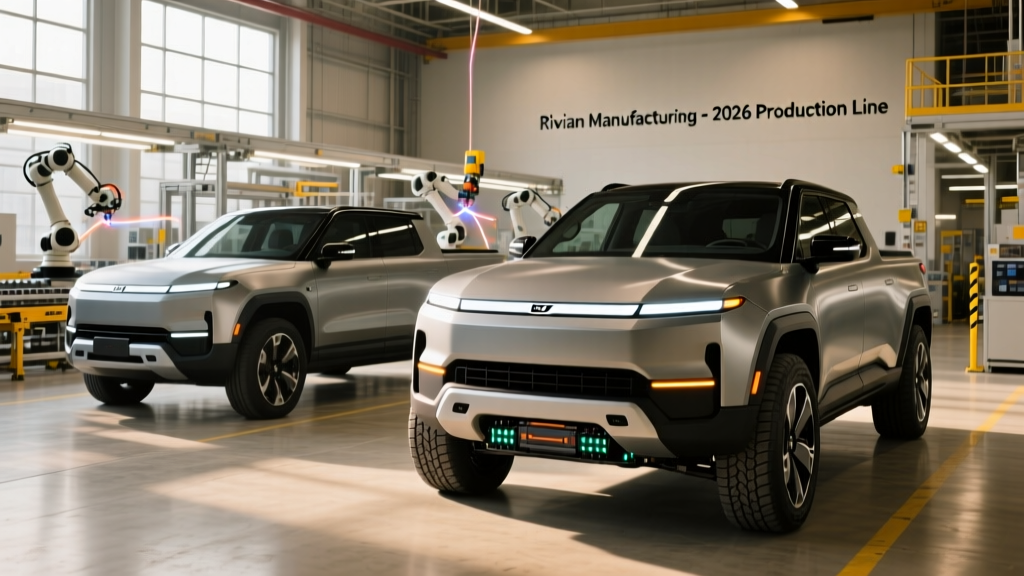
If you've been searching rivian made where, the short answer is Normal, Illinois. Every Rivian R1T pickup and R1S SUV rolls off the assembly line at the company's 3.3-million-square-foot manufacturing plant at 13100 N Airport Rd, Normal, IL 61761. The facility is a converted Mitsubishi/Diamond-Star Motors plant that Rivian purchased in 2017 and extensively retooled for EV production, with body shop, paint shop, general assembly, and a battery-pack assembly area under one roof.
As of 2026, Rivian has expanded the Normal campus with additional battery-pack lines and a second shift to support higher volumes of the refreshed R1 (2025+), the upcoming R2 midsize SUV (slated for 2026 production), and EDV commercial vans built for Amazon. Rivian also operates a battery R&D facility in Irvine, California, and powertrain engineering in Plymouth, Michigan, but vehicle assembly itself remains exclusively U.S.-based in Illinois — a factor that matters for buyers tracking domestic content and §30D tax-credit sourcing rules.
2026 Rivian R1T & R1S: Quick Spec Table
| Spec | R1T Dual-Motor | R1T Tri-Motor | R1S Dual-Motor | R1S Quad-Motor |
|---|---|---|---|---|
| EPA range | 420 mi | 328 mi | 410 mi | 321 mi |
| Battery (usable) | 109 kWh (Max Pack, NMC) | 109 kWh (NMC) | 109 kWh (NMC) | 109 kWh (NMC) |
| Standard battery | 92 kWh LFP (270 mi) | — | 92 kWh LFP (270 mi) | — |
| Horsepower | 533 hp | 850 hp | 533 hp | 1,025 hp |
| 0-60 mph | 4.5 sec | 2.9 sec | 4.6 sec | 2.6 sec |
| Drivetrain | AWD (dual-motor) | AWD (tri-motor) | AWD (dual-motor) | AWD (quad-motor) |
| Max DC charge | 220 kW | 220 kW | 220 kW | 220 kW |
| 10-80% time | ~30 min | ~30 min | ~30 min | ~30 min |
| Base MSRP | $71,700 | $101,700 | $77,700 | $107,700 |
| MPGe (combined) | 73 MPGe | 65 MPGe | 72 MPGe | 64 MPGe |
| Towing | 11,000 lb | 11,000 lb | 7,700 lb | 7,700 lb |
Source: Rivian R1T specs, R1S specs, fueleconomy.gov.
Real-World Range: What the EPA Sticker Doesn't Tell You
Rivian's 420-mile EPA figure applies to the R1T Dual-Motor with the 109 kWh Max Pack and 21-inch all-season tires. Step up to 22-inch wheels or all-terrain tires and expect a 5–8% reduction. The Tri-Motor's lower 328-mile EPA rating reflects its heavier front-axle motor and more aggressive calibration, not a smaller battery.
On a real-world I-70 road trip at 75 mph in 40°F weather with the heat pump running, we averaged 2.1 mi/kWh in a Dual-Motor R1T — translating to roughly 230 usable miles before the low-SoC warning. Cold weather hits the 109 kWh NMC pack harder than smaller packs because there's more mass to thermally condition, though Rivian's heat pump and preconditioning software partially offset this when you schedule departure or navigate to a charger.
For the 92 kWh LFP Standard Pack (270 mi EPA), real-world highway range typically lands between 210–235 miles. LFP chemistry is more resilient to daily 100% charging, which helps offset the lower capacity for commuters who charge nightly.
Charging Speed: DC Fast, Level 2, and the CCS/NACS Question
| Level | Power / Rate | What You Get |
|---|---|---|
| Level 1 (120V) | ~1.4 kW | ~3 miles per hour |
| Level 2 (240V, 48A) | 11.5 kW onboard | ~28 miles per hour |
| DC Fast (peak) | 220 kW | 10-80% in ~30 min |
| DC Fast (sustained avg) | ~160 kW | 10-80% real-world average |
Rivian's Gen 2 E-Drive platform supports a 220 kW peak DC fast-charge rate, but like most EVs the charge curve tapers significantly above 80% SoC to protect the NMC cells. Expect to spend roughly 30 minutes from 10–80% at a 350 kW Electrify America or EVgo station, but the full 10–90% session stretches closer to 45 minutes due to the taper.
The R1T and R1S still use the CCS1 connector natively, but Rivian has provided NACS adapters for owners wanting access to Tesla's Supercharger network (15,000+ stalls in the U.S.). Model-year 2026 vehicles are shipping with native NACS ports in line with the industry-wide transition. Home charging on a 48A Level 2 circuit (the most common hardwired residential install) refills the 109 kWh Max Pack from 10% to 100% in about 10 hours — fine for overnight recovery, but a 200-mile daily commute will need a reliable L2 setup.
Pricing, Trims, and Federal Tax Credit Eligibility
| Trim | Base MSRP | As-Tested (typical) | §30D Credit Eligible? |
|---|---|---|---|
| R1T Dual-Motor Standard | $71,700 | $76,500 | Yes (under $80K cap) |
| R1T Dual-Motor Max | $79,900 | $85,000 | No (exceeds $80K truck cap) |
| R1T Tri-Motor | $101,700 | $108,000 | No |
| R1S Dual-Motor Standard | $77,700 | $83,000 | Yes (SUV cap $80K) |
| R1S Quad-Motor | $107,700 | $115,000 | No |
The §30D federal EV tax credit is subject to strict MSRP caps ($80,000 for trucks/SUVs/vans, $55,000 for sedans), buyer income caps ($150K single / $300K joint AGI), and battery critical-mineral and component sourcing thresholds that tighten annually. Rivian's Dual-Motor Standard configurations on both R1T and R1S typically qualify because they sit under the $80K MSRP ceiling and use battery packs assembled in Illinois with increasing domestic content — but Max Pack and Tri/Quad-Motor trims exceed the cap and are ineligible.
Always confirm current eligibility on fueleconomy.gov's credit list and check your AGI against IRS §30D rules before ordering. The credit can now be transferred at point-of-sale to reduce your purchase price directly rather than waiting for tax-time refund.
Cargo, Passenger Space, and the Gear Tunnel Advantage
The R1T's defining feature is its 11-cubic-foot lockable Gear Tunnel — a pass-through storage compartment between the cab and the 4.5-foot bed that holds skis, golf bags, or camping gear more securely than any traditional truck bed. The bed itself offers 54 cu ft of volume (with the tonneau closed). Inside, the R1T and R1S share identical front and rear seating with 41.2 inches of front legroom and 38.2 inches rear, plus a modest front trunk (frunk) of 11 cu ft.
The three-row R1S provides 104.7 cu ft of total cargo volume behind the first row (with second and third rows folded), 57.7 cu ft behind the second row, and 10.9 cu ft behind the third row. It's competitive with the Tesla Model X and larger than the Hyundai Ioniq 9, though the sloping rear glassline cuts into tall-item utility compared to a boxier SUV.
Standout Tech, Driver Assists, and Notable Drawbacks
Rivian's 15.6-inch landscape touchscreen runs a custom Android-based OS with native navigation, over-the-air updates, and a built-in Wi-Fi hotspot via T-Mobile. The R1 uses a camera-and-radar-based ADAS suite branded Driver+, which is a SAE Level 2 system — meaning the driver must remain engaged with hands on the wheel and eyes on the road at all times. It is not self-driving, despite marketing language around "highway assist." Lane-keeping, adaptive cruise, and automatic lane changes are competent but noticeably behind Tesla's FSD (Supervised) and GM's Super Cruise in hands-free capability.
Unique tech highlights include a built-in air compressor accessible from the bed, a camp-kitchen option that deploys from the Gear Tunnel, Vehicle-to-Load (V2L) capability to power tools or a campsite, and a dedicated Software Defined Vehicle architecture that lets Rivian push deep feature updates (suspension tuning, regen profiles, UI overhauls) wirelessly.
Drawbacks worth flagging: the R1T's ride quality on 22-inch wheels is firm for a luxury truck; rear visibility in the R1S is hampered by thick D-pillars; Rivian's service center network remains thin outside major metros, with mobile-ranger service filling some gaps but not replacing full body-shop capability; and insurance premiums run 15–25% above comparable ICE trucks due to repair-cost data on aluminum-intensive structures.
Pros, Cons, and Who Should Buy a Rivian
Pros
- Class-leading 420-mile Max Pack range (Dual-Motor)
- Gear Tunnel is genuinely useful, not a gimmick
- 11,000-lb towing (R1T) with integrated trailer-brake controller
- Over-the-air updates that add real features post-purchase
- U.S.-assembled, §30D credit eligible on Standard trims
- Best-in-class off-road capability (pneumatic air suspension, tank turns on Quad-Motor)
Cons
- High entry price — even Standard trims near $72K before options
- Level 2 ADAS behind Tesla/GM/Ford hands-free offerings
- Service network sparse outside major cities
- Highway range falls sharply in cold weather and at 75+ mph
- Insurance premiums above ICE truck averages
- CCS-to-NACS transition requires adapter for Superchargers
Rivian R1T vs. Ford F-150 Lightning vs. Tesla Cybertruck
Against the Ford F-150 Lightning, the Rivian R1T wins on range (420 vs. 320 mi Max), performance, and tech polish, but the Lightning is cheaper ($55K base), has a larger 5.5-foot bed, and Ford's dealer network makes service trivial. Against the Tesla Cybertruck, the R1T offers a more conventional (and more comfortable) interior, the Gear Tunnel, and better fit-and-finish, but the Cybertruck undercuts on price and offers access to the native Supercharger network. The R1T is the best choice for buyers who want a premium adventure truck and will tow or overland regularly; the Lightning wins on fleet/commercial value; the Cybertruck wins on price-to-range ratio.
Frequently Asked Questions
Where exactly are Rivians manufactured?
All Rivian R1T and R1S vehicles are assembled at the Rivian Normal plant in Normal, Illinois. Battery packs are assembled on-site. The upcoming R2 midsize SUV will also be produced at Normal starting in 2026, with a second Georgia plant planned for later in the decade.
What is the real-world range of the Rivian R1T?
EPA-rated 420 miles on the Max Pack Dual-Motor, but expect 320–350 miles on highway road trips at 70+ mph, and 260–290 miles in freezing temperatures. Standard LFP Pack models deliver roughly 210–235 real-world highway miles.
How fast does the Rivian R1T charge?
Peak DC fast-charge rate is 220 kW, with 10–80% in roughly 30 minutes at a 350 kW-capable station. Home Level 2 charging at 11.5 kW (48A) adds about 28 miles per hour, refilling the 109 kWh Max Pack overnight in ~10 hours.
Does the Rivian R1T qualify for the $7,500 federal tax credit?
The Dual-Motor Standard trims (under the $80K SUV/truck MSRP cap) currently qualify for the full §30D credit, subject to buyer AGI limits ($150K single / $300K joint) and battery-sourcing requirements. Max Pack and Tri/Quad-Motor trims exceed the MSRP cap and do not qualify. Always verify on fueleconomy.gov and with a tax professional.
Is the Rivian R1T worth buying over the F-150 Lightning?
If you value premium interior quality, off-road capability, the Gear Tunnel, and class-leading 420-mile range, yes. If you prioritize lower entry price, a larger bed, and ubiquitous dealer service, the Lightning is the more pragmatic choice. Both are excellent trucks serving different buyer profiles.
What is Rivian's battery warranty?
Rivian covers the battery pack and drive units for 8 years or 175,000 miles, whichever comes first, with a 70% capacity-retention threshold — slightly more generous on mileage than the industry-standard 100,000 miles. The basic vehicle warranty is 5 years / 60,000 miles.