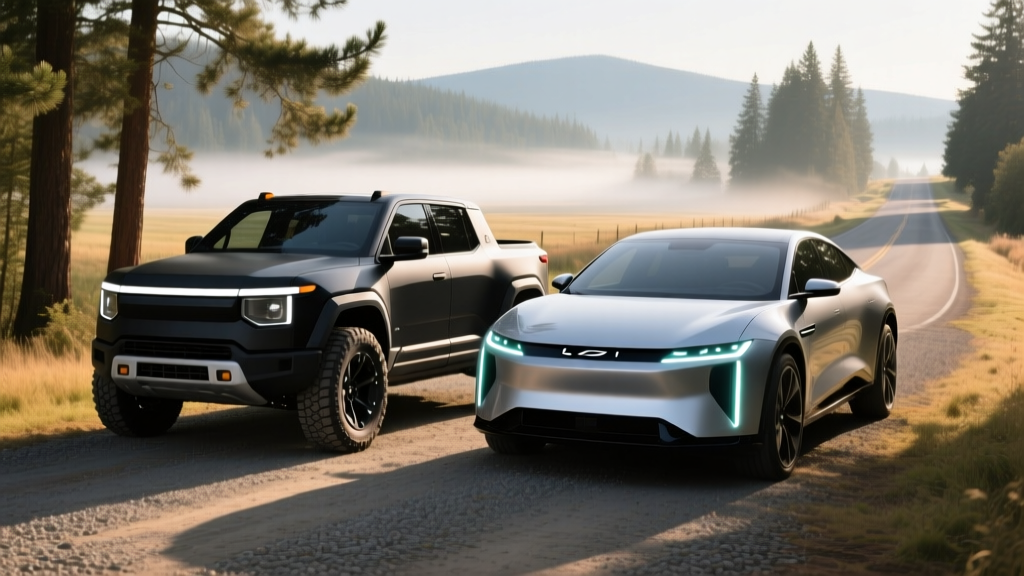
Washington State has become one of the most important EV markets in the country — not just because of its tech-forward population and abundant hydroelectric power, but because of a legal framework that allows companies like Rivian and Lucid to sell directly to consumers. The rivian lucid washington sales law landscape in 2026 means buyers can walk into a company-owned showroom, configure a vehicle online, and take delivery without ever stepping foot in a traditional franchise dealership. But understanding what you're actually buying — the real range, the charging reality, the total cost after incentives — requires digging past the marketing.
This guide breaks down Washington's direct-sales environment for both Rivian and Lucid, then delivers a full spec-and-reality review of the vehicles you can actually order and take delivery of in the Evergreen State in 2026: the Rivian R1S / R1T (Gen 2) and the Lucid Air lineup.
Washington's Direct-Sales Law: What It Means for Rivian and Lucid Buyers
Unlike most states, Washington does not have a franchise law that prohibits automakers from selling directly to consumers. This means Rivian and Lucid — both of which bypass the traditional dealer model — can operate company-owned showrooms, service centers, and delivery hubs throughout the state without legal obstruction. As of 2026, Rivian operates a Space in Seattle and a service center in the greater Puget Sound area, while Lucid maintains a Studio in the Seattle region with mobile service coverage extending across much of western Washington.
The practical impact for buyers is significant:
- No dealer markups or mandatory add-ons. You pay the MSRP set by the manufacturer, plus destination and applicable fees.
- Transparent online configuration. Both brands let you build, reserve, and track your order digitally — no negotiation theater.
- Direct service relationship. Warranty work goes through the manufacturer's own service network or authorized mobile technicians, not a third-party dealer.
Washington also imposes no state income tax, which affects the financial calculus differently than in high-tax states. However, the state's EV sales tax exemption (capped at vehicles under a specific MSRP threshold set by the legislature) can stack with the federal §30D credit. Always verify current thresholds with the Washington Department of Revenue, as exemption caps have shifted in recent legislative sessions.
Rivian R1S and R1T (Gen 2): Full Spec & Real-World Review
The second-generation Rivian R1 platform, launched for the 2025 model year and carrying into 2026, brought meaningful upgrades: a new electrical architecture, improved thermal management, a refreshed interior, and the switch to NACS (Tesla-style) charge ports as standard. Both the R1S (three-row SUV) and R1T (pickup truck) share the same core powertrain options.
| Spec | Dual-Motor Standard | Dual-Motor Max | Tri-Motor |
|---|---|---|---|
| Drivetrain | AWD (dual-motor) | AWD (dual-motor) | AWD (tri-motor) |
| Horsepower | 533 hp | 533 hp | 850 hp |
| 0–60 mph | ~4.5 sec | ~4.5 sec | ~2.9 sec |
| Battery Chemistry | LFP (Standard Pack) | NMC (Max Pack) | NMC (Max Pack) |
| Battery Capacity (usable) | ~92 kWh | ~141 kWh | ~141 kWh |
| EPA Range (R1S) | ~270 mi | ~410 mi | ~390 mi |
| EPA Range (R1T) | ~270 mi | ~420 mi | ~400 mi |
| Max DC Fast Charge | ~200 kW | ~220 kW | ~220 kW |
| 10–80% DCFC Time | ~25 min | ~30 min | ~30 min |
| Level 2 Home Charging | 11.5 kW (~25 mi/hr) | 11.5 kW (~25 mi/hr) | 11.5 kW (~25 mi/hr) |
| Efficiency (R1S Combined) | ~73 MPGe | ~76 MPGe | ~70 MPGe |
| Towing Capacity | 7,700 lb (R1T) | 7,700 lb (R1T) | 7,700 lb (R1T) |
EPA estimates assume a mix of city and moderate-speed driving. On a 70–75 mph highway run in 50°F conditions, expect roughly 85–90% of EPA from the Max Pack (~350–370 mi for the R1T). In Pacific Northwest winter (35–40°F, rain, headlights, cabin heat), plan for 70–80% of EPA. The Standard Pack LFP variant is more consistent across charge cycles but offers a shorter total envelope (~220–240 mi real-world highway). Washington's relatively mild winters help compared to Midwest owners, but mountain passes like Snoqualpie will draw significantly more energy on the ascent — budget accordingly.
Charging Reality for Rivian in Washington
Rivian's 2026 models ship with the NACS connector, granting native access to Tesla Supercharger V3/V4 stalls (up to 250 kW) without an adapter. Washington's I-5 and I-90 corridors are well-served by Supercharger stations, making road trips to Portland, Vancouver BC, or Spokane practical with one or two stops depending on pack size.
| Charging Method | Power | Approximate Rate |
|---|---|---|
| Level 1 (120V household) | ~1.4 kW | ~3 mi/hr |
| Level 2 (240V / 48A home) | 11.5 kW | ~25 mi/hr |
| DC Fast (Supercharger V3/V4) | Peak ~200–220 kW | 10–80% in ~25–30 min |
| DC Fast (EA / third-party CCS w/ adapter) | Varies | Depends on station output |
At home, most Washington Rivian owners install a 48A Level 2 wall connector on a 60A circuit. Expect a full overnight charge to replenish even the Max Pack from 20% to 80% in roughly 8–9 hours — ideal for daily commuting patterns. Installation in the Puget Sound region typically runs $800–$2,500 depending on panel capacity and conduit distance; older Seattle homes with 100A panels may require a $2,000–$4,000 service upgrade.
Rivian Pricing & Federal Tax Credit Eligibility
| Trim / Config | Base MSRP | Federal §30D Credit | Effective Price |
|---|---|---|---|
| R1S Dual-Motor Standard | ~$75,900 | Up to $7,500* | ~$68,400 |
| R1S Dual-Motor Max | ~$85,900 | Up to $7,500* | ~$78,400 |
| R1T Dual-Motor Standard | ~$69,900 | Up to $7,500* | ~$62,400 |
| R1T Tri-Motor Max | ~$99,900 | Up to $7,500* | ~$92,400 |
*Federal §30D credit eligibility depends on MSRP caps (SUVs/vans/pickups: $80,000; sedans: $55,000), buyer income limits (AGI ≤ $300k joint / $150k single), and battery critical-mineral and component sourcing requirements that have tightened annually. As of 2026, Rivian's US-built vehicles with Samsung SDI cells have generally qualified for at least partial credit, but the exact amount can shift as sourcing rules update. The point-of-sale transfer option lets you apply the credit as a down-payment reduction at purchase. Always confirm current eligibility on IRS.gov before finalizing your order.
Note: R1S and R1T configurations above $80,000 MSRP (Tri-Motor, Adventure trims with Max Pack) exceed the §30D SUV/pickup cap and are ineligible for the federal credit. This is a critical consideration when building your configuration.
Lucid Air: Full Spec & Real-World Review
Lucid Motors positions the Air sedan as the efficiency and range champion of the luxury EV segment. Built in Casa Grande, Arizona, the Air lineup for 2026 spans from the entry-level Pure to the ultra-performance Sapphire. Washington buyers benefit from Lucid's direct-sales Studio model, with mobile service and a growing authorized body-shop network in the state.
| Spec | Air Pure | Air Touring | Air Grand Touring | Air Sapphire |
|---|---|---|---|---|
| Drivetrain | RWD (single motor) | AWD (dual-motor) | AWD (dual-motor) | AWD (tri-motor) |
| Horsepower | 430 hp | 620 hp | 819 hp | 1,234 hp |
| 0–60 mph | ~5.0 sec | ~3.4 sec | ~3.0 sec | ~1.89 sec |
| Battery Chemistry | NMC | NMC | NMC | NMC |
| Battery Capacity (usable) | ~88 kWh | ~112 kWh | ~112 kWh | ~118 kWh |
| EPA Range | ~419 mi | ~425 mi | ~516 mi | ~427 mi |
| Max DC Fast Charge | ~200 kW | ~250 kW | ~300 kW | ~300 kW |
| 10–80% DCFC Time | ~30 min | ~25 min | ~22 min | ~22 min |
| Level 2 Home Charging | 19.2 kW (~50 mi/hr) | 19.2 kW (~50 mi/hr) | 19.2 kW (~50 mi/hr) | 19.2 kW (~50 mi/hr) |
| Efficiency (Combined) | ~146 MPGe | ~131 MPGe | ~131 MPGe | ~105 MPGe |
| Cargo (trunk + frunk) | ~32 cu ft total | ~32 cu ft total | ~32 cu ft total | ~32 cu ft total |
| Rear Legroom | ~36.6 in | ~36.6 in | ~36.6 in | ~36.6 in |
Lucid's EPA numbers are among the highest in the industry, and the Air's efficiency is genuinely exceptional. In real-world highway testing at 70–75 mph in moderate temperatures, the Grand Touring has returned 420–460 miles — roughly 85–90% of its sticker figure. The Pure RWD, with its lighter curb weight and single motor, can approach or even meet EPA in mixed city/highway driving. Washington winters (35–45°F) reduce range by approximately 10–15% due to cabin heating and battery thermal management — less severe than the 25–30% losses seen in sub-zero climates. For Seattle-to-Portland (175 mi) or Seattle-to-Spokane (280 mi), even the Pure can complete the trip without a charging stop in fair conditions.
Lucid Charging: The 900V Advantage
Lucid's 900V+ electrical architecture enables DC fast-charging speeds that rival the fastest platforms on the market. The Grand Touring and Sapphire can accept up to 300 kW peak at compatible chargers, adding roughly 200 miles in about 12 minutes under ideal conditions. However, sustained speeds depend on station capability — most Electrify America and third-party stations in Washington top out at 150–350 kW, and the Air's charge curve tapers meaningfully above 80% SoC.
At home, Lucid's available 19.2 kW onboard charger is a standout. On a hardwired 80A circuit (100A breaker), you can add roughly 50 miles per hour of charging — enough to fully replenish even the Grand Touring overnight in under 7 hours. This requires a robust electrical panel (200A minimum recommended), which many newer Washington homes support but older Seattle properties may not.
| Charging Method | Power | Approximate Rate |
|---|---|---|
| Level 1 (120V) | ~1.4 kW | ~4 mi/hr |
| Level 2 (240V / 80A) | 19.2 kW | ~50 mi/hr |
| DC Fast (350 kW station) | Peak ~300 kW | 10–80% in ~22 min (GT/Sapphire) |
| DC Fast (150 kW station) | ~150 kW | 10–80% in ~40 min |
Lucid vehicles in 2026 use the NACS charge port, providing native Supercharger access alongside the growing network of open NACS chargers from Electrify America, ChargeFinder-listed independents, and others across Washington.
Lucid Air Pricing & Federal Tax Credit
| Trim | Base MSRP | Federal §30D Credit | Effective Price |
|---|---|---|---|
| Air Pure | ~$69,900 | Up to $7,500* | ~$62,400 |
| Air Touring | ~$87,400 | Not eligible (>$55k sedan cap) | ~$87,400 |
| Air Grand Touring | ~$125,600 | Not eligible | ~$125,600 |
| Air Sapphire | ~$249,000 | Not eligible | ~$249,000 |
The §30D credit's $55,000 MSRP cap for sedans is the critical factor here. Only the Air Pure (in its base configuration) has a realistic path to the full $7,500 credit, and even that depends on battery-sourcing compliance and buyer income limits. Any options that push the Pure above $55,000 MSRP will disqualify it. Touring, Grand Touring, and Sapphire trims are categorically ineligible due to the sedan price cap. Washington's state EV sales tax exemption may partially offset this for qualifying trims — check current thresholds with the WA DOR.
Head-to-Head: Rivian vs. Lucid for Washington Buyers
These brands serve fundamentally different use cases. Here's a structured comparison to clarify the decision:
| Factor | Rivian R1S / R1T | Lucid Air |
|---|---|---|
| Vehicle Type | SUV / Pickup | Luxury Sedan |
| Best Use Case | Family hauling, towing, camping, adventure | Executive commuting, long-range road trips |
| Max EPA Range | ~420 mi (R1T Max Pack) | ~516 mi (Air Grand Touring) |
| Peak DC Fast Charge | ~220 kW | ~300 kW (GT/Sapphire) |
| Home Charging (L2) | 11.5 kW (~25 mi/hr) | 19.2 kW (~50 mi/hr) |
| Cargo Capacity | R1S: ~104 cu ft max / R1T: bed + gear tunnel | ~32 cu ft (trunk + frunk) |
| Towing | 7,700 lb (R1T) | Not rated for towing |
| Off-Road Capability | Excellent (quad-motor option, air suspension) | None |
| Efficiency | ~70–76 MPGe | ~105–146 MPGe |
| Starting Price (after max credit) | ~$62,400 (R1T Standard) | ~$62,400 (Air Pure) |
- Class-leading off-road capability and ground clearance
- R1T's gear tunnel is a genuinely unique cargo solution
- Three-row seating in R1S for families
- 7,700-lb towing opens camping/boat/trailer use
- NACS native Supercharger access
- Strong OTA update cadence adding real features
- Efficiency trails sedan competitors significantly
- Max Pack configurations exceed §30D MSRP cap
- Service center footprint in WA still limited — mobile service fills gaps but isn't ideal for major repairs
- Tri-Motor's 2.9-sec 0–60 is thrilling but adds weight and cost
- Industry-leading efficiency (up to 146 MPGe)
- Grand Touring's 516-mi EPA range is best-in-class
- 19.2 kW Level 2 charging is fastest in the segment
- 900V architecture enables 300 kW DCFC peaks
- Spacious rear cabin for a sedan (36.6" legroom)
- Quiet, refined ride quality
- Only the Pure trim qualifies for §30D (sedan MSRP cap)
- Service network in Washington is thin — heavily reliant on mobile technicians
- Infotainment UI still maturing vs. Tesla/Rivian
- No towing capability
- Low-slung sedan limits practicality for cargo/bad-weather loading
Ownership in Washington: Battery Warranty, Service & Longevity
Both brands offer competitive battery and powertrain warranties, but the details matter:
- Rivian: 8 years / 175,000 miles battery warranty (retaining ≥70% capacity) for Max Pack; 8 years / 100,000 miles for Standard Pack. Powertrain covered at 8 years / 175,000 miles. Rivian's LFP Standard Pack batteries are expected to show slower long-term degradation due to LFP chemistry's inherent cycle-life advantages, though total energy capacity is lower.
- Lucid: 8 years / 100,000 miles battery and powertrain warranty (retaining ≥70% capacity). Lucid's NMC cells, supplied primarily by Samsung SDI and LG Energy Solution, have demonstrated strong calendar-aging performance in early fleet data, but the 100,000-mile cap is lower than Rivian's Max Pack coverage.
Washington's mild climate is a tailwind for battery longevity. Extreme heat is the primary accelerator of lithium-ion degradation, and Seattle's average summer highs in the low 70s°F are far less stressful than Arizona or Texas summers. Expect both brands to retain 90%+ State of Health after 5 years under typical Washington ownership patterns, based on early cohort data from fueleconomy.gov and owner-community tracking.
Who Should Buy What — The Washington Decision Framework
- You need three rows for a family of 5+
- You tow a trailer, boat, or camper (up to 7,700 lb)
- You want off-road capability for Cascade or Olympic adventures
- Daily driving is under 60 miles and you can charge at home
- You need a truck bed for work or recreation but want EV running costs
- The gear tunnel's lockable, weather-sealed storage solves a real problem for you
- You tow but don't need a full-size truck's footprint
- You commute 40–80 miles daily and want to charge only 2–3 times per week
- Maximum range-per-dollar is your priority (419 mi EPA, ~$62,400 after credit)
- You prefer sedan dynamics and don't need cargo height or towing
- You regularly drive Seattle–Eastern WA, Seattle–Portland, or longer without wanting to stop
- 516 miles of EPA range and 300 kW DCFC capability eliminate range anxiety entirely
- Tax credit ineligibility is acceptable given your budget
Frequently Asked Questions
Can I buy a Rivian or Lucid directly in Washington State in 2026?
Yes. Washington does not prohibit direct manufacturer sales. Both Rivian and Lucid operate company-owned showrooms and delivery processes in the state. You can configure, order, and take delivery without a franchise dealer intermediary.
What is the real-world range of the Rivian R1T with the Max Pack?
EPA rates it at approximately 420 miles. In real-world highway driving at 70–75 mph in moderate temperatures, expect 350–370 miles. In Washington winter conditions (35–45°F with rain and cabin heat), plan for 300–340 miles before needing to charge.
How fast does the Lucid Air Grand Touring charge at home?
With Lucid's available 19.2 kW onboard charger on a 240V/80A circuit, you'll add roughly 50 miles of range per hour. A full 10–80% home charge takes approximately 6–7 hours for the 112 kWh usable battery. This requires a 100A breaker and a 200A+ electrical panel — confirm capacity with a licensed electrician before committing.
Does the Rivian R1T qualify for the $7,500 federal EV tax credit?
It depends on configuration. The R1T is classified as a pickup, so the §30D MSRP cap is $80,000. Dual-Motor Standard configurations starting around $69,900 generally qualify, provided the buyer meets income limits (AGI ≤ $300k joint / $150k single) and the battery meets critical-mineral and component sourcing requirements. Tri-Motor and Max Pack configurations that exceed $80,000 MSRP are ineligible. Always verify on IRS.gov before purchasing.
Does the Lucid Air qualify for the federal EV tax credit?
Only the Air Pure, in its base configuration below the $55,000 sedan MSRP cap, has a path to the §30D credit. Any options or packages that push MSRP above $55,000 disqualify it. The Touring, Grand Touring, and Sapphire trims are categorically ineligible due to the sedan price cap. Buyer income limits and battery-sourcing rules also apply.
Is it worth buying a Rivian or Lucid in Washington vs. a Tesla?
It depends on your priorities. Tesla still leads in charging network density and software maturity. Rivian offers capabilities Tesla doesn't match (truck bed, gear tunnel, serious off-road hardware, three-row SUV). Lucid delivers efficiency and range that exceed anything in Tesla's current sedan lineup, plus a more traditional luxury interior. Washington's direct-sales law means you won't pay dealer markups on any of these brands — so the decision comes down to vehicle attributes, not purchase friction.
How reliable is mobile service for Rivian and Lucid in Washington?
Both brands use mobile service vans for software-related fixes, minor hardware swaps, and diagnostics. For major battery or drivetrain work, you may need to visit a physical service center — Rivian's nearest to Seattle is in-region, while Lucid's closest major facility may require a trip to the Portland or Bay Area service hub depending on the repair. This is a genuine ownership friction point worth weighing against the purchase-price advantages of direct sales.