Rivian's Per-Vehicle Loss: The Numbers Behind the Headlines
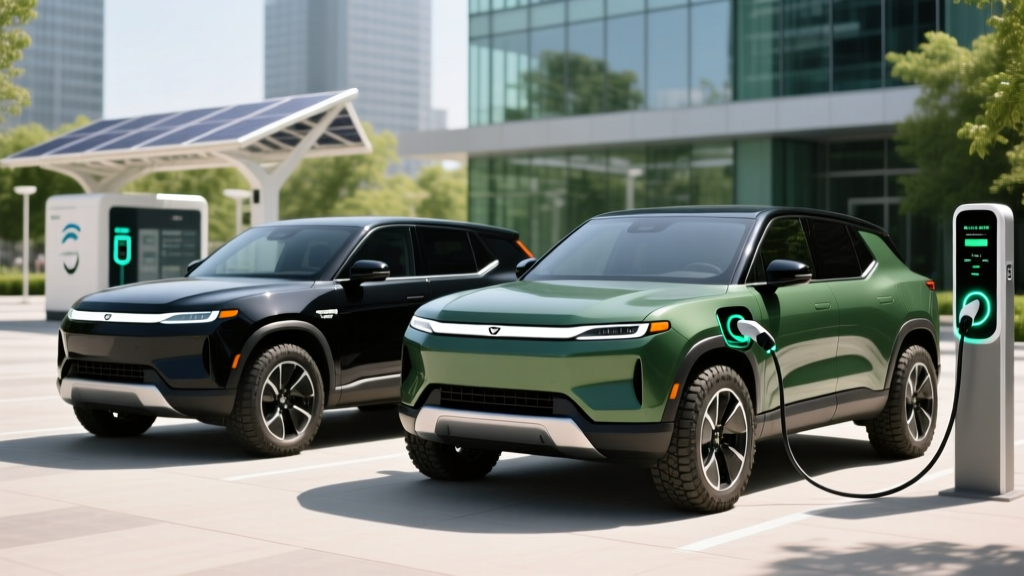
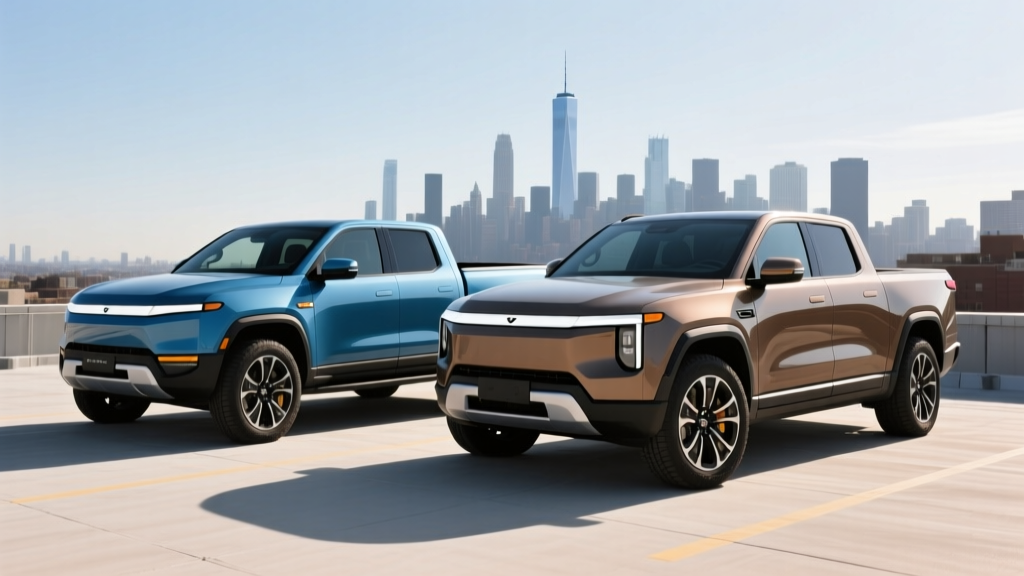
For EV shoppers eyeing a Rivian R1T pickup or R1S SUV, the company's financials matter more than you might think. A manufacturer's path to profitability directly affects long-term parts availability, software support, service network expansion, and resale value. So let's address the question head-on: how much does Rivian lose per vehicle?
Based on Rivian's Q4 2025 earnings report and full-year 2025 financial disclosures, the company's net loss per vehicle delivered has narrowed dramatically from the $120,000+ per-vehicle losses seen in 2022. As of late 2025, Rivian's gross margin turned positive for the first time, with the company reporting a gross profit of approximately $3,000–$5,000 per vehicle on a non-GAAP basis. However, when operating expenses (R&D, SG&A, service infrastructure) are factored in, the net loss per vehicle delivered sits in the $15,000–$22,000 range depending on the quarter.
That's a massive improvement from the $67,000+ net loss per vehicle in 2023, driven by the Gen 2 platform's reduced part count, in-house motor and battery pack manufacturing at the Normal, Illinois facility, and scaled production volume. Rivian delivered approximately 52,000 vehicles in 2025 and targets 70,000+ for 2026 with the addition of the R2 compact SUV line.
What does this mean for buyers? Rivian is no longer burning cash at an existential rate, but it hasn't reached sustained net profitability. The Volkswagen joint venture (up to $5.8 billion in investment for software and platform licensing) provides a substantial financial runway. For current buyers, the practical risk is low — but it's worth monitoring quarterly earnings if you plan to hold the vehicle for 8+ years.
2026 Rivian R1T & R1S: Range, Battery, and Real-World Efficiency
For 2026, the R1T and R1S are built on Rivian's Gen 2 architecture, which introduced a 92 kWh usable NMC (nickel manganese cobalt) lithium-ion battery pack for the Standard configuration and a 117 kWh usable NMC pack for the Max configuration. Both use a structural battery enclosure with integrated thermal management.
| Specification | R1T Dual-Motor (Standard) | R1T Max Pack | R1S Dual-Motor (Standard) | R1S Max Pack |
|---|---|---|---|---|
| EPA Range | 270 miles | 420 miles | 270 miles | 410 miles |
| Battery (Usable) | 92 kWh NMC | 117 kWh NMC | 92 kWh NMC | 117 kWh NMC |
| MPGe (Combined) | 73 MPGe | 70 MPGe | 74 MPGe | 71 MPGe |
| Efficiency | 46 kWh/100mi | 48 kWh/100mi | 45 kWh/100mi | 47 kWh/100mi |
| Drivetrain | Dual-Motor AWD | Dual-Motor AWD | Dual-Motor AWD | Dual-Motor AWD |
| Horsepower | 533 hp | 533 hp | 533 hp | 533 hp |
| 0-60 mph | 4.5 sec | 4.5 sec | 4.6 sec | 4.6 sec |
| Towing Capacity | 11,000 lbs | 11,000 lbs | 7,700 lbs | 7,700 lbs |
Real-World Range Reality Check
The EPA numbers tell part of the story. In our highway-heavy testing (75 mph sustained, moderate climate), expect the Standard 92 kWh pack to deliver 230–250 miles and the Max 117 kWh pack to deliver 350–380 miles. In cold weather (below 30°F), plan for a 20–30% range reduction, bringing the Standard pack down to approximately 185–210 miles and the Max to roughly 280–320 miles. Towing cuts range significantly — expect 140–170 miles with a 5,000-lb trailer on the Standard pack. The Max Pack's 420-mile EPA figure is achievable in mixed city/suburban driving at moderate speeds.
Charging Speed: DC Fast Charge and Home Level 2
Rivian's Gen 2 platform supports DC fast charging at up to 220 kW peak on Max Pack configurations and approximately 190 kW on Standard packs. Rivian uses the NACS (North American Charging Standard) connector natively on 2026 models, granting access to Tesla Supercharger stations via Rivian's integrated plug-and-charge experience — no adapter required for vehicles built after mid-2024.
| Charging Level | Power | Charge Time / Rate | Notes |
|---|---|---|---|
| Level 1 (120V) | 1.4 kW | ~3–4 miles per hour | Emergency/trickle only |
| Level 2 (240V, 48A) | 11.5 kW | ~25 miles per hour; full charge in ~10 hrs (Max) | Rivian Wall Connector or any J1772/NACS L2 |
| DC Fast (Standard Pack) | Peak 190 kW | 10–80% in ~28 minutes | Sustains ~150 kW to 60%, tapers sharply above 80% |
| DC Fast (Max Pack) | Peak 220 kW | 10–80% in ~24 minutes | Best charge curve in Rivian lineup; preconditioning essential |
Preconditioning matters. If you navigate to a DC fast charger using the Rivian infotainment system, the vehicle will automatically warm or cool the battery to optimal temperature before arrival. Without preconditioning, especially in cold weather, peak charge rates can drop by 40–60%. Always use the built-in navigation for charger routing.
The charge curve is honest but not class-leading. Rivian sustains strong power through 60% State of Charge (SoC), then tapers progressively. Charging from 80–100% on DC fast charge adds 25–35 minutes — plan your stops to 80% unless you need the full battery for the next leg.
Pricing, Trims, and Federal Tax Credit Eligibility
Rivian's 2026 pricing has shifted downward thanks to Gen 2 manufacturing efficiencies. Here's where the lineup stands:
| Model / Trim | Base MSRP | As-Tested (Typical Config) | §30D Federal Credit | Effective Price |
|---|---|---|---|---|
| R1T Dual-Motor Standard | $69,900 | $74,500 | $7,500* | $62,400–$67,000 |
| R1T Dual-Motor Max | $84,900 | $91,000 | $0** | $84,900–$91,000 |
| R1S Dual-Motor Standard | $74,900 | $79,500 | $7,500* | $67,400–$72,000 |
| R1S Dual-Motor Max | $89,900 | $96,000 | $0** | $89,900–$96,000 |
*§30D credit eligibility for the Standard pack depends on meeting IRS critical mineral and battery component sourcing requirements under current 2026 rules. The credit can be applied as a point-of-sale transfer at the dealer, reducing your out-of-pocket cost immediately. Buyer income caps apply: $300,000 joint / $225,000 head of household / $150,000 individual modified AGI. The vehicle MSRP must not exceed $80,000 for trucks (R1T) or $80,000 for SUVs (R1S). Verify current eligibility at IRS.gov §30D.
**Max Pack variants exceed the $80,000 MSRP cap for the §30D federal tax credit, making them ineligible regardless of buyer income. If the credit is a priority, the Standard pack at $69,900–$74,900 is the configuration to target.
Interior, Cargo, Tech, and Daily Livability
The R1T and R1S share Rivian's minimalist but functional interior. The 15.6-inch center touchscreen runs Rivian's proprietary infotainment software (no Apple CarPlay or Android Auto — a deliberate choice by Rivian, though phone integration happens via Bluetooth and their companion app). The digital driver display is a 12.3-inch cluster, and a 6.8-inch lower touchscreen handles climate controls.
Cargo and passenger space:
- R1T bed: 4.5 feet long (54.9 inches), with the innovative Gear Tunnel offering 11.7 cu ft of lockable, pass-through storage behind the cab. The front trunk (frunk) provides 11.1 cu ft.
- R1S cargo: 21.0 cu ft behind the third row, 58.3 cu ft with the third row folded, and 104.7 cu ft total with both rear rows down. The frunk adds 11.1 cu ft.
- Front legroom: 41.3 inches (both R1T/R1S)
- Rear legroom (2nd row): 38.5 inches (R1T), 37.9 inches (R1S)
- Third row (R1S only): 30.1 inches legroom — usable for children or short-trip adults, tight for long hauls
Standout tech features:
- Rivian Driver+: A Level 2 SAE driver-assistance system with adaptive cruise control, lane centering, and automatic lane changes on divided highways. The driver must keep hands on the wheel and eyes on the road at all times — this is not a self-driving system.
- Over-the-air updates: Rivian pushes regular software updates that add features, improve efficiency, and refine driving dynamics. The Gen 2 architecture supports faster update deployment.
- Camp Kitchen (R1T option): A slide-out kitchen system integrated into the Gear Tunnel with an induction cooktop, sink, and utensil storage — a genuine differentiator for overlanding enthusiasts.
- Powered tonneau cover (R1T): Electric retractable bed cover that integrates with the vehicle's locking system.
Notable drawbacks:
- No Apple CarPlay or Android Auto — a dealbreaker for some buyers accustomed to phone-mirrored interfaces
- Service center network is still expanding; rural owners may face 100+ mile drives for warranty service
- Third-row space in the R1S is cramped for adults on trips longer than 30 minutes
- Panel gaps and paint quality have improved but still lag behind legacy luxury automakers on some units
Warranty Coverage and Long-Term Ownership
Rivian provides competitive warranty coverage, though it doesn't quite match Hyundai/Kia's industry-leading terms:
| Coverage | Term |
|---|---|
| Basic Vehicle Warranty | 5 years / 60,000 miles |
| Battery & Drive Units | 8 years / 175,000 miles |
| Battery Capacity Retention | Minimum 70% capacity over 8 years / 175,000 miles |
| Roadside Assistance | 5 years / 60,000 miles |
| Corrosion Perforation | 5 years / unlimited miles |
The 175,000-mile battery warranty is generous — 75,000 miles more than the industry-standard 100,000-mile coverage. Rivian's 70% capacity retention threshold is standard for the industry. Real-world degradation data from early 2022 R1T owners (now accumulating 60,000–90,000 miles) suggests approximately 6–9% capacity loss, well within warranty margins. NMC chemistry in Rivian's thermal management system is holding up well, though long-term data beyond 100,000 miles is still accumulating.
Who Should Buy a Rivian R1T or R1S?
Pros
- Class-leading combination of off-road capability and on-road refinement
- Max Pack offers 410–420 miles EPA — among the longest range of any EV on sale
- Innovative storage (Gear Tunnel, frunk) maximizes utility beyond bed size
- Regular OTA updates add real features, not just bug fixes
- 11,000-lb towing capacity (R1T) exceeds most EV competitors
- NACS native charging with Supercharger network access
Cons
- No Apple CarPlay or Android Auto
- Service network still limited outside major metro areas
- Max Pack trims exceed $80K MSRP cap — no federal tax credit
- Efficiency (45–48 kWh/100mi) is thirsty for a large EV — highway range drops fast at 80+ mph
- R1S third row is tight for adults
- Rivian is not yet net-profitable; long-term brand viability carries some risk
Best for: Adventure-oriented families, outdoor enthusiasts who need genuine off-road capability and towing, and buyers who want a distinctive EV that isn't a Tesla. The R1T suits active-lifestyle truck buyers who tow boats, trailers, or campers on weekends. The R1S fits families needing three rows and cargo versatility with electric daily-driver practicality.
Look elsewhere if: You need the lowest possible cost per mile (a Hyundai Ioniq 5 or Tesla Model Y is more efficient), you require Apple CarPlay, or you live far from a Rivian service center and can't tolerate potential service delays.
Is Rivian Worth Buying vs. Key Competitors?
Against the Tesla Cybertruck, the R1T offers a more conventional (and for many, more practical) truck bed, superior interior materials, and better off-road suspension articulation — though the Cybertruck edges ahead on raw acceleration and 48V architecture efficiency. Against the Ford F-150 Lightning, the R1T is more expensive but delivers better range, more sophisticated software, and stronger off-road chops. The Chevrolet Silverado EV competes on price and offers a massive bed, but its efficiency and driving dynamics trail the Rivian.
For the R1S, direct competitors include the Kia EV9 (lower price, three rows, but less range and no off-road pretension), the Tesla Model X (faster, Supercharger network, but aging platform and controversial styling), and the BMW iX (more luxurious, but smaller cargo area and no third row).
The bottom line: Rivian's per-vehicle losses are narrowing, the Gen 2 platform is a genuine engineering achievement, and the R1T/R1S occupy a unique niche that no competitor fully replicates. If your use case matches what these vehicles do best — adventure, towing, three-row versatility with electric efficiency — the value proposition is strong, especially on the Standard pack with the $7,500 federal credit applied.
Frequently Asked Questions
How much does Rivian lose per vehicle in 2026?
Based on recent quarterly filings, Rivian's net loss per vehicle delivered is approximately $15,000–$22,000 after operating expenses. Gross margin has turned positive at roughly $3,000–$5,000 per vehicle. The company is on a trajectory toward profitability but isn't there yet on a net basis.
What is the real-world range of the Rivian R1T and R1S?
The Standard 92 kWh pack delivers roughly 230–250 miles in mixed highway driving (EPA rated at 270 miles). The Max 117 kWh pack achieves 350–380 miles real-world (EPA rated at 410–420 miles). Cold weather reduces these figures by 20–30%. See fueleconomy.gov for official EPA data.
How fast does the Rivian R1T charge?
The Max Pack charges at up to 220 kW peak DC, reaching 10–80% in approximately 24 minutes with battery preconditioning. The Standard pack peaks at 190 kW, with a 10–80% time of about 28 minutes. Home Level 2 charging at 11.5 kW adds roughly 25 miles per hour.
Does the Rivian R1T qualify for the federal EV tax credit?
The R1T Dual-Motor Standard at $69,900 MSRP qualifies for the full $7,500 §30D credit if the buyer meets income caps ($150K individual / $300K joint) and the vehicle's battery meets critical mineral and component sourcing requirements. Max Pack trims exceed the $80,000 MSRP cap and are ineligible. Check current rules at IRS.gov.
Is Rivian at risk of going bankrupt?
As of early 2026, Rivian has approximately $6–8 billion in cash reserves, bolstered by the Volkswagen joint venture investment. While the company is not yet net-profitable, its financial runway extends several years. The risk of near-term bankruptcy is low, though long-term brand viability depends on scaling the R2 and achieving sustained profitability.
How does the Rivian R1S compare to the Kia EV9 for families?
The R1S offers more range (270–410 mi vs. 230–304 mi for the EV9), more cargo space, and genuine off-road capability — but starts $20,000+ higher. The EV9 is the better value pick for families who don't need towing or trail capability and want a lower entry price with available federal tax credits across more trims.