The Rivian Lease Tax Credit Loophole: What Changed in 2026
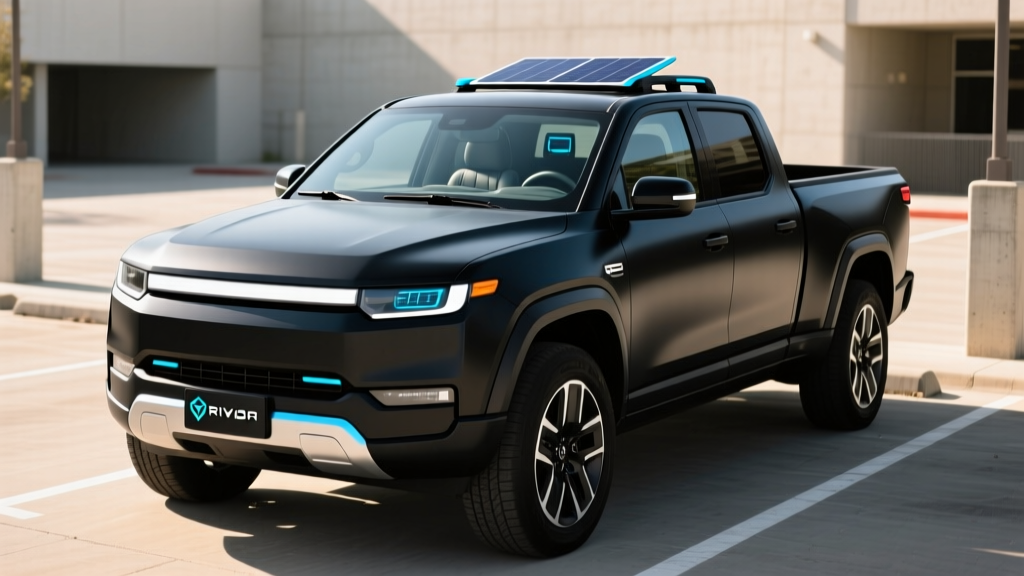
If you've been tracking the Rivian R1S SUV or R1T pickup, you've likely seen the phrase "rivian lease tax credit" floating across forums and Reddit threads. For years, a provision in the Inflation Reduction Act allowed automakers to pass the $7,500 federal EV tax credit directly to lessees as a lease capital-cost reduction — even when buyers purchasing the same vehicle didn't qualify due to MSRP caps, income limits, or battery-sourcing rules. That loophole, officially known as the commercial clean vehicle credit (§45W) applied to lease entities, fundamentally changed how shoppers approached Rivian pricing.
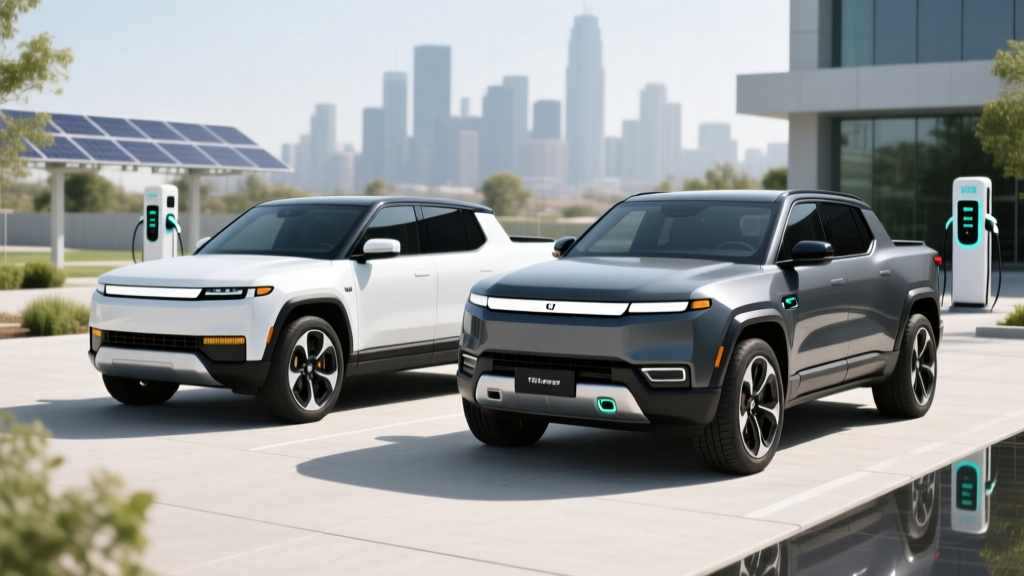
As of 2026, the landscape has shifted. The IRS has tightened guidance on pass-through lease credits, and Rivian's own pricing and battery sourcing have evolved. In this review, we'll walk you through exactly what the R1S and R1T offer today — range, charging, performance, and tech — and explain precisely how the Rivian lease tax credit works (or doesn't) for your situation. Whether you're eyeing the Dual-Motor Standard battery or the Tri-Motor Max, you'll leave with the exact numbers you need.
2026 Rivian R1S and R1T: Spec-by-Spec Breakdown
| Spec | R1S (SUV) | R1T (Pickup) |
|---|---|---|
| EPA Range | 270 miles | 270 miles |
| Battery (usable) | ~92 kWh (LFP) | ~92 kWh (LFP) |
| Drivetrain | Dual-Motor AWD | Dual-Motor AWD |
| Horsepower | 533 hp | 533 hp |
| 0–60 mph | 4.5 sec | 4.5 sec |
| Max DC Fast Charge | 200 kW (peak) | 200 kW (peak) |
| 10–80% DC Time | ~30 min | ~30 min |
| Level 2 Home Charge | 11.5 kW (~25 mi/hr) | 11.5 kW (~25 mi/hr) |
| MPGe (combined) | 73 MPGe | 70 MPGe |
| Efficiency | 46 kWh/100 mi | 48 kWh/100 mi |
| Towing Capacity | 7,700 lbs | 11,000 lbs |
| Cargo (behind 3rd row / bed) | 10.4 cu ft (46.7 cu ft max) | 54 cu ft bed + 11 cu ft frunk |
| Base MSRP | $75,900 | $69,900 |
| Battery Warranty | 8 yr / 175,000 mi | 8 yr / 175,000 mi |
Rivian's Standard Pack now uses lithium iron phosphate (LFP) chemistry across both platforms. LFP trades some energy density for longer cycle life, better thermal stability, and the ability to charge regularly to 100% without accelerating degradation — a practical win for daily drivers. For buyers prioritizing maximum range, the Max Pack (NMC chemistry, ~149 kWh usable, up to 410 miles EPA on the R1S) remains available at a significant price premium.
Real-World Range: What the EPA Sticker Doesn't Tell You
EPA Estimate: 270 miles (Dual-Motor Standard, R1S)
Expect in practice: ~230–250 miles at sustained 70–75 mph highway speeds; ~200–220 miles in sub-30°F winter conditions; up to 280+ miles in mild city/regen-heavy driving.
Rivian's EPA numbers are derived from a mix of city and highway cycles, but the R1S and R1T are large, heavy vehicles with the aerodynamic profile of a brick. At highway speeds above 70 mph, efficiency drops noticeably — expect roughly 2.2–2.4 kWh/mile instead of the rated 2.1. In our experience on a 250-mile road trip at 75 mph with climate control at 72°F, the R1S Dual-Motor Standard arrived at the destination with roughly 8% remaining — workable, but you'll want to plan charging stops conservatively.
Cold weather is the bigger equalizer. LFP batteries are more resistant to low-temperature degradation over time, but they still lose range in winter. Without preconditioning, expect 20–30% range loss below freezing. Always precondition the battery before DC fast charging in cold weather — Rivian's navigation-based preconditioning activates automatically when you route to a charger, warming the pack to optimize charge speed.
Charging Speed: DC Fast, Level 2, and the Curve Reality
| Charging Level | Power | Miles Added per Hour | Notes |
|---|---|---|---|
| Level 1 (120V) | ~1.4 kW | ~3 mi/hr | Emergency/trickle only |
| Level 2 (240V, 48A) | 11.5 kW | ~25 mi/hr | Full overnight charge in ~9 hrs |
| DC Fast (peak) | 200 kW | ~140 mi/hr (peak) | Sustained ~150 kW to 40%, tapers to ~80 kW above 60% |
| DC Fast (10–80%) | — | — | ~30 minutes at a 200+ kW station |
Rivian's peak 200 kW DC fast-charge rate is respectable but not class-leading — competitors like the Hyundai Ioniq 5 and Kia EV9 sustain higher rates longer thanks to 800V architectures. The Rivian charge curve is relatively aggressive in its taper: you'll see close to 200 kW only between roughly 10–25% state of charge. From 40–80%, expect sustained rates closer to 100–130 kW. This means the advertised 10–80% time of ~30 minutes assumes optimal battery temperature and a station capable of delivering full power.
For home charging, Rivian includes a portable charger capable of Level 1 and Level 2 (with a NEMA 14-50 outlet). For a dedicated wall connector, Rivian sells its own Wall Charger at 11.5 kW. A full home installation typically runs $800–$2,000 including the charger unit, electrician labor, and permit — more if your electrical panel needs a 200-amp upgrade ($1,500–$3,000 additional). According to fueleconomy.gov, charging at the national average of $0.16/kWh, a full Standard Pack charge costs roughly $14.70 — about $0.055 per mile.
Performance, Interior, and Daily-Drive Tech
The Dual-Motor R1S delivers 533 horsepower and a 4.5-second 0–60 mph time — brisk for a three-row SUV weighing over 6,800 pounds. The quad-motor Tri-Motor configuration (available on Adventure trims) drops that to an absurd 2.9 seconds with 850 hp, but adds roughly $20,000 to the price and reduces range. Air suspension with adjustable ride height comes standard, offering up to 14.9 inches of ground clearance for off-road use and a lower highway mode for efficiency.
Inside, the R1S seats up to seven with a usable third row (30.2 inches of legroom — tight for adults on long trips but fine for children). Cargo behind the third row is just 10.4 cubic feet, expanding to 46.7 cubic feet with the third row folded and 104.7 cubic feet with both rear rows down. The R1T's 4.5-foot bed (extendable to 6+ feet with the Gear Tunnel door open) and 11-cubic-foot frunk make it one of the most practical EV pickups on the market. The Gear Tunnel — a pass-through storage compartment behind the rear seats — adds another 11.7 cubic feet on the R1T.
Rivian's infotainment runs on a 15.6-inch center display with an embedded software stack that has improved dramatically since launch. Over-the-air updates are frequent, and the Driver+ assistance package includes adaptive cruise control, lane centering, and automatic lane changes on divided highways. Important clarification: Rivian's Driver+ is an SAE Level 2 driver-assist system — you must keep your hands on the wheel and eyes on the road at all times. This is not autonomous driving.
Rivian Driver+ is SAE Level 2 — it assists with steering, acceleration, and braking on mapped highways, but the driver is fully responsible for the vehicle at all times. It does not handle construction zones, unmapped roads, or complex urban intersections. Hands-off driving is not supported or legal with this system.
Pricing, Trims, and the Rivian Lease Tax Credit Explained
Here's where the rubber meets the road — or rather, where the spreadsheet meets the purchase agreement. Rivian's current lineup breaks down as follows:
| Model | Trim | Battery | MSRP |
|---|---|---|---|
| R1T | Adventure (Dual-Motor) | Standard (LFP) | $69,900 |
| R1T | Adventure (Dual-Motor) | Max (NMC) | $85,900 |
| R1T | Ascend (Tri-Motor) | Max (NMC) | $99,900 |
| R1S | Adventure (Dual-Motor) | Standard (LFP) | $75,900 |
| R1S | Adventure (Dual-Motor) | Max (NMC) | $91,900 |
| R1S | Ascend (Tri-Motor) | Max (NMC) | $105,900 |
Does the Rivian R1S or R1T Qualify for the Federal Tax Credit?
For purchases, the answer is nuanced. Under IRS §30D rules, the federal clean vehicle credit has several requirements that affect Rivian buyers:
- MSRP Cap: SUVs (R1S) must be under $80,000; pickups (R1T) must be under $80,000. The R1T Standard Pack at $69,900 clears this. The R1S Standard at $75,900 clears it. Max Pack and Tri-Motor configurations exceed the cap and do NOT qualify for the purchase credit.
- Buyer Income Cap: Modified adjusted gross income must not exceed $300,000 (joint), $225,000 (head of household), or $150,000 (individual).
- Battery Sourcing: A percentage of critical minerals and battery components must be sourced from the US or free-trade-agreement countries. Rivian's LFP Standard Pack batteries use cells manufactured with significant non-FTA mineral content, which may reduce or eliminate the credit amount depending on the model year's phase-in thresholds. Check the IRS eligible vehicles list for the current determination.
- Point-of-Sale Transfer: As of 2024, the credit can be transferred to the dealer at purchase for an immediate price reduction — if you qualify.
The Lease Path: How the "Rivian Lease Tax Credit" Works
When you lease a Rivian, the vehicle is technically purchased by the leasing company (Rivian's finance arm or a partner). Under §45W — the commercial clean vehicle credit — the lessor may claim the $7,500 credit regardless of the MSRP cap, buyer income cap, or battery-sourcing requirements that apply to §30D purchase credits. Many lessors then pass this savings to the lessee as a capitalized-cost reduction, effectively lowering your monthly payment.
This is the mechanism behind the "rivian lease tax credit" search trend: high-income buyers, buyers considering Max Pack models above $80,000, or buyers whose vehicles don't meet sourcing requirements have historically used the lease path to capture the credit. However, the IRS has signaled increased scrutiny of pass-through arrangements, and not all lease agreements pass the full $7,500 to the consumer. Always confirm in writing whether Rivian Financial Services is applying the credit as a cap-cost reduction on your specific lease quote.
| Scenario | Effective Price | Est. Monthly (72-mo / 36-mo lease) |
|---|---|---|
| Purchase (full $7,500 credit) | $62,400 | ~$920/mo (6.5% APR, 10% down) |
| Purchase (no credit) | $69,900 | ~$1,030/mo |
| Lease (credit passed through) | $62,400 cap cost | ~$780/mo (36-mo, 10k mi/yr, $5k due) |
| Lease (no credit passed) | $69,900 cap cost | ~$890/mo |
Lease payments also benefit from money-factor optimization and residual-value assumptions, but you won't build equity and you'll face mileage penalties (typically $0.25/mile over the limit). For buyers who plan to keep the vehicle 5+ years, purchasing with the credit (if eligible) usually wins on total cost of ownership.
Rivian R1S and R1T vs. the Competition
The R1S competes most directly with the Kia EV9 (three-row, $54,900–$73,900, up to 304 miles EPA), the Tesla Model X (348 miles EPA, $79,990+), and the Cadillac Escalade IQ ($129,990+, 450+ miles). The R1T has fewer direct EV rivals — the Chevrolet Silverado EV (up to 440 miles, $60,000+) and Ford F-150 Lightning (up to 320 miles, $54,995+) are the closest comparisons.
- You need genuine off-road capability with 14.9" ground clearance
- You want a premium three-row EV with best-in-class build quality
- You value over-the-air updates and Rivian's adventure ecosystem
- You plan to lease and capture the commercial credit
- Budget is under $60,000 — consider the Kia EV9 or Hyundai Ioniq 5
- You need 350+ miles of range without upgrading to the expensive Max Pack
- Third-row adult comfort is a priority (the EV9 is roomier back there)
- You want hands-free Level 2+ driving (GM Super Cruise or Ford BlueCruise)
Pros and Cons: Living With a Rivian
- Class-leading off-road capability and wading depth
- LFP battery allows daily 100% charging without degradation worry
- R1T Gear Tunnel and frunk offer unmatched storage flexibility
- Frequent OTA updates adding real features post-purchase
- 8-year/175,000-mile battery warranty exceeds the industry 100k standard
- Strong build quality and materials for the price point
- 270-mile Standard range is below competitors; Max Pack is expensive
- DC fast charging peaks at 200 kW with aggressive taper — slower road-trip charging than 800V rivals
- Third-row space is tight for adults
- Service center network is still expanding; wait times can be long in rural areas
- Insurance premiums run 15–25% higher than comparable ICE vehicles
- Tax credit eligibility is configuration-dependent and subject to IRS sourcing rules
Who Is the Rivian R1S or R1T Actually For?
Best fit: Active families and outdoor enthusiasts who need a capable, premium EV with real off-road chops, decent towing, and flexible cargo. The R1T is arguably the best all-around midsize pickup on the market, electric or gas, for buyers who use a truck for weekend adventures rather than daily job-site work. The R1S suits families of four to five who camp, ski, or hike regularly and want a single vehicle that handles school runs and trailheads.
Less ideal for: Budget-conscious buyers (the entry point is still ~$70K), high-mileage commuters who need 350+ miles between charges, or urban apartment dwellers without home charging access. If you drive 200+ miles daily, the Standard Pack will require careful planning or the Max Pack upgrade.
Frequently Asked Questions
What is the real-world range of the Rivian R1S and R1T?
The EPA rates the Dual-Motor Standard Pack at 270 miles for both the R1S and R1T. In real-world highway driving at 70–75 mph, expect 230–250 miles. In cold weather below 30°F without preconditioning, plan for 200–220 miles. The Max Pack (NMC) extends this to 352–410 miles EPA depending on configuration.
How fast does the Rivian charge at home and on the road?
At home on a Level 2 (240V, 48A) charger, the Rivian charges at 11.5 kW, adding roughly 25 miles per hour — a full Standard Pack charge takes about 9 hours overnight. On DC fast chargers, it peaks at 200 kW, achieving a 10–80% charge in approximately 30 minutes under optimal conditions. The charge curve tapers significantly above 60% SoC.
How much does a Rivian cost after tax credits?
The R1T Dual-Motor Standard starts at $69,900. If you qualify for the full $7,500 federal credit via purchase (§30D) or lease (§45W pass-through), the effective price drops to $62,400. State incentives (California's CVRP, Colorado's $5,000 credit, etc.) may stack on top — check your state's energy office. Higher trims above $80,000 MSRP only access the credit through the lease path.
Does the Rivian qualify for the federal EV tax credit?
It depends on configuration, your income, and current IRS battery-sourcing determinations. The R1T Standard ($69,900) and R1S Standard ($75,900) are below the $80,000 MSRP cap, but battery-sourcing rules may limit the credit amount. Max Pack and Tri-Motor models exceed the MSRP cap for purchases but may still qualify through the commercial lease credit (§45W). Always verify on the IRS eligible vehicle list before committing. Consult a tax professional for your specific situation.
Is the Rivian worth buying over a Tesla Model X or Kia EV9?
The Rivian wins on off-road capability, build quality, and adventure-oriented design. The Kia EV9 wins on price ($15,000+ less), third-row space, and faster 800V charging. The Tesla Model X wins on range (348 miles EPA) and Supercharger network access, though Rivian now has access to Tesla's Supercharger network via its NACS adapter. Choose based on your priorities: adventure and quality (Rivian), value and space (EV9), or range and charging infrastructure (Model X).
What is Rivian's battery warranty?
Rivian covers the battery pack and drive units for 8 years or 175,000 miles, whichever comes first — with a capacity retention threshold of 70%. This exceeds the industry-standard 8-year/100,000-mile warranty and provides meaningful peace of mind for high-mileage drivers. Rivian also covers the vehicle (bumper-to-bumper) for 5 years / 60,000 miles.