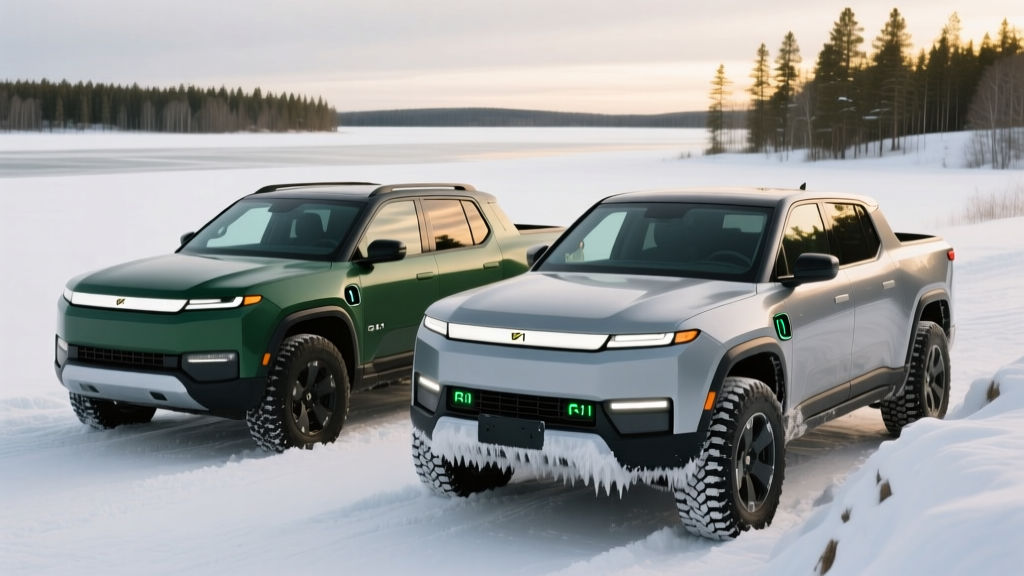
Minnesota's harsh winters and sprawling landscapes make it one of the most demanding environments for any electric vehicle. For residents considering a Rivian lease in MN, the stakes are higher than in milder climates: battery chemistry, thermal management, and all-wheel-drive capability aren't just spec-sheet trivia — they determine whether your EV is a daily asset or a cold-weather liability.
This guide dissects the 2026 Rivian R1S (three-row SUV) and R1T (pickup truck) through the lens of a Minnesota buyer. We cover real-world range expectations when temperatures plunge below freezing, DC fast-charging curves, leasing economics versus purchasing with the federal §30D tax credit, and whether these vehicles actually deliver on their adventure-vehicle promises in the Upper Midwest.
2026 Rivian R1S and R1T: Core Specifications at a Glance
Rivian offers both the R1S and R1T on the same skateboard platform with shared powertrain options for 2026. The lineup now centers on the Dual-Motor and the performance-oriented Tri-Motor configurations, with battery packs branded as Standard, Large, and Max.
| Specification | R1S (SUV) | R1T (Truck) |
|---|---|---|
| EPA Range (Large Pack) | 352 miles | 352 miles |
| Battery Capacity (usable) | ~109 kWh (NMC) | ~109 kWh (NMC) |
| Drivetrain | Dual-Motor AWD | Dual-Motor AWD |
| Horsepower | 533 hp | 533 hp |
| 0-60 mph | 4.5 seconds | 4.5 seconds |
| Max DC Fast Charge | 220 kW (peak) | 220 kW (peak) |
| 10-80% DCFC Time | ~30 minutes | ~30 minutes |
| Level 2 Home Charging | 11.5 kW (~25 mi/hr) | 11.5 kW (~25 mi/hr) |
| Efficiency (MPGe) | 73 MPGe combined | 73 MPGe combined |
| Towing Capacity | 7,700 lbs | 11,000 lbs |
| Cargo Volume (behind 3rd row / bed) | 10.6 cu ft (+ frunk 11.1 cu ft) | 54 cu ft bed (+ Gear Tunnel 11.7 cu ft + frunk 11.1 cu ft) |
| Base MSRP (Dual-Motor, Standard) | $79,900 | $71,700 |
| Battery/Powertrain Warranty | 8 yr / 175,000 mi | 8 yr / 175,000 mi |
Sources: EPA / fueleconomy.gov, Rivian official specs.
Real-World Range: What Minnesota Winters Actually Do
The EPA sticker is a starting point, not a guarantee — and nowhere is this more true than in Minnesota, where January highs average 22°F in the Twin Cities and regularly dip below 0°F in the northern counties.
Range Reality Check: Rivian R1S/R1T (Large Pack, Dual-Motor)
EPA Estimated Range: 352 miles
Real-World Highway (65-75 mph, 50°F): ~290-310 miles
Real-World Minnesota Winter (20°F, highway + city mixed): ~220-260 miles
Extreme Cold (below 0°F, short trips, cabin heat): ~180-220 miles
Cold-weather range loss of 25-40% is consistent with independent EV testing. Rivian's heat pump and battery preconditioning mitigate but do not eliminate this physics-driven reduction. Always plan charging stops using the lower winter figure.
Rivian's Large Pack uses NMC (nickel manganese cobalt) chemistry, which offers high energy density but is more susceptible to cold-weather capacity reduction than LFP. The vehicle's active thermal management system — including a standard heat pump — works to keep the battery in its optimal temperature window, but energy consumed warming the pack is energy not spent on propulsion.
For Minnesota commuters driving 40-60 miles round trip, even the worst-case winter range leaves ample buffer. Road-trippers heading from Minneapolis to the Boundary Waters (~300 miles one way) should plan at least one DC fast-charge stop in winter months.
Charging Speeds: DC Fast, Level 2, and the Rivian Adventure Network
Charging infrastructure access is a top concern for any EV buyer, and it's especially relevant in Minnesota where public DC fast chargers outside the Twin Cities metro remain sparse compared to coastal states.
| Charging Level | Power (kW) | Speed (miles of range per hour) | Typical Use Case |
|---|---|---|---|
| Level 1 (120V household) | ~1.4 kW | ~3 mi/hr | Emergency / overnight trickle |
| Level 2 (240V home, 48A) | 11.5 kW | ~25 mi/hr | Daily home charging (full overnight) |
| DC Fast Charge (peak) | 220 kW | ~140 mi in 20 min | Road trips, Rivian Adventure Network |
| DC Fast Charge (10-80%) | Varies (tapers above 80%) | ~30 minutes total | Highway stop planning |
Understanding the charge curve: Rivian's 220 kW peak rate applies only at lower states of charge (roughly 10-40%). Above 80% SoC, the charge rate tapers significantly to protect battery health — a universal characteristic of lithium-ion packs. Plan road-trip stops around the 10-80% window for the fastest throughput.
Home charging in Minnesota: A Level 2 home charger (240V, 48-amp circuit) is effectively mandatory for Rivian ownership. At 11.5 kW, you'll replenish roughly 200 miles of range in an 8-hour overnight session — more than enough for daily needs. Budget $800-$2,000 for a professional Level 2 installation, and potentially more if your home's electrical panel needs an upgrade to support a 60-amp breaker.
Rivian Adventure Network: Rivian continues expanding its proprietary DC fast-charging network along adventure corridors. Minnesota stations include locations near the North Shore and along I-35. Rivian owners also have access to the broader Tesla Supercharger network via the included NACS adapter, significantly expanding public charging options in the state.
Leasing vs. Buying a Rivian in Minnesota: Economics and the §30D Tax Credit
The decision to lease or buy a Rivian in Minnesota hinges on the federal EV tax credit structure, your income, and how you plan to use the vehicle. Here's how the numbers break down for 2026.
| Trim / Config | MSRP | §30D Credit Eligible? | Effective Price (with credit) |
|---|---|---|---|
| R1T Dual-Motor Standard | $71,700 | Yes (if income/sourcing met) | ~$64,200 |
| R1T Dual-Motor Large | $79,900 | Yes (if income/sourcing met) | ~$72,400 |
| R1S Dual-Motor Standard | $79,900 | Yes (if income/sourcing met) | ~$72,400 |
| R1S Dual-Motor Large | $87,900 | Yes (if income/sourcing met) | ~$80,400 |
| R1S/R1T Tri-Motor Max | $105,900+ | Yes (under SUV/truck MSRP cap) | ~$98,400+ |
Critical §30D eligibility rules (2026):
- MSRP cap: Vans, SUVs, and pickup trucks must have an MSRP at or below $80,000 to qualify. The R1T pickup and R1S SUV both fall under this cap in most configurations, but Tri-Motor/Max Pack trims may exceed it.
- Income cap: Modified adjusted gross income (AGI) must not exceed $150,000 (single), $225,000 (head of household), or $300,000 (joint filers).
- Battery sourcing: The credit amount (up to $7,500) depends on critical-mineral and battery-component sourcing requirements that tighten annually. Check IRS.gov §30D guidelines for current-year specifics.
- Point-of-sale transfer: As of 2024, buyers can transfer the credit to the dealer at purchase, reducing the upfront cost rather than waiting for a tax return offset.
The lease loophole: If your income exceeds the §30D caps, leasing a Rivian can be advantageous. The commercial clean vehicle credit (§45W) applies to leased EVs and has no MSRP or income restrictions — the leasing company (lessor) claims the credit and may pass savings through as a lower monthly payment or capitalized-cost reduction. Ask the dealer specifically whether their lease offers incorporate this benefit.
Minnesota state incentives: Check the Minnesota Department of Commerce for any active state-level EV rebates or reduced registration fees, as these change by legislative session. Some Minnesota utilities (Xcel Energy, Minnesota Power) also offer off-peak charging rebates that reduce home charging costs.
Performance, Capability, and Daily Driving in Minnesota
The Rivian's dual-motor AWD system is a genuine advantage in Minnesota conditions. Unlike part-time AWD systems that engage only when slip is detected, Rivian's setup provides continuous torque vectoring to all four wheels, with independent motors on each axle delivering near-instant traction adjustments.
Winter driving highlights:
- Snow mode: Adjusts throttle response, regen braking, and torque distribution for low-traction surfaces. Pairs well with dedicated winter tires (Rivian offers approved all-terrain and winter tire packages).
- Regenerative braking in cold: Regen strength is reduced when the battery is cold — expect more reliance on friction brakes during the first 10-15 minutes of a winter drive until the pack warms up.
- Ground clearance: 14.9 inches (max) with the air suspension, helpful for unplowed driveways and trail access. The suspension can also lower for highway efficiency.
- Camp mode / cabin preconditioning: Use the app to warm the cabin while plugged in, preserving battery range for driving rather than heating.
Performance specs (Dual-Motor): 533 horsepower and 610 lb-ft of torque deliver a 4.5-second 0-60 mph time — brisk for a vehicle of this size. The Tri-Motor drops that to roughly 3.0 seconds with over 850 hp, though the trade-off is reduced range and higher cost.
Interior and cargo: The R1S seats up to seven with usable third-row space for adults on shorter trips. Cargo behind the third row is modest at 10.6 cubic feet, but folding the third row opens 46.7 cu ft, and the 11.1 cu ft front trunk (frunk) adds weather-sealed storage. The R1T's 4.5-foot bed, lockable Gear Tunnel (11.7 cu ft on the passenger side), and frunk make it one of the most versatile cargo platforms in the EV market.
Technology, Driver Assistance, and Notable Drawbacks
Rivian's software stack is proprietary and over-the-air updateable, covering everything from navigation to suspension tuning. The 15.6-inch center touchscreen runs a clean, responsive interface with native integration for trip planning that accounts for charging stops, elevation changes, and temperature.
Driver assistance (SAE Level 2): Rivian's Driver+ system combines adaptive cruise control with lane-centering on highways. It is a hands-on, eyes-on Level 2 system — not self-driving. The driver must remain engaged at all times. A camera-based monitoring system alerts you if attention lapses.
⚠️ Driver+ Is Not Autonomous
Rivian's Driver+ is an SAE Level 2 driver-assist system. It does not replace an attentive driver. You must keep your hands on the wheel and eyes on the road. Hands-free systems like GM's Super Cruise or Ford's BlueCruise (on approved highways) offer more latitude, but no consumer vehicle currently sold is self-driving (Level 4/5).
Standout tech features:
- Integrated camp kitchen option (R1T) with slide-out induction cooktop
- Powered tonneau cover (R1T) with integrated LED bed lighting
- Native trip planner with charger routing and preconditioning
- Vehicle-to-load (V2L) capability — power tools, appliances, or a campsite from the truck's battery
- Over-the-air updates that have historically added range, features, and performance
Notable drawbacks:
- Service center network is still expanding — Minnesota owners may face wait times or need to travel to the Twin Cities for warranty work
- Third-row space in the R1S is tighter than a Tahoe or Atlas for long trips
- No Apple CarPlay or Android Auto — Rivian uses its own native infotainment (some buyers see this as a positive, others a negative)
- Insurance premiums tend to run higher than comparable ICE vehicles; get quotes before signing
Pros and Cons: The Honest Summary
✅ Pros
- Class-leading AWD and genuine off-road capability in snow and mud
- 352-mile EPA range (Large Pack) provides real road-trip flexibility
- NACS adapter included — access to Tesla Supercharger network
- Versatile cargo solutions (frunk, Gear Tunnel, camp kitchen)
- Strong 8-year / 175,000-mile battery warranty
- Regular OTA updates improve the vehicle post-purchase
❌ Cons
- Base MSRP starts near $72K-$80K — premium pricing
- Cold-weather range loss of 25-40% is significant in MN winters
- Limited service center footprint outside major metros
- No native Apple CarPlay / Android Auto
- Tri-Motor/Max trims may exceed $80K MSRP cap for §30D credit
- Driver+ is competent but not class-leading among Level 2 systems
Is a Rivian Lease in MN Worth It? The Decision Framework
Choose a Rivian Lease If:
- Your AGI exceeds the §30D income caps and you want to access the §45W commercial credit through the lessor
- You want to upgrade every 3-4 years as battery and charging tech evolves rapidly
- You're uncertain about long-term EV ownership and want to test the lifestyle with lower commitment
- You drive 10,000-15,000 miles/year and don't want to worry about resale value
Choose to Buy (with §30D Credit) If:
- You qualify for the full $7,500 federal credit (income under caps, MSRP eligible, battery sourcing met)
- You plan to keep the vehicle 5+ years and want to build equity
- You drive high annual miles that would incur lease overage penalties
- You want to modify the vehicle (wraps, lift kits, aftermarket wheels) without lease restrictions
Who this EV suits best: The Rivian R1S is ideal for Minnesota families who need three rows, ski-gear cargo capacity, and weekend-trip range to the North Shore or Wisconsin Dells. The R1T fits outdoor enthusiasts, tradespeople who need a truck bed with V2L power, and anyone who values the Gear Tunnel's secure, weatherproof storage. Neither is a budget pick — but for buyers who need genuine all-weather, all-terrain capability in an EV, Rivian remains one of the most complete packages available.
Key competitors to cross-shop: Tesla Model X (more Supercharger access, less off-road capability), Ford F-150 Lightning (lower starting price, less range), GMC Hummer EV (more power, far heavier and less efficient), and the Kia EV9 (lower price, less rugged capability but strong family SUV value).
Frequently Asked Questions
What is the real-world range of the Rivian R1S and R1T in Minnesota winters?
With the Large Pack (352 miles EPA), expect roughly 220-260 miles of mixed driving range in typical Minnesota winter conditions (20°F). In extreme cold below 0°F with short trips and cabin heating, range can drop to 180-220 miles. Plan charging stops conservatively using the lower figure from November through March.
How fast does a Rivian charge at home and on the road?
At home on a Level 2 (240V) charger, the Rivian charges at 11.5 kW, adding roughly 25 miles of range per hour — a full overnight session restores 200+ miles. On DC fast chargers, it peaks at 220 kW and charges from 10-80% in approximately 30 minutes, though the rate tapers significantly above 80%.
Does the Rivian R1T or R1S qualify for the $7,500 federal EV tax credit?
Most Dual-Motor and some Tri-Motor configurations qualify, as they fall under the $80,000 MSRP cap for SUVs and pickups. However, eligibility also depends on your income (AGI caps apply), battery critical-mineral sourcing, and current-year IRS rules. Check IRS.gov for the latest requirements. Leasing may bypass income and MSRP restrictions via the §45W commercial credit.
Is Rivian's service network adequate in Minnesota?
Rivian has a service center in the Twin Cities metro and offers mobile service for many repairs. However, the network is still growing, and major warranty work may require travel to Minneapolis or a neighboring state. Factor this into your ownership decision if you live in greater Minnesota.
Can I use Tesla Superchargers with a Rivian?
Yes. Rivian includes a NACS (North American Charging Standard) adapter, giving you access to the Tesla Supercharger network — the most extensive DC fast-charging network in the U.S. This significantly expands charging options for Minnesota road trips along I-94, I-35, and beyond.
How does Rivian's battery warranty compare to competitors?
Rivian offers an 8-year / 175,000-mile battery and powertrain warranty, which is more generous on mileage than most competitors (Tesla offers 8 yr / 150,000 mi for Model X; Ford offers 8 yr / 100,000 mi for the Lightning). The warranty covers defects and capacity degradation below a specified threshold.
What battery chemistry does Rivian use, and does it matter?
Rivian's Large and Max packs use NMC (nickel manganese cobalt) chemistry, which prioritizes energy density and range. NMC performs well but experiences more cold-weather capacity reduction than LFP (lithium iron phosphate). For Minnesota, this means planning for winter range loss — but the Large Pack's 352-mile EPA baseline provides enough buffer for most daily and road-trip needs.
Note: Pricing, tax credit rules, and specifications reflect 2026 model-year data available at time of publication. Federal §30D credit requirements change annually — verify current eligibility with a tax professional and IRS.gov before purchasing or leasing.