Quick Verdict: Are Rivian Lease Incentives Worth It in 2026?
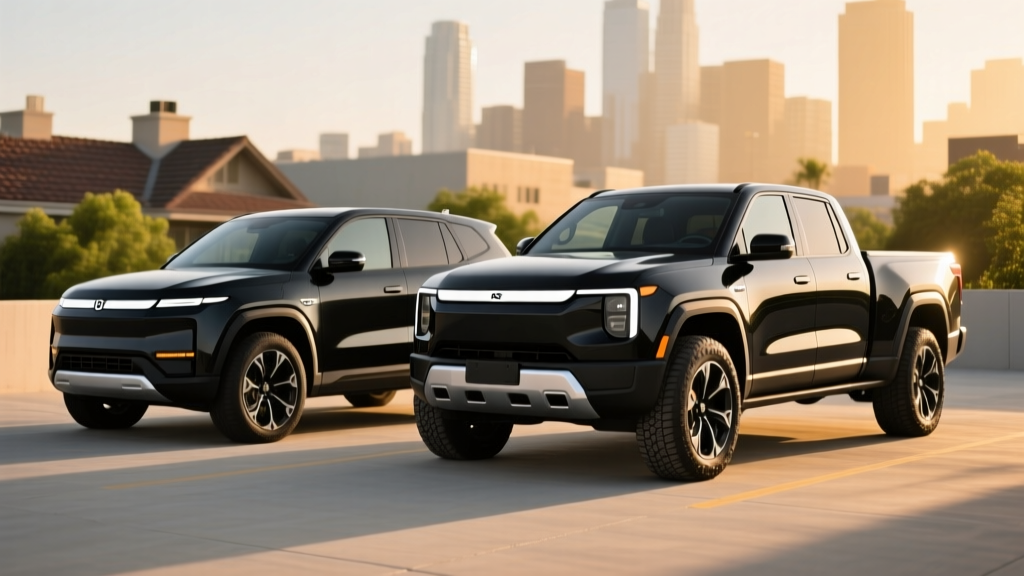
Rivian's R1S SUV and R1T pickup remain two of the most capable electric adventure vehicles on the market, but their premium pricing puts them out of reach for many buyers. That's where Rivian lease incentives come into play. By structuring a lease through Rivian Financial Services and applying the $7,500 federal EV tax credit as a lease credit (often called a "lease loophole" under IRS §30D commercial vehicle provisions), qualified lessees can significantly reduce monthly payments on these adventure-ready EVs.
In this review, we break down the 2026 Rivian lineup — the updated R1S and R1T with their new dual-motor and tri-motor powertrains, NMC battery options, NACS charging ports, and real-world range — alongside a detailed look at lease incentive structures, tax credit eligibility, and total cost of ownership versus key competitors like the Tesla Model X, Ford F-150 Lightning, and Lucid Gravity.
2026 Rivian R1S and R1T: Specs at a Glance
| Specification | R1S Dual-Motor (Standard) | R1T Dual-Motor (Standard) | R1S Tri-Motor Max |
|---|---|---|---|
| EPA Range | 270 miles | 270 miles | ~410 miles (est.) |
| Battery Capacity (usable) | ~92 kWh (NMC) | ~92 kWh (NMC) | ~141 kWh (NMC) |
| Battery Chemistry | NMC (Nickel Manganese Cobalt) | NMC | NMC |
| Max DC Fast Charge | 220 kW (peak) | 220 kW (peak) | 220 kW (peak) |
| 10–80% DC Charge Time | ~21 minutes | ~21 minutes | ~36 minutes |
| Level 2 Home Charging | 11.5 kW (~25 mi/hr) | 11.5 kW (~25 mi/hr) | 11.5 kW (~30 mi/hr) |
| 0–60 mph | 4.5 seconds | 4.5 seconds | ~2.9 seconds |
| Horsepower | 533 hp | 533 hp | 850 hp |
| Drivetrain | Dual-Motor AWD | Dual-Motor AWD | Tri-Motor AWD |
| Efficiency (MPGe) | 69 MPGe combined | 70 MPGe combined | TBD |
| Towing Capacity | 7,700 lbs | 11,000 lbs | 7,700 lbs |
| Cargo Volume (R1S behind 3rd row) | 10.4 cu ft (46.7 cu ft max) | N/A (bed: 4.5 ft) | 10.4 cu ft (46.7 cu ft max) |
| Legroom (front / 2nd row) | 41.3 / 38.2 in | 41.3 / 38.2 in | 41.3 / 38.2 in |
| Base MSRP | $75,900 | $69,900 | $99,900 (est.) |
| Battery Warranty | 8 yr / 175,000 mi | 8 yr / 175,000 mi | 8 yr / 175,000 mi |
| Powertrain Warranty | 8 yr / 175,000 mi | 8 yr / 175,000 mi | 8 yr / 175,000 mi |
Real-World Range: What the EPA Sticker Doesn't Tell You
R1S/R1T Dual-Motor Standard Pack: EPA-rated 270 miles. In real-world highway driving at 70–75 mph, expect approximately 230–245 miles. In cold weather (below 32°F), range can drop to 190–210 miles due to cabin heating demand and increased battery resistance. City driving with regenerative braking can yield 260–280 miles.
R1S/R1T Max Pack (141 kWh): EPA-rated approximately 410 miles (dual-motor). Real-world highway: ~340–360 miles. Cold weather highway: ~290–320 miles.
Source: fueleconomy.gov and owner-reported data.
Rivian equips the R1S and R1T with a heat pump on 2025+ model years, which helps mitigate cold-weather range loss compared to resistive heating systems. However, the boxy, truck-like aerodynamic profile of both vehicles means highway efficiency drops noticeably above 65 mph. If your typical drive is a 40-mile round-trip commute with mixed city/highway driving, the Standard Pack's 270-mile EPA range is more than adequate. For road-trippers towing trailers or driving in mountain terrain, the Max Pack's extra capacity provides a meaningful buffer.
Towing significantly impacts range. Rivian's own testing and third-party data suggest towing a 5,000-lb trailer can reduce range by 40–50%, bringing effective range to roughly 135–160 miles on the Standard Pack. This is a critical consideration for R1T buyers planning to tow boats, campers, or horse trailers regularly.
Charging Speed and Infrastructure
| Charging Level | Power / Rate | Miles Added per Hour | Notes |
|---|---|---|---|
| Level 1 (120V outlet) | ~1.4 kW | ~3–4 miles/hr | Emergency/trickle only |
| Level 2 (240V home) | 11.5 kW | ~25 miles/hr | Full charge in ~9–10 hours (Standard); ~14 hours (Max) |
| DC Fast Charge (peak) | 220 kW | ~140 miles in 20 min | 10–80% in ~21 min (Standard); tapers above 80% |
| DC Fast Charge (sustained avg) | ~150–170 kW | ~90–110 miles/hr avg | Real-world sustained rate over 10–80% session |
The 2026 R1S and R1T come equipped with the NACS (North American Charging Standard) connector, giving native access to Tesla's Supercharger network — the most reliable and extensive DC fast-charging network in the U.S. This is a major advantage over CCS-only vehicles that require adapters for Supercharger access.
Rivian's DC fast-charging curve peaks at 220 kW on the Standard and Large packs but tapers progressively above 60% state of charge (SoC). Expect the 10–80% session to average around 150–170 kW sustained. The Max Pack's larger battery takes longer to charge in absolute minutes (~36 minutes, 10–80%) but benefits from a slightly flatter charge curve, meaning more of the session runs near peak power.
Home charging setup: Rivian recommends a 60-amp circuit with a 48-amp Level 2 wall connector for optimal home charging at 11.5 kW. Installation costs typically range from $800–$2,500 depending on panel capacity and run length. Homes with a 200-amp electrical panel usually accommodate this without a panel upgrade; older 100-amp panels may require a $2,000–$4,000 upgrade. Always consult a licensed electrician for final specifications.
Rivian Lease Incentives and Tax Credit Breakdown
Understanding how Rivian lease incentives work in 2026 requires navigating the intersection of manufacturer promotions, the federal EV tax credit, and lease structure mechanics. Here's the essential framework:
- MSRP Cap: SUVs and pickups (R1S, R1T) must have an MSRP at or below $80,000 to qualify for purchase credits. Vehicles above this cap are ineligible for the purchase credit.
- Buyer Income Cap: Adjusted gross income must not exceed $300,000 (married filing jointly), $225,000 (head of household), or $150,000 (individual).
- Battery Sourcing: Full $7,500 credit requires meeting both critical-mineral sourcing (40%+ from U.S. or FTA partners) and battery-component assembly (50%+ in North America) thresholds. Partial credit ($3,750) applies if only one threshold is met.
- Point-of-Sale Transfer: The credit can be applied at purchase as an immediate price reduction, or for leases, it is typically passed through as a lease capital cost reduction.
- Lease "Loophole" (§45W Commercial Credit): When a vehicle is leased, the lessor (Rivian Financial Services) claims the commercial clean vehicle credit under §45W, which has no MSRP cap, no income cap, and no battery-sourcing restrictions. The lessor may pass the $7,500 savings to the lessee as a capitalized cost reduction — this is the mechanism behind many "lease incentives."
Source: IRS.gov — Clean Vehicle Credits
| Model / Trim | Base MSRP | Lease Incentive (est.) | Effective First-Month Cost | Est. Monthly Lease (36 mo, $5k down) |
|---|---|---|---|---|
| R1T Dual-Motor Standard | $69,900 | $7,500 lease credit | $62,400 (effective cap cost) | ~$780–$850/mo |
| R1S Dual-Motor Standard | $75,900 | $7,500 lease credit | $68,400 (effective cap cost) | ~$850–$920/mo |
| R1T Dual-Motor Large | $82,900 | $7,500 lease credit | $75,400 (effective cap cost) | ~$950–$1,030/mo |
| R1S Dual-Motor Large | $88,900 | $7,500 lease credit | $81,400 (effective cap cost) | ~$1,020–$1,100/mo |
| R1S Tri-Motor Max | $99,900 | $7,500 lease credit | $92,400 (effective cap cost) | ~$1,200–$1,350/mo |
How much does it cost after tax credits? For a purchase, the R1T Dual-Motor Standard at $69,900 qualifies for the full $7,500 federal tax credit (assuming you meet income and sourcing requirements), bringing the effective price to approximately $62,400 before state incentives. For a lease, the same $7,500 is typically applied as a capitalized cost reduction regardless of the lessee's income level, because the credit is claimed by the lessor under §45W. This is the primary advantage of leasing a Rivian that exceeds the $80,000 MSRP cap — the R1T Large and R1S Large trims become accessible with the same credit that purchase buyers cannot claim on those trims.
Important caveat: Lease incentive amounts and structures vary by promotion period and are set by Rivian Financial Services. Always confirm current terms directly with Rivian or your delivery center before signing. Tax credit rules are subject to change; consult a tax professional for your specific situation.
Performance, Tech, and Daily Livability
The 2026 Rivian dual-motor powertrain delivers 533 horsepower and a 4.5-second 0–60 mph time — brisk for a three-row SUV or a crew-cab pickup. The tri-motor variant (available on R1S and R1T) bumps output to approximately 850 hp with a sub-3-second 0–60 mph sprint, putting it in supercar territory despite its 6,000+ lb curb weight.
Standout tech features:
- Rivian Driver+: A Level 2 driver-assistance system with adaptive cruise control, lane centering, and automatic lane changes on divided highways. It requires continuous driver supervision and is not self-driving. Competent on highways but not as hands-off as GM's Super Cruise on compatible roads.
- 15.6-inch center touchscreen with a clean, responsive UI, native navigation with charging stop integration, and over-the-air updates.
- Gear Tunnel (R1T): A lockable, pass-through storage compartment spanning the width of the truck bed — ideal for skis, fishing rods, or camping gear. Unique to the R1T.
- Camp Kitchen (optional): A slide-out electric kitchen module that fits in the Gear Tunnel, with an induction cooktop and sink.
- Powered tonneau cover (R1T) and air suspension with adjustable ride height (all models) for off-road clearance or highway aero efficiency.
- V2L (Vehicle-to-Load): The R1T can power external devices up to 3.5 kW via bed outlets — useful for job sites and camping.
Notable drawbacks:
- Third-row space (R1S): The third row is best suited for children or short trips. Adults will find legroom tight at 38.2 inches in the second row and even less in the third.
- Charging speed vs. competitors: At 220 kW peak, the R1S/R1T charge slower than the Hyundai Ioniq 5 (350 kW peak) or the Lucid Air (300+ kW). Road-trip charging stops take a few extra minutes.
- No Apple CarPlay or Android Auto: Rivian uses a proprietary infotainment system. While well-designed, some buyers expect phone mirroring as standard.
- Insurance costs: Rivian insurance premiums tend to run 20–35% higher than comparable gas trucks due to repair costs and parts availability. Get a quote before committing.
Pros and Cons
- Class-leading off-road capability with quad/dual-motor AWD, air suspension, and 14.9 inches of ground clearance
- NACS connector for native Tesla Supercharger access
- $7,500 lease incentive available on all trims (including those above $80k MSRP)
- Unique Gear Tunnel and Camp Kitchen options (R1T)
- Strong 8-year / 175,000-mile battery and powertrain warranty
- Over-the-air updates continuously add features
- 220 kW peak DC charging is slower than segment leaders
- R1S third row is cramped for adults
- No Apple CarPlay / Android Auto
- Higher insurance premiums than gas equivalents
- Towing cuts range by 40–50%
- Tri-Motor Max trims are very expensive ($100k+)
Rivian vs. Competitors: Is It Worth Buying?
The R1S and R1T compete in distinct but overlapping segments. Here's how they stack up against key rivals:
| Attribute | Rivian R1S (Dual-Motor) | Tesla Model X | Ford F-150 Lightning | Lucid Gravity |
|---|---|---|---|---|
| EPA Range | 270 mi (Std) / 410 mi (Max) | 335 mi | 240–320 mi | 440 mi |
| Starting MSRP | $75,900 | $79,990 | $54,995 | $79,900 |
| 0–60 mph | 4.5 sec | 3.8 sec (Plaid: 2.5 sec) | 4.0–6.5 sec | 3.5 sec |
| Max DC Charge | 220 kW | 250 kW | 150 kW | 300+ kW |
| Connector | NACS | NACS | CCS (NACS adapter avail.) | NACS |
| Towing | 7,700 lbs | 5,000 lbs | 10,000 lbs | 6,000 lbs |
| Off-Road Capability | Excellent | Limited | Good | Limited |
| Lease Incentive | $7,500 (all trims via §45W) | $7,500 (income/MSRP rules apply) | $7,500 (income/MSRP rules apply) | $7,500 (income/MSRP rules apply) |
- You need serious off-road capability combined with a premium EV experience
- You want a pickup (R1T) with unique storage features like the Gear Tunnel
- You plan to lease and want the $7,500 incentive on trims above $80,000 MSRP
- Native Supercharger access and NACS matter to you for road trips
- You prioritize maximum range per dollar → Lucid Gravity or Tesla Model X
- You need a work truck with maximum towing at a lower price → Ford F-150 Lightning
- You want the fastest charging speeds for frequent road trips → Lucid Gravity
- Third-row adult comfort is a priority → Tesla Model X or Lucid Gravity
Who This EV Suits Best
R1S: Best for active families who want a premium three-row electric SUV with genuine off-road chops. Ideal for ski trips, national park adventures, and daily commuting. The Max Pack is the sweet spot for road-trippers who regularly drive 250+ miles between charging stops.
R1T: Best for outdoor enthusiasts, contractors, and adventure seekers who need a pickup bed but want an electric daily driver. The Gear Tunnel and Camp Kitchen make it uniquely suited to overlanding and weekend camping. Towing-heavy buyers should budget for frequent charging stops or consider the Max Pack.
Lease buyers specifically: If your income exceeds the §30D purchase credit caps, or if you want a trim above $80,000 MSRP, leasing through Rivian Financial Services is the most reliable way to capture the $7,500 incentive in 2026. The lease structure under §45W bypasses the MSRP and income restrictions that apply to outright purchases.
Frequently Asked Questions
What is the real-world range of the 2026 Rivian R1S and R1T?
The EPA rates the dual-motor Standard Pack at 270 miles. Real-world highway driving at 70–75 mph yields approximately 230–245 miles. In cold weather (below freezing), expect 190–210 miles on the highway. The Max Pack extends EPA range to approximately 410 miles, with real-world highway figures around 340–360 miles. City driving with regenerative braking can approach or slightly exceed the EPA sticker.
How fast does the Rivian R1S/R1T charge at home and on DC fast chargers?
On a Level 2 home charger at 11.5 kW (48-amp, 240V), the Standard Pack adds about 25 miles per hour and fully charges in roughly 9–10 hours. The Max Pack takes about 14 hours. On DC fast chargers, both peak at 220 kW, with the Standard Pack reaching 10–80% in approximately 21 minutes and the Max Pack in about 36 minutes. Sustained average charge rate over a 10–80% session is typically 150–170 kW.
How much does a Rivian cost after tax credits and lease incentives?
The R1T Dual-Motor Standard starts at $69,900 MSRP. With the $7,500 federal incentive (applied as a lease credit or point-of-sale reduction), the effective cost is approximately $62,400 before state incentives, destination fees, and options. Higher trims like the R1T Large ($82,900) and R1S Tri-Motor Max (~$99,900) exceed the $80,000 MSRP cap for purchase credits, but the lease incentive under §45W still applies — making leasing the preferred path for these trims.
Does the Rivian R1S and R1T qualify for the federal EV tax credit?
Yes, with conditions. For outright purchase, the R1T and R1S Standard and some mid-tier trims fall under the $80,000 MSRP cap for SUVs/pickups under §30D, and may qualify for the full $7,500 credit if the buyer meets income limits ($300k joint, $150k individual) and the vehicle meets battery-sourcing requirements. For leases, the §45W commercial credit pathway allows the $7,500 incentive to apply regardless of MSRP or buyer income, subject to Rivian Financial Services passing the savings through. Always verify current eligibility at IRS.gov and confirm with Rivian directly.
Is the Rivian R1S or R1T worth it versus competitors?
The Rivian R1S and R1T are worth it if you prioritize off-road capability, adventure-oriented features (Gear Tunnel, Camp Kitchen, air suspension), and premium build quality in an electric package. They trail some competitors in DC charging speed (220 kW vs. 300+ kW for Lucid) and third-row space (vs. Tesla Model X). For budget-conscious buyers, the Ford F-150 Lightning offers more truck for less money. For maximum range, the Lucid Gravity leads. But for the specific combination of luxury, off-road prowess, and EV technology, Rivian occupies a unique niche with few direct rivals.
What are the biggest pros and cons of leasing a Rivian?
The biggest advantage of leasing is access to the $7,500 federal incentive on trims above the $80,000 MSRP purchase cap, with no income restrictions under the §45W pathway. Leasing also shields you from long-term battery depreciation risk. The main downsides are mileage restrictions (typically 10,000–15,000 miles/year), no equity buildup, and potential disposition fees at lease end. If you drive more than 15,000 miles annually or plan to keep the vehicle long-term, purchasing may be more economical despite the MSRP cap limitations on higher trims.