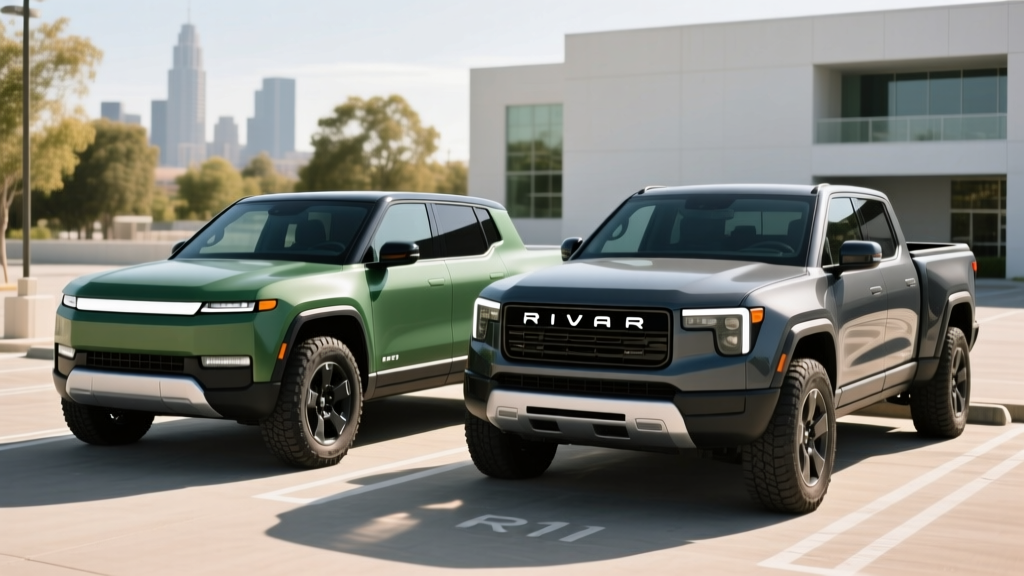
If you've been watching Rivian's pricing moves over the past year, you already know the landscape shifted dramatically. The 2025 R1S and R1T — now in their Gen 2 configuration — arrived with lower MSRPs, improved efficiency, and a new LFP battery option. But the real headline for many buyers has been the Rivian lease incentives that make these electric adventure vehicles significantly more attainable. Let's break down exactly what's available, what you'll actually pay, and whether leasing a Rivian in 2025 is smarter than buying outright.
Rivian's 2025 Lease Incentive Structure Explained
Rivian has periodically offered lease incentives that effectively pass through the value of the federal §30D clean vehicle credit — even when the buyer might not qualify directly due to income caps or tax liability limitations. The mechanism is straightforward: under IRS rules governing commercial clean vehicle credits (§45W), the leasing company (the lessor) can claim the $7,500 credit and apply it as a capitalized-cost reduction on the lease, lowering your monthly payment.
For the 2025 model year, Rivian has offered lease credit incentives on qualifying R1S and R1T configurations. These have typically taken the form of a $7,500 lease credit applied at signing, which reduces the effective capitalized cost of the vehicle. The exact availability and terms have varied by quarter and configuration, so checking Rivian's current configurator or speaking with a Rivian advisor is essential before committing.
2025 Rivian R1S & R1T: What You're Actually Leasing
The 2025 model year brought the Gen 2 platform refresh to both the R1S SUV and R1T pickup. Key upgrades include a new electrical architecture with fewer ECUs, an updated heat pump system, revised suspension tuning, the addition of a Standard battery pack with LFP chemistry, and new Tri-Motor and Quad-Motor performance configurations. Here's what the spec sheet looks like across the most popular configurations:
| Spec | R1S Dual-Motor (Standard) | R1S Dual-Motor (Max) | R1T Dual-Motor (Large) |
|---|---|---|---|
| EPA Range | 270 mi | 410 mi | 342 mi |
| Battery (Usable) | ~92 kWh (LFP) | ~141 kWh (NMC) | ~128 kWh (NMC) |
| Horsepower | 533 hp | 533 hp | 533 hp |
| 0–60 mph | 4.5 sec | 4.5 sec | 4.5 sec |
| Drivetrain | AWD (Dual-Motor) | AWD (Dual-Motor) | AWD (Dual-Motor) |
| Efficiency | ~2.0 kWh/mi (70 MPGe) | ~2.1 kWh/mi (69 MPGe) | ~2.2 kWh/mi (66 MPGe) |
| Max DC Fast Charge | ~200 kW peak | ~220 kW peak | ~220 kW peak |
| 10–80% DC Time | ~30 min | ~42 min | ~38 min |
| Level 2 Home Charging | 11.5 kW (~16 mi/hr) | 11.5 kW (~16 mi/hr) | 11.5 kW (~16 mi/hr) |
| Towing Capacity | 7,700 lb | 7,700 lb | 11,000 lb |
| Base MSRP | $75,900 | $89,900 | $69,900 |
Sources: fueleconomy.gov, Rivian official specifications. Specs reflect Dual-Motor configurations; Tri-Motor and Quad-Motor variants carry higher performance and pricing.
Real-World Range: What the EPA Sticker Doesn't Tell You
R1S Dual-Motor (Max Pack): EPA 410 mi — Expect ~340–360 mi on sustained highway driving at 70+ mph. In cold weather (below 32°F), anticipate a 20–30% reduction, bringing usable range to ~280–310 mi.
R1T Dual-Motor (Large Pack): EPA 342 mi — Expect ~280–300 mi highway. Cold weather drops this to ~240–270 mi.
R1S/R1T (Standard Pack, LFP): EPA 270 mi — Expect ~220–240 mi highway. Cold weather brings this to ~190–210 mi.
The R1S Max Pack's 410-mile EPA figure is genuinely impressive for a three-row SUV, but real-world results depend heavily on driving style and conditions. Rivian's boxy profile and substantial curb weight (over 6,800 lb for the R1S Max) mean aerodynamic drag dominates at highway speed. In our experience with Gen 1 Rivians and early Gen 2 testing, sustained 75 mph highway driving yields roughly 85–90% of the EPA sticker in moderate temperatures.
The LFP chemistry in the Standard pack has a notable advantage: LFP cells tolerate regular 100% charging without the degradation concerns that apply to NMC packs. That means your 270-mile EPA range is more consistently accessible day-to-day, since you can charge to full without long-term health trade-offs. The trade-off is lower energy density (more weight for fewer kWh) and slower DC fast charging.
Charging Speed and Infrastructure: The Full Picture
| Charging Level | Power | Miles Added per Hour | Notes |
|---|---|---|---|
| Level 1 (120V) | ~1.4 kW | ~3–4 mi/hr | Emergency/top-up only |
| Level 2 (240V, 48A) | 11.5 kW | ~16–19 mi/hr | Overnight full charge in 8–12 hrs |
| DC Fast Charge (Max Pack) | Up to 220 kW peak | Up to ~240 mi/hr (peak) | 10–80% in ~42 min; tapers above 80% |
| DC Fast Charge (Standard LFP) | Up to 200 kW peak | Up to ~200 mi/hr (peak) | 10–80% in ~30 min; LFP charges slower overall |
Home Level 2 charging at 11.5 kW is robust — you'll add roughly 130–150 miles overnight in an 8-hour window, which covers most daily needs. For the Max Pack's 141 kWh usable battery, a full Level 2 charge from near-empty takes roughly 12 hours, so plan accordingly if you're running the pack low on a road trip and returning home.
On DC fast charging, Rivian's Gen 2 thermal management has improved charge-curve sustainment compared to Gen 1. The Max Pack peaks around 220 kW but begins tapering around 60% SoC, dropping to roughly 100 kW by 80%. This is why the 10–80% time sits at approximately 42 minutes rather than the theoretical minimum. The Rivian Adventure Network continues to expand with 400+ kW-capable chargers at key outdoor destinations, though CCS compatibility means you can also use Electrify America and other networks — or NACS with the included adapter for Tesla Supercharger access.
Pricing, Tax Credits, and What a Lease Actually Costs
| Model / Configuration | Base MSRP | Lease Credit Applied | Effective Cap Cost | Est. Monthly (36-mo, $5k down) |
|---|---|---|---|---|
| R1T Dual-Motor (Large) | $69,900 | -$7,500 | $62,400 | ~$820–$900 |
| R1S Dual-Motor (Standard) | $75,900 | -$7,500 | $68,400 | ~$900–$990 |
| R1S Dual-Motor (Max) | $89,900 | -$7,500 | $82,400 | ~$1,100–$1,200 |
Monthly estimates are illustrative and assume a money factor around 0.0025 (equivalent to ~6% APR), 55–60% residual, and standard fees. Actual lease terms vary by credit tier, state taxes, and dealer fees. Always confirm current incentive availability directly with Rivian.
Does It Qualify for the Federal EV Tax Credit?
Here's where the lease pathway becomes particularly strategic. If you purchase a Rivian outright or finance it, the §30D new clean vehicle credit has strict requirements:
- MSRP cap: Vans, SUVs, and pickups must be under $80,000. This disqualifies the R1S Max Pack ($89,900) and most Adventure/Ascend trims from the direct purchase credit.
- Income cap: Modified AGI must not exceed $300,000 (joint), $225,000 (head of household), or $150,000 (single).
- Battery sourcing: Critical mineral and battery component requirements phase in annually and may disqualify some configurations.
- Tax liability: The credit is non-refundable for purchases — you need sufficient federal tax liability to use it (unless using the point-of-sale transfer option).
Under a commercial lease, however, the $7,500 credit is claimed by the lessor under §45W and passed through as a cap-cost reduction. This bypasses the MSRP cap, income cap, and tax liability limitations entirely. That's why the Rivian lease incentive is particularly attractive for the R1S Max Pack and higher-priced configurations that would not qualify for the direct purchase credit.
Interior, Cargo, and Tech: Living With a Rivian
The R1S offers three rows of seating with 104.7 cu ft of total passenger volume. Cargo space behind the third row is 10.4 cu ft, expanding to 56.4 cu ft with the third row folded and 104.1 cu ft with both rear rows down. The R1T's 4.5-foot bed (extending to 6.5 feet with the gear tunnel and tailgate down) provides versatile hauling, and the 11 cu ft front trunk (frunk) is one of the largest in any EV.
Rivian's Gen 2 infotainment system runs on a custom operating system with a 15.6-inch center display and a 12.3-inch driver cluster. Wireless Apple CarPlay and Android Auto are not supported — Rivian uses its own native navigation and app ecosystem. The interface is responsive and well-designed, but the closed ecosystem is a notable drawback for buyers who rely on phone projection.
Driver assistance comes via Rivian's Driver+ system, which includes adaptive cruise control, lane centering, and highway assist. This is a SAE Level 2 system — it requires continuous driver supervision and is not a self-driving system. It performs competently on highways but does not match the hands-free capabilities of GM's Super Cruise or Ford's BlueCruise on mapped roads.
Who Should Lease a Rivian — And Who Should Look Elsewhere
Lease a Rivian If:
- You want a premium electric SUV or truck with genuine off-road capability (8.9–14.9 inches of ground clearance with air suspension)
- You tow regularly (up to 11,000 lb on the R1T) and want electric torque for trailer launches
- You exceed the §30D income caps but still want to capture the $7,500 incentive via lease
- You want a Max Pack configuration above the $80K MSRP cap that can't get the purchase credit
- You prefer upgrading every 36 months and don't want long-term battery-depreciation risk
Look Elsewhere If:
- You want Apple CarPlay/Android Auto — Rivian does not support phone projection
- You need hands-free highway driving (Level 2+ with eyes-off capability) — consider GM or Ford
- You drive more than 20,000 miles/year — lease mileage penalties add up fast
- You want the lowest monthly payment possible — a Tesla Model Y or Hyundai Ioniq 5 lease will be substantially cheaper
- You live in an area with limited DC fast charging and need 400+ mi range for road trips
Pros, Cons, and the Competition
Pros
- Class-leading off-road capability with quad-motor torque vectoring (Tri/Quad trims)
- Max Pack achieves 410 mi EPA — longest range in a three-row electric SUV
- $7,500 lease credit makes high-end configurations more accessible
- Excellent build quality and thoughtful design (gear tunnel, camp kitchen option)
- LFP Standard pack allows daily 100% charging without degradation concerns
- Over-the-air updates continuously add features
Cons
- No Apple CarPlay or Android Auto — closed infotainment ecosystem
- Driver+ is competent but not hands-free; falls behind Super Cruise/BlueCruise
- High curb weight means real-world highway range drops noticeably at speed
- Service center network still limited outside major metros
- Max Pack's 42-minute 10–80% charge is slower than Hyundai/Kia's 800V platforms
- Lease mileage limits (typically 10K–15K/yr) may not suit high-mileage drivers
Against key competitors: the Tesla Model X offers more Supercharger density and faster charging but less off-road capability and a polarizing interior. The BMW iX provides a more luxurious cabin and CarPlay but lacks three rows and any off-road pretense. The Kia EV9 undercuts on price with three rows and 800V fast charging, but it can't match Rivian's range or adventure capability. For truck buyers, the Ford F-150 Lightning offers more conventional truck utility at a lower price point, but the R1T's gear tunnel, air suspension, and on-road dynamics are in a different class.
Warranty Coverage
Rivian provides the following warranty coverage on 2025 models:
- Vehicle limited warranty: 5 years / 60,000 miles
- Battery and powertrain: 8 years / 175,000 miles (retains ≥70% capacity)
- Roadside assistance: 5 years / 60,000 miles
The 175,000-mile battery warranty is generous by industry standards and provides strong long-term confidence — particularly relevant if you plan to purchase at lease-end. Note that the 70% capacity retention threshold is standard across the industry, matching what Tesla, Ford, and GM offer.
Frequently Asked Questions
Are Rivian lease incentives available on all 2025 configurations?
Incentive availability has varied by quarter and trim. Generally, Dual-Motor and select Tri-Motor configurations have qualified for the $7,500 lease credit passthrough. Ascend edition and limited-run configurations may not always be included. Always verify current incentive terms on Rivian's configurator or with a Rivian advisor before placing an order.
Can I buy the Rivian at the end of the lease?
Yes. Rivian leases typically include a purchase option at lease-end at a predetermined residual value. If you've enjoyed the vehicle and the residual is competitive with the used market, buying out the lease can be a smart move — particularly since you'll have full service history and knowledge of the vehicle's condition.
How does the LFP Standard battery compare to the NMC Max pack for longevity?
LFP (lithium iron phosphate) chemistry generally offers longer cycle life — often 3,000+ full cycles before significant degradation — compared to NMC's ~1,000–2,000 cycles. LFP also tolerates regular 100% charging better, making it ideal for daily use. The trade-off is lower energy density (more weight, less range) and slower DC fast charging. For a lease where you're driving 36 months, both chemistries will comfortably outlast the lease term with minimal degradation.
What happens if Rivian changes or removes the lease incentive before my delivery?
Lease incentives are typically locked at the time you finalize your lease agreement, not at order placement. If you've signed the lease paperwork with the $7,500 cap-cost reduction applied, that term is contractually fixed. If you're still in the reservation or pre-delivery phase, incentive terms may change. Confirm the incentive in writing before signing.
Is the Rivian R1T a good daily driver, or is it just an adventure vehicle?
The R1T excels as a daily driver. Its air suspension delivers a comfortable ride, the dual-motor powertrain provides effortless acceleration (0–60 in 4.5 seconds), and the crew-cab interior offers generous rear-seat legroom. The gear tunnel provides secure, lockable storage that functions like a large trunk. The main compromise is width (81.8 inches including mirrors) — tight urban parking garages can be challenging.