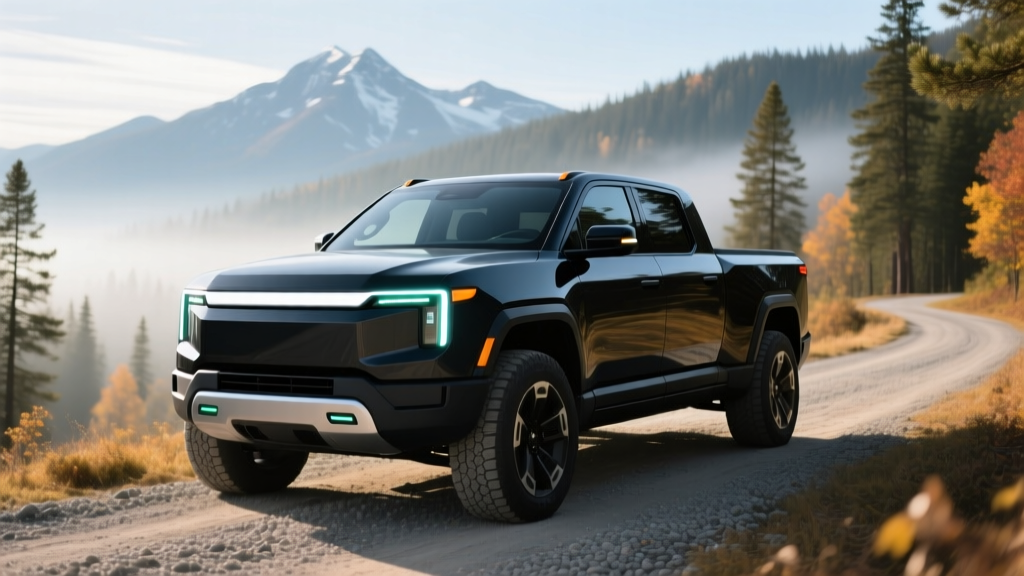
Rivian R1T Lease Discount: The Smart Way to Drive the 2026 Electric Truck
If you've been watching Rivian's pricing dance over the last two years, the current Rivian lease discount R1T offers might feel like a reprieve. For 2026, Rivian is pushing aggressive lease incentives on the R1T Dual-Motor and Tri-Motor trims — often stacking manufacturer cash with the federal §30D tax credit (passed through as a lease capitalization reduction) and state rebates. The result? Monthly payments that undercut a financed purchase by $200-$400 in many scenarios, with less long-term battery risk exposure.
But before you sign, you need to know exactly what you're leasing: real-world range, charging behavior, and whether the R1T's specs justify the commitment. Here's the full breakdown.
2026 Rivian R1T: Range, Battery, and Real-World Efficiency
The 2026 R1T continues with three battery configurations, all using NMC (nickel manganese cobalt) chemistry — chosen for energy density over the cycle-life advantages of LFP. Rivian does not publish exact usable kWh figures, but independent teardowns and EPA filings place the packs at approximately:
- Standard Pack: ~95 kWh usable
- Large Pack: ~128 kWh usable
- Max Pack: ~149 kWh usable
| Configuration | EPA Range | Real-World Highway (70 mph) | Cold Weather (20°F) |
|---|---|---|---|
| Dual-Motor Standard | 270 mi | ~230-245 mi | ~195-215 mi |
| Dual-Motor Large | 352 mi | ~300-315 mi | ~255-275 mi |
| Tri-Motor Max | 420 mi | ~360-380 mi | ~300-330 mi |
Source: EPA fueleconomy.gov. Highway and cold-weather estimates based on real-world testing patterns — expect 15-20% loss at sustained 70+ mph and 25-30% loss in sub-freezing temps without preconditioning.
Efficiency lands around 73-76 MPGe combined (Dual-Motor Large), translating to roughly 44-46 kWh/100 mi. That's typical for a 7,000-lb electric truck — the Ford F-150 Lightning Extended Range sits in a similar band. If you're towing, slash these numbers by 40-50%.
Charging Speed: DC Fast, Level 2, and the Curve Reality
Rivian upgraded the R1T's charging architecture for the 2025-2026 model years, moving to a higher-voltage system that meaningfully improved DC fast-charge rates on Large and Max packs.
| Charge Level | Power / Rate | Time or Miles Added |
|---|---|---|
| Level 1 (120V, 12A) | ~1.4 kW | ~3-4 mi/hr |
| Level 2 (240V, 48A) | 11.5 kW | ~25 mi/hr (full charge in 10-14 hrs) |
| DC Fast (Standard Pack) | Peak 190 kW | 10-80% in ~28 min |
| DC Fast (Large Pack) | Peak 220 kW | 10-80% in ~22 min |
| DC Fast (Max Pack) | Peak 220 kW | 10-80% in ~26 min |
Charging curve reality check: Peak kW is not sustained kW. The R1T Large Pack hits 220 kW briefly between 10-25% SoC, then tapers to ~160 kW by 50%, and drops below 80 kW past 70%. Your actual average rate on a 10-80% session is closer to 150-160 kW. Always precondition the battery via the Rivian app before arriving at a DC fast charger — skipping this can add 8-12 minutes to your session in cold weather.
The R1T uses the NACS (Tesla-style) connector natively as of 2025, giving you direct access to Tesla Superchargers (V3 and V4) without an adapter — a significant network advantage over CCS-only trucks.
Performance, Drivetrain, and Capability
The R1T is quick by any measure, but the powertrain choices matter for both performance and efficiency:
| Spec | Dual-Motor | Performance Dual-Motor | Tri-Motor |
|---|---|---|---|
| Horsepower | 533 hp | 665 hp | 850 hp |
| Torque | 610 lb-ft | 829 lb-ft | 1,103 lb-ft |
| 0-60 mph | 4.5 sec | 3.4 sec | 2.9 sec |
| Drivetrain | AWD (2 motors) | AWD (2 motors) | AWD (3 motors) |
| Max Towing | 11,000 lbs | 11,000 lbs | 11,000 lbs |
| Payload | ~1,760 lbs | ~1,760 lbs | ~1,760 lbs |
The Tri-Motor's 2.9-second 0-60 time is absurd for a truck, but the real-world value is in the low-end torque for towing and off-road crawling. The Dual-Motor is the efficiency sweet spot — you sacrifice a second of acceleration but gain 30-70 miles of range depending on pack size.
Cargo, Bed, and Interior Space
The R1T's 4.5-foot bed is shorter than a full-size truck's, but Rivian compensates with clever storage:
- Bed volume: ~27 cu ft (bed floor), plus the Gear Tunnel (11 cu ft, lockable, pass-through)
- Frunk (front trunk): ~11 cu ft, drainable — useful as a cooler
- Bed length with tailgate down: ~6.5 ft (fits a sheet of plywood flat)
- Rear-seat legroom: 37.3 inches (crew-cab only — no extended cab option)
- Front headroom: 41.0 inches
Compared to the F-150 Lightning's 5.5-foot bed and larger frunk, the R1T trades outright volume for adventure-oriented features like the Gear Tunnel and built-in air compressor. If you regularly haul 4x8 sheets with the tailgate up, the Lightning wins on utility. If you want lockable, weather-sealed storage for bikes or camping gear, the R1T's layout is more thoughtful.
Pricing, Lease Discounts, and Tax Credit Eligibility
Here's where the lease calculus gets interesting. Rivian's 2026 MSRP structure for the R1T (before destination):
| Trim / Config | Base MSRP | As-Tested (Typical) | §30D Credit Eligible? |
|---|---|---|---|
| Dual-Motor Standard | $69,900 | $74,000-$78,000 | Yes (below $80K truck cap) |
| Dual-Motor Large | $75,900 | $82,000-$88,000 | Varies by final config |
| Performance Dual Large | $82,400 | $89,000-$95,000 | No (exceeds $80K MSRP cap) |
| Tri-Motor Max | $99,900 | $105,000-$110,000 | No (exceeds $80K MSRP cap) |
Note: The §30D credit for trucks/vans/SUVs has an $80,000 MSRP cap. Only the base Dual-Motor Standard Pack consistently qualifies. Buyer income caps also apply ($150K single / $300K joint for new vehicles). Battery sourcing and critical mineral requirements must also be met — verify current-year rules at IRS.gov §30D.
The lease discount mechanism: When you lease an EV, the §30D credit goes to the lessor (Rivian Financial Services), not you directly. However, most OEMs — Rivian included in current promotions — pass this through as a capitalized cost reduction, effectively lowering your monthly payment by the credit's value ($3,750-$7,500 depending on sourcing compliance). This also means trims above the $80K MSRP cap can still benefit if Rivian applies a manufacturer lease cash incentive in lieu of the federal credit.
Current 2026 lease offers (subject to change, region-dependent):
- $2,000-$4,000 Rivian lease cash on Dual-Motor trims
- $7,500 pass-through on qualifying Standard Pack configs
- Money factor (lease APR equivalent) as low as 0.00125 (~3.0% APR) for well-qualified buyers
A realistic lease scenario for a Dual-Motor Standard ($69,900 MSRP, $73,000 as-tested with options): with $7,500 credit pass-through + $2,000 lease cash + $5,000 down, expect monthly payments in the $650-$750 range for 36 months / 10,000 miles/year.
Tech, Driver Assistance, and Ownership Experience
The R1T runs Rivian's proprietary software stack on a 15.6-inch center display with a 12.3-inch driver cluster. Key tech highlights:
- Rivian Driver+: SAE Level 2 system with adaptive cruise + lane centering. Competent for highway use but requires hands-on-wheel attention — not a hands-off system like GM's Super Cruise.
- Over-the-air updates: Regular feature additions and performance tweaks, similar to Tesla's cadence.
- Vehicle-to-load (V2L): Power devices from the bed outlet (up to 2.4 kW) — useful for camping or job-site tools.
- Quad-motor tank turns: (Tri-Motor only) Low-speed 360° pivots for tight off-road spots.
- Camp Kitchen option: Slide-out induction cooktop and sink from the Gear Tunnel (dealer-installed, ~$5,000).
Warranty and Long-Term Battery Outlook
Rivian's warranty coverage is competitive within the EV truck segment:
- Battery & Drive Units: 8 years / 175,000 miles (whichever comes first), with a capacity retention threshold of 70%.
- Limited Vehicle Warranty: 5 years / 60,000 miles bumper-to-bumper.
- Roadside Assistance: 5 years / 60,000 miles.
The 175,000-mile battery warranty is a standout — it exceeds the industry-standard 100,000 miles and signals confidence in the NMC pack's longevity. Real-world degradation data from 2022-2024 R1T owners shows approximately 5-8% capacity loss at 50,000 miles, which is typical for liquid-cooled NMC packs. The 70% threshold means Rivian would replace or repair the battery if it drops below ~67 kWh (Standard) or ~90 kWh (Large) within the warranty period.
Is the R1T Lease Worth It vs. Competitors?
- You want an adventure-oriented truck with clever storage (Gear Tunnel, frunk, V2L)
- You value NACS native charging and Supercharger access
- You plan to keep the vehicle 3 years or less (lease avoids long-term depreciation risk)
- You want to stack incentives on a sub-$80K config
- You need a full-size 5.5+ ft bed for regular work use
- You want a lower starting price (Lightning starts ~$55K)
- You prefer a dealership service network over Rivian's mobile/limited-center model
- Best-in-class adventure features (Gear Tunnel, air compressor, camp kitchen)
- Native NACS = direct Supercharger access
- Strong battery warranty (8yr/175K mi)
- Lease stacking: §30D + lease cash + state rebates
- Tri-Motor performance is class-leading
- 4.5-ft bed limits work-truck utility
- Only base Dual-Motor qualifies for full §30D credit
- Limited service center network vs. Ford/Chevy
- Real-world range drops significantly when towing
- Lease mileage penalties (typically $0.25-$0.30/mi over limit)
Frequently Asked Questions
What is the real-world range of the 2026 Rivian R1T?
EPA estimates range from 270 mi (Standard Pack) to 420 mi (Max Pack). Real-world highway driving at 70 mph typically yields 230-380 mi depending on pack, and cold weather (20°F) can reduce that by 25-30%. Towing cuts range roughly in half.
How fast does the R1T charge at home and on the road?
At home on a 48A Level 2 charger (11.5 kW), expect ~25 miles of range per hour, or a full charge in 10-14 hours. On DC fast chargers, the Large Pack peaks at 220 kW and charges 10-80% in ~22 minutes, though sustained rates average 150-160 kW across the curve.
How much does the R1T cost after tax credits and lease discounts?
The Dual-Motor Standard starts at $69,900 MSRP. With the $7,500 §30D credit pass-through (on qualifying configs), $2,000-$4,000 in Rivian lease cash, and potential state rebates, effective monthly leases can land in the $650-$750 range for 36 months with $5,000 down. Higher trims exceed the $80K MSRP cap but may still receive manufacturer incentives.
Does the R1T qualify for the federal EV tax credit?
The Dual-Motor Standard Pack (MSRP under $80K) generally qualifies for up to $7,500 under §30D, subject to buyer income caps ($150K single / $300K joint), battery sourcing rules, and critical mineral requirements. Performance and Tri-Motor trims exceed the $80K MSRP cap for trucks and do not qualify for the purchase credit — but lease structures may pass equivalent savings through the lessor. Always verify current rules at IRS.gov.
Is it better to buy or lease the R1T in 2026?
Leasing makes sense if you want to maximize incentive stacking (credit + lease cash), avoid long-term battery depreciation risk, and upgrade in 3 years. Buying makes sense if you drive over 12,000 miles/year (lease penalties add up), plan to keep the truck 5+ years, or want to customize it (lift kits, wraps, aftermarket — all restricted under lease terms).
What are the biggest drawbacks of the R1T?
The 4.5-foot bed limits work-truck utility, the service center network is still sparse outside major metros, and only the base trim qualifies for the full federal credit. Towing range is also a significant concern — expect 130-180 miles between charges when pulling a 5,000+ lb trailer.