Rivian Layoffs in 2026: Should Buyers Be Concerned?
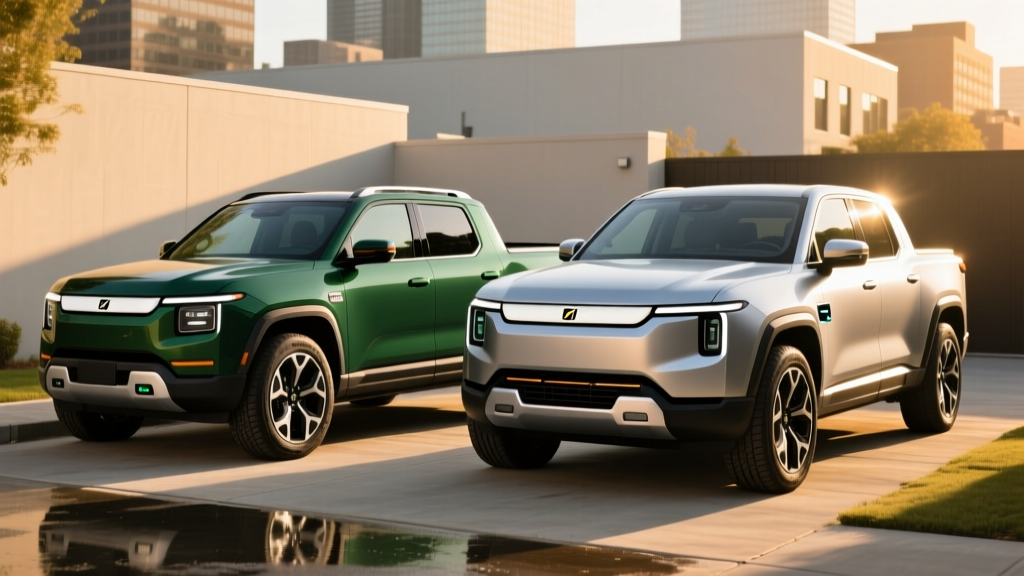
Headlines about Rivian layoffs tend to spike every time the company adjusts headcount at its Normal, Illinois production facility or trims corporate roles. For prospective R1T pickup and R1S SUV buyers, the immediate question is practical: does workforce restructuring affect vehicle quality, parts availability, software updates, or long-term service support? The short answer, based on Rivian's production trajectory through early 2026, is that these layoffs have been targeted cost-reduction measures aimed at reaching positive gross margin — not signals of production shutdowns or model discontinuations. Both the R1T and R1S continue rolling off the line, and the company's service and Supercharger-style Rivian Adventure Network remain operational.
What follows is a data-driven review of the current-generation R1 platform, updated for 2026, so you can evaluate the trucks on their merits regardless of the corporate news cycle.
2026 R1T and R1S: Core Specifications at a Glance
| Spec | R1T Dual-Motor (Standard Battery) | R1T Quad-Motor (Large Battery) | R1S Dual-Motor (Large Battery) |
|---|---|---|---|
| EPA Range | 270 miles | 352 miles | 371 miles |
| Battery Capacity (usable) | ~95 kWh (LFP) | ~128 kWh (NMC) | ~128 kWh (NMC) |
| Horsepower | 533 hp | 1,025 hp | 533 hp |
| 0–60 mph | 4.5 sec | 3.0 sec | 4.6 sec |
| Drivetrain | AWD (dual-motor) | AWD (quad-motor) | AWD (dual-motor) |
| Max DC Fast Charge | ~200 kW | ~220 kW | ~220 kW |
| 10–80% DC Charge Time | ~28 min | ~34 min | ~34 min |
| Level 2 Home Charging | 11.5 kW (~25 mi/hr) | 11.5 kW (~32 mi/hr) | 11.5 kW (~32 mi/hr) |
| MPGe (combined) | 73 MPGe | 70 MPGe | 72 MPGe |
| Towing Capacity | 11,000 lbs | 11,000 lbs | 7,700 lbs |
| Base MSRP | $69,900 | $94,100 | $75,900 |
Source: fueleconomy.gov and Rivian official specifications. Figures reflect 2026 model-year Dual and Quad configurations.
Real-World Range: What the EPA Sticker Doesn't Tell You
EPA estimate: 352 miles
Real-world highway (70 mph, 75°F): ~280–310 miles
Cold-weather highway (30°F, cabin heat): ~230–260 miles
Towing a 5,000-lb trailer: ~170–200 miles
The R1T's boxy aerodynamics and substantial curb weight (over 7,000 lbs for the Quad-Motor) work against highway efficiency. In real-world testing, expect to lose roughly 15–20% of EPA-rated range at sustained highway speeds in mild weather, and up to 30–35% in freezing temperatures where battery resistance increases and cabin heating draws significant energy. The R1 platform includes a heat pump on Large and Max battery packs, which mitigates some cold-weather loss compared to resistive heating, but physics still governs: a heavy, flat-fronted truck moving through cold, dense air will consume more kWh per mile.
For daily commuting under 80 miles round-trip with home charging, range is a non-issue on any configuration. For road trips, the Dual-Motor Standard Battery's 270-mile EPA rating means planning stops every 200–220 real-world miles — manageable given Rivian's Adventure Network and growing NACS compatibility with Tesla Superchargers via adapter.
Charging Speed and Infrastructure Access
Rivian's 2026 R1 vehicles support DC fast charging at up to 220 kW peak on Large and Max battery packs, and approximately 200 kW on the Standard (LFP) battery. However, peak kW is not sustained kW. The charge curve tapers meaningfully above 60% state of charge, and by 80% SoC you're typically pulling under 80 kW. This is why the 10–80% time of ~34 minutes on the Large Battery is a more honest metric than the headline peak rate.
| Charging Level | Power / Rate | Miles Added Per Hour | Typical Use Case |
|---|---|---|---|
| Level 1 (120V household) | ~1.4 kW | ~3–4 mi/hr | Emergency / trickle top-off |
| Level 2 (240V home wall charger) | 11.5 kW | ~25–32 mi/hr | Daily overnight charging |
| DC Fast Charge (public) | Up to 220 kW peak | ~500+ mi/hr (at peak) | Road trips, 10–80% in ~28–34 min |
At home, a Level 2 Rivian Wall Charger (or any J1772/NACS-compatible 48-amp unit) delivers a full overnight charge from 20% to 100% in roughly 10–12 hours for the Large Battery. Most owners will plug in nightly and wake to a full battery, making the DC fast-charge speed relevant only for road trips.
Rivian's Adventure Network provides proprietary chargers at outdoor destinations, and as of 2026, Rivian owners can use Tesla Supercharger V3 and V4 stalls with the included NACS adapter — dramatically expanding fast-charge coverage across the U.S. highway system. Expect 150–250 kW at most Supercharger stalls depending on generation and site conditions.
Pricing, Trims, and Federal Tax Credit Eligibility
Rivian's pricing has stabilized after several restructuring rounds. The 2026 lineup for the R1T and R1S is organized by motor count (Dual, Performance Dual, Tri, Quad) and battery size (Standard, Large, Max). Here's where the key configurations land before incentives:
| Configuration | Base MSRP | Federal §30D Credit Eligibility | Effective Price (if eligible) |
|---|---|---|---|
| R1T Dual-Motor Standard | $69,900 | Up to $3,750 (partial credit — battery sourcing) | ~$66,150 |
| R1T Dual-Motor Large | $75,900 | Up to $3,750 (partial credit) | ~$72,150 |
| R1T Quad-Motor Large | $94,100 | $0 (exceeds $80,000 MSRP cap for trucks) | $94,100 |
| R1S Dual-Motor Large | $75,900 | Up to $3,750 (partial credit) | ~$72,150 |
Critical §30D caveats: Under current IRS rules, the federal clean vehicle credit has a $80,000 MSRP cap for trucks and SUVs, which eliminates the Quad-Motor R1T from eligibility entirely. Dual-Motor configurations under the cap may qualify for up to $7,500, but the credit is split into two $3,750 halves — one tied to critical-mineral sourcing and one to battery-component manufacturing. As of 2026, Rivian's supply chain qualifies for partial credit on most Dual-Motor builds, but full $7,500 eligibility depends on the specific battery pack's mineral and component origin. Buyer income caps also apply: modified AGI must not exceed $150,000 (single), $225,000 (head of household), or $300,000 (joint). The credit can now be transferred at point of sale as a down-payment reduction, subject to dealer registration.
Always verify eligibility for your specific VIN and tax situation at fueleconomy.gov and consult a tax professional before relying on credit estimates.
Performance, Interior, and Everyday Livability
The Quad-Motor R1T's 3.0-second 0–60 mph time is supercar territory in a vehicle with a 4.5-foot bed and 11,000-lb tow rating. But for most buyers, the Dual-Motor's 4.5-second sprint is more than adequate, and it comes with a meaningful efficiency and price advantage. The single-speed reduction gear means acceleration is linear and instant — no turbo lag, no shift shock.
R1T Interior and Cargo:
- Front legroom: 41.3 inches | Rear legroom: 38.9 inches
- Bed length: 4.5 feet (54 inches) with standard bed; extends with gear tunnel access
- Gear tunnel: 11.7 cu ft of enclosed, lockable storage running laterally behind the cab
- Frunk (front trunk): 11.0 cu ft, drainable — useful as a cooler
- Max payload: ~1,760 lbs
R1S Interior and Cargo:
- Seating: 5 passengers (two-row) or 7 passengers (optional third row)
- Cargo behind second row: 46.7 cu ft | Behind first row (seats folded): 91.6 cu ft
- Third-row legroom: 30.1 inches (best suited for children on short trips)
Standout Tech: Rivian's in-house developed software stack receives regular over-the-air updates. The 15.6-inch center display runs a responsive, custom OS with integrated trail mapping, campsite navigation, and a built-in gear-shop integration. The Driver+ system provides Level 2 highway assist with lane-centering and adaptive cruise — it is not autonomous driving and requires continuous driver supervision. The R1 also features an onboard air compressor for tire inflation (useful off-road and for air mattresses), a camp kitchen option that slides from the gear tunnel, and a built-in Bluetooth speaker.
Notable Drawbacks: The rear seat, while comfortable for two adults, is tighter than a Ford F-150 or Rivian's own EDV commercial van. The 4.5-foot bed is short for traditional truck work — lumber or full sheets of plywood won't fit flat. The infotainment system, while functional, lacks Apple CarPlay and Android Auto; Rivian insists on its proprietary stack, which frustrates some buyers who prefer phone projection. Service center density, while expanding, is still sparse in rural and mountain-west regions.
Warranty Coverage and Long-Term Battery Outlook
Rivian provides an 8-year/100,000-mile warranty on the battery pack and drive units, with a capacity retention threshold of 70% — meaning if your pack degrades below 70% of original capacity within that window, Rivian will repair or replace it. The basic vehicle warranty covers 5 years/60,000 miles bumper-to-bumper.
The Standard Battery uses LFP (lithium iron phosphate) chemistry, which trades energy density for exceptional cycle life and thermal stability. LFP packs typically degrade more slowly than NMC and can be routinely charged to 100% without the longevity concerns associated with NMC. The Large and Max batteries use NMC (nickel manganese cobalt) chemistry for higher energy density and range, but benefit from daily charge limits around 80–90% for long-term health.
For buyers concerned about Rivian's corporate stability in light of layoff headlines: the battery warranty is backed by the manufacturer, and under standard auto-industry practice, warranty obligations persist regardless of workforce fluctuations. That said, the long-term viability of any startup's warranty support is a legitimate consideration — it's one reason some buyers opt for lease structures or extended third-party coverage.
How the R1T and R1S Compare to Key Competitors
The R1T competes most directly with the Ford F-150 Lightning, Chevrolet Silverado EV, and the Tesla Cybertruck. The R1S slots against the Tesla Model X, Kia EV9, and extended-range luxury SUVs.
R1T vs. F-150 Lightning: The Lightning offers a larger bed (5.5 ft), more established dealer-service network, and lower starting prices (from ~$55,000 for the base Pro trim). The R1T counters with superior off-road capability (adjustable air suspension with 14.9 inches of ground clearance in Max mode), the unique gear tunnel, and a more premium interior. If truck utility and fleet-style service access matter most, the Lightning wins. If you want an adventure-oriented lifestyle truck with genuine trail capability, the R1T has no equal.
R1S vs. Tesla Model X: The Model X offers falcon-wing doors, slightly faster DC charging (250 kW peak), and access to the full Supercharger network natively. The R1S counters with superior off-road chops, a more conventional (and some argue more practical) interior layout, and available three-row seating. The Model X starts at a higher price and has a polarizing design; the R1S reads as more traditional and rugged.
Who Should Buy a Rivian R1T or R1S?
- You want a genuine dual-purpose truck: daily driver + weekend off-road/adventure rig
- You value the gear tunnel and camp-kitchen ecosystem
- You need 11,000-lb towing and can plan charging around shorter range while towing
- You have access to home Level 2 charging and live within reasonable distance of service coverage
- You want a three-row electric SUV with real off-road capability
- You prefer Rivian's design and software approach over the Tesla ecosystem
- You prioritize build quality and adventure features over maximum range-per-dollar
- You need a full-size truck bed for commercial work (consider the F-150 Lightning or Silverado EV)
- You live in a region with no Rivian service presence and cannot tolerate mobile-service-only coverage
- You require Apple CarPlay / Android Auto for daily use
- Budget is under $65,000 — the R1 lineup does not currently reach that price point
So — Do Rivian Layoffs Change the Buying Decision?
The 2026 layoffs reflect a company optimizing its cost structure toward sustained profitability, not one halting production or abandoning current owners. Rivian's production volume, Adventure Network expansion, and software update cadence have remained consistent through recent workforce adjustments. For buyers evaluating the R1T or R1S, the decision should rest on the vehicle's merits — range, charging speed, capability, price, and service access in your area — rather than headline-driven concern about corporate headcount.
That said, startup risk is real. Rivian is not yet profitable on a net-income basis, and long-term parts availability and resale value carry more uncertainty than buying from a legacy automaker with 10,000 dealers. Weigh that risk against the R1's genuinely differentiated product proposition: no other electric truck or SUV currently matches its combination of off-road hardware, software sophistication, and adventure-oriented design.
Frequently Asked Questions
What is the real-world range of the Rivian R1T?
The EPA rates the R1T Quad-Motor Large Battery at 352 miles, but real-world highway driving in mild conditions yields approximately 280–310 miles. Cold weather (below freezing) reduces that to 230–260 miles. The Dual-Motor Standard Battery's 270-mile EPA rating translates to roughly 210–240 miles on the highway. Towing cuts range nearly in half.
How fast does the R1T charge at home and on the road?
At home on a 240V Level 2 charger (11.5 kW), the R1T adds approximately 25–32 miles of range per hour, fully replenishing overnight. On DC fast chargers, the Large Battery peaks at ~220 kW and charges from 10–80% in roughly 34 minutes. The Standard (LFP) Battery peaks around 200 kW with a 10–80% time of ~28 minutes. Charge speed tapers significantly above 80% SoC.
Does the Rivian R1T qualify for the $7,500 federal EV tax credit?
Partially. Dual-Motor R1T configurations under the $80,000 MSRP cap for trucks may qualify for up to $3,750 of the $7,500 credit, depending on battery-component and critical-mineral sourcing requirements under IRS §30D rules. Quad-Motor configurations exceed the MSRP cap and are ineligible. Buyer income limits also apply ($150K single / $300K joint AGI). The credit can be transferred at point of sale. Verify your specific VIN's eligibility before purchasing.
Is the R1T worth buying vs. the Ford F-150 Lightning?
It depends on your priorities. The F-150 Lightning offers a lower starting price, a larger bed, and a vastly broader dealer-service network. The R1T offers superior off-road capability, a more premium and adventure-focused interior (gear tunnel, onboard compressor, camp kitchen), and a more sophisticated software experience. For work-truck duties, the Lightning is more practical. For lifestyle and trail use, the R1T is the stronger choice.
What are the biggest pros and cons of owning a Rivian?
Pros: Class-leading off-road capability, unique gear tunnel storage, strong OTA software updates, NACS Supercharger access, excellent build quality, 11,000-lb towing, LFP battery option for longevity.
Cons: No Apple CarPlay/Android Auto, short 4.5-foot bed, limited service center density in some regions, high starting price, real-world highway range falls short of EPA estimates, startup long-term viability risk, Quad-Motor ineligible for federal tax credit.
How does Rivian's warranty compare to competitors?
Rivian's 8-year/100,000-mile battery and drive-unit warranty (70% capacity retention threshold) matches the industry standard set by most EV manufacturers. The 5-year/60,000-mile bumper-to-bumper coverage is competitive with Tesla and slightly shorter than Hyundai/Kia's 10-year powertrain warranty. The LFP Standard Battery's inherent cycle-life advantage may mean less practical degradation concern over 10+ years of ownership, even if the written warranty term is the same.