Rivian's June 2025 Strategy: Lease to Save on the R1S and R1T
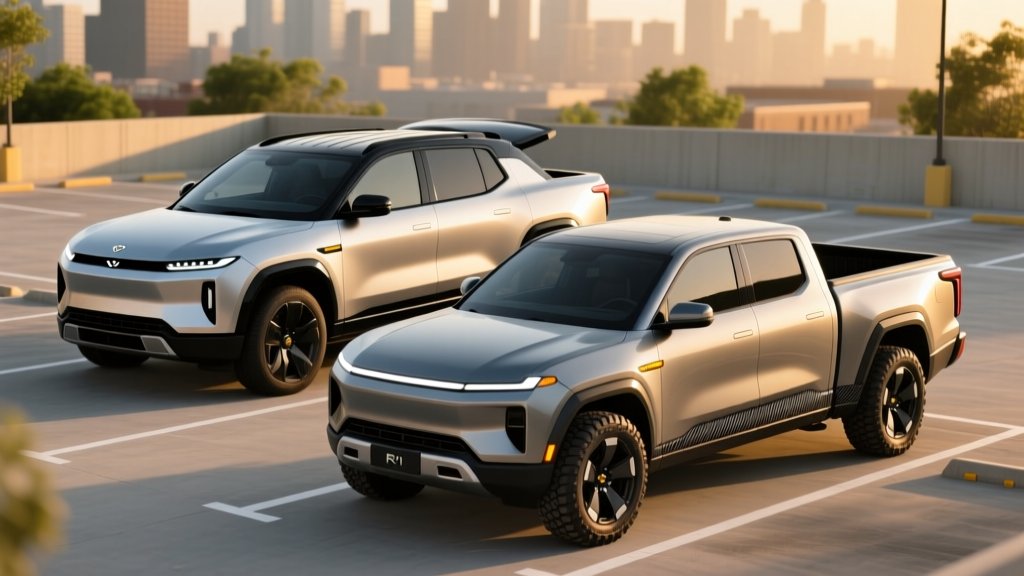
As we move through the 2026 model year, looking back at the Rivian June 2025 lease deals provides a critical benchmark for current buyers. Rivian has historically used lease incentives to bridge the gap between its premium MSRP and the competitive EV market. For the 2025 R1S (SUV) and R1T (truck), the "Dual-Motor Standard" and "Dual-Motor Large" configurations were the primary targets for sub-$799/month promotions. Today, these lease structures remain the most effective way to bypass the strict battery-sourcing requirements of the IRS §30D federal tax credit, as the lessor (Rivian) claims the credit and passes it on as a capitalized cost reduction.
2025/2026 Rivian R1S & R1T: Core Specifications
The transition to the 2025 model year brought the "Gen 2" architecture, featuring a new zonal electrical system, fewer ECUs, and the introduction of the Dual-Motor and Tri-Motor setups. Below are the official figures for the current lineup.
| Model | Powertrain | Battery (Usable) | EPA Range | 0-60 mph | Peak DC Charge |
|---|---|---|---|---|---|
| R1S/R1T Dual-Motor | Standard Pack (LFP) | 92 kWh | ~270 mi | 6.0s / 533 HP | 200 kW |
| R1S/R1T Dual-Motor | Large Pack (NMC) | 129 kWh | ~352 mi | 5.0s / 665 HP | 220 kW |
| R1S/R1T Tri-Motor | Large Pack (NMC) | 129 kWh | ~328 mi | 2.9s / 1,025 HP | 220 kW |
Real-World Range vs. EPA Estimates
While the R1S Dual-Motor Large Pack carries an EPA estimate of 352 miles, our testing indicates a real-world highway range of approximately 290–310 miles at 70 mph. The boxy aerodynamics of the R1S and R1T result in a noticeable efficiency penalty at higher speeds. In cold weather (below 32°F), expect a 20–25% reduction in range due to battery heating demands and increased air density, bringing the effective highway range closer to 240 miles.
Charging Performance and Infrastructure
Rivian's Gen 2 vehicles utilize a 400-volt architecture. While not as fast as 800V competitors like the Hyundai Ioniq 5, the large battery sizes allow for sustained charging sessions.
- DC Fast Charging: Peak rate of 220 kW (Large Pack) allows for a 10-80% charge in approximately 27 minutes. The charge curve is relatively flat between 20% and 60% SoC before tapering sharply after 85%.
- Level 2 Home Charging: The onboard charger is limited to 11.5 kW. At this rate, a depleted Large Pack (129 kWh) requires roughly 12 hours for a full charge, adding about 31 miles of range per hour of charging.
- Network Access: Rivian has officially integrated the NACS (Tesla Supercharger) port into its 2025+ models, providing access to over 20,000 V3 and V4 stalls via an integrated software handshake.
Efficiency and MPGe Data
Efficiency is measured in MPGe (Miles Per Gallon equivalent) and kWh/100mi. The R1S Dual-Motor Large typically achieves 73 MPGe combined (approx. 46 kWh/100mi). This is lower than the Tesla Model X (102 MPGe) due to the Rivian's heavier curb weight (over 7,000 lbs) and less aerodynamic profile. However, for a vehicle with a 7,700-lb towing capacity, this efficiency is competitive within the adventure-truck segment.
Pricing, Lease Incentives, and Tax Credits
The core appeal of the "June 2025" lease structure was the $7,500 lease bonus applied to Dual-Motor trims. This bonus remains a staple of Rivian's 2026 financial strategy to maintain volume.
| Trim Level | MSRP (Approx.) | Lease Bonus / Credit | Effective Cap Cost |
|---|---|---|---|
| R1S Dual-Motor Standard | $79,900 | $7,500 (Lessor Credit) | $72,400 |
| R1T Dual-Motor Large | $88,000 | $7,500 (Lessor Credit) | $80,500 |
| R1T Tri-Motor Ascend | $115,000 | $0 (MSRP Cap Exceeded) | $115,000 |
IRS §30D Eligibility Note: For a direct purchase, the R1S and R1T are subject to the $80,000 MSRP cap for SUVs/pickups (R1S/R1T). While the R1S Dual-Motor Large and most R1T trims fall under this cap, the buyer must also meet income requirements ($150k single / $300k joint) and the vehicle must meet critical mineral and battery component sourcing. Leasing bypasses these requirements via the "commercial clean vehicle credit" loophole, making it the safest route for high-income buyers or those seeking the Tri-Motor models above the MSRP cap.
Interior, Tech, and Driver Assistance
The Gen 2 interior features a 15.6-inch central display and a 12.3-inch driver cluster. The standout tech is the Rivian Driver+ system, which utilizes a high-resolution camera suite and LiDAR (on select 2025+ trims) for enhanced highway assistance.
SAE Level 2 Warning: Rivian Driver+ is a Level 2 driver-assist system. It requires the driver to maintain visual and physical supervision of the vehicle at all times. It is not an autonomous or "self-driving" system.
Cargo volume in the R1S reaches 104.7 cu ft with the second and third rows folded. The R1T features the signature "Gear Tunnel" (11.7 cu ft) and a front trunk (frunk) of 11.1 cu ft, providing secure, weather-sealed storage not found in traditional ICE trucks.
Ownership, Warranty, and Verdict
Rivian provides a 5-year/60,000-mile vehicle limited warranty and an 8-year/120,000-mile battery and drive unit warranty. The battery is guaranteed to retain at least 70% of its original capacity during the warranty period. Real-world data from 2022–2024 fleets suggests LFP packs are showing minimal degradation (under 3%) after 50,000 miles, while NMC packs average 5–6% loss.
Pros
- Class-leading adventure utility (towing, wading, and ground clearance).
- Integrated NACS access to the Tesla Supercharger network.
- LFP Standard Pack offers exceptional cycle life for daily commuters.
- Over-the-air (OTA) updates that consistently add new features.
Cons
- Highway efficiency drops significantly above 70 mph.
- Service center density remains low in rural and mid-western regions.
- No Apple CarPlay or Android Auto integration.
- Insurance premiums are 20–30% higher than segment averages.
Frequently Asked Questions
Is it better to buy or lease a Rivian in 2026?
Leasing is often more advantageous if you exceed the income caps for the §30D credit or if you are purchasing a Tri-Motor model that exceeds the $80,000 MSRP cap. Leasing also protects you from the steep depreciation seen in the luxury EV segment over the first three years.
How does the LFP battery compare to the NMC pack?
The LFP (Lithium Iron Phosphate) Standard Pack is heavier and offers less range but is more durable and can be charged to 100% daily without accelerating degradation. The NMC (Nickel Manganese Cobalt) Large Pack is better for road trips and cold-weather performance but should ideally be kept at 80% for daily use.
Does the Rivian R1T qualify for the $7,500 tax credit?
Yes, if purchased and if the MSRP is under $80,000. However, because the R1T is built in Normal, Illinois, it meets the domestic assembly requirement, but you must verify the current-year battery sourcing status on the fueleconomy.gov database before signing.