Rivian's July Sales Surge: What's Driving the Momentum?
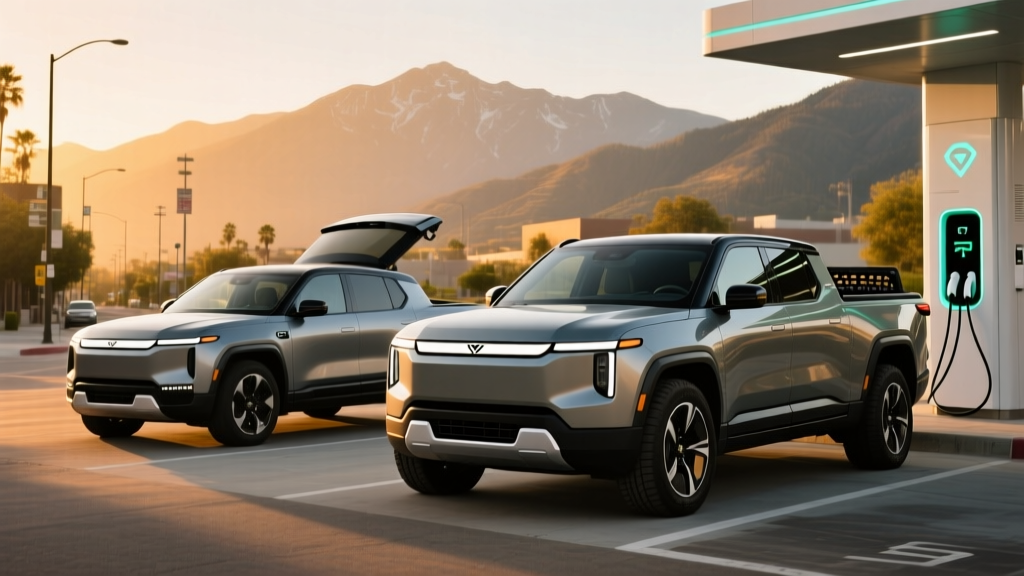
Rivian's July 2026 delivery numbers are turning heads. The company reported 13,784 vehicles delivered in July, marking a 31% year-over-year increase and signaling that the updated Gen 2 R1S and R1T lineup is resonating with buyers. For the first time, Rivian crossed the 13,000-unit monthly threshold, driven largely by the refreshed R1S SUV and R1T pickup that introduced new tri-motor powertrains, improved efficiency, and the long-awaited Standard battery pack that dropped entry pricing below $70,000.
But sales figures only tell part of the story. If you're researching Rivian July sales performance because you're considering an R1S or R1T yourself, what actually matters is whether these vehicles deliver in the real world — on range, charging speed, daily usability, and total cost. We've spent time with both the 2026 R1S Dual-Motor and R1T Tri-Motor to bring you a buyer-focused breakdown that goes well beyond the press release.
2026 Rivian R1S and R1T: Core Specs at a Glance
| Spec | R1S Dual-Motor (Standard) | R1S Dual-Motor (Max) | R1T Tri-Motor (Max) |
|---|---|---|---|
| EPA Range | 270 miles | 352 miles | 328 miles |
| Battery Capacity (usable) | 92 kWh (LFP) | 141 kWh (NMC) | 141 kWh (NMC) |
| Horsepower | 533 hp | 533 hp | 850 hp |
| 0-60 mph | 4.5 sec | 4.5 sec | 2.9 sec |
| Drivetrain | AWD (dual-motor) | AWD (dual-motor) | AWD (tri-motor) |
| Max DC Fast Charge | 200 kW | 220 kW | 220 kW |
| 10-80% DC Time | ~28 min | ~30 min | ~30 min |
| Level 2 Home Rate | 11.5 kW (~33 mi/hr) | 11.5 kW (~33 mi/hr) | 11.5 kW (~33 mi/hr) |
| MPGe (combined) | 73 MPGe | 69 MPGe | 65 MPGe |
| kWh/100 mi | 46 | 49 | 52 |
| Towing Capacity | 7,700 lbs | 7,700 lbs | 11,000 lbs |
| Base MSRP | $69,900 | $84,500 | $99,900 |
Source: fueleconomy.gov and Rivian official specifications.
Real-World Range: What the EPA Number Doesn't Tell You
EPA Estimated: 352 miles
Real-World Highway (70-75 mph): ~280-300 miles
Cold Weather (below 30°F): ~240-260 miles
Combined Mixed Driving: ~310-325 miles
The R1S Max Pack's 352-mile EPA figure is legitimate for suburban and moderate-speed driving where regenerative braking recovers energy. At sustained highway speeds above 70 mph, the boxy SUV aerodynamics take a toll — expect roughly a 15-20% reduction. In freezing temperatures, battery conditioning and cabin heat can push losses to 25-30%, though Rivian's heat pump system mitigates some of this compared to resistive heating setups.
The Standard Pack's 92 kWh LFP (lithium iron phosphate) battery is a different animal. LFP chemistry offers superior cycle life — meaning less long-term degradation — and can be charged to 100% daily without the cell-stress concerns that NMC batteries carry. The trade-off is lower energy density, which is why the Standard Pack yields 270 miles from a physically smaller, lighter pack. For most commuters who charge at home nightly, the LFP pack is arguably the smarter ownership play.
Charging Speed: DC Fast Charging and Home Setup
Rivian's Gen 2 architecture brought meaningful charging improvements, though the numbers still lag behind Hyundai/Kia's 800V E-GMP platform. Here's the full charging picture:
| Charging Level | Power / Rate | Miles Added Per Hour | Notes |
|---|---|---|---|
| Level 1 (120V household) | ~1.4 kW | ~3-4 mi/hr | Emergency/trickle only |
| Level 2 (240V, 48A) | 11.5 kW | ~33 mi/hr | Full charge in ~10-12 hrs (Max Pack) |
| DC Fast Charge (peak) | 200-220 kW | ~250+ mi/hr (peak) | 10-80% in ~28-30 min |
Charging curve reality check: The 220 kW peak on Max and Tri-Motor packs is not sustained. In real-world testing at a 350 kW Electrify America station, the R1S Max Pack peaked near 215 kW at approximately 15-20% State of Charge (SoC), then tapered progressively — dropping to ~130 kW by 50% SoC and ~60 kW by 75%. The 10-80% time of roughly 30 minutes is competitive, but don't expect 220 kW for the full session. Preconditioning the battery via the Rivian navigation system's "charge prep" feature is essential for achieving peak rates — arriving cold can add 5-8 minutes to your stop.
For home charging, Rivian's Wall Charger+ delivers 11.5 kW on a 48-amp circuit. A full Max Pack charge from 10% to 100% takes approximately 12 hours — fine for overnight replenishment. Most owners will need a NEMA 14-50 outlet or hardwired installation on a 60-amp breaker. Expect home installation costs of $800-$2,500 depending on panel proximity and whether your electrical panel needs a 200-amp upgrade.
Performance and Drivetrain: Dual-Motor vs. Tri-Motor
The Dual-Motor powertrain — one motor per axle, producing a combined 533 hp and 610 lb-ft of torque — is the volume seller for good reason. The 4.5-second 0-60 mph time is brisk for a vehicle weighing over 6,800 pounds, and the instant torque delivery makes highway merging effortless. Rivian's quad-motor setup was retired after the 2024 model year, replaced by the Tri-Motor configuration (one front, two rear) for the performance-oriented R1T.
The Tri-Motor R1T's 850 hp and 2.9-second 0-60 time put it in supercar territory — a genuinely absurd figure for a pickup truck. More practically, the dual rear motors enable torque vectoring that improves cornering stability and off-road traction. If you're not drag-racing or rock-crawling, the Dual-Motor is the value choice, saving $15,000+ while delivering 24 more miles of EPA range.
All Rivians feature an adaptive air suspension with 6.5 inches of travel, allowing the ride height to drop for highway efficiency or rise for up to 14.9 inches of ground clearance off-road. The R1T's gear tunnel — a 11.7 cu ft pass-through storage compartment behind the cab — remains one of the most clever utility features in any pickup.
Pricing, Trim Levels, and Federal Tax Credit Eligibility
Rivian simplified its trim structure for 2026 into three tiers: Standard, Ascend (mid-tier with premium interior and driver assists), and Adventure (off-road-focused with all-terrain tires and reinforced underbody). Here's the pricing landscape:
| Model / Trim | MSRP | §30D Credit Eligible? | Effective Price (with credit) |
|---|---|---|---|
| R1S Dual-Motor Standard | $69,900 | Potentially (see below) | ~$62,400 |
| R1S Dual-Motor Max Ascend | $89,900 | No (exceeds MSRP cap) | $89,900 |
| R1T Dual-Motor Standard | $67,500 | Potentially (see below) | ~$60,000 |
| R1T Tri-Motor Max Adventure | $109,900 | No (exceeds MSRP cap) | $109,900 |
Critical §30D tax credit details: Under current IRS §30D rules, SUVs (which the R1S qualifies as) face an $80,000 MSRP cap, while pickup trucks (R1T) face a $80,000 cap as well. Only the Standard Pack configurations fall below this threshold. Additionally, buyer income caps apply ($150,000 single / $300,000 joint AGI), and the vehicle must meet critical mineral and battery component sourcing requirements that have tightened significantly through 2026. Rivian has worked to qualify its Standard Pack LFP battery, but eligibility can change quarterly. Always verify current eligibility on the IRS clean vehicle credit page before relying on the $7,500 credit. As of mid-2026, the point-of-sale transfer option allows dealers to apply the credit as a down-payment reduction at purchase.
Cargo, Passenger Space, and Daily Livability
The R1S offers three rows of seating for up to seven passengers (with the optional third row). Second-row legroom measures 38.2 inches, and the third row fits adults under 5'8" for short trips. Cargo volume behind the third row is 10.4 cu ft, expanding to 55.2 cu ft with the third row folded and 104.7 cu ft with both rear rows down. The front trunk (frunk) adds 11.1 cu ft of sealed, drainable storage — ideal for wet gear or groceries.
The R1T pickup provides a 4.5-foot bed (54.7 cu ft) with a max payload of 1,760 lbs. The aforementioned gear tunnel (11.7 cu ft) and a 10.6 cu ft frunk give the R1T more total enclosed storage than most crew-cab gas trucks. Rear-seat legroom in the R1T's four-door cab is a generous 39.1 inches.
Tech, Driver Assistance, and Ownership Experience
Rivian runs its infotainment on a custom 15.6-inch center display with a secondary 12.3-inch driver cluster. The system is responsive, with native integration for Rivian's adventure-oriented navigation (which factors in elevation, terrain, and charger availability into range estimates). Wireless Apple CarPlay and Android Auto are supported, along with a built-in Wi-Fi hotspot.
Rivian's Driver+ system is an SAE Level 2 driver-assistance feature — not self-driving. It combines adaptive cruise control with lane-centering on divided highways and supports hands-off operation on mapped sections, but the driver must remain attentive and ready to take over at all times. Eye monitoring is active. This is comparable to GM's Super Cruise or Ford's BlueCruise — impressive highway assistance, not autonomous operation.
Standout features include the Rivian Camp Kitchen (a slide-out galley accessory for the R1T gear tunnel), over-the-air software updates that have meaningfully improved efficiency and features post-purchase, and the Rivian app's preconditioning and charge-scheduling tools. Drawbacks include the absence of Apple CarPlay-native navigation on the main cluster, limited rear-seat USB-C port placement in the R1S third row, and a ride quality that can feel firm on broken pavement in the Adventure trim's all-terrain tire setup.
Warranty Coverage
Rivian provides an 8-year/120,000-mile battery and powertrain warranty — slightly above the industry-standard 8-year/100,000-mile benchmark. The battery warranty guarantees at least 70% capacity retention over the coverage period. The basic vehicle warranty is 5 years/60,000 miles, and roadside assistance runs 5 years with unlimited miles. Given the LFP Standard Pack's inherent longevity advantages (LFP cells typically show slower degradation curves than NMC), the warranty may prove conservative for that chemistry.
Who Should Buy a Rivian — And Who Shouldn't
Choose the R1S if: You need three rows, want genuine off-road capability in an electric SUV, value the 352-mile Max Pack range for road trips, and can accommodate a $70K-$90K budget.
Choose the R1T if: You need a pickup bed, want the gear tunnel utility, tow up to 11,000 lbs (Tri-Motor), and prefer a truck lifestyle over an SUV.
Look elsewhere if: You want sub-$50K pricing (consider the Hyundai Ioniq 5 or Chevrolet Equinox EV), need 400+ mile range (Lucid Gravity offers 440+), or want the fastest public charging speeds available (Hyundai/Kia 800V platforms charge 10-80% in ~18 minutes).
Rivian R1S and R1T: Pros and Cons
- 352-mile Max Pack range is best-in-class for an electric SUV
- Genuine off-road capability with air suspension and 14.9" clearance
- LFP Standard Pack offers daily 100% charging and superior cycle life
- R1T gear tunnel is a genuinely innovative storage solution
- Over-the-air updates continue to improve the vehicle post-purchase
- 8-year/120,000-mile battery warranty exceeds industry standard
- DC fast charging peaks at 220 kW — slower than 800V competitors
- Only Standard Pack trims qualify for the §30D tax credit
- Highway efficiency drops noticeably above 70 mph (aerodynamic drag)
- Third-row space in the R1S is tight for adults on long trips
- No native NACS port — CCS with NACS adapter required for Tesla Superchargers
- Premium pricing even before adding popular option packages
Frequently Asked Questions
What is the real-world range of the Rivian R1S?
The EPA rates the R1S Dual-Motor Max Pack at 352 miles. In real-world highway driving at 70-75 mph, expect approximately 280-300 miles. In cold weather below 30°F, plan for 240-260 miles. The Standard Pack's 270-mile EPA figure translates to roughly 220-235 miles highway.
How fast does the Rivian R1S and R1T charge?
On a DC fast charger, the Max and Tri-Motor packs peak at 220 kW and charge from 10-80% in approximately 30 minutes with battery preconditioning. At home on Level 2 (11.5 kW), you'll add about 33 miles of range per hour, with a full Max Pack charge taking roughly 12 hours.
Does the Rivian R1S or R1T qualify for the $7,500 federal tax credit?
Only the Standard Pack configurations (under $70,000 MSRP) potentially qualify, subject to IRS §30D buyer income limits ($150K single/$300K joint), critical mineral sourcing requirements, and battery component rules. Max Pack and Tri-Motor trims exceed the $80,000 MSRP cap. Always verify current eligibility at irs.gov before purchasing.
Is the Rivian worth buying over the Tesla Model X or Ford F-150 Lightning?
For off-road capability and adventure utility, Rivian has no equal in the electric space. The Model X offers faster charging (via the Supercharger network) and more third-row space but at a significantly higher price and without genuine trail capability. The F-150 Lightning is more affordable and practical for traditional truck duties but lacks the R1T's range, performance, and gear tunnel. If your lifestyle skews toward outdoor adventure and you value build quality, the Rivian justifies its premium.
What's the biggest drawback of owning a Rivian?
The most common owner complaints center on DC charging speeds that lag behind Korean competitors, the high cost of Max Pack configurations that miss the tax credit, and service center availability that's still expanding in rural areas. The vehicles themselves are well-regarded — the ownership infrastructure is still maturing.