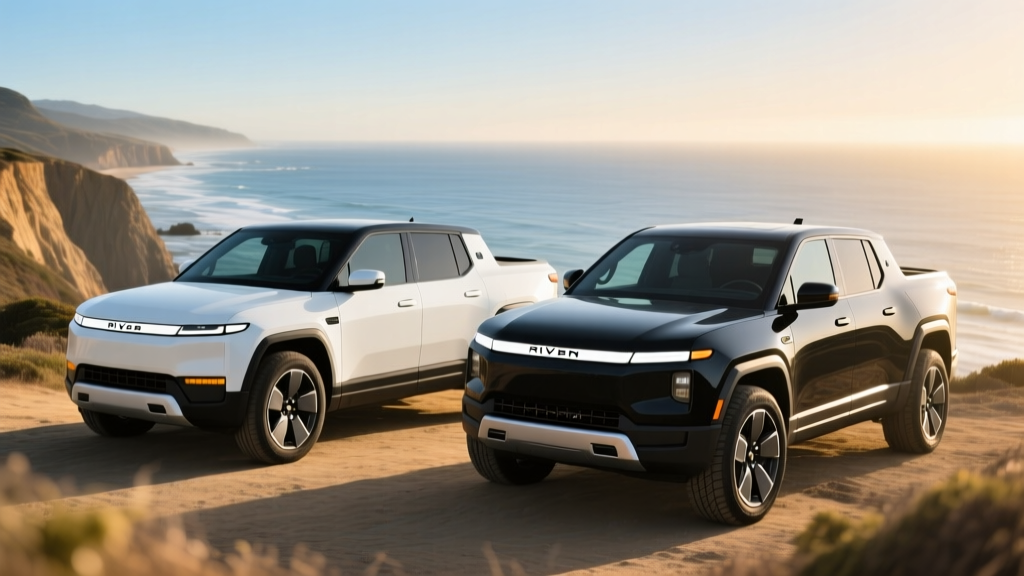
If you've been tracking Rivian's electric SUV and truck pricing, July has historically been one of the most attractive months to lease. Rivian July lease incentives often stack manufacturer lease cash, federal point-of-sale tax credit passthroughs, and loyalty bonuses into monthly payments that undercut outright purchases by thousands. Here's what the 2026 R1S SUV and R1T pickup look like under current lease programs, with the real-world range, charging, and ownership data you need before signing.
Rivian July Lease Incentives: What's Actually on the Table
Rivian's lease programs are structured through its captive finance arm and typically include three levers that move the monthly payment:
- Manufacturer lease cash: Rivian periodically injects $2,000–$5,000 in lease cash on select trims, often timed around end-of-quarter pushes. July, sitting at the midpoint of Q3, has historically carried modest lease cash or loyalty bonuses for returning R1 owners.
- Federal §30D credit passthrough: Because Rivian leases are structured as closed-end leases through Rivian Automotive, LLC, the lessor (Rivian) claims the $7,500 federal EV tax credit and can pass it as a capitalized cost reduction. This effectively drops the lease price by $7,500 upfront — a critical advantage over purchasing if you don't meet the IRS income caps.
- Money factor and residual: Rivian's July residuals on the R1S Dual-Motor have hovered around 54–57% at 36 months, with money factors roughly equivalent to 5.5–6.5% APR. These shift monthly.
| Model / Trim | MSRP | Lease Cash (est.) | §30D Passthrough | Est. Monthly (36 mo / 10k mi) |
|---|---|---|---|---|
| R1S Dual-Motor Standard | $75,900 | $2,000 | $7,500 | ~$820–$890 |
| R1S Dual-Motor Max | $85,400 | $2,500 | $7,500 | ~$980–$1,060 |
| R1T Dual-Motor Standard | $69,900 | $2,000 | $7,500 | ~$740–$810 |
| R1T Dual-Motor Max | $79,400 | $2,500 | $7,500 | ~$900–$975 |
Note: Monthly payments vary by state taxes, dealer fees, money factor at time of signing, and credit tier. Confirm exact figures with Rivian's online configurator or a Rivian Space.
The key advantage of leasing a Rivian in July versus purchasing: if your household AGI exceeds the IRS §30D income caps ($300k joint / $150k single), you cannot claim the $7,500 credit on a purchase. But on a lease, the lessor claims it and passes it through as cap-cost reduction regardless of your income. This is the single biggest reason high-earners lease Rivians.
2026 Rivian R1S: Range, Battery, and Real-World Efficiency
R1S Dual-Motor Max Pack: EPA-estimated 410 miles. Real-world highway: ~340–365 miles. Cold weather: ~290–320 miles.
R1S Tri-Motor: EPA-estimated 390 miles. Real-world highway: ~320–345 miles.
The 2026 R1S continues on Rivian's second-generation skateboard platform. The Standard Pack uses a ~92 kWh usable NMC (nickel manganese cobalt) lithium-ion pack, while the Max Pack steps up to approximately 141 kWh usable, also NMC. Rivian has not switched to LFP chemistry in the R1 lineup as of the 2026 model year — the energy density requirements for a 5,000+ lb SUV demand NMC's higher specific energy.
Efficiency on the Dual-Motor Standard lands around 79 MPGe combined (roughly 43 kWh/100 mi) per EPA data on fueleconomy.gov. The Max Pack variant drops slightly to ~75 MPGe due to the added battery mass. For context, that's typical for a large electric SUV — the BMW iX xDrive50 achieves ~86 MPGe but offers far less cargo capacity.
Charging Speed: DC Fast, Level 2, and Curve Reality
| Charging Level | Connector | Peak Rate | Speed / Time |
|---|---|---|---|
| Level 1 (120V) | NACS (native) | ~1.4 kW | ~3–4 mi/hr |
| Level 2 (240V / 48A) | NACS | 11.5 kW | ~25–28 mi/hr (Standard) / ~22 mi/hr (Max) |
| DC Fast Charge | NACS (native) | 220 kW (Std) / 200 kW (Max) | 10–80% in ~21 min (Std) / ~30 min (Max) |
Rivian moved to the NACS (North American Charging Standard) connector natively on 2025+ models, eliminating the need for a CCS adapter. This grants direct access to Tesla's Supercharger network — a significant practical advantage over CCS-only vehicles.
The charging curve matters more than peak kW. The Standard Pack sustains near-peak rates (~200+ kW) from roughly 10–45% SoC before tapering to ~120 kW through 65%, and further to ~60 kW above 80%. The Max Pack, with more cells to fill, has a broader but lower sustained curve — it rarely holds 200 kW for long, averaging closer to 150 kW across the 10–80% window. On a road trip, plan for 20–25 minute stops on the Standard and 30–35 minute stops on the Max.
Home charging on a 48A Level 2 circuit (requiring a 60A breaker) delivers a full overnight charge in roughly 9–10 hours for the Standard Pack. The Max Pack needs approximately 14 hours from empty — though in practice, most owners charge within a 20–80% daily window, which completes in ~6 hours on Level 2.
Performance, Cargo, and Daily Livability
| Spec | Standard Pack | Max Pack |
|---|---|---|
| Horsepower | 533 hp | 533 hp |
| Torque | 610 lb-ft | 610 lb-ft |
| 0–60 mph | 4.5 sec | 4.7 sec |
| Drivetrain | Dual-Motor AWD | Dual-Motor AWD |
| Towing Capacity | 7,700 lbs | 7,700 lbs |
| Cargo (behind 3rd row) | 10.4 cu ft | 10.4 cu ft |
| Cargo (2nd row folded) | 57.4 cu ft | 57.4 cu ft |
| Cargo (all rows folded) | 104.7 cu ft | 104.7 cu ft |
| Front Trunk (Frunk) | 11.0 cu ft | 11.0 cu ft |
| 3rd-Row Legroom | 30.4 in | 30.4 in |
| Ground Clearance (max) | 14.9 in | 14.9 in |
The R1T pickup mirrors most powertrain specs but swaps the enclosed cargo area for a 4.5-foot bed (extending to ~6 feet with the gear tunnel door open). The R1T's bed-plus-gear-tunnel system offers 11.0 cu ft frunk + 11.0 cu ft gear tunnel + ~28 cu ft bed, making it arguably the most storage-versatile electric vehicle on the market.
The Tri-Motor variant (available on both R1S and R1T) bumps output to 850 hp and drops the 0–60 time to 2.9 seconds — supercar territory in a body-on-frame vehicle. However, the Tri-Motor's efficiency penalty (~70 MPGe) and $95,000+ starting price push it into niche territory.
Federal Tax Credit Eligibility: §30D Rules for 2026
- MSRP cap: ✅ R1S qualifies (SUV cap: $80,000 — note that Max Pack and Tri-Motor trims exceed this and are NOT eligible on purchase).
- MSRP cap (truck): ✅ R1T qualifies (pickup cap: $80,000 — Max Pack trims near this threshold).
- Buyer income cap (purchase): AGI ≤ $300k joint / $225k HoH / $150k single.
- Battery sourcing: ✅ Rivian confirmed 2026 R1 battery cells meet critical-mineral and battery-component thresholds under current IRS §30D guidance.
- Final assembly: ✅ Assembled in Normal, Illinois.
- Lease loophole: On a lease, the lessor claims the credit — buyer income and MSRP caps do NOT apply. The $7,500 is typically passed as cap-cost reduction.
This is why the July lease play matters: if you're eyeing an R1S Max Pack at $85,400 MSRP, it exceeds the $80,000 SUV cap and gets zero purchase credit. Lease it, and the full $7,500 comes off regardless of MSRP or your income. This is the most underappreciated advantage in EV leasing right now.
Always confirm credit eligibility with a tax professional before purchase. Lease credit passthrough is contractual — confirm Rivian is applying it as cap-cost reduction in your lease agreement.
Driver Assistance, Tech, and Notable Drawbacks
Rivian's Driver+ suite provides SAE Level 2 driver assistance — adaptive cruise control with lane centering on highways. This is not self-driving; you must keep hands on the wheel and eyes on the road. Rivian has been progressively rolling out enhanced highway assist features via OTA updates, but as of mid-2026, it does not offer hands-free driving comparable to GM's Super Cruise or Ford's BlueCruise.
The 15.6-inch center touchscreen runs Rivian's proprietary OS, which includes native route planning with charge-stop integration, a built-in camp kitchen controller (for the R1T), and over-the-air updates. Apple CarPlay and Android Auto are not supported — a deliberate choice by Rivian that remains a dealbreaker for some buyers.
Notable drawbacks to weigh honestly:
- Class-leading cargo versatility (frunk + gear tunnel on R1T)
- Native NACS — no adapter needed for Superchargers
- Air suspension with 14.9" ground clearance for genuine off-road capability
- Over-the-air updates continuously add features
- Lease passthrough of $7,500 credit bypasses income/MSRP caps
- No Apple CarPlay or Android Auto
- Driver+ lags behind Super Cruise / BlueCruise in hands-free maturity
- Max Pack trims exceed $80k MSRP cap (no purchase credit)
- 3rd-row space is tight for adults (30.4" legroom)
- Service center network still limited outside major metros
Warranty and Long-Term Battery Outlook
Rivian covers the 2026 R1S and R1T with:
- Vehicle limited warranty: 5 years / 60,000 miles
- Battery and drive unit warranty: 8 years / 175,000 miles (retaining ≥70% capacity)
The 175,000-mile battery warranty is among the most generous in the segment, exceeding Tesla's 120,000-mile threshold on the Model X. Rivian uses a mix of 2170 and 46mm cylindrical cells from Samsung SDI. Long-term degradation data is still maturing (the oldest R1 vehicles are ~4 years old), but early fleet data suggests ~5–7% degradation over the first 60,000 miles — in line with industry norms for NMC packs with active thermal management.
Who Should Lease a Rivian in July?
Choose the R1T if: You want truck utility with SUV refinement — the gear tunnel is uniquely practical for gear-heavy lifestyles (skiing, biking, camping). The R1T Standard at ~$69,900 is the most affordable entry point.
Lease (don't buy) if: You want a Max Pack or Tri-Motor trim (over $80k MSRP cap), your household income exceeds §30D limits, or you prefer to cycle into newer battery tech every 3 years.
Look elsewhere if: CarPlay/Android Auto is non-negotiable, you need hands-free highway driving today, or you live far from a Rivian service center.
Frequently Asked Questions
What is the real-world range of the 2026 Rivian R1S?
The EPA rates the R1S Dual-Motor Standard at 270 miles and the Max Pack at 410 miles. In real-world highway driving at 70–75 mph, expect ~230–245 miles from the Standard and ~340–365 from the Max. Cold weather (below 30°F) can reduce range 20–30% without preconditioning.
How fast does the Rivian R1S charge at home and on the road?
On a 48A Level 2 home charger, the R1S adds ~25–28 miles per hour (Standard) or ~22 mi/hr (Max). DC fast charging peaks at 220 kW on the Standard Pack, reaching 10–80% in approximately 21 minutes. The Max Pack peaks at 200 kW with a 10–80% time of ~30 minutes due to the larger battery.
Does the Rivian R1S/R1T qualify for the $7,500 federal tax credit?
Yes — but only on trims under the $80,000 MSRP cap (SUVs) or $80,000 cap (pickups) when purchasing, and only if your income falls within IRS limits ($300k joint / $150k single). On a lease, the lessor claims the credit and typically passes it as a cap-cost reduction regardless of your income or the trim's MSRP.
How do Rivian July lease incentives compare to buying?
Leasing can save $7,500+ versus purchasing if you exceed income caps or choose a trim above the MSRP cap. July programs have historically included $2,000–$5,000 in lease cash. Combined with the §30D passthrough, a July lease can reduce effective cost by $9,500–$12,500 versus an ineligible purchase.
Is the Rivian R1S worth it versus the Tesla Model X or BMW iX?
The R1S wins on off-road capability, cargo versatility (frunk + flat-fold interior), and NACS Supercharger access. The Model X offers more third-row space and a mature Supercharger ecosystem. The BMW iX is more efficient (~86 MPGe) and has CarPlay, but offers no off-road pretensions and less cargo room. The R1S is the best choice for adventure-oriented families who need genuine capability beyond pavement.
Does Rivian support Apple CarPlay or Android Auto?
No. Rivian uses its own proprietary infotainment system and has not announced plans to add CarPlay or Android Auto. This remains a top complaint among prospective buyers who prefer phone-mirrored navigation and media.