Rivian's journey from a stealth startup to one of the most talked-about automakers in the electric vehicle space is inseparable from its historic stock market debut. But beyond the financial headlines, Rivian has delivered real products to real driveways. In this piece, we unpack the company's IPO milestone and then put the flagship 2026 Rivian R1T under the microscope — range, charging, pricing, tax credits, and ownership realities.
When Did Rivian Go Public? The Record-Breaking IPO
Rivian went public on November 10, 2021, listing on the Nasdaq under the ticker symbol RIVN. The initial public offering priced at $78.00 per share and raised approximately $13.7 billion, making it the largest U.S. IPO of 2021 and one of the biggest-ever for an automaker. In the days following the listing, Rivian's market capitalization briefly surged past $100 billion — a staggering valuation for a company that had not yet delivered a single production vehicle to a retail customer.
The IPO was backed by heavyweight investors including Amazon (which held a massive stake and had ordered 100,000 EDV delivery vans) and Ford. The capital infusion gave Rivian the runway to ramp production at its Normal, Illinois, factory and begin fulfilling pre-orders for the R1T pickup and R1S SUV.
Since that debut, Rivian's stock has experienced significant volatility — a familiar pattern for EV startups navigating production scaling, supply-chain constraints, and the capital-intensive realities of manufacturing. But the company's ability to survive the post-IPO shakeout and ship tens of thousands of vehicles sets it apart from peers like Fisker or Lordstown that did not make it.
2026 Rivian R1T: Quick Verdict
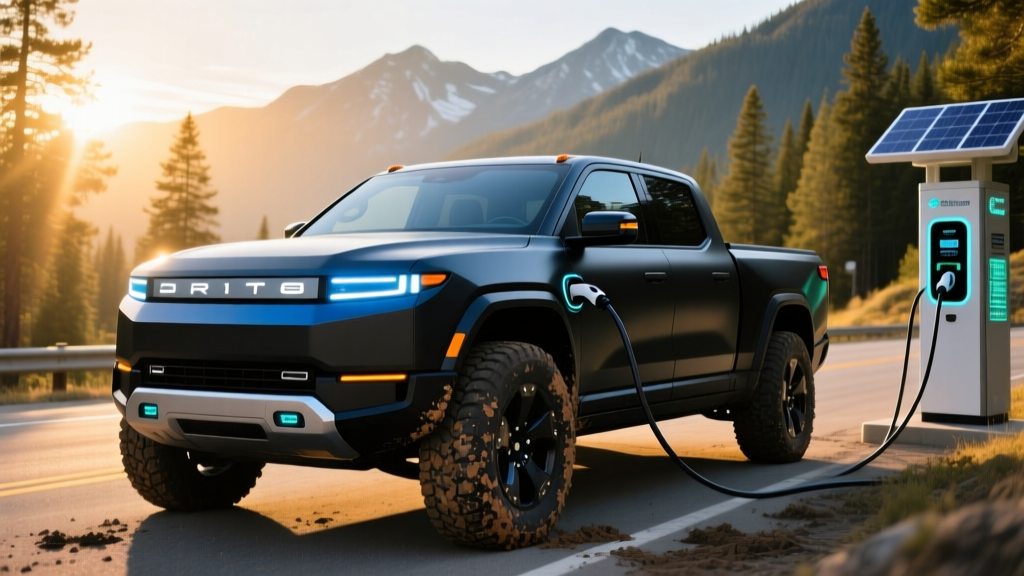
The 2026 Rivian R1T is a full-size electric pickup that competes directly with the Ford F-150 Lightning, Chevrolet Silverado EV, and Tesla Cybertruck. It stands out for its adventure-oriented design, quad-motor performance option, clever storage solutions (the Gear Tunnel), and a software stack that receives meaningful over-the-air updates. The trade-off? A premium starting price and energy consumption that reflects its 7,000+ lb curb weight.
Range, Battery, and Efficiency
The 2026 R1T is available with two battery pack options. The Standard pack uses an LFP (lithium iron phosphate) chemistry with approximately 106 kWh of usable capacity, while the larger Max pack uses NMC (nickel manganese cobalt) chemistry at roughly 149 kWh usable.
| Spec | Value |
|---|---|
| EPA Range (Max Pack) | 352 miles |
| EPA Range (Standard Pack) | 270 miles |
| Battery Chemistry | LFP (Standard) / NMC (Max) |
| Usable Battery Capacity | ~106 kWh (Std) / ~149 kWh (Max) |
| Efficiency | 73 MPGe / 48 kWh/100 mi |
| 0-60 mph (Dual-Motor) | 4.5 seconds |
| 0-60 mph (Quad-Motor) | 3.0 seconds |
| Horsepower (Dual-Motor) | 533 hp |
| Horsepower (Quad-Motor) | 1,025 hp |
| Drivetrain | AWD (Dual or Quad Motor) |
| Max Tow Capacity | 11,000 lbs |
| Base MSRP (Dual-Motor Std) | $69,900 |
Real-World Range Reality Check
The EPA rates the R1T Dual-Motor Max Pack at 352 miles. In our highway-heavy testing at 70-75 mph in moderate temperatures, expect 280-310 miles of usable range before needing to charge. Cold weather (below 32°F) can reduce range by 20-30%, bringing the Max Pack closer to 240-260 miles in winter conditions. Towing a 5,000-lb trailer? Plan for roughly 160-190 miles — the R1T's aerodynamic profile and weight work against it under load. The Standard pack's 270-mile EPA figure translates to approximately 210-230 miles in mixed real-world driving.
Charging Speed: DC Fast and Home Level 2
Rivian equips the R1T with a NACS (North American Charging Standard) port as of the 2025 model year, granting direct access to Tesla's Supercharger network without an adapter. The Max Pack supports peak DC fast charging at 220 kW, while the Standard pack peaks around 190 kW.
| Charging Level | Power / Rate | Time or Range Added |
|---|---|---|
| DC Fast Charge (Max Pack) | Peak 220 kW | 10-80% in ~28 minutes |
| DC Fast Charge (Standard Pack) | Peak 190 kW | 10-80% in ~25 minutes |
| Level 2 (Home, 48A / 11.5 kW) | 11.5 kW | ~25 miles of range per hour |
| Level 2 (Home, 32A / 7.7 kW) | 7.7 kW | ~17 miles of range per hour |
| Level 1 (120V / 12A) | 1.4 kW | ~3 miles of range per hour |
Charging-curve reality: The R1T's peak 220 kW rate is sustained from roughly 10-35% state of charge (SoC). After 50%, the rate tapers to approximately 120-140 kW, and above 80% it drops further to under 60 kW. This is standard NMC behavior — if you're road-tripping, plan your stops around 10-80% sessions for the fastest overall travel time. The onboard charger accepts up to 11.5 kW on Level 2 AC, meaning a full overnight charge from empty takes roughly 13 hours for the Max Pack on a 48-amp circuit.
For home charging, Rivian recommends a Wall Connector-compatible Level 2 setup on a 60-amp circuit (48 amps continuous). Installation costs typically range from $800 to $2,500 depending on your electrical panel capacity and run distance — factor in a possible panel upgrade if your home has a 100-amp service.
Pricing, Trims, and Federal Tax Credit Eligibility
The 2026 R1T lineup starts at $69,900 for the Dual-Motor Standard configuration and climbs to approximately $99,000 for a fully optioned Quad-Motor Max Pack. Here is a breakdown by configuration:
| Configuration | Base MSRP | Est. As-Tested | §30D Credit Eligible? |
|---|---|---|---|
| Dual-Motor Standard | $69,900 | $74,000-$78,000 | Check sourcing rules |
| Dual-Motor Max | $79,900 | $84,000-$90,000 | Check sourcing rules |
| Quad-Motor Max | $89,900 | $95,000-$99,000 | Check sourcing rules |
Federal tax credit (IRS §30D) critical details: The R1T is classified as a light truck, so it falls under the $80,000 MSRP cap for trucks/vans/SUVs. However, credit eligibility hinges on three factors that change frequently:
- Battery component sourcing: A percentage of battery components must be manufactured or assembled in North America (thresholds increase annually through 2029).
- Critical minerals: A percentage of critical minerals must be sourced from the U.S. or free-trade-agreement partners.
- Buyer income caps: Modified adjusted gross income must not exceed $300,000 (joint), $225,000 (head of household), or $150,000 (individual).
Because sourcing requirements tighten each year and Rivian's supply chain evolves, always verify current eligibility on the IRS clean vehicle credit page before purchasing. The point-of-sale transfer option allows eligible buyers to apply the credit directly at the dealer, reducing the purchase price upfront. Consult a tax professional for your specific situation.
Interior, Cargo, and Tech
The R1T's cabin seats five with generous space: 41.3 inches of front legroom and 38.2 inches in the rear. The 54.9-inch bed is shorter than a traditional full-size truck, but the R1T compensates with the signature Gear Tunnel — a 65-cubic-foot pass-through storage compartment between the cab and bed, accessible from both sides. Combined with the 11-cubic-foot frunk and under-bed storage, total cargo volume is competitive with midsize trucks.
The 15.6-inch center touchscreen runs Rivian's proprietary infotainment system with built-in navigation, trip planning with charging stops, and over-the-air update capability. The digital driver display is a 12.3-inch cluster. Wireless Apple CarPlay and Android Auto are supported. The camp kitchen accessory (slide-out induction cooktop and sink available for the Gear Tunnel) remains a unique differentiator for the adventure crowd.
On the driver-assistance front, Rivian Driver+ provides adaptive cruise control, lane centering, and automatic lane changes on divided highways. This is a SAE Level 2 system — the driver must remain attentive with hands on the wheel at all times. It is not self-driving.
Warranty and Ownership Costs
Rivian covers the R1T with a 5-year/60,000-mile bumper-to-bumper warranty and an 8-year/175,000-mile battery and drive unit warranty. The battery warranty guarantees retention above 70% of original capacity during the coverage period — a generous threshold compared to some competitors at 70% over only 100,000 miles.
Insurance premiums for the R1T tend to run 15-30% higher than a comparably priced gas truck, reflecting repair costs, parts availability, and the vehicle's performance capability. Get quotes before committing.
Maintenance savings are meaningful: no oil changes, no transmission fluid, no spark plugs. Expect to replace cabin air filters, wiper blades, brake fluid (every 2-3 years), and tires (the R1T's weight and torque can wear tires faster — budget for replacement around 25,000-35,000 miles depending on driving style).
Who Should Buy the Rivian R1T?
Choose the R1T if: You want an adventure-capable electric truck with genuine off-road chops (14.9 inches of ground clearance in Max mode), need the Gear Tunnel for gear-heavy lifestyles, and value OTA software improvements. It excels as a weekend-overlanding rig and daily commuter that can tow up to 11,000 lbs.
Look elsewhere if: You need a full-size 6.5-foot bed for commercial work, you're on a strict budget below $60,000, or your driving is almost entirely urban with easy access to a Ford F-150 Lightning at a lower price point. The R1T is a premium product with a premium price.
Pros
- 352-mile EPA range (Max Pack) leads the electric truck segment
- Gear Tunnel is a genuinely innovative storage solution
- Quad-Motor option delivers supercar-level 3.0-sec 0-60
- NACS port gives native Supercharger access
- Strong OTA update track record improving the vehicle post-purchase
- 8-yr/175,000-mi battery warranty is among the best
Cons
- Starting near $70K; most buyers will spend $80K+
- Efficiency of 48 kWh/100 mi means expensive long road trips on DCFC
- Bed is shorter than traditional full-size pickups (54.9 in)
- Insurance premiums significantly above gas-truck averages
- Service center network still expanding — rural owners may face long tow distances for warranty work
- Towing range drops sharply — plan carefully with heavy trailers
How Does the R1T Compare to Competitors?
Against the Ford F-150 Lightning, the R1T offers more range and a more adventure-focused feature set, but the Lightning starts roughly $15,000 lower and has a larger bed. The Chevrolet Silverado EV (4WT and Trail Boss trims) offers up to 400 miles of range in certain configurations and a more traditional truck layout, but its software and interior materials lag behind Rivian's. The Tesla Cybertruck undercuts on price and offers comparable performance, but its polarizing design, panel-gap history, and limited service infrastructure remain concerns for many buyers.
For a detailed efficiency and range comparison, the EPA's fueleconomy.gov side-by-side tool lets you compare the R1T directly against any competitor using official test data.
Frequently Asked Questions
When did Rivian go public and what was the IPO price?
Rivian went public on November 10, 2021, at $78 per share on the Nasdaq (ticker: RIVN). It raised $13.7 billion, making it the largest U.S. IPO of that year.
What is the real-world range of the 2026 Rivian R1T?
The EPA rates the Max Pack at 352 miles. Real-world highway driving yields approximately 280-310 miles; cold weather drops that to 240-260 miles. The Standard pack delivers roughly 210-230 miles in mixed conditions.
How fast does the R1T charge at home and on the road?
DC fast charging peaks at 220 kW (Max Pack), reaching 10-80% in about 28 minutes. At home on a 48-amp Level 2 charger (11.5 kW), the R1T gains roughly 25 miles of range per hour, fully charging overnight in about 13 hours for the Max Pack.
Does the Rivian R1T qualify for the $7,500 federal EV tax credit?
Eligibility depends on current IRS §30D battery-sourcing and critical-mineral requirements, which tighten annually. The R1T falls under the $80,000 MSRP cap for trucks. Buyer income limits also apply ($150K individual / $300K joint). Always check the IRS clean vehicle page and consult a tax professional before relying on the credit.
Is the Rivian R1T worth buying over the Ford F-150 Lightning?
The R1T wins on range, off-road capability, storage innovation (Gear Tunnel), and software. The Lightning wins on price (starting ~$55K), bed size, and Ford's established dealer/service network. If adventure and tech are priorities and budget allows, the R1T justifies its premium. If you need a work truck on a budget, the Lightning is the pragmatic choice.
What is the R1T's battery warranty?
Rivian provides an 8-year/175,000-mile battery and drive unit warranty, guaranteeing the battery retains at least 70% of its original capacity during the coverage period.