Why Rivian Insurance Costs More Than the Average EV
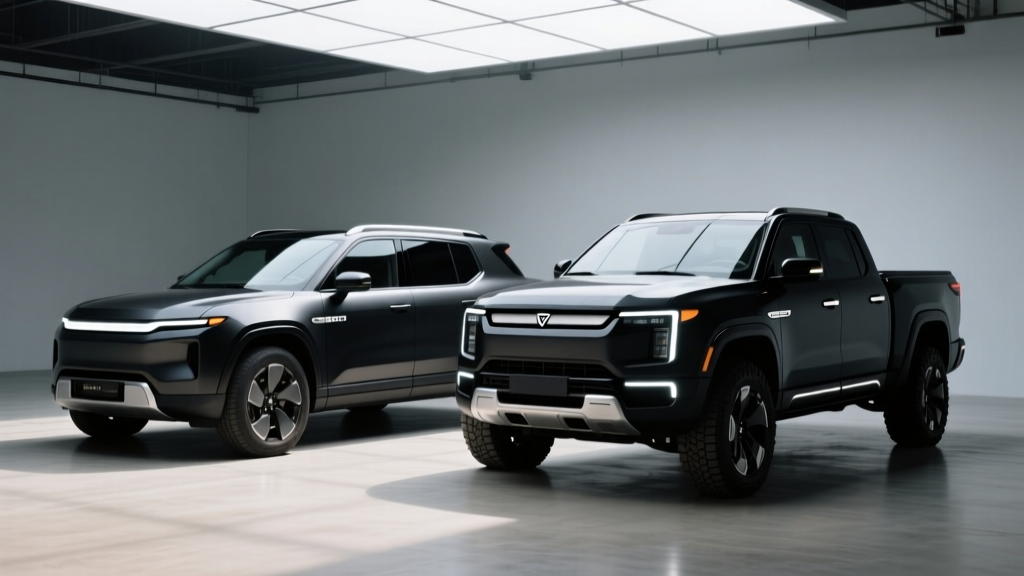
If you're researching a Rivian R1S SUV or R1T truck, you've likely noticed a recurring theme in owner forums: insurance premiums are steep. In 2026, Rivian insurance averages $2,800 to $3,600 per year for the R1S and $2,600 to $3,400 per year for the R1T, depending on trim, driving record, location, and coverage level. That's roughly 40–70% higher than the national EV insurance average and nearly double what you'd pay for a comparably priced gas-powered SUV.
The reasons are structural, not arbitrary. Rivians are heavy (over 7,000 lbs curb weight for the R1S), packed with expensive sensor arrays and proprietary body panels, and repaired at a limited network of certified collision centers. When a fender bender requires recalibrating lidar-adjacent cameras and replacing aluminum-intensive bodywork, claims costs surge — and insurers price accordingly.
This review covers everything you need to budget for beyond the sticker price: real-world range, charging infrastructure, tax credit eligibility, and whether a Rivian makes financial sense once insurance and operating costs are factored in.
Rivian R1S and R1T: 2026 Spec Overview
| Spec | R1S (SUV) | R1T (Truck) |
|---|---|---|
| EPA Range (Standard Pack, ~92 kWh usable) | 270 mi | 270 mi |
| EPA Range (Max Pack, ~141 kWh usable) | 410 mi | 390 mi |
| Battery Chemistry | NMC (LG Energy Solution 2170 cells) | NMC (LG Energy Solution 2170 cells) |
| Drivetrain | Dual-Motor AWD (AWD available on base) | Dual-Motor AWD |
| Horsepower (Dual-Motor) | 533 hp | 533 hp |
| Horsepower (Quad-Motor) | 872 hp | 872 hp |
| 0–60 mph (Dual-Motor) | 4.5 sec | 4.5 sec |
| 0–60 mph (Quad-Motor) | 3.0 sec | 3.0 sec |
| Max DC Fast Charge | ~220 kW peak | ~220 kW peak |
| 10–80% DC Charge Time | ~21 min (Standard), ~34 min (Max) | ~21 min (Standard), ~34 min (Max) |
| Level 2 Home Charge Rate | 11.5 kW (~25 mi/hr) | 11.5 kW (~25 mi/hr) |
| Efficiency (Dual-Motor) | ~69 MPGe / 48 kWh/100mi | ~70 MPGe / 47 kWh/100mi |
| Cargo Volume (behind 3rd row / bed) | 10.4 cu ft (all rows up: 108 cu ft max) | 54 cu ft bed + 11 cu ft frunk |
| Towing Capacity | 7,700 lbs | 11,000 lbs |
| Battery/Powertrain Warranty | 8 yr / 175,000 mi | 8 yr / 175,000 mi |
| Base MSRP (2026 Dual-Motor) | $79,900 | $73,000 |
Sources: fueleconomy.gov, Rivian official specs.
Real-World Range: What the EPA Sticker Doesn't Tell You
R1S Dual-Motor Standard Pack: EPA 270 mi → Expect ~220–245 mi highway at 70+ mph; ~190–210 mi in sub-30°F weather.
R1S Max Pack: EPA 410 mi → Expect ~330–360 mi highway; ~280–310 mi in cold conditions.
R1T Dual-Motor: EPA 270 mi → Expect ~225–250 mi highway; towing drops range to ~130–160 mi.
Rivian's large battery packs and heavy curb weight work against highway efficiency. At sustained 75–80 mph speeds, aerodynamic drag dominates, and you'll see consumption climb to 52–58 kWh/100mi versus the EPA-rated 47–48. Cold weather compounds this: NMC chemistry loses roughly 15–25% of usable capacity below freezing, and cabin heating (even with the available heat pump on newer models) draws significant energy.
If your commute is mostly city driving with regenerative braking opportunities, you'll land closer to — or even slightly above — the EPA estimate. But road-trippers should plan charging stops using the ~80% rule: don't rely on more than 80% of the displayed range for trip planning, especially in winter or mountainous terrain.
Charging Speed and Infrastructure
Rivian uses the NACS (North American Charging Standard) connector on 2025+ models, granting native access to Tesla Superchargers with V3 (150 kW) and V4 (up to 250 kW) stalls. Older R1S/R1T models with CCS1 require a NACS adapter, which Rivian provides to owners.
| Charging Level | Power / Rate | Miles Added per Hour | Notes |
|---|---|---|---|
| Level 1 (120V) | 1.4 kW | ~3 mi/hr | Emergency/trickle only |
| Level 2 (240V, 48A) | 11.5 kW | ~25 mi/hr | Full charge overnight (~10–11 hrs for Standard Pack) |
| DC Fast (Peak) | ~220 kW | ~140 mi in 20 min | Peak rate sustained to ~55% SoC, then tapers |
The charge curve is a critical ownership detail. Rivian's Standard Pack (~92 kWh) peaks near 220 kW but tapers significantly above 60% State of Charge. The Max Pack (~141 kWh) takes longer to fill proportionally — expect 34–40 minutes for a 10–80% session, not the ~21 minutes Rivian advertises for the smaller pack. For road trips, charging from 10–60% is fast; pushing past 80% is rarely time-efficient unless you need the buffer for your destination.
Home charging on a Level 2 wall connector (Rivian's own or a ChargePoint Home Flex) is the practical backbone of ownership. Budget $800–$1,500 for equipment plus $500–$2,000 for electrician installation, depending on whether your panel needs a 200A upgrade.
Pricing, Tax Credits, and Total Cost with Insurance
| Model / Trim | MSRP | Federal §30D Credit | Effective Price | Est. Annual Insurance |
|---|---|---|---|---|
| R1T Dual-Motor Standard | $73,000 | $0 (exceeds $80K truck cap? — see note) | $73,000 | $2,600–$3,400 |
| R1T Dual-Motor Max Pack | $93,000 | $0 (above MSRP cap) | $93,000 | $3,000–$3,800 |
| R1S Dual-Motor Standard | $79,900 | Up to $7,500* | ~$72,400 | $2,800–$3,600 |
| R1S Dual-Motor Max Pack | $99,900 | $0 (above MSRP cap) | $99,900 | $3,200–$4,000 |
*The IRS §30D credit applies to SUVs with MSRP ≤ $80,000 and trucks ≤ $80,000. Buyer income must not exceed $300K (MFJ) / $150K (single). Battery must meet critical-mineral and component sourcing requirements. Verify current-year eligibility at fueleconomy.gov before purchasing. Point-of-sale transfer is available through registered dealers.
Here's where insurance enters the ownership equation. Over five years, a Rivian R1S owner paying $3,200/year spends $16,000 on insurance alone — roughly $6,000–$8,000 more than insuring a Tesla Model Y or Hyundai Ioniq 5 over the same period. Factor this into your total cost of ownership (TCO) alongside electricity ($1,200–$1,800/yr at home), tire replacement (heavy EVs wear tires faster — expect $1,200–$1,600 every 25,000–30,000 mi), and the absence of oil changes or transmission service.
What Drives Rivian Insurance Premiums Higher
Insurers calculate premiums from actuarial data, and several Rivian-specific factors push rates above the EV average:
- Repair cost concentration: Rivian operates a limited network of certified body shops. Aluminum-intensive construction and proprietary sensor arrays (cameras, ultrasonic sensors, radar) mean even minor collisions generate large claims.
- Vehicle weight: The R1S exceeds 7,100 lbs curb weight. Heavier vehicles cause more damage in multi-vehicle accidents, increasing liability exposure for insurers.
- Parts availability: Unlike legacy automakers with massive aftermarket parts ecosystems, Rivian controls most replacement components. Supply-chain delays can extend rental-car reimbursement periods on claims.
- Performance profile: A 533-hp dual-motor (or 872-hp quad-motor) SUV with a 3.0-second 0–60 time is classified similarly to performance vehicles by underwriters.
- Driver demographics: Early Rivian buyers skew toward higher-income, urban/suburban profiles — which paradoxically can increase comprehensive coverage costs (higher-value garaging areas, more claims density).
Cost-reduction strategies: Bundle with homeowners insurance, opt for usage-based programs (Progressive Snapshot, State Farm Drive Safe & Save), raise deductibles to $1,000–$2,000, and get quotes from EV-friendly carriers like Lemonade, Root, and Hagerty (which has expanded into modern EVs). Multiple owners report savings of 15–25% by shopping across at least five carriers.
Technology, Driver Assists, and Interior
Rivian's software-defined architecture is among the most sophisticated in the EV space. The 15.6-inch center touchscreen runs Rivian's proprietary OS with native navigation that integrates charging stops, elevation data, and battery preconditioning. Over-the-air updates have meaningfully improved features post-delivery — including the addition of Highway Assist (a Level 2 driver-assistance system with adaptive cruise and lane centering).
Rivian's Highway Assist and Adaptive Cruise require continuous driver supervision. Hands must remain on the wheel, and eyes on the road. This is not autonomous or self-driving — it is a driver-assist feature comparable to Tesla Autopilot, Ford BlueCruise, and GM Super Cruise in classification.
The R1S offers three rows of seating for up to seven passengers, with 41.3 inches of front legroom and a usable third row for adults on shorter trips. The R1T's gear tunnel (a pass-through storage compartment behind the cab) is a genuinely innovative feature — 11.6 cu ft of lockable, weather-sealed space accessible from either side of the truck.
Notable drawbacks: the panoramic glass roof creates significant cabin heat in summer (many owners add aftermarket tint), the center console lacks physical knobs for climate control, and the mobile app, while improved, still lags Tesla's in remote preconditioning reliability.
Pros, Cons, and Who Should Buy a Rivian
- Class-leading Max Pack range (410 mi EPA on R1S)
- Quad-motor performance rivals supercars (3.0s 0–60)
- 8-yr/175,000-mi battery warranty exceeds industry standard
- NACS native charging + Supercharger access
- R1T gear tunnel and camp-kitchen accessory ecosystem
- Robust OTA update track record
- Insurance costs $800–$1,500/yr more than EV average
- Most trims exceed $80K MSRP cap — no federal tax credit
- Heavy weight reduces efficiency vs. lighter EVs
- Limited certified repair network increases claim timelines
- No Apple CarPlay / Android Auto (native OS only)
- Towing cuts range by 40–50%
Best for: Outdoor-oriented families (R1S) or adventure-use truck buyers (R1T) who need genuine off-road capability, 7-passenger seating, or 11,000-lb towing and who can absorb higher insurance and upfront costs. Home-charging access is essential — public-charging-only Rivian ownership is expensive and inconvenient given the Max Pack's long charge times.
Consider alternatives if: Your priority is low total cost of ownership. A Tesla Model Y Long Range ($48,000, ~$1,600/yr insurance, 310 mi range) or Hyundai Ioniq 5 ($44,000, ~$1,800/yr insurance, 303 mi range) delivers comparable daily practicality at significantly lower operating cost.
Frequently Asked Questions
What is the real-world range of a Rivian R1S or R1T?
The EPA rates the R1S Dual-Motor Standard Pack at 270 miles and the Max Pack at 410 miles. In real-world highway driving at 70–75 mph, expect 220–245 miles (Standard) and 330–360 miles (Max). Cold weather below 30°F reduces these figures by 15–25%. Towing with the R1T cuts range roughly in half.
How fast does a Rivian charge at home and on the road?
At home on Level 2 (240V, 48A), Rivians add approximately 25 miles of range per hour, fully recharging a Standard Pack in about 10–11 hours. On DC fast chargers, the Standard Pack peaks near 220 kW and charges 10–80% in roughly 21 minutes. The Max Pack takes 34–40 minutes for the same session due to its larger 141 kWh battery.
Does the Rivian R1S or R1T qualify for the federal EV tax credit?
Only the R1S Dual-Motor Standard Pack (MSRP $79,900) falls under the $80,000 SUV cap for the IRS §30D credit, and only if the buyer meets income requirements ($300K MFJ / $150K single) and the battery satisfies critical-mineral and component sourcing rules. Max Pack and Quad-Motor trims exceed the MSRP cap and are ineligible. Always verify at fueleconomy.gov and consult a tax professional.
Why is Rivian insurance more expensive than Tesla or Hyundai EVs?
Rivians are heavier (7,000+ lbs), use proprietary aluminum body panels, have a smaller certified repair network, and feature performance-tier acceleration. These factors combine to produce higher average claim costs, which insurers pass through as elevated premiums. Shopping multiple carriers and bundling policies can reduce costs by 15–25%.
Is a Rivian worth buying in 2026 versus competitors?
If you need a 7-seat electric SUV with genuine off-road capability and 410-mile Max Pack range, the R1S has no direct rival. If you need an electric truck for towing and adventure use, the R1T is the segment leader. However, if cost-efficiency is the priority, the Tesla Model Y, Hyundai Ioniq 5, or Kia EV9 deliver lower insurance, better tax-credit eligibility, and comparable daily practicality.