The Quick Verdict on Rivian's Incentive Picture
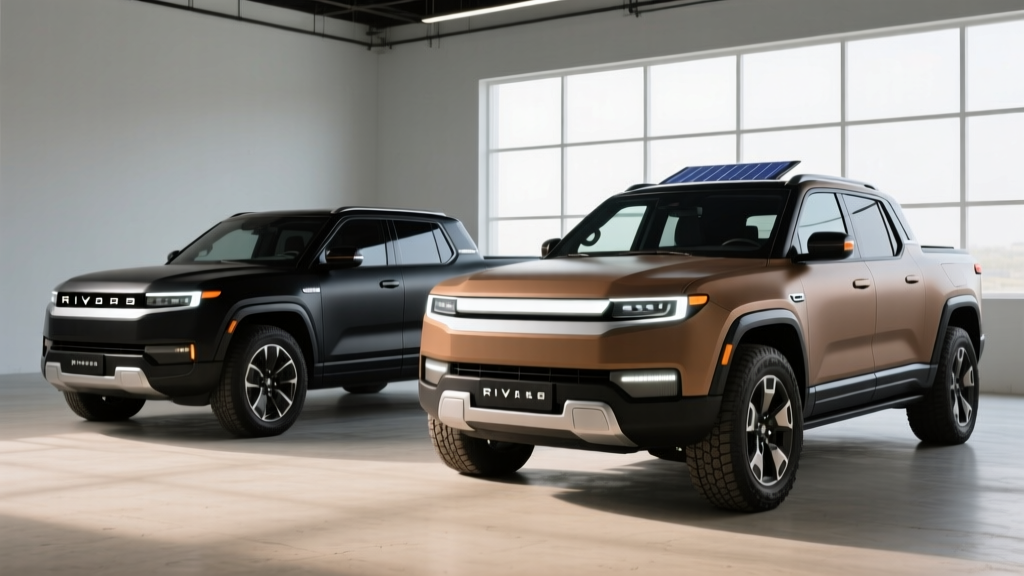
If you are shopping for an electric truck or three-row SUV, the 2025 Rivian R1T and R1S sit in a unique position: they are among the most capable off-road EVs on the market, but navigating which trims actually qualify for federal incentives requires careful attention to MSRP caps, buyer income limits, and battery-sourcing rules. The Gen 2 Rivians — introduced for the 2025 model year with a new Enduro motor option, LFP battery chemistry on the Standard pack, and upgraded electrical architecture — changed the incentive calculus significantly.
Here is what buyers need to know: not every Rivian qualifies for the full $7,500 federal tax credit under IRS §30D, and eligibility hinges on the specific trim, battery pack, and your household income. Let us walk through the numbers, the real-world performance, and the total cost picture so you can determine whether a Rivian fits your budget and your lifestyle.
Rivian R1T & R1S: Core Specs at a Glance
| Spec | R1T Dual-Motor Standard | R1T Dual-Motor Max | R1T Quad-Motor Max | R1S Dual-Motor Standard |
|---|---|---|---|---|
| EPA Range | 270 mi | 420 mi | 352 mi | 270 mi |
| Battery (usable kWh) | 92 kWh (LFP) | 141 kWh (NMC) | 141 kWh (NMC) | 92 kWh (LFP) |
| Drivetrain | AWD (Dual-Motor) | AWD (Dual-Motor) | AWD (Quad-Motor) | AWD (Dual-Motor) |
| Horsepower | 533 hp | 533 hp | 1,025 hp | 533 hp |
| 0–60 mph | 4.5 sec | 4.5 sec | 2.5 sec | 4.6 sec |
| MPGe (combined) | 73 MPGe | 70 MPGe | 58 MPGe | 72 MPGe |
| kWh/100 mi | 46 kWh | 48 kWh | 58 kWh | 47 kWh |
| Base MSRP | $69,900 | $83,900 | $99,900 | $75,900 |
| Towing Capacity | 11,000 lbs | 11,000 lbs | 11,000 lbs | 7,700 lbs |
| Battery/Powertrain Warranty | 8 yr / 100,000 mi | 8 yr / 100,000 mi | 8 yr / 100,000 mi | 8 yr / 100,000 mi |
Source: fueleconomy.gov and Rivian official specs. Specs reflect 2025 model-year Gen 2 vehicles.
Real-World Range: What the EPA Sticker Doesn't Tell You
Highway driving at 70 mph: expect ~340–360 miles
Cold weather (below 32°F): expect ~280–320 miles
Towing a 5,000-lb trailer: expect ~180–210 miles
City / mixed driving: ~380–400 miles (regen-heavy routes help)
Rivian's 420-mile Max Pack is one of the longest EPA-rated ranges of any production EV. But the R1T is a heavy, boxy truck pushing nearly 7,000 lbs, and aerodynamic drag at highway speeds erodes range faster than in a sleek sedan. In our experience and consistent with third-party testing, highway-heavy road trips at 70–75 mph will net roughly 80–85% of the EPA figure. Cold weather compounds the loss — the R1T's heat pump helps, but expect a 20–30% reduction in freezing temperatures, particularly on short trips where the cabin and battery are cold-soaking.
The Standard Pack's 270-mile EPA range is more honest for daily commuting and shorter road trips. If your typical drive is under 150 miles round-trip with home charging, the LFP-based Standard pack is the pragmatic choice — and it comes with the added benefit of LFP chemistry's superior cycle life and tolerance for regular 100% charging.
Charging Speed: DC Fast, Level 2, and the Charge Curve
Rivian's Gen 2 platform brought meaningful charging improvements. Here is the breakdown by battery pack:
| Charging Method | Standard Pack (92 kWh LFP) | Large Pack (106 kWh NMC) | Max Pack (141 kWh NMC) |
|---|---|---|---|
| DC Fast Charge (peak kW) | 200 kW | 220 kW | 220 kW |
| 10–80% DC Fast Time | ~28 min | ~25 min | ~38 min |
| Level 2 Home (kW) | 11.5 kW | 11.5 kW | 11.5 kW |
| Level 2 Miles per Hour | ~22 mi/hr | ~21 mi/hr | ~20 mi/hr |
| Full Level 2 Charge (0–100%) | ~8.5 hr | ~10 hr | ~13 hr |
| Connector | NACS (native) | NACS (native) | NACS (native) |
A critical detail for road-trippers: the Max Pack's 141 kWh capacity means that even at a sustained 220 kW peak, charging from 10–80% takes longer simply because there is more energy to replenish. The charge curve also tapers significantly above 80% SoC — if you need to push past 80% at a DC fast charger, expect charge rates to drop below 60 kW, adding 20+ minutes for that final 20%. Plan your stops around the 10–80% window for the most efficient road trips.
At home, the 11.5 kW onboard charger is competitive. On a 48-amp Level 2 circuit (the most common residential install), you will recover roughly 20–22 miles of range per hour of charging. Overnight charging from 20% to 80% takes about 6–7 hours on the Max Pack — perfectly adequate for daily use.
Rivian's 2025 models ship with the NACS (Tesla-style) connector natively, granting direct access to Tesla Supercharger stations (now open to Rivian via the North American charging network transition). This is a significant practical advantage over CCS-only vehicles, as the Supercharger network remains the most reliable DC fast-charging infrastructure in the U.S.
Rivian Incentives 2025: Federal Tax Credit Eligibility Explained
This is where things get nuanced. The federal EV tax credit under IRS §30D offers up to $7,500 for qualifying new EVs, but the R1T and R1S face several hurdles:
- MSRP Cap: Vans, SUVs, and pickup trucks must have an MSRP at or below $80,000. The R1T qualifies as a pickup truck ($80K cap); the R1S qualifies as an SUV ($80K cap).
- Buyer Income Cap: Modified AGI must not exceed $300,000 (joint), $225,000 (head of household), or $150,000 (individual).
- Battery Sourcing: Critical minerals and battery components must meet escalating domestic-content thresholds. Rivian's LFP Standard Pack sources cells from non-U.S. supply chains (primarily CATL in China), which may disqualify the $3,750 critical-minerals half of the credit.
- Final Assembly: Must occur in North America. ✅ Rivian assembles all R1 vehicles in Normal, Illinois.
- Point-of-Sale Transfer: As of 2024, eligible buyers can transfer the credit to the dealer for an upfront price reduction. Check with Rivian at time of purchase for POS availability.
| Model / Trim | Base MSRP | Estimated Credit | Effective Price | Credit Eligibility Notes |
|---|---|---|---|---|
| R1T Dual-Motor Standard | $69,900 | $0–$7,500 | $62,400–$69,900 | Under $80K cap; LFP battery sourcing may reduce credit |
| R1T Dual-Motor Large | $75,900 | $0–$7,500 | $68,400–$75,900 | Under $80K cap; NMC sourcing more likely to qualify |
| R1T Dual-Motor Max | $83,900 | $0 | $83,900 | Exceeds $80K MSRP cap — ineligible |
| R1T Quad-Motor Max | $99,900 | $0 | $99,900 | Exceeds $80K MSRP cap — ineligible |
| R1S Dual-Motor Standard | $75,900 | $0–$7,500 | $68,400–$75,900 | Under $80K cap; battery sourcing dependent |
| R1S Dual-Motor Max | $89,900 | $0 | $89,900 | Exceeds $80K MSRP cap — ineligible |
Important: Tax credit eligibility depends on your personal tax situation, the specific battery pack's supply chain at time of delivery, and current IRS rules. Consult a tax professional and verify eligibility on the IRS Energy Credits portal before purchasing. Credit amounts shown are estimates based on publicly available sourcing data and may change.
The practical takeaway: the Dual-Motor Standard and Dual-Motor Large configurations are the incentive-eligible sweet spots. If you want the Max Pack's 420-mile range, you will pay full MSRP — and at $83,900+ for the R1T, that is a deliberate trade-off for range supremacy.
Performance, Cargo, and the Ownership Experience
The Gen 2 Rivian introduced a reengineered drive unit architecture. The Dual-Motor models deliver 533 hp and a 4.5-second 0–60 time — quick for a 7,000-lb truck and more than adequate for highway merging and passing. The Quad-Motor, with individual motors at each wheel producing 1,025 hp, is a 2.5-second rocket that competes with supercars off the line, though its 352-mile range and $99,900+ price make it a specialty choice.
R1T Cargo & Utility:
- Bed length: 4.5 ft (54 in) — compact for a truck, but supplemented by the Gear Tunnel
- Gear Tunnel: 11 cu ft lockable pass-through storage (unique to Rivian)
- Frunk (front trunk): 11 cu ft, drainable — doubles as a cooler
- Total cargo volume (bed + tunnel + frunk): ~38 cu ft enclosed
- Towing: 11,000 lbs rated (Dual-Motor and Quad-Motor)
R1S Passenger & Cargo:
- Seating: 7 passengers (3 rows)
- Third-row legroom: 32.3 in (tight for adults on long trips)
- Cargo behind 3rd row: 10.4 cu ft
- Cargo behind 2nd row (3rd row folded): 46.7 cu ft
- Max cargo (all rear seats folded): 104.6 cu ft
The R1S is a genuine three-row family hauler, but that third row is best reserved for children or short trips. The R1T's compact bed is a real limitation if you need to haul lumber or motorcycles — the Gear Tunnel helps for camping gear and luggage, but it is not a substitute for a full 6-foot bed.
Standout Tech and Notable Drawbacks
What Rivian does well:
- Rivian Adventure Network: Proprietary DC fast chargers near national parks and outdoor destinations — a unique value-add for the target buyer
- Over-the-air updates: Regular software improvements, including new drive modes and feature additions
- Driver+ (Level 2 ADAS): Hands-on highway assist with lane centering and adaptive cruise — competent but not class-leading versus GM Super Cruise or Ford BlueCruise
- Off-road capability: Quad-Motor tank turns, adjustable air suspension with up to 14.9 in ground clearance, and genuine trail cred
- Native NACS connector: Direct Supercharger access without adapters (2025+ models)
Honest drawbacks:
- Build quality inconsistencies reported by early Gen 2 owners (panel gaps, minor rattles)
- Service center network still limited outside major metro areas
- Max Pack charging time is long — 38+ minutes 10–80% is a road-trip penalty
- Insurance premiums run 15–25% higher than comparable ICE trucks (get a quote before buying)
- Third-row space in the R1S is tighter than a Kia EV9 or Tesla Model X
How the Rivian R1T Stacks Up Against Key Competitors
| Metric | Rivian R1T Dual-Motor | Ford F-150 Lightning Lariat | Chevy Silverado EV 4WT | Tesla Cybertruck AWD |
|---|---|---|---|---|
| EPA Range | 270–420 mi | 230–320 mi | 380 mi | 318–340 mi |
| Base MSRP | $69,900 | $59,995 | $55,900 | $79,990 |
| 0–60 mph | 4.5 sec | 4.0 sec (Ext. Range) | 5.4 sec | 4.1 sec |
| Towing | 11,000 lbs | 10,000 lbs | 10,000 lbs | 11,000 lbs |
| Bed Length | 4.5 ft | 5.5 ft | 5.5 ft | 6.0 ft |
| §30D Credit Eligible? | Partial (trim-dependent) | Yes (most trims) | Yes (most trims) | No ($80K+ MSRP) |
The F-150 Lightning wins on price, bed size, and broad tax-credit eligibility. The Silverado EV offers the most range-per-dollar at the 4WT work-truck trim. The Cybertruck is polarizing but delivers strong range and performance at a premium. The Rivian R1T carves its own lane: it is the adventure-lifestyle truck — more premium interior, superior off-road capability, and the Gear Tunnel utility that no competitor matches. If your use case is outdoor recreation, camping, and trail access rather than job-site hauling, the R1T's premium is justified.
Who Should Buy a Rivian — and Who Should Look Elsewhere
Choose the Rivian R1T if: You need a premium adventure truck for camping, off-roading, and towing toys. You value the Gear Tunnel, frunk, and Rivian Adventure Network. You can charge at home and your daily driving is under 200 miles.
Choose the Rivian R1S if: You want a three-row electric SUV with genuine off-road chops and a premium cabin. You prioritize build quality and design over maximizing interior volume per dollar.
Look elsewhere if: You need a full-size truck bed for work (F-150 Lightning). You need the cheapest possible electric truck with full tax credit (Silverado EV 4WT). You want a roomier third row and lower price (Kia EV9). You need the longest range at the lowest cost (Hyundai Ioniq 5 or Tesla Model Y for non-truck buyers).
Frequently Asked Questions
Does the 2025 Rivian R1T qualify for the $7,500 federal EV tax credit?
The Dual-Motor Standard ($69,900) and Dual-Motor Large ($75,900) R1T trims fall under the $80,000 MSRP cap for pickup trucks and are assembled in Illinois, meeting the North American final-assembly requirement. However, the full $7,500 credit depends on battery-sourcing requirements (critical minerals and component manufacturing), which vary by battery pack and delivery date. The Standard Pack's LFP cells, sourced primarily from China, may only qualify for the $3,750 component half — or potentially none at all depending on FEOC (Foreign Entity of Concern) rules. The Large Pack's NMC cells have a higher likelihood of meeting sourcing thresholds. Always verify on the IRS Energy Credits portal before purchasing.
What is the real-world range of the Rivian R1T Max Pack?
The EPA rates the R1T Dual-Motor Max at 420 miles. In real-world highway driving at 70 mph, expect approximately 340–360 miles. In cold weather (below freezing), that drops to roughly 280–320 miles. When towing a 5,000-lb trailer, range approximately halves to 180–210 miles. These figures are consistent with the physics of moving a heavy, high-drag vehicle at speed — no current EV truck achieves its EPA sticker while towing or driving aggressively on the highway.
How fast does the Rivian R1T charge at home and on the road?
At home on a Level 2 charger (11.5 kW / 48A), the R1T adds approximately 20–22 miles of range per hour, with a full charge taking 8.5–13 hours depending on the battery pack. On DC fast chargers, the Large and Max Packs peak at 220 kW, with the Large Pack achieving 10–80% in roughly 25 minutes and the Max Pack in about 38 minutes. The Standard Pack peaks at 200 kW with a 10–80% time of about 28 minutes. Rivian's native NACS connector provides direct access to Tesla Superchargers.
Is the Rivian R1S worth buying over the Kia EV9 or Tesla Model X?
It depends on your priorities. The R1S offers superior off-road capability, a more premium interior, and the adventure-oriented ecosystem (Gear Tunnel, Rivian Adventure Network chargers). The Kia EV9 is significantly cheaper ($54,900 base), offers a roomier third row, and qualifies for the full tax credit. The Tesla Model X provides more cargo space and Supercharger-native convenience but at a higher price ($79,990+) and with aging interior quality. If off-road capability and adventure lifestyle are central to your needs, the R1S justifies its premium. If you simply need a three-row electric family hauler, the EV9 is the more pragmatic purchase.
What is Rivian's battery warranty, and how long will the battery last?
Rivian covers the battery pack and drive system for 8 years or 100,000 miles, whichever comes first, with a capacity retention threshold of 70%. This is industry-standard and matches most competitors. The LFP chemistry in the Standard Pack offers superior cycle life (3,000+ cycles to 80% capacity) compared to NMC (~1,000–1,500 cycles), meaning the Standard Pack battery should outlast the vehicle itself under normal use. NMC packs in the Large and Max configurations offer higher energy density but are more sensitive to frequent 100% charging — Rivian recommends daily charging to 80–85% for NMC packs.