Why Rivian HQ Matters to EV Buyers
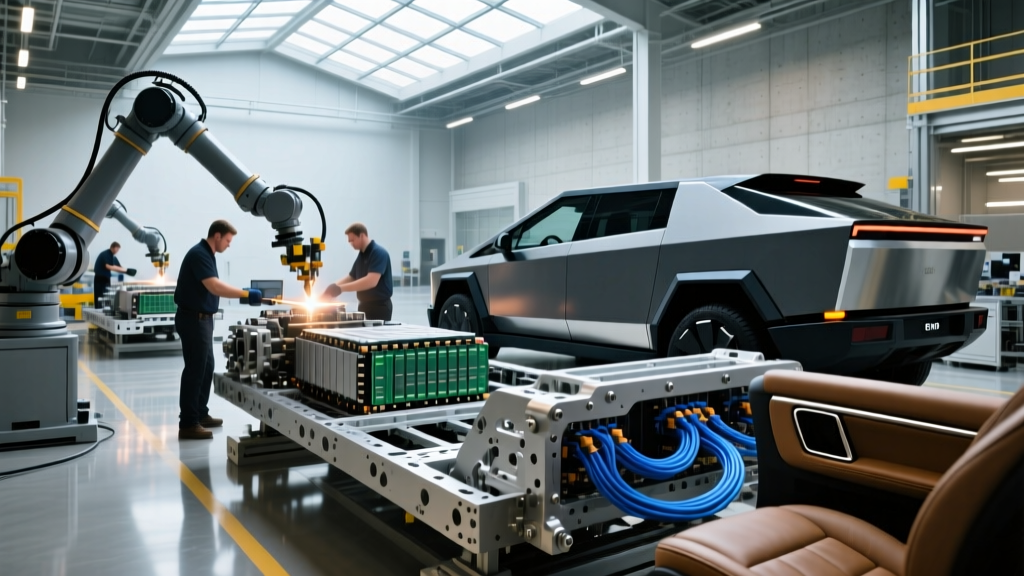
Searches for Rivian HQ usually point to the company's production hub in Normal, Illinois — the 3.3-million-square-foot factory where every R1T pickup and R1S SUV rolls off the line. Understanding what happens inside that plant matters to buyers because Rivian is one of the few automakers that still builds its vehicles entirely in the United States, on a site it retrofitted from a former Mitsubishi/Diamond-Star facility rather than a greenfield gigafactory. That legacy footprint influences everything from production ramp speed to the cost structure that ultimately shows up on the Monroney sticker.
This review pairs a look at how Rivian's Normal plant shapes the product with a spec-by-spec breakdown of the current-generation R1T and R1S, including the updated dual-motor, performance dual-motor, and tri-motor configurations that define the 2026 lineup.
2026 Rivian R1T and R1S: The Quick Verdict
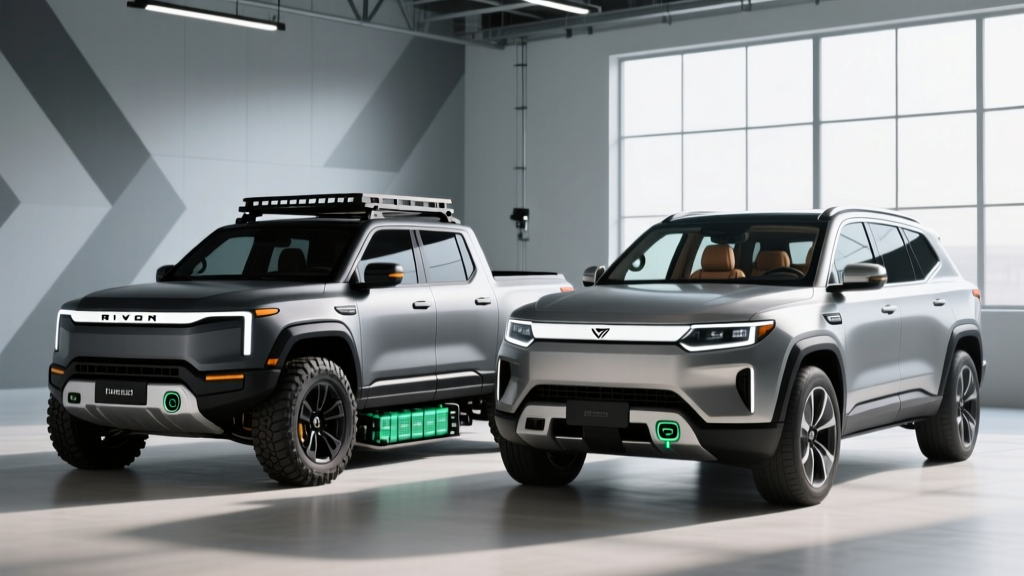
The R1T remains the most capable electric pickup in its class when you balance on-road refinement, off-road capability, and software sophistication. The R1S is its three-row SUV sibling, sharing the same skateboard-like Gen 2 platform but trading the bed for usable passenger and cargo volume. Both vehicles benefited from a major Gen 2 electrical-architecture overhaul that reduced wiring harness weight, cut the number of ECUs, and enabled features like Rivian's latest Driver+ ADAS suite. For 2026, Rivian continues to refine build quality at Normal and has expanded its Max battery option across more trims, which is the single biggest lever buyers can pull for range.
| Spec | R1T Dual-Motor (Standard Pack) | R1S Dual-Motor (Standard Pack) |
|---|---|---|
| EPA Range | 270 miles | 270 miles |
| Usable Battery | ~92 kWh (NMC) | ~92 kWh (NMC) |
| Peak DC Fast Charge | 200 kW | 200 kW |
| 10–80% DC Time | ~30 min | ~30 min |
| Level 2 Home Rate | 11.5 kW (~25 mi/hr) | 11.5 kW (~25 mi/hr) |
| 0–60 mph | 4.5 sec | 4.6 sec |
| Horsepower | 533 hp | 533 hp |
| Drivetrain | AWD (dual-motor) | AWD (dual-motor) |
| Combined Efficiency | 73 MPGe / 46 kWh/100 mi | 71 MPGe / 47 kWh/100 mi |
| Max Tow Rating | 11,000 lb | 7,700 lb |
| Battery/Powertrain Warranty | 8 yr / 120,000 mi | 8 yr / 120,000 mi |
| Base MSRP | $69,900 | $74,900 |
Range, Efficiency, and the Real-World Reality
EPA estimates on the R1T and R1S vary meaningfully by battery and motor configuration. The Standard Pack dual-motor trucks land at 270 miles EPA, the Large Pack dual-motor at roughly 352 miles EPA (R1T), and the tri-motor configurations with the Max Pack push past 400 miles EPA on the R1S. Those are the sticker numbers — what you actually see depends heavily on how you drive.
Real-World Range Expectations
- City / mixed suburban: Within ~5% of EPA — the regenerative braking system recovers aggressively and the boxy shape matters less at low speed.
- Highway (75 mph sustained): Expect 10–15% below EPA. The R1T's truck aerodynamics and ~7,000-lb curb weight hurt at speed; plan on ~230 real miles from a 270-mile Standard Pack truck before you need a charger.
- Cold weather (below 32°F): Add another 15–25% reduction on top of highway losses. A heat pump is standard, which helps, but NMC chemistry still suffers in deep cold. A 352-mile Large Pack truck on a 20°F interstate day may realistically deliver ~250–270 miles.
- Towing: Range roughly halves under a heavy trailer. Budget 130–160 miles per charge when towing near max rating.
Efficiency is rated at about 73 MPGe combined for the R1T Dual-Motor and 71 MPGe for the R1S, which translates to roughly 46–47 kWh per 100 miles. That is typical for the segment — the Ford F-150 Lightning Extended Range sits in the same neighborhood — but it means charging cost per mile is very sensitive to your local electricity rate. At the U.S. average of ~$0.16/kWh, home charging costs roughly $0.07 per mile; at a $0.48/kWh DC fast charger, that jumps to ~$0.22 per mile.
Charging Speeds: DC Fast, Level 2, and the Curve
Charging is where Rivian's Normal-built hardware has drawn both praise and criticism. The Gen 2 platform supports NACS natively — no adapter required — which gives R1T and R1S owners direct access to Tesla Superchargers, Electrify America, and other networks using the same plug. Peak DC fast-charge rates vary by pack:
| Pack | Peak DC kW | 10–80% Time | Level 2 kW | Level 2 mi/hr |
|---|---|---|---|---|
| Standard (~92 kWh) | 200 kW | ~30 min | 11.5 kW | ~25 mi/hr |
| Large (~128 kWh) | 220 kW | ~35 min | 11.5 kW | ~25 mi/hr |
| Max (~149 kWh) | 220 kW | ~40 min | 11.5 kW | ~25 mi/hr |
A few owner-relevant nuances that spec sheets bury:
- Charge curve taper: Peak kW only holds through roughly 30–40% SoC on the Standard Pack, then steps down. Average power across a 10–80% session is closer to 140–160 kW, which is why a "200 kW peak" truck doesn't charge twice as fast as a 100 kW one.
- Preconditioning: Rivian's nav-routed battery preconditioning is essential in cold weather. Plan your route through the onboard navigation to warm the pack before arrival — skipping this can add 10+ minutes to a DC session in sub-40°F weather.
- Home Level 2: The 11.5 kW onboard charger is best-in-class for overnight recovery — roughly 9 hours from empty on the Standard Pack, 12 hours on the Max. Most buyers will install a 48-amp hardwired wall connector (requires a 60-amp circuit) for full throughput.
Performance and Drivetrain
Every R1T and R1S uses an all-wheel-drive layout with independent motors per axle; the tri-motor adds a second rear motor for torque-vectoring. The dual-motor Standard Pack delivers 533 hp and 610 lb-ft of torque, with a 0–60 mph time around 4.5 seconds in the R1T. The Performance Dual-Motor bumps output to roughly 665 hp and drops 0–60 into the low-3-second range, while the tri-motor tops out near 850 hp with sub-3-second sprints — supercar numbers in a vehicle with a 6-foot bed.
Rivian's quad-motor variant from the early Gen 2 launch has been consolidated into the tri-motor architecture for 2026, simplifying the lineup while retaining torque vectoring across the rear axle. Off-road, the air suspension offers up to 14.9 inches of ground clearance in Max mode, and Rivian's tank-turn and gear-tunnel features (R1T only) remain segment differentiators.
Pricing, Trims, and Federal Tax-Credit Eligibility
Rivian's pricing has been a moving target as the company scales production at Normal. The current MSRP ladder for the 2026 model year is approximately:
- R1T Dual-Motor Standard Pack: $69,900
- R1T Dual-Motor Large Pack: $75,900
- R1T Tri-Motor Max Pack: $99,900
- R1S Dual-Motor Standard Pack: $74,900
- R1S Dual-Motor Large Pack: $80,900
- R1S Tri-Motor Max Pack: $104,900
Destination charges and popular options (Forest Green paint, 22-inch wheels, the Camp Kitchen) typically add $3,000–$8,000 to as-tested pricing.
| Rule | Threshold | R1T / R1S Status |
|---|---|---|
| Vehicle MSRP Cap (trucks/vans/SUVs) | ≤ $80,000 | R1T Standard & Large qualify; Tri-Motor Max exceeds cap |
| Buyer MAGI Cap (married filing jointly) | ≤ $300,000 | Buyer-dependent |
| Buyer MAGI Cap (single / HOH) | ≤ $150,000 / $225,000 | Buyer-dependent |
| Battery Critical Minerals / North America Assembly | Per IRS sourcing rules | Assembled in Normal, IL; sourcing varies by model year — verify on IRS eligible-vehicle list |
| Point-of-Sale Transfer | Allowed | Rivian supports POS transfer at delivery |
In practice, this means the R1T Dual-Motor Standard and Large Pack are the trims most likely to clear the $80,000 MSRP cap and qualify for up to $7,500 under §30D — assuming the buyer is under the income limit and the specific battery pack's critical-mineral and component sourcing meets that year's phase-in thresholds. The R1S, classified as an SUV, has the same $80,000 cap. Always confirm current eligibility on irs.gov before ordering; rules have shifted annually since 2023.
Interior, Cargo, and Technology
The R1T seats five with 41.4 inches of front legroom and 36.5 inches in the rear. The R1S adds a usable third row (33.0 inches of legroom) for up to seven passengers. Cargo volume with all rows in use is modest for the R1S (~16 cu ft behind the third row), but folding the third row opens up roughly 55 cu ft, and both rows flat yields over 100 cu ft. The R1T's 54-inch bed is supplemented by the signature gear tunnel — an 11-cu-ft pass-through trunk between the cab and bed that is ideal for skis, camping gear, or the optional Camp Kitchen.
Infotainment runs on Rivian's proprietary software on a 12.3-inch driver display and 15.6-inch center touchscreen. There is no Apple CarPlay or Android Auto — a deliberate (and divisive) decision. The system handles navigation, over-the-air updates, and vehicle controls natively, with strong voice recognition and a clean UI, but phone-mirroring holdouts will feel the absence.
Rivian Driver+ is the brand's Level 2 driver-assistance suite (per SAE J3016), combining adaptive cruise, lane centering, and automatic lane changes on divided highways. It is not self-driving — the driver must keep hands on the wheel and eyes on the road. In testing, Driver+ tracks smoothly on well-marked interstates but disengages promptly in construction zones, which is the expected and correct behavior for a Level 2 system.
Warranty and Long-Term Ownership
Rivian backs the R1T and R1S battery pack and drive unit with an 8-year / 120,000-mile warranty, with a capacity-retention threshold typically set at 70% of original capacity — in line with industry norms. The limited vehicle warranty is 5 years / 60,000 miles. Because Rivian uses NMC chemistry across the lineup (not LFP), buyers should expect gradual capacity loss accelerated by frequent 100% charges and DC fast-charging in extreme heat; daily charging to 80–90% is the recommended practice for longevity.
Service is handled through Rivian's own service centers and a growing mobile-service fleet, not third-party dealers. This is a double-edged sword: owners consistently praise the quality of mobile technicians, but wait times in underserved metro areas can stretch to weeks for non-urgent repairs. Rivian's support portal lists current service-center coverage by ZIP code.
Who the R1T and R1S Are Actually For
The R1T fits buyers who want a daily-drivable electric pickup with genuine off-road chops and don't need a full-size 6.5-foot bed. It is ideal for: weekend adventurers who tow boats or trailers under 11,000 lb, homeowners who need a truck a few times a month but don't want the footprint of an F-150 Lightning, and tech-forward buyers who value OTA updates and native software over CarPlay.
The R1S is the family counterpart — three rows, excellent safety ratings from IIHS, and enough range on the Large or Max pack to make 300-mile family road trips viable with one DC stop. It competes most directly with the Tesla Model X, Kia EV9, and upcoming large electric SUVs from legacy brands.
Pros
- Class-leading build quality for a startup, improving yearly at Normal
- Native NACS — full Supercharger access without an adapter
- Best-in-class off-road capability with air suspension and tank turns
- Strong OTA update cadence; vehicle improves after purchase
- Gear tunnel and Camp Kitchen are genuinely useful, not gimmicks
Cons
- No Apple CarPlay or Android Auto
- Tri-Motor Max trims exceed the §30D MSRP cap
- Real-world highway range trails EPA by 10–15% (typical for boxy EVs)
- Service-center coverage still thin outside major metros
- Insurance premiums run 15–25% above comparable gas trucks
Frequently Asked Questions
What is the real-world range of the Rivian R1T?
The EPA-rated range spans from 270 miles (Standard Pack) to over 400 miles (Tri-Motor Max). In real-world highway driving at 75 mph, expect 10–15% below EPA; in cold weather, 15–25% below EPA is typical. Towing cuts range roughly in half.
How fast does the Rivian R1T charge?
Peak DC fast charging is 200–220 kW depending on pack size, with a 10–80% session taking 30–40 minutes. Home Level 2 charging at 11.5 kW adds roughly 25 miles of range per hour.
How much does a Rivian cost after tax credits?
Eligible R1T Dual-Motor trims under the $80,000 MSRP cap can qualify for up to $7,500 in federal tax credit under §30D, subject to buyer income limits and battery-sourcing rules. A $69,900 Standard Pack R1T could net to ~$62,400 after credit, before state incentives.
Is the Rivian R1T worth buying vs. the F-150 Lightning?
The R1T is smaller, more refined, and more capable off-road; the Lightning is larger, cheaper, and has broader dealer service coverage. Choose the R1T for adventure-oriented use and tighter urban footprint; choose the Lightning for fleet-style utility and lower entry price.
Does the Rivian R1S qualify for the federal EV tax credit?
The R1S qualifies for up to $7,500 under §30D on trims at or below the $80,000 SUV MSRP cap, subject to buyer income limits and current-year battery-sourcing rules. Always verify eligibility on the IRS clean-vehicle list before ordering.
Where is Rivian HQ and where are the vehicles built?
Rivian's headquarters and primary manufacturing plant are located in Normal, Illinois. The facility produces all R1T and R1S vehicles for the U.S. market and is also the company's engineering and corporate operations hub.