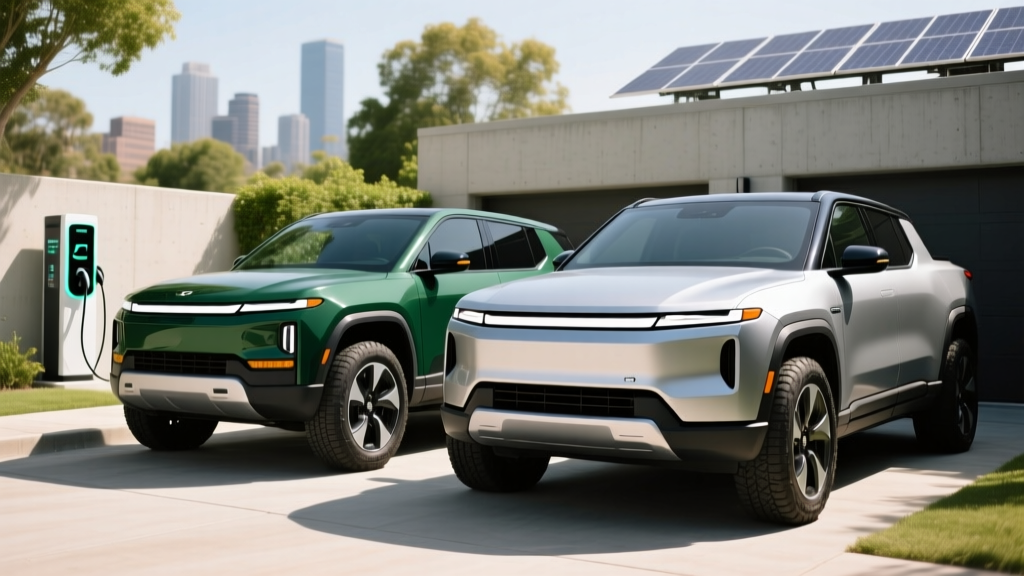
If you've been following the EV space for the past few years, you've likely asked: how long has Rivian been around? The short answer is that Rivian Automotive was founded in 2009 by MIT graduate R.J. Scaringe — making the company over 16 years old as of 2026. But the longer answer is far more interesting, because Rivian spent its first decade quietly engineering its platform before delivering its first production vehicles (the R1T pickup and R1S SUV) in late 2021.
That lengthy R&D runway is precisely why Rivian's second-generation vehicles, now in showrooms for the 2025 and 2026 model years, feel so polished compared to typical startup offerings. Below, we break down the full Rivian timeline, then put the current R1T and R1S under the microscope — range, charging, pricing, tax credits, and real-world ownership — so you can decide if one belongs in your driveway.
Rivian's Timeline: From MIT Lab to 2026 Production
Understanding how long Rivian has been around helps explain its engineering depth. Here are the key milestones:
- 2009: R.J. Scaringe founds the company (originally named Mainstream Motors, later Rivian Automotive) in Plymouth, Michigan.
- 2015–2017: Rivian pivots to an all-electric "adventure" platform, developing its proprietary skateboard chassis with integrated battery pack.
- 2018: The R1T and R1S are unveiled at the LA Auto Show.
- 2019: Amazon invests $700 million; Ford invests $500 million. Rivian also secures an order from Amazon for 100,000 electric delivery vans (EDVs).
- September 2021: First production R1T rolls off the line at the Normal, Illinois factory.
- November 2021: Rivian goes public (NASDAQ: RIVN) in the largest IPO of the year.
- 2023–2024: Cumulative production surpasses 100,000 vehicles. The R2 compact SUV platform is announced for a 2026 launch at a new Georgia factory.
- 2025–2026: Second-generation R1T and R1S reach dealers with updated battery packs, NACS charge ports, and enhanced ADAS.
So when someone asks how long Rivian has been around, the real insight is this: the company spent roughly 12 years in stealth engineering before selling a single vehicle. That's unusual in the EV startup world, and it shows in the maturity of the current product.
2026 Rivian R1T & R1S: Specs at a Glance
The 2026 R1T (four-door pickup) and R1S (three-row SUV) share the same platform, battery options, and powertrain configurations. Here's the core spec table:
| Spec | R1T (Dual-Motor / Max Pack) | R1S (Dual-Motor / Max Pack) |
|---|---|---|
| EPA Range (Max Pack) | ~420 miles | ~400 miles |
| EPA Range (Standard Pack) | ~270 miles | ~260 miles |
| Battery Capacity (Max Pack, usable) | ~149 kWh (NMC) | ~149 kWh (NMC) |
| Battery Capacity (Standard, usable) | ~106 kWh (LFP) | ~106 kWh (LFP) |
| Peak DC Fast-Charge Rate | 220 kW | 220 kW |
| 10–80% DC Fast-Charge Time | ~29 minutes | ~29 minutes |
| Level 2 Home Charging | 11.5 kW (~25 mi/hr) | 11.5 kW (~25 mi/hr) |
| 0–60 mph (Dual-Motor) | 4.5 seconds | 4.6 seconds |
| 0–60 mph (Tri-Motor Performance) | ~3.0 seconds | ~3.1 seconds |
| Horsepower (Dual-Motor) | 533 hp | 533 hp |
| Horsepower (Tri-Motor) | 850 hp | 850 hp |
| Drivetrain | AWD (dual or tri-motor) | AWD (dual or tri-motor) |
| Max Towing Capacity | 11,000 lbs | 7,700 lbs |
| MPGe (Combined, Dual-Motor Std) | 73 MPGe | 71 MPGe |
| Efficiency (kWh/100 mi) | ~46 kWh/100 mi | ~48 kWh/100 mi |
Source: fueleconomy.gov and Rivian's official 2026 spec sheets. Tri-Motor and Max Pack efficiency figures may vary.
Real-World Range: What the EPA Sticker Doesn't Tell You
Rivian uses two distinct battery chemistries in 2026. The Max Pack employs nickel-manganese-cobalt (NMC) cells for maximum energy density — essential for squeezing 149 kWh into the skateboard. The Standard Pack uses lithium iron phosphate (LFP), which sacrifices some range for lower cost, longer cycle life, and the ability to charge to 100% daily without accelerated degradation. If your commute is under 100 miles round-trip and you want a battery that will outlast the vehicle, the LFP Standard Pack is the pragmatic choice.
Charging Speed: DC Fast, Level 2, and the NACS Transition
For the 2026 model year, all Rivian R1T and R1S vehicles ship with the NACS (North American Charging Standard) port natively — no adapter required. This grants direct access to Tesla's Supercharger network, which remains the most reliable DC fast-charging infrastructure in North America.
| Charging Level | Power (kW) | Miles of Range Added per Hour | Notes |
|---|---|---|---|
| Level 1 (120V household) | ~1.4 kW | ~3–4 mi/hr | Emergency/trickle only |
| Level 2 (240V home, 48A) | 11.5 kW | ~25 mi/hr | Full overnight charge (~10–14 hrs for Max Pack) |
| DC Fast Charge (peak) | 220 kW | N/A (10–80% in ~29 min) | Charge curve tapers sharply above 80% |
| DC Fast Charge (sustained avg 10–80%) | ~150 kW avg | ~180 mi in 29 min | Peak 220 kW held only between ~15–45% SoC |
Charging curve reality: Rivian's 220 kW peak is legitimate, but like all EVs, the charge rate tapers as the battery fills. You'll see 220 kW between roughly 15% and 45% state of charge. By 65%, you're closer to 120 kW, and above 80%, the rate drops to under 50 kW to protect the cells. For road trips, the practical strategy is to charge from 10–80% (about 29 minutes) and move on rather than wait for a painfully slow 80–100% top-off.
For home charging, Rivian recommends a 48-amp Level 2 wall connector on a 60-amp dedicated circuit. This delivers 11.5 kW, replenishing the Standard Pack in roughly 9 hours and the Max Pack in 13–14 hours. Expect home installation costs of $800–$2,000 depending on panel capacity and conduit runs — more if you need a 200-amp service upgrade (which can add $1,500–$3,000).
Pricing, Trim Levels, and Federal Tax Credit Eligibility
Rivian's pricing has stabilized after the volatile early-delivery years. Here's where the 2026 lineup stands:
| Model / Trim | Base MSRP | Estimated Price After §30D Credit |
|---|---|---|
| R1T Dual-Motor Standard Pack | $69,900 | $62,400* |
| R1T Dual-Motor Max Pack | $83,900 | $76,400* |
| R1T Tri-Motor Performance | $99,900 | Not eligible (over $80K MSRP cap) |
| R1S Dual-Motor Standard Pack | $74,900 | $67,400* |
| R1S Dual-Motor Max Pack | $89,900 | Not eligible (over $80K MSRP cap) |
| R1S Tri-Motor Performance | $104,900 | Not eligible (over $80K MSRP cap) |
*Credit eligibility requires meeting all IRS §30D criteria. See checklist below. As-tested prices with options (Adventure package, premium paint, camp kitchen) can add $5,000–$15,000.
Federal tax credit checklist (§30D, 2026 rules):
- MSRP cap: Vans, SUVs, and pickups must be at or below $80,000 MSRP. This means the R1T Standard and the R1S Standard qualify, but Max Pack and Tri-Motor trims exceed the cap.
- Buyer income cap: Modified adjusted gross income (MAGI) must not exceed $150,000 (single), $225,000 (head of household), or $300,000 (joint).
- Battery sourcing: A percentage of critical minerals and battery components must be sourced from the U.S. or free-trade-agreement partners. Rivian has worked to shift its supply chain, but eligibility can change — verify on irs.gov before purchasing.
- Point-of-sale transfer: As of 2024+, you can transfer the credit to the dealer at purchase, reducing your out-of-pocket cost immediately rather than waiting for tax filing.
Always confirm eligibility at the time of purchase. Rivian's website and fueleconomy.gov maintain current credit-eligibility listings.
Interior, Cargo, Tech, and Driver Assistance
The R1T and R1S interiors blend minimalist design with rugged utility. Both feature a 15.6-inch center touchscreen and a 12.3-inch driver display, running Rivian's in-house software (not Android Automotive or Apple CarPlay — a point of contention for some buyers). Over-the-air updates continuously add features; in 2025, Rivian added improved voice navigation and enhanced camp mode.
Cargo and passenger space:
- R1T bed: 4.5 feet long (with midgate open: ~6.5 ft). The gear tunnel (11 cu ft) is a unique lockable pass-through behind the rear seats — ideal for skis, fishing rods, or camping gear.
- R1S cargo: ~21 cu ft behind the third row; ~58 cu ft behind the second row; ~104 cu ft with both rows folded.
- Front trunk (frunk): ~11 cu ft on both models — one of the largest in the EV market.
- Second-row legroom: ~38.5 inches (R1T and R1S).
- Third-row legroom (R1S only): ~30.4 inches — best suited for children or short trips.
Driver assistance (SAE Level 2): Rivian's Driver+ system combines adaptive cruise control and lane-centering on divided highways. It is a Level 2 driver-assist system, meaning you must keep your hands on the wheel and eyes on the road at all times. It is not "self-driving." The system is competent for highway cruising but does not match Tesla's FSD (Supervised) or GM's Super Cruise in hands-off-permitted scenarios. Rivian has signaled a more advanced ADAS for future OTA updates, but as of 2026, it remains a hands-on system.
Pros, Cons, and Who Should Buy a Rivian
- Class-leading range (420 mi Max Pack R1T)
- Gear tunnel and frunk provide unmatched cargo versatility
- NACS port — native Supercharger access
- LFP Standard Pack option for longevity and daily 100% charging
- 11,000-lb towing (R1T) with integrated trailer software
- Strong OTA update cadence adding real features
- No Apple CarPlay or Android Auto
- Third row in R1S is tight for adults
- Max Pack / Tri-Motor trims exceed §30D MSRP cap
- Service center network still expanding — wait times in some regions
- Efficiency (kWh/100 mi) trails lighter SUVs like the Ioniq 5 or Model Y
- Insurance premiums run 15–25% above comparable gas trucks
Who the Rivian R1T is for: Outdoor enthusiasts, adventure travelers, and truck buyers who need genuine towing capability and off-road chops (8.9 inches of ground clearance, wading depth of 36 inches) but want zero tailpipe emissions. If you regularly tow a boat or camper under 11,000 lbs and have home charging, the R1T is arguably the most capable electric truck on the market.
Who the Rivian R1S is for: Families wanting three rows and serious cargo space without stepping into a minivan. The R1S competes with the Tesla Model X and the Kia EV9, but offers more rugged capability and a more distinctive design. If your third-row needs are occasional (kids and their friends), the R1S is excellent; if you regularly carry six adults, look at the EV9 or a minivan.
Warranty and Long-Term Ownership
Rivian's warranty coverage is competitive with legacy automakers:
- Battery & drivetrain: 8 years / 175,000 miles (whichever comes first), with a guaranteed minimum 70% capacity retention.
- General vehicle: 5 years / 60,000 miles bumper-to-bumper.
- Roadside assistance: 5 years / unlimited miles.
The 175,000-mile battery warranty is notably generous — 75,000 miles more than the federal minimum and longer than Tesla's 8-year/120,000-mile coverage for Model S/X (Model 3/Y is 8yr/100K). For buyers planning to hold the vehicle long-term, this is a meaningful advantage.
One ownership caveat: Rivian's service center footprint is still growing. As of early 2026, there are roughly 50 service centers and a mobile service fleet in major metros. If you live in a rural area, factor in potential travel for warranty work — though Rivian's mobile service vans handle many common repairs (12V battery replacements, suspension adjustments, software re-flashes) at your home.
Frequently Asked Questions
How long has Rivian been around compared to Tesla?
Rivian was founded in 2009 — about 6 years after Tesla (2003). However, Tesla began delivering vehicles (the Roadster) in 2008, while Rivian didn't deliver its first production vehicle until September 2021. Rivian spent 12 years in R&D before reaching customers, whereas Tesla iterated through production vehicles during that time.
What is the real-world range of the Rivian R1T?
The Max Pack R1T has an EPA-estimated 420 miles. In real-world highway driving at 70–75 mph, expect 330–360 miles. In cold weather below 30°F, that drops to roughly 280–310 miles. The Standard Pack (270 mi EPA) realistically delivers 220–240 miles on the highway.
How fast does the Rivian R1T charge at home and on the road?
At home on a 48-amp Level 2 charger (11.5 kW), you'll add roughly 25 miles of range per hour — a full Max Pack charge takes about 13–14 hours overnight. On DC fast chargers, the R1T peaks at 220 kW and charges from 10–80% in approximately 29 minutes, with the charge rate tapering significantly above 80%.
Does the Rivian R1T qualify for the $7,500 federal EV tax credit?
Only certain trims qualify. The R1T Dual-Motor Standard Pack ($69,900 MSRP) is under the $80,000 truck/SUV cap and may qualify for the full $7,500 credit, provided you meet IRS income limits ($150K single / $300K joint) and the battery sourcing requirements are met at the time of purchase. Max Pack and Tri-Motor trims exceed the MSRP cap and are ineligible. Always verify on irs.gov.
Is the Rivian R1T worth buying over the Ford F-150 Lightning?
It depends on your priorities. The R1T offers more range (420 vs. 320 miles max), a unique gear tunnel, and native NACS/Supercharger access. The F-150 Lightning is less expensive (starting ~$55,000), has a larger service network, and offers Pro Power Onboard for job-site use. If adventure capability and range are paramount, the R1T wins. If budget and fleet-style practicality matter more, the Lightning is the stronger pick.
Does Rivian offer Apple CarPlay or Android Auto?
No. Rivian uses its own proprietary infotainment system with built-in navigation, streaming, and voice control. The company has not announced plans to add CarPlay or Android Auto. If phone-mirroring is a dealbreaker, this is a significant drawback.