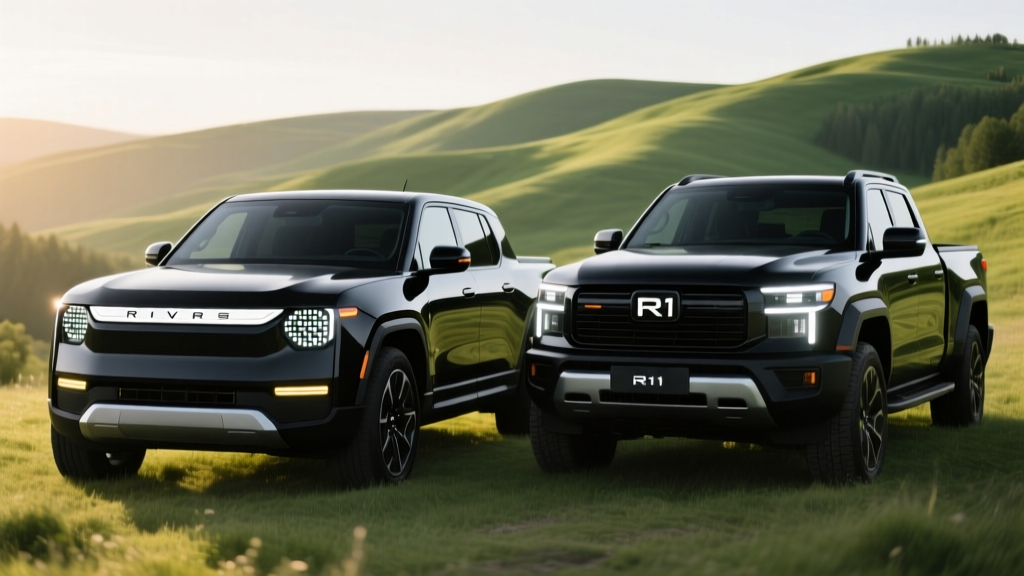
Rivian's R1S SUV and R1T pickup share one of the most distinctive lighting signatures on the road. The horizontal stadium-style LED light bar isn't just a design flourish — it's an integrated adaptive lighting system tied directly into the vehicle's driver-assistance and thermal management architecture. If you've been searching for details on Rivian headlights, you've likely noticed that information is scattered. This guide breaks down exactly how Rivian's lighting system works, what it means for real-world driving, and pairs that with the full spec-sheet review buyers need: range, charging, pricing, and tax credit eligibility for the 2026 model year.
How Rivian Headlights Actually Work
The R1S and R1T use a full-LED adaptive headlight system with a signature horizontal light bar that spans the front fascia. Unlike conventional projector-beam setups, Rivian's system uses a matrix of individually addressable LED segments that can selectively dim or brighten zones to avoid blinding oncoming traffic while maintaining maximum illumination elsewhere on the road.
Key technical details of the Rivian headlight system:
- Adaptive high-beam assist: The system uses forward-facing cameras to detect oncoming and preceding vehicles, automatically adjusting beam pattern in real time.
- Cornering illumination: LED segments activate based on steering angle and vehicle speed to light up curves and intersections before the vehicle turns into them.
- Integrated turn signals and DRLs: The stadium light bar incorporates daytime running lights, turn signals, and sequential indicators into a single housing — reducing parts count and potential failure points.
- Thermal integration: The headlight assemblies share cooling pathways with the front drive unit, which helps maintain LED longevity during sustained high-output use (e.g., dark rural highways in cold weather).
Rivian does not offer a laser-headlight option (unlike BMW or Audi), and the system is the same across all trim levels — there is no "premium lighting" upgrade package. Every R1S and R1T leaves the factory with the identical adaptive LED setup.
Real-World Range: EPA Stickers vs. What You'll Actually Get
Rivian offers multiple battery pack sizes across the R1S and R1T lineup for 2026, and the EPA range varies significantly depending on pack, drivetrain, and wheel size. Here's what the numbers look like:
EPA Range vs. Real-World Expectations
| Model / Pack | EPA Range | Real-World Highway (70 mph) | Cold Weather (20°F) |
|---|---|---|---|
| R1T Dual-Motor Standard (106 kWh) | 270 mi | ~230-245 mi | ~190-210 mi |
| R1T Dual-Motor Large (129 kWh, NMC) | 352 mi | ~295-315 mi | ~240-265 mi |
| R1T Tri-Motor Max (149 kWh, NMC) | 420 mi | ~350-375 mi | ~285-310 mi |
| R1S Dual-Motor Large (129 kWh, NMC) | 352 mi | ~290-310 mi | ~235-260 mi |
| R1S Tri-Motor Max (149 kWh, NMC) | 410 mi | ~340-365 mi | ~275-300 mi |
Source: fueleconomy.gov. Real-world estimates based on owner-reported data and independent testing. Cold-weather figures assume no preconditioning and cabin heat active.
All Rivian packs use NMC (nickel manganese cobalt) chemistry, which offers higher energy density than LFP but is more sensitive to sustained 100% state-of-charge storage. Rivian recommends daily charging to 85-90% for battery longevity, reserving 100% for road trips. The vehicle's battery management system includes a usable buffer — the 129 kWh "Large" pack has roughly 122-125 kWh of usable capacity, with the remainder held in reserve to prevent deep discharge degradation.
Efficiency varies by configuration. The Dual-Motor R1T with the Standard pack achieves approximately 73 MPGe combined (about 46 kWh/100 miles), while the Tri-Motor Max drops to roughly 68 MPGe combined (49 kWh/100 miles) due to the added weight and power of the third motor. These figures are competitive with the Ford F-150 Lightning Extended Range but trail the Tesla Cybertruck AWD by a small margin.
Charging Speed: DC Fast Charge and Home Level 2
Charging speed is where Rivian's large battery packs create a trade-off: more range takes longer to refill. Here's the full picture:
| Level | Power | 10-80% Time | Miles Added per Hour |
|---|---|---|---|
| Level 1 (120V) | ~1.4 kW | N/A (days) | ~3-5 mi/hr |
| Level 2 (240V, 48A) | 11.5 kW | ~11-14 hrs (full) | ~25-30 mi/hr |
| DC Fast Charge (peak) | 220 kW (Max pack) | ~27-30 min | ~140 mi in 15 min |
Rivian's DC fast-charging peak rate reaches 220 kW on the Max pack and 200 kW on the Large pack. However, the charge curve tapers meaningfully above 60% state-of-charge. In practice, you'll see peak rates between 20-55% SoC, after which the rate drops to roughly 120-140 kW, and above 80% it falls below 50 kW. This means a 10-80% session takes approximately 27-30 minutes on a 350 kW-capable station (like Electrify America or Tesla Supercharger stalls with the NACS adapter).
Rivian transitioned to the NACS (Tesla) charging port starting with 2025 model-year vehicles. If you're buying a 2024 or earlier model, the truck uses a CCS1 port, and Rivian provides a NACS adapter for Supercharger access. For 2026 models, the native NACS port means direct access to Tesla's Supercharger network — currently the largest and most reliable DC fast-charging network in the US — without any adapter.
For home charging, Rivian's onboard charger supports up to 11.5 kW (48 amps) on Level 2. With a properly installed 60-amp circuit and a Wall Connector or Rivian Wall Charger, you'll add roughly 25-30 miles of range per hour, which is sufficient to fully replenish a Standard pack overnight and mostly refill a Large pack in a single night.
Performance and Drivetrain Specs
| Spec | Dual-Motor | Tri-Motor (2026) |
|---|---|---|
| Horsepower | 533 hp | 850 hp |
| Torque | 610 lb-ft | 1,100 lb-ft |
| 0-60 mph | 4.5 sec | 2.9 sec |
| Drivetrain | AWD (dual motor) | AWD (tri motor) |
| Top Speed | 125 mph | 130 mph |
| Max Towing | 11,000 lbs | 11,000 lbs |
The Tri-Motor configuration (one front, two rear motors) delivers acceleration that rivals supercars while maintaining genuine off-road capability. Rivian's quad-motor setup from the early R1 production has been consolidated to the Tri-Motor for 2026, reducing complexity and weight while retaining the torque-vectoring rear axle that gives the R1T its distinctive cornering feel for a vehicle of its size.
Cargo, Passenger Space, and Practicality
The R1T's party trick remains the Gear Tunnel — a transverse pass-through storage compartment behind the rear seats that holds roughly 11 cu ft of cargo and is accessible from both sides of the truck. Combined with the 54-inch bed and the front trunk (frunk) offering 11 cu ft, total enclosed cargo capacity is substantial for a midsize pickup.
For the R1S three-row SUV:
- Behind 3rd row: ~10.5 cu ft
- Behind 2nd row (3rd folded): ~46 cu ft
- Behind 1st row (all rear folded): ~88 cu ft
- Front legroom: 41.3 inches
- Second-row legroom: 38.9 inches
- Third-row legroom: 30.4 inches (best suited for children or short trips)
The R1S third row is usable for adults on short trips but tight for long highway drives. Families with older children will find it adequate; those regularly carrying six adults should cross-shop the Kia EV9 or the extended-wheelbase Rivian R1S expected in future model years.
Pricing, Trims, and Federal Tax Credit Eligibility
| Model / Trim | Base MSRP | §30D Credit Eligible? | Est. After Credit |
|---|---|---|---|
| R1T Dual-Motor Standard | $69,900 | Yes (partial/full TBD by sourcing) | ~$62,400-$66,150 |
| R1T Dual-Motor Large | $75,900 | Yes (partial/full TBD) | ~$68,400-$72,150 |
| R1T Tri-Motor Max | $99,900 | Yes (partial/full TBD) | ~$92,400-$96,150 |
| R1S Dual-Motor Standard | $74,900 | Yes (partial/full TBD) | ~$67,400-$71,150 |
| R1S Tri-Motor Max | $104,900 | Yes (partial/full TBD) | ~$97,400-$101,150 |
- MSRP cap: Vans, SUVs, and pickups qualify up to $80,000 MSRP. This means the Dual-Motor Standard and Large trims of the R1T qualify, but the Tri-Motor Max trims and most R1S configurations exceed the cap and do not qualify for the full credit.
- Buyer income limits: AGI must not exceed $300,000 (married filing jointly), $225,000 (head of household), or $150,000 (single).
- Battery sourcing: The credit is split into two $3,750 halves — one for critical minerals sourcing and one for battery component manufacturing. Rivian's supply chain qualifies for at least the critical minerals portion; full $7,500 eligibility depends on current-year battery component sourcing compliance. Check the IRS qualified vehicles list before purchasing.
- Point-of-sale transfer: You can transfer the credit to the dealer at purchase, reducing your out-of-pocket cost immediately rather than waiting for tax filing.
Driver Assistance, Tech, and Headlight Integration
Rivian's driver-assistance suite, branded Rivian Driver+, operates at SAE Level 2 — meaning it provides steering, acceleration, and braking assistance but requires the driver to remain fully engaged with hands on the wheel and eyes on the road at all times. It is not a self-driving system.
The headlight system integrates with Driver+ in a meaningful way: when the vehicle detects it is on a dark highway with no oncoming traffic (via the same camera array used for lane-keeping), the adaptive high beams activate automatically and adjust the beam pattern based on detected vehicles ahead. This reduces the driver's need to manually toggle high beams during long nighttime drives — a genuine safety benefit on rural routes.
The infotainment system runs on a 15.6-inch center touchscreen with a dedicated instrument cluster display. Wireless Apple CarPlay and Android Auto are standard. Over-the-air (OTA) updates regularly add features — Rivian has a strong track record of post-purchase software improvements, including lighting behavior refinements delivered via OTA.
Warranty Coverage
- Battery pack: 8 years / 175,000 miles (retains at least 70% of original capacity)
- Powertrain (motors, gearbox): 8 years / 175,000 miles
- Bumper-to-bumper: 5 years / 60,000 miles
- Corrosion perforation: 12 years / unlimited miles
Rivian's battery warranty threshold of 70% capacity retention is industry-standard (matching Tesla and Ford). The 175,000-mile coverage exceeds the typical 100,000-mile powertrain warranties from legacy automakers and provides meaningful peace of mind for high-mileage drivers and those who tow frequently.
Pros, Cons, and Who Should Buy
Pros
- Class-leading range with Max pack (420 mi EPA, R1T)
- Genuine off-road capability with 14.9" ground clearance and tank turns
- Distinctive, functional headlight system with excellent beam width
- NACS port on 2025+ models = native Supercharger access
- 11,000-lb towing capacity (best in electric midsize pickup class)
- OTA updates continuously improve the vehicle post-purchase
- Gear Tunnel storage is a unique practicality advantage
Cons
- High starting price — many trims exceed §30D MSRP cap
- DC fast charging slower than Hyundai Ioniq 5/Kia EV9 (220 kW vs 240-350 kW peak)
- R1S third row is tight for adults
- Service center network still expanding — rural owners may face long tow distances
- No Apple CarPlay in early builds (now added via OTA, but late vs competitors)
- Adaptive high-beam switching slightly slower than European rivals
Who the Rivian R1S/R1T Is For
Choose the R1T if: You need a genuine work/adventure truck with real towing capacity, off-road chops, and daily-drivable comfort — and you can install a Level 2 home charger to avoid relying solely on public DC charging for a large battery pack.
Choose the R1S if: You want a three-row electric SUV with more personality and off-road capability than the Tesla Model X or Kia EV9, and your typical driving involves outdoor recreation, camping, or rural roads where the headlight system and ground clearance shine.
Look elsewhere if: Budget is your primary concern (the Ford F-150 Lightning and Chevy Silverado EV start lower), you need the fastest possible DC charging (Hyundai/Kia 800V platforms refill faster), or you regularly carry six adults (the Kia EV9's third row is roomier).
Frequently Asked Questions
Can I upgrade Rivian headlights after purchase?
No. Rivian does not offer aftermarket headlight upgrades or alternative lighting packages. The adaptive LED system is standard on all trims and is deeply integrated with the vehicle's ADAS camera system and thermal management. Any modification would likely void related warranty coverage and could interfere with Driver+ functionality.
Do Rivian headlights perform well in snow and ice?
Yes. The LED elements generate enough heat to resist light icing, and the headlight washers (standard on all trims) help clear road salt and grime. In extreme cold (below 10°F), some owners report minor condensation inside the lens that clears within a few minutes of operation. The wide beam pattern is particularly useful in low-visibility snow conditions where focused high beams cause glare-back.
What is the real-world range of the Rivian R1T?
The EPA rates the R1T Dual-Motor Large at 352 miles, but expect approximately 295-315 miles at sustained highway speeds (70-75 mph) in moderate temperatures. In cold weather (below 30°F), plan for 240-265 miles due to battery chemistry limitations and cabin heating load. The Max pack extends these figures to roughly 350-375 highway miles in fair weather.
How fast does the Rivian R1T charge at home?
With a 48-amp Level 2 home charger on a 240V circuit, the R1T adds approximately 25-30 miles of range per hour (11.5 kW). A full charge from 10% to 100% on the Large pack takes roughly 11-14 hours — typically done overnight. Rivian strongly recommends a dedicated 60-amp circuit installed by a licensed electrician for optimal Level 2 performance.
Does the Rivian R1T qualify for the $7,500 federal EV tax credit?
It depends on the trim and your income. The R1T Dual-Motor trims fall under the $80,000 MSRP cap for trucks/SUVs and are potentially eligible. The Tri-Motor Max exceeds the cap. Buyer income must be under $300,000 (joint), $225,000 (head of household), or $150,000 (single). Battery sourcing rules determine whether you receive the full $7,500 or a partial $3,750 credit. Always verify on the IRS qualified vehicles list before purchasing.
How does the Rivian R1T compare to the Ford F-150 Lightning?
The R1T offers more range (420 mi Max vs 320 mi Extended Range Lightning), faster acceleration (2.9s vs 3.8s 0-60), and better off-road capability. The F-150 Lightning starts at a significantly lower price, has a larger bed (67" vs 54"), and benefits from Ford's established dealer service network. If budget and bed size matter most, the Lightning wins. If range, performance, and adventure capability are priorities, the R1T is the stronger choice.
Is Rivian's headlight system covered under warranty?
Yes. The headlight assemblies are covered under the 5-year/60,000-mile bumper-to-bumper warranty. If a headlight module fails due to a manufacturing defect, Rivian will replace it at no cost. Damage from road debris, accidents, or aftermarket modification is not covered. Replacement cost out of warranty is estimated at $1,800-$2,500 per assembly based on owner reports.