Rivian's Halloween 2025 Software Drop: More Than Just Spooky Easter Eggs
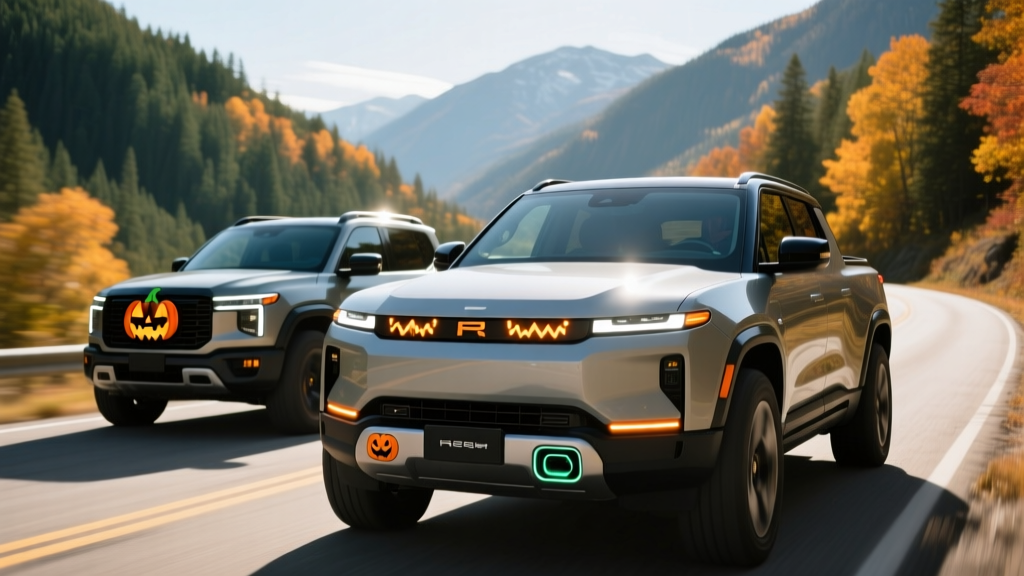
Rivian's over-the-air (OTA) software updates have become one of the brand's strongest ownership perks, and the Rivian Halloween update 2025 (software version 2025.44, pushed in late October) is no exception. While previous holiday-themed drops leaned heavily on cosmetic Easter eggs, this one layers genuine utility improvements on top of the seasonal fun — including enhanced highway driver-assist behavior, refined regenerative braking tuning, and expanded Camp Mode capabilities for both the R1S SUV and R1T pickup.
For current Gen 2 owners (2025 model year and later, built on Rivian's updated Enduro/Gen 2 drive-unit platform), the Halloween update arrives as a free OTA download. Gen 1 owners (2022–2024 model years) receive a more limited feature set due to hardware differences in sensor suites and drive-unit controllers. Below, we map exactly what the update delivers — and contextualize it within the full R1 platform's range, charging, pricing, and ownership picture heading into 2026.
What's Actually in the Rivian Halloween Update 2025
Rivian doesn't publish exhaustive patch notes the way a phone OS does, but based on owner community logs and Rivian's in-app release summary, version 2025.44 includes:
- Highway Assist refinement: Smoother lane-centering on curves, improved cut-in detection, and reduced phantom braking events on divided highways. This is a Level 2 SAE driver-assist — you must keep hands on the wheel and eyes on the road.
- Regen braking recalibration: The "Standard" regen mode now provides slightly stronger deceleration at low speeds, making one-pedal driving more viable in stop-and-go traffic without touching the brake pedal.
- Camp Mode 2.0: New climate-scheduling presets, a "quiet hours" mode that limits compressor noise, and the ability to keep the 120V bed outlet (R1T) or cargo-area outlets (R1S) live overnight for appliances.
- Halloween Easter eggs: Animated instrument-cluster themes (ghost, bat, pumpkin motifs), a spooky startup chime, and a "Haunted Garage" horn sound — all toggleable and reversible after the holiday.
- Charge scheduling improvements: More granular departure-time preconditioning, which matters for DC fast-charging speed in cold weather.
- Battery-health display: A new State of Health (SoH) estimate in the vehicle settings menu, giving owners a clearer picture of long-term degradation.
2026 Rivian R1S and R1T: Full Spec Breakdown
The Halloween update doesn't change hard specs — those are set by the Gen 2 hardware platform. Here's the current state of the R1 lineup as sold for the 2026 model year:
| Spec | Dual-Motor (Standard) | Performance Dual-Motor | Tri-Motor |
|---|---|---|---|
| Drivetrain | AWD (2 motors) | AWD (2 motors) | AWD (3 motors) |
| Horsepower | 533 hp | 665 hp | 850 hp |
| 0–60 mph | 4.5 sec | 3.4 sec | 2.9 sec (R1T) |
| Battery (Standard) | 92 kWh usable (NMC) | 92 kWh usable (NMC) | 92 kWh usable (NMC) |
| Battery (Max Pack) | 128 kWh usable (NMC) | 128 kWh usable (NMC) | 128 kWh usable (NMC) |
| EPA Range (Std / Max) | 270 / 352 mi (R1S) | 260 / 340 mi (R1S) | 250 / 320 mi (R1S) |
| Max DC Fast Charge | 200 kW | 220 kW | 220 kW |
| 10–80% DCFC Time | ~27 min | ~25 min | ~25 min |
| Level 2 Home Charge | 11.5 kW (~25 mi/hr) | 11.5 kW (~25 mi/hr) | 11.5 kW (~25 mi/hr) |
| MPGe (combined) | 73 MPGe | 70 MPGe | 65 MPGe |
| Towing Capacity | 7,700 lb | 7,700 lb | 7,700 lb |
Source: fueleconomy.gov and Rivian official specifications. Tri-Motor R1S EPA range figures are preliminary estimates pending final certification; R1T figures are within ±5 miles of R1S equivalents.
Real-World Range: What the EPA Sticker Doesn't Tell You
The R1S Dual-Motor Max Pack's 352-mile EPA sticker is a strong number, but real-world results depend heavily on conditions:
• Highway (70–75 mph, mild weather): Expect 290–310 miles. The R1's boxy aerodynamics (Cd around 0.38) punish efficiency at sustained speed.
• City / mixed driving: 330–350 miles is achievable thanks to regen braking and lower average speeds.
• Cold weather (below 30°F): Budget a 20–30% range reduction. A Max Pack R1S may deliver 240–270 miles in freezing conditions without preconditioning.
• Towing: With a 5,000-lb trailer, expect 140–170 miles. Plan charging stops accordingly.
The new battery-health display in the Halloween update is relevant here. Rivian's NMC (nickel manganese cobalt) chemistry degrades more noticeably in the first 20,000 miles (typically 3–5% capacity loss) before leveling off. The SoH readout helps owners track this curve and make informed decisions about charging habits — like whether to set a daily 80% charge limit, which Rivian recommends for longevity.
Charging Speed: DC Fast, Level 2, and Cold-Weather Reality
Rivian uses the CCS1 connector on all current R1 vehicles (a NACS adapter for Tesla Supercharger access ships standard with 2025+ models). Here's how charging breaks down:
| Charge Level | Power / Rate | Miles Added | Notes |
|---|---|---|---|
| Level 1 (120V) | 1.4 kW | ~3 mi/hr | Emergency/trickle only |
| Level 2 (240V, 48A) | 11.5 kW | ~25 mi/hr | Full charge overnight (~10–12 hr) |
| DC Fast (peak) | 200–220 kW | ~140 mi in 15 min | Peak only; tapers above 60% SoC |
| DC Fast (10–80%) | Avg ~150 kW | ~200 mi | 25–27 min (battery preconditioned) |
| Tesla Supercharger (via adapter) | Up to 150 kW (V2) / 250 kW (V3) | Varies | NACS adapter included; speed depends on stall generation |
Charging-curve reality check: The 220 kW peak on Performance and Tri-Motor trims is sustained only between roughly 10–40% State of Charge. Above 60%, the curve tapers sharply — expect 80 kW or less past 70% SoC. This is standard NMC behavior, not a Rivian-specific limitation. The Halloween update's improved charge-scheduling preconditioning helps: if you set a DC fast-charging stop in the navigation, the battery thermal management system will warm the pack to optimal temperature before you arrive, shaving 3–5 minutes off a 10–80% session in cold weather.
For home charging, a 48-amp Level 2 wall connector on a 60-amp circuit is the sweet spot. Installation typically runs $800–$2,000 depending on panel proximity, and a full overnight charge adds roughly 250+ miles — enough for virtually any daily use case.
Pricing, Trims, and Federal Tax Credit Eligibility
| Trim | Base MSRP | §30D Credit Eligible? | Effective Price (est.) |
|---|---|---|---|
| R1S Dual-Motor (Standard Pack) | $75,900 | Yes (if under $80k cap) | ~$68,400 |
| R1S Dual-Motor (Max Pack) | $82,900 | No (exceeds $80k SUV cap) | $82,900 |
| R1S Performance Dual-Motor | $84,500 | No | $84,500 |
| R1S Tri-Motor | $99,000 | No | $99,000 |
| R1T Dual-Motor (Standard Pack) | $69,900 | Yes (under $80k truck cap) | ~$62,400 |
| R1T Dual-Motor (Max Pack) | $76,900 | Yes (under $80k truck cap) | ~$69,400 |
| R1T Performance Dual-Motor | $79,900 | Yes (under $80k truck cap) | ~$72,400 |
| R1T Tri-Motor | $94,000 | No | $94,000 |
IRS §30D tax credit rules (2026): The $7,500 federal credit applies at point of sale, but eligibility requires meeting all of the following:
- MSRP cap: ≤$80,000 for SUVs (R1S), ≤$80,000 for pickups (R1T). Adding options that push the sticker above the cap disqualifies the vehicle.
- Buyer income cap: Modified AGI ≤$150,000 (single), ≤$225,000 (head of household), ≤$300,000 (joint).
- Battery sourcing: A percentage of critical minerals and battery components must be sourced from the U.S. or FTA-partner nations. Rivian has been working to qualify its Samsung SDI cells, but eligibility can change by model year. Verify at IRS.gov's qualifying vehicle list before purchasing.
- Point-of-sale transfer: You can transfer the credit to the dealer at purchase, reducing your out-of-pocket cost immediately — but you must still meet income requirements at tax-filing time or repay the credit.
The R1S Standard Pack Dual-Motor and most R1T configurations clear the MSRP cap, making them credit-eligible. Max Pack and Tri-Motor R1S models typically exceed $80,000 and do not qualify. Always confirm with your tax professional and the IRS list before committing.
Interior, Cargo, and Tech: Space That Earns Its Price
Rivian's interior has matured significantly since the 2022 launch. The 2026 Gen 2 models feature improved material quality, a revised center-console layout with physical volume and climate knobs (a direct response to owner feedback), and the same 15.6-inch landscape touchscreen running Rivian's in-house OS.
R1S cargo volume: 12.7 cu ft (behind 3rd row) / 46.7 cu ft (behind 2nd row) / 104.7 cu ft (max, all rows folded). The front trunk (frunk) adds 11.1 cu ft of lockable, drainable storage — a genuine advantage over competitors like the Tesla Model X or Jeep Grand Wagoneer L.
R1T bed: 4.5 ft (54 in) bed length, with the innovative Gear Tunnel (11.7 cu ft of lockable pass-through storage on Dual-Motor and Performance trims) remaining a class-exclusive feature. The Tri-Motor deletes the Gear Tunnel to accommodate the rear drive unit.
Passenger space: Front legroom is generous at 41.3 inches. Second-row legroom (37.4 in) is competitive with midsize SUVs but tighter than a full-size Tahoe. The R1S third row is best suited for children — 29.3 inches of legroom is tight for adults on long trips.
Driver-assist tech: Highway Assist (adaptive cruise + lane centering) is standard. It's competent for long highway stretches but not class-leading — GM's Super Cruise and Ford's BlueCruise offer hands-free operation on mapped highways, which Rivian does not yet support. The Halloween update's improved lane-centering narrows the gap, but you still need hands on the wheel.
Warranty and Long-Term Ownership
Rivian's warranty coverage is competitive with the EV segment:
- Vehicle limited warranty: 5 years / 60,000 miles
- Battery and drive-unit warranty: 8 years / 175,000 miles (retains ≥70% capacity)
- Roadside assistance: 5 years / 60,000 miles
The 175,000-mile battery warranty is a standout — it exceeds Tesla's 120,000-mile threshold on Model X/S and matches or beats most competitors. The 70% capacity-retention floor is industry-standard. Rivian's NMC batteries from Samsung SDI have shown moderate degradation curves in early owner data: roughly 4–6% loss over the first 30,000 miles, then stabilizing. The new SoH display in the Halloween update gives owners direct visibility into this.
One ownership caveat: Rivian's service-center network remains thinner than Tesla's, particularly in rural areas. Mobile service handles many software and minor hardware issues, but body repair and major drive-unit work may require a trip to a regional center. Factor this into your decision if you're far from a metro area.
Pros, Cons, and Who Should Buy
- Class-leading frunk + Gear Tunnel storage (R1T)
- Genuine off-road capability (8.9 in ground clearance, quad-motor tank turns on Tri-Motor)
- Frequent, meaningful OTA updates (Halloween 2025 adds real utility)
- 175,000-mile battery warranty exceeds most competitors
- R1T Standard Pack qualifies for $7,500 §30D credit
- Strong towing capacity (7,700 lb) with integrated trailer-brake controller
- R1S Max Pack and Tri-Motor exceed $80k MSRP cap — no federal credit
- Highway efficiency suffers from boxy aero (70–73 MPGe combined)
- Service-center network still limited outside major metros
- Third-row space in R1S is tight for adults
- DC fast-charging tapers aggressively above 60% SoC
- No hands-free driving mode (Level 2 only, unlike Super Cruise/BlueCruise)
Who this EV suits best:
- Adventure-oriented families who need genuine off-road capability, towing, and cargo versatility — the R1T with Gear Tunnel is unmatched here.
- Outdoor-lifestyle commuters who want weekend trail access without a separate vehicle.
- Tech-forward buyers who value OTA evolution — Rivian's update cadence (roughly every 6–8 weeks) is among the best in the industry.
Who should look elsewhere:
- Highway-heavy commuters prioritizing efficiency — a Tesla Model Y or Hyundai Ioniq 5 will cost less per mile.
- Large families needing usable third rows — the Kia EV9 or Rivian's own future R2 (expected 2026) may serve better.
- Buyers far from service centers — check Rivian's service map before committing.
Frequently Asked Questions
What is the real-world range of the Rivian R1S and R1T?
The EPA rates the R1S Dual-Motor Max Pack at 352 miles, but real-world highway driving at 70+ mph typically yields 290–310 miles. In freezing weather, budget 240–270 miles. The Standard Pack (92 kWh) delivers 250–270 miles real-world. Towing cuts range roughly in half.
How fast does the Rivian R1 charge at home and on DC fast chargers?
On a 48-amp Level 2 home charger (11.5 kW), the R1 adds about 25 miles per hour — a full overnight charge from 10% takes 10–12 hours. On DC fast chargers, peak rates hit 200–220 kW, but the average 10–80% session takes 25–27 minutes with a preconditioned battery. The charge curve tapers sharply above 60% SoC.
How much does a Rivian R1 cost after the federal tax credit?
The R1T Dual-Motor Standard Pack starts at $69,900 MSRP and qualifies for the $7,500 §30D credit (if buyer income and battery-sourcing rules are met), bringing the effective price to ~$62,400. The R1S Standard Pack at $75,900 also qualifies. Max Pack and Tri-Motor R1S models exceed the $80,000 SUV MSRP cap and do not qualify for the federal credit.
Does the Rivian R1 qualify for the federal EV tax credit in 2026?
It depends on the exact configuration. Under IRS §30D rules, SUVs must have an MSRP ≤$80,000 and pickups ≤$80,000. Buyer modified AGI must be ≤$300,000 (joint), ≤$225,000 (head of household), or ≤$150,000 (single). Battery-sourcing requirements also apply and can change. Always verify the specific VIN on the IRS qualifying vehicle list before purchasing.
Is the Rivian R1 worth buying vs. the Tesla Model X, Ford F-150 Lightning, or Kia EV9?
It depends on your use case. The R1T is the most capable electric pickup for off-road and adventure use, beating the F-150 Lightning on ground clearance and storage versatility (Gear Tunnel). The R1S offers more character and off-road chops than the Model X but trails on efficiency and Supercharger-network convenience. The Kia EV9 is cheaper and has a more usable third row, but can't match Rivian's adventure capability or OTA update pace. If you tow, go off-road, or value continuous software improvement, the R1 earns its premium.
What did the Rivian Halloween update 2025 actually add?
Software version 2025.44 brought Highway Assist refinements (smoother lane centering, fewer phantom-braking events), stronger low-speed regen for one-pedal driving, Camp Mode 2.0 with quiet-hours scheduling, a battery State of Health display, improved charge preconditioning for DC fast charging, and toggleable Halloween-themed Easter eggs for the instrument cluster and startup chime.
How long is the Rivian battery warranty?
Rivian covers the battery pack and drive units for 8 years or 175,000 miles, whichever comes first, with a capacity-retention threshold of 70%. This is one of the longest battery warranties in the EV segment.
Always verify current pricing, tax-credit eligibility, and specifications with Rivian.com, fueleconomy.gov, and IRS.gov, as rules and MSRPs are subject to change.