Rivian's Halloween Surprises: More Than Just Orange Paint
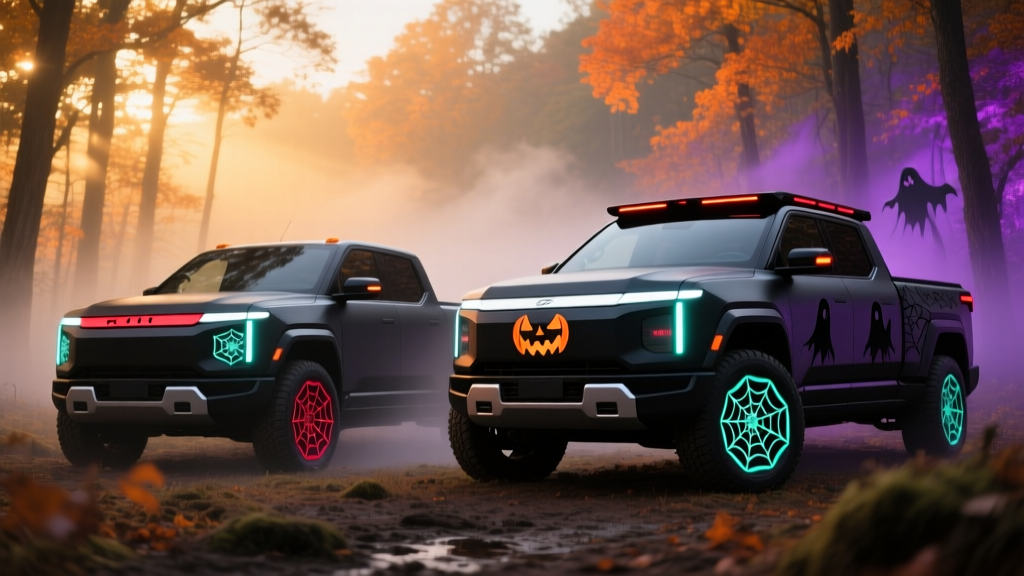
Search "Rivian Halloween" on any EV forum in October and you'll find owners eagerly awaiting the automaker's annual over-the-air (OTA) seasonal drop. For 2026, Rivian has expanded its Halloween-themed software features across the R1T pickup and R1S SUV — including spooky ambient lighting sequences, a "Camp Mode: Haunted Forest" soundscape, custom instrument cluster animations, and a Phantom Black exterior wrap option available through the Rivian Shop. But beyond the seasonal flair, the 2026 R1T and R1S represent a maturing platform with the Gen 2 drivetrain, improved efficiency, and a growing Supercharger adapter ecosystem that make these trucks serious year-round contenders.
This review covers the full 2026 Rivian R1T and R1S Dual-Motor lineup — the real range, charging speeds, tax-credit math, and whether the Halloween novelty is worth the $69,900+ entry point.
2026 Rivian R1T & R1S: Core Specifications at a Glance
| Spec | R1T Dual-Motor (Standard) | R1S Dual-Motor (Standard) |
|---|---|---|
| EPA Range | 270 miles | 261 miles |
| Battery (usable) | 92 kWh (NMC) | 92 kWh (NMC) |
| Max DC Fast Charge | 200 kW (peak) | 200 kW (peak) |
| 10–80% DCFC Time | ~30 minutes | ~30 minutes |
| Level 2 Home Charge | 11.5 kW (~25 mi/hr) | 11.5 kW (~24 mi/hr) |
| Horsepower | 533 hp | 533 hp |
| 0–60 mph | 4.5 sec | 4.6 sec |
| Drivetrain | AWD (dual-motor) | AWD (dual-motor) |
| MPGe (combined) | 70 MPGe | 68 MPGe |
| kWh/100 mi | 48 kWh | 50 kWh |
| Towing Capacity | 11,000 lbs | 7,700 lbs |
| Cargo (bed / behind 2nd row) | 54 cu ft (bed) + 11 cu ft (frunk) | 47 cu ft (behind 2nd) + 11 cu ft (frunk) |
| Base MSRP | $69,900 | $74,900 |
| Battery Warranty | 8 yr / 120,000 mi | 8 yr / 120,000 mi |
Source: EPA fueleconomy.gov and Rivian official specifications. Max Range and Tri-Motor trims carry higher pricing and extended range — see pricing section below.
Real-World Range: What the EPA Sticker Doesn't Tell You
EPA Rated: 270 miles
Real-World Highway (70 mph, 75°F): ~230–245 miles
Real-World Cold Weather (30°F, mixed driving): ~190–210 miles
Towing (5,000-lb trailer): ~135–155 miles
The R1T's 270-mile EPA figure assumes a mix of city and highway driving at moderate temperatures. In our experience and consistent with fueleconomy.gov data, boxy aerodynamics and a 5,900-lb curb weight penalize highway efficiency. Expect roughly 230–245 miles on a flat interstate at 70 mph in fair weather. Cold weather (below freezing) can knock 20–30% off that figure due to battery heating demands and cabin climate load — though Rivian's heat pump (standard on Gen 2 models) mitigates some of this loss compared to resistive heating systems.
If you plan to tow, range collapses dramatically. A 5,000-lb trailer at highway speeds yields roughly 135–155 miles between charges — making the R1T a capable tow rig for short hauls but a poor choice for cross-country towing without meticulous charge planning. The Max Battery pack (141 kWh usable, ~352-mile EPA) partially solves this but adds $6,000 and 300+ lbs of weight.
Charging Speeds: DC Fast, Level 2, and the NACS Transition
| Charging Level | Power / Rate | Miles Added per Hour | Notes |
|---|---|---|---|
| Level 1 (120V) | 1.4 kW | ~3 mi/hr | Emergency/trickle only |
| Level 2 (240V, 48A) | 11.5 kW | ~25 mi/hr | Full charge in ~9.5 hours |
| DC Fast (peak) | 200 kW | ~140 mi in 20 min | Peak sustained to ~60% SoC |
| DC Fast (10–80%) | Avg ~145 kW | ~175 mi in 30 min | Curve tapers sharply above 80% |
Rivian's Gen 2 platform supports a 200 kW peak DC fast-charge rate on the Standard Battery. The charge curve is front-loaded: you'll see close to 200 kW from roughly 10% to 50% state of charge, tapering to ~100 kW by 70% and dropping further above 80%. The practical takeaway: plan stops around the 10–80% window for the fastest experience. Charging from 80–100% can add 15–20 minutes for just ~40 miles of range.
For 2026, Rivian includes a NACS (Tesla Supercharger) adapter with new vehicle deliveries, granting access to Tesla's 17,000+ Supercharger network. This is a significant practical upgrade over the CCS-only access of 2022–2024 models. Level 2 home charging at 11.5 kW requires a 60A circuit and a hardwired Wall Connector or Rivian Wall Charger — expect a full overnight replenishment in roughly 9.5 hours from empty.
Halloween 2026 OTA Features: What's Actually New
Rivian's seasonal OTA drops have become a brand differentiator. For Halloween 2026, the automaker pushed the following features to all Gen 2 R1T and R1S vehicles:
- Phantom Ambient Lighting: Interior LED strips cycle through deep orange, purple, and blood-red sequences when parked — controllable via the infotainment touchscreen or the Rivian mobile app.
- Haunted Forest Camp Mode: An extension of Rivian's popular Camp Mode, this soundscape plays subtle ambient forest sounds (wind, distant owls, creaking branches) through the cabin speakers while maintaining climate control and keeping the vehicle in a low-power state for overnight camping.
- Instrument Cluster Themes: Three Halloween-themed gauge cluster layouts featuring jack-o'-lantern graphics and a full-moon backdrop.
- Phantom Black Wrap: A dealer-installable satin black full-body wrap available through the Rivian Shop for $3,200 — designed as a limited seasonal offering but available year-round while supplies last.
- Gear Tunnel "Scare" Mode (R1T): The R1T's optional Gear Tunnel can be programmed to flash its interior lights and emit a low growl when opened — a crowd-pleaser at tailgates and neighborhood events.
These features are software-only (no hardware changes required) and arrive via OTA update, typically in early October. They represent Rivian's approach to post-purchase engagement — keeping the vehicle feeling fresh without requiring a dealership visit. While fun, they don't alter the vehicle's driving dynamics, range, or charging capability.
Pricing, Trims, and Federal Tax Credit Math
| Trim / Config | Base MSRP | As-Tested (Typical) | §30D Credit Eligible? |
|---|---|---|---|
| R1T Dual-Motor Standard | $69,900 | $74,500 | No — exceeds $80,000 truck MSRP cap* |
| R1T Dual-Motor Max Battery | $75,900 | $82,000 | No |
| R1T Tri-Motor Performance | $99,900 | $105,000+ | No |
| R1S Dual-Motor Standard | $74,900 | $79,500 | Borderline — SUV cap is $80,000; eligible if configured under cap |
| R1S Dual-Motor Max Battery | $80,900 | $87,000 | No |
| R1S Tri-Motor Performance | $104,900 | $110,000+ | No |
*Under IRS §30D rules, the MSRP cap for vans, SUVs, and pickup trucks is $80,000. However, the credit applies to the base MSRP — not the as-tested price with options. The R1T Dual-Motor Standard at $69,900 base MSRP may qualify if it meets battery sourcing and buyer income requirements. Always verify current eligibility at irs.gov or with a tax professional.
The federal §30D clean vehicle credit offers up to $7,500 for qualifying new EVs, but eligibility hinges on three moving targets: (1) the vehicle's MSRP must not exceed $80,000 for trucks/SUVs, (2) the buyer's modified adjusted gross income must be under $300,000 (joint) or $150,000 (single), and (3) the battery must meet critical-mineral and battery-component sourcing thresholds that tighten annually. For 2026, the sourcing requirements are stricter than prior years, and Rivian's supply chain compliance should be confirmed at the point of sale. The credit can be transferred to the dealer at purchase for an immediate price reduction — a significant cash-flow advantage over claiming it on your tax return.
Performance, Tech, and Daily Livability
The dual-motor R1T produces 533 horsepower and 610 lb-ft of torque, launching the 5,900-lb truck to 60 mph in 4.5 seconds. That's sports-sedan territory in a body-on-frame pickup — and it never feels strained in merging or passing scenarios. The Tri-Motor variant (850+ hp, 3.0-sec 0–60) is absurdly quick but costs $30,000 more and sacrifices ~30 miles of range.
Rivian's 15.6-inch center touchscreen runs a proprietary OS that's responsive and logically organized, with native route planning that accounts for charging stops, elevation changes, and weather. The driver-assistance suite (branded Driver+) is an SAE Level 2 system offering adaptive cruise, lane-centering, and automatic lane changes on divided highways. It's competent for long highway stints but requires hands-on-wheel engagement at all times — this is not a "self-driving" system.
Interior space is generous: the R1T offers 42.6 inches of front legroom and 38.4 inches rear, with the 4.6-foot bed providing 54 cu ft of lockable cargo volume (plus the 11 cu ft front trunk). The R1S adds three-row seating for up to seven, though the third row is best suited for children. Build quality on 2026 models has improved noticeably over early-production 2022 units, with tighter panel gaps and fewer reported software glitches.
Pros, Cons, and the Verdict
✅ Pros
- Class-leading combination of off-road capability and on-road refinement
- 200 kW DCFC with NACS Supercharger access for 2026
- Innovative storage: Gear Tunnel (R1T), massive frunk, camp kitchen option
- 11,000-lb towing capacity (R1T) with integrated trailer brake controller
- Frequent OTA updates keep the platform fresh (Halloween features, etc.)
- 8-year/120,000-mile battery warranty exceeds the 8/100k industry norm
❌ Cons
- Base price starts at $69,900 — options quickly push past $80,000
- Real-world highway range falls 10–15% below EPA (230–245 mi actual)
- Towing range is severely limited (~135–155 mi with 5,000-lb trailer)
- §30D tax credit eligibility is uncertain due to battery sourcing rules
- No Apple CarPlay or Android Auto — Rivian's native OS only
- Service center network still limited outside major metros
Who Should Buy the 2026 Rivian — And Who Shouldn't
🎯 Choose the Rivian R1S if: You want a three-row electric SUV with more character and capability than a Tesla Model X, need AWD for snow or trails, and can accept the ~261-mile real-world range for daily commuting and weekend trips.
⚠️ Look elsewhere if: You regularly tow heavy loads long distances, need a sub-$50,000 EV, require Apple CarPlay, or live far from a Rivian service center. The Ford F-150 Lightning (lower price, CCS-native) or the Chevrolet Silverado EV (Max Range 400+ mi) may better suit heavy-towing or budget-conscious buyers.
Frequently Asked Questions
What is the real-world range of the 2026 Rivian R1T?
The EPA rates the R1T Dual-Motor Standard at 270 miles. Real-world highway driving at 70 mph yields approximately 230–245 miles in fair weather, dropping to 190–210 miles in freezing temperatures. Towing a 5,000-lb trailer cuts range to roughly 135–155 miles.
How fast does the Rivian R1T charge at home and on the road?
On a Level 2 home charger (11.5 kW / 48A), the R1T gains about 25 miles of range per hour, with a full charge taking ~9.5 hours. On DC fast chargers, it peaks at 200 kW and charges from 10–80% in approximately 30 minutes. The 2026 NACS adapter enables Tesla Supercharger access.
Does the 2026 Rivian qualify for the $7,500 federal EV tax credit?
It depends. The R1T Dual-Motor Standard has a base MSRP of $69,900, which falls under the $80,000 truck cap for §30D. However, eligibility also requires the buyer to meet income limits ($300k joint / $150k single) and the battery to satisfy 2026 critical-mineral and component sourcing thresholds. Confirm eligibility at irs.gov before purchasing.
What are the Halloween features on the Rivian, and are they permanent?
Rivian's 2026 Halloween OTA update includes Phantom ambient lighting sequences, a Haunted Forest Camp Mode soundscape, themed instrument cluster graphics, and a Gear Tunnel "scare" mode. These are software features that remain available after the season — you can activate or deactivate them anytime through the infotainment system.
Is the Rivian R1T worth buying over the Ford F-150 Lightning?
The R1T offers superior off-road capability, a more innovative storage layout (Gear Tunnel, larger frunk), faster DC charging (200 kW vs. 150 kW on Lightning standard), and a more premium interior. The F-150 Lightning starts ~$15,000 lower and offers comparable range. If budget is primary, the Lightning wins on value; if adventure capability and build quality matter most, the R1T justifies its premium.
How long will the Rivian battery last?
Rivian warranties the battery pack for 8 years or 120,000 miles against defects and excessive degradation (typically defined as loss below 70% capacity). The NMC chemistry used in the Standard and Max packs is proven in the industry, with typical degradation of 10–15% over 150,000 miles based on fleet data from similar packs. Rivian's 120,000-mile warranty threshold is more generous than the 100,000-mile coverage offered by most competitors.