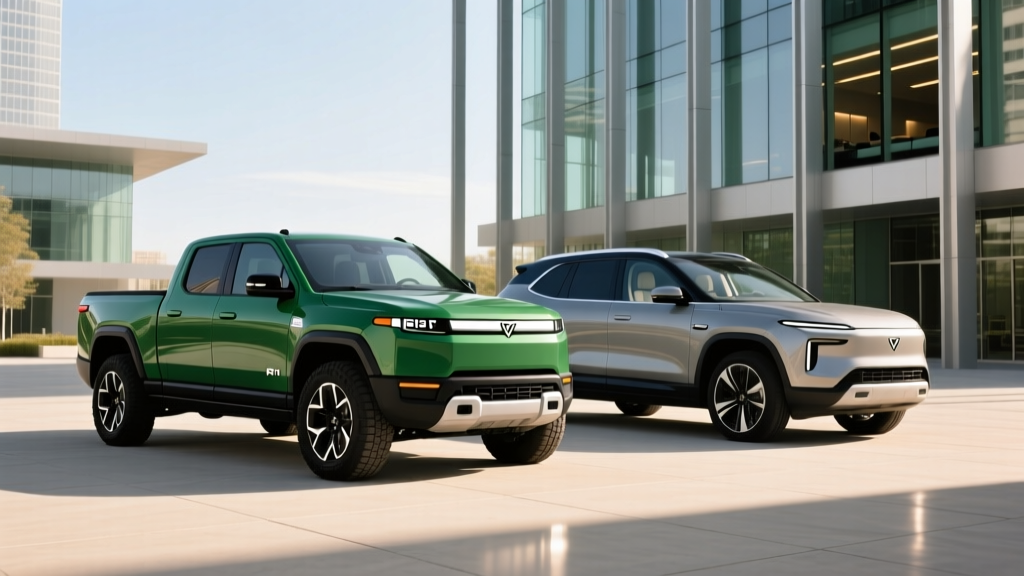
Every time Rivian reports a quarterly loss, the same question resurfaces in EV forums and comment sections: Is Rivian going out of business? It's a fair concern for anyone spending $70,000–$100,000+ on a vehicle. A bankrupt automaker means orphaned software, shuttered service centers, and plummeting resale values.
As of early 2026, the short answer is no — Rivian is not going out of business. But the longer answer requires looking at both the company's financial trajectory and whether the vehicles it's building today (the refreshed R1T pickup and R1S SUV) are worth your money regardless of what the stock ticker does. This review covers the hard numbers: EPA range, charging speeds, battery chemistry, tax credit eligibility, and real-world ownership economics.
Rivian's 2026 Financial Snapshot: Cash, Production, and the VW Lifeline
Before we evaluate the trucks, let's address the bankruptcy question directly. Rivian ended Q4 2025 with approximately $6.3 billion in liquidity, bolstered significantly by Volkswagen Group's $5 billion joint-venture investment announced in mid-2024. That deal does two things: it injects cash to keep the Normal, Illinois factory running, and it validates Rivian's electrical architecture and software stack for licensing to VW's own brands.
Production volume has climbed past 60,000 vehicles annually, and the upcoming R2 midsize platform (slated for 2026 production at a new Georgia facility) represents the company's bid for volume profitability. Rivian is still burning cash — gross margins have been improving but remain under pressure — but the VW backstop and a growing service network make a near-term collapse highly unlikely.
What does this mean for buyers? You're purchasing from a company with a credible multi-year runway, not a startup on life support. Now let's look at what they're actually building.
2026 Rivian R1T and R1S: Core Specifications at a Glance
| Spec | R1 Dual-Motor (Standard) | R1 Tri-Motor | R1 Quad-Motor |
|---|---|---|---|
| Drivetrain | AWD (Dual-Motor) | AWD (Tri-Motor) | AWD (Quad-Motor) |
| Horsepower | 533 hp | 850 hp | 1,025 hp |
| 0-60 mph | 4.5 sec | 3.0 sec (est.) | 2.5 sec |
| Battery (usable) | ~92 kWh (Standard) | ~128 kWh (Large) | ~128 kWh (Large) |
| Battery Chemistry | NMC (Nickel Manganese Cobalt) | NMC | NMC |
| EPA Range (R1T) | 270 mi (Standard Pack) 352 mi (Large Pack) | ~420 mi (Max Pack est.) | ~320 mi |
| EPA Range (R1S) | 261 mi (Standard) 341 mi (Large) | ~410 mi (Max Pack est.) | ~310 mi |
| Max DC Fast Charge | 200 kW (Standard) 220 kW (Large) | 220 kW | 220 kW |
| 10-80% DCFC Time | ~28 min (Large Pack) | ~30 min | ~30 min |
| Level 2 Home Charging | 11.5 kW (~25 mi/hr) | 11.5 kW | 11.5 kW |
| Efficiency (R1T Dual-Motor Large) | 73 MPGe / 46 kWh/100mi | — | — |
| Towing Capacity | 11,000 lbs | 11,000 lbs | 11,000 lbs |
| Ground Clearance | Up to 14.9 in (air suspension) | Up to 14.9 in | Up to 14.9 in |
Real-World Range: What the EPA Sticker Doesn't Tell You
The R1T Dual-Motor Large Pack carries an EPA-estimated 352 miles. In real-world highway driving at 70-75 mph, expect 280–310 miles depending on temperature and terrain. In cold weather (below 30°F), plan for a 15–25% reduction, bringing usable highway range to roughly 240–270 miles. The R1S, being slightly heavier and less aerodynamic, loses 10–15 miles across all scenarios. The Quad-Motor's immense power draw means real-world range often sits closer to 250–270 miles even in mild conditions.
Rivian's NMC battery packs are energy-dense but follow typical lithium-ion behavior: sustained highway speeds, cold temperatures, and aggressive acceleration all eat into the EPA figure. The R1T's pickup-truck aerodynamics (that flatbed creates drag) penalize highway efficiency more than a sleeker SUV or sedan would. If your commute is mostly city and suburban driving under 50 mph, you'll get closer to — or even exceed — the EPA number thanks to regenerative braking. Road-trippers should plan charging stops assuming ~280 miles of real range in summer and ~240 in winter.
One practical note: Rivian's Max Pack option uses a higher-density cell arrangement to push past 400 miles EPA. This is compelling for towing, where range can drop below 200 miles with a heavy trailer at highway speeds.
Charging Speed and Infrastructure: NACS, CCS, and Home Setup
Rivian transitioned to the NACS (North American Charging Standard) port for 2025+ models, giving R1 owners native access to the Tesla Supercharger network — currently the most reliable DC fast-charging ecosystem in North America. Older CCS-port Rivians can use a NACS adapter.
| Charging Level | Power / Voltage | Speed (Miles of Range Added) | Notes |
|---|---|---|---|
| Level 1 (120V household) | ~1.4 kW | ~3-4 mi/hr | Emergency/trickle only; not practical for daily use |
| Level 2 (240V home) | 11.5 kW (48A) | ~25 mi/hr (full overnight) | Requires NEMA 14-50 or hardwired; ~$500-$1,500 install |
| DC Fast Charge (NACS) | Up to 220 kW peak | ~140 mi in 15 min (Large Pack) | Peak rate not sustained; tapers significantly above 80% SoC |
The 220 kW peak DC charge rate is competitive but not class-leading — the Hyundai Ioniq 5 and Kia EV9 can accept 250+ kW on 800V architectures. In practice, the Rivian Large Pack charges from 10-80% in roughly 28-30 minutes at a capable Supercharger or Electrify America station. The charge curve tapers noticeably above 80%, so plan to unplug at 80% on road trips rather than waiting for a full top-off.
For home charging, Rivian recommends a 60-amp circuit with a 48-amp continuous charger (like the Wallbox Pulsar Plus or ChargePoint Home Flex). A full charge from 10% to 100% on Level 2 takes approximately 12-14 hours for the Large Pack — fine for overnight replenishment. Expect to pay $500–$1,500 for a professional Level 2 installation, potentially more if your electrical panel needs an upgrade to 200A service.
Pricing, Trims, and the Federal EV Tax Credit (§30D)
The 2026 Rivian lineup is not cheap, and tax credit eligibility requires careful navigation of IRS rules.
| Model / Config | Base MSRP | As-Tested (Typical) | §30D Credit Eligible? |
|---|---|---|---|
| R1T Dual-Motor Standard Pack | $69,900 | $74,000–$78,000 | Potentially — see rules below |
| R1T Dual-Motor Large Pack | $75,900 | $82,000–$88,000 | Yes, if under $80K MSRP cap for trucks |
| R1T Tri-Motor / Quad-Motor | $92,000+ | $99,000–$110,000+ | Exceeds $80K MSRP cap — NOT eligible |
| R1S Dual-Motor Standard Pack | $74,900 | $79,000–$84,000 | Potentially |
| R1S Dual-Motor Large Pack | $79,900 | $85,000–$92,000 | Exceeds $80K MSRP cap for SUVs — NOT eligible |
Critical §30D rules for 2026 (per IRS.gov):
- MSRP caps: Vans, SUVs, and pickup trucks must have an MSRP at or below $80,000. Sedans are capped at $55,000. Options and destination charges count toward this cap.
- Buyer income limits: Modified AGI must not exceed $300,000 (joint), $225,000 (head of household), or $150,000 (single).
- Battery sourcing: Critical minerals and battery components must meet escalating domestic/free-trade-agreement thresholds. Rivian's supply chain has been improving compliance, but confirm current-year eligibility at purchase.
- Point-of-sale transfer: Eligible buyers can transfer the credit to the dealer for an immediate price reduction rather than waiting for a tax refund.
In practice, only the R1T Dual-Motor configurations priced under $80,000 MSRP consistently qualify. The moment you add the Large Pack upgrade, premium paint, or the Camp Kitchen, you may push past the cap. Always verify the final MSRP on the window sticker before assuming credit eligibility. Consult a tax professional for your specific situation.
Performance, Capability, and Daily Livability
The Dual-Motor R1T's 533 hp and 4.5-second 0-60 time are already faster than any gas pickup this side of a Raptor. The Quad-Motor's 1,025 hp and 2.5-second sprint are supercar territory in a 7,000-pound truck — thrilling but largely unnecessary for real driving.
Where the R1 platform shines is versatility. The R1T offers:
- Gear Tunnel: A lockable, full-width pass-through storage compartment behind the cab (~11 cu ft) — unique to Rivian and ideal for skis, camping gear, or groceries.
- Bed: 4.5-foot bed with integrated tie-downs, 110V outlet, and available air compressor. The powered tonneau cover is a $2,500 option worth considering.
- Interior space (R1S): Three rows with 37.3 inches of second-row legroom and 30.4 inches in the third (usable for kids, tight for adults). Cargo behind the third row is ~10.6 cu ft, expanding to ~57 cu ft with the third row folded.
- Interior space (R1T): Two rows, 41.3 inches of rear legroom, and a 54-gallon front trunk (frunk) that replaces the engine bay.
The air suspension is standard on higher trims and provides up to 14.9 inches of ground clearance for off-road use, then drops for easy highway loading. Ride quality is firm but well-damped — this is a heavy vehicle on 275-section tires, not a luxury sedan.
Tech, Driver Assistance, and Software
Rivian runs its own vertically integrated software stack, including over-the-air updates that have meaningfully improved the vehicle since launch. The 15.6-inch center display is responsive, and the infotainment system supports wireless Apple CarPlay and Android Auto (added via OTA in 2024).
Driver assistance (SAE Level 2): Rivian's Driver+ system includes adaptive cruise control, lane centering, and highway hands-on assist. It is not self-driving. The driver must remain engaged with hands on the wheel and eyes on the road at all times. It's competent for highway cruising but less aggressive than Tesla's Autopilot and doesn't yet match GM's Super Cruise for hands-off mapped-highway capability. Rivian has announced enhanced autonomy features for future OTA releases, but current functionality is firmly Level 2.
Notable tech drawbacks: No native Apple Maps integration (you must use CarPlay), and the camera-based mirror system (available as an option) takes adjustment. Some owners report that the glass roof, while beautiful, creates significant cabin heat in direct summer sun — the powered shade is a must-have option.
Warranty and Long-Term Ownership
| Coverage | Duration |
|---|---|
| Limited Vehicle Warranty | 5 years / 60,000 miles |
| Battery & Drive Unit (Powertrain) | 8 years / 175,000 miles |
| Battery Capacity Retention | ≥70% for 8 years / 175,000 miles |
| Corrosion Perforation | 5 years / unlimited miles |
| Roadside Assistance | 5 years / 60,000 miles |
The 8-year/175,000-mile battery warranty is above the industry-standard 8/100,000 offered by most competitors. Rivian guarantees the battery will retain at least 70% of its original capacity during that period. NMC chemistry typically degrades 1-2% per year under normal use, so most owners will see 90%+ State of Health (SoH) within the warranty window. Replacement cost for a Large Pack, should it be needed out of warranty, is estimated at $15,000–$22,000 based on current cell pricing trends — though this figure should decrease as battery costs continue to fall.
Service remains a consideration. Rivian operates a growing network of service centers and mobile service vans, but coverage in rural areas is still sparse compared to legacy automakers. Before buying, confirm there's a service option within a reasonable distance of your home.
Pros, Cons, and the Competition
- Class-leading versatility (Gear Tunnel, frunk, air suspension)
- Genuine off-road capability with 14.9" ground clearance
- 11,000-lb towing capacity
- NACS port = native Supercharger access
- Strong OTA update track record improving the vehicle post-purchase
- Above-average 8yr/175K battery warranty
- Expensive — most configurations exceed $80K, eliminating tax credit
- Real-world highway range falls 15-20% below EPA (aero penalty)
- 220 kW peak DC charge rate trails 800V competitors (250-350 kW)
- Service network still expanding — rural coverage is limited
- Company is not yet profitable; long-term viability depends on R2 success
- Third row in R1S is cramped for adults
Key competitors: The Ford F-150 Lightning starts lower (~$55K) and qualifies for the tax credit more easily, but offers less range and a conventional truck experience. The Tesla Cybertruck undercuts on price in base AWD form but has polarizing styling and limited bed utility. The Chevrolet Silverado EV offers a 400+ mile Max Range variant but is larger and less agile. None match the R1T's combination of performance, off-road chops, and clever storage.
Who Should Buy a Rivian R1 — And Who Shouldn't
Choose the Rivian R1T if: You need a pickup that can tow 11,000 lbs on Saturday, handle rocky trails on Sunday, and commute efficiently on Monday — and you can absorb a $75K+ price tag with or without a tax credit.
Choose the Rivian R1S if: You want a three-row electric SUV with genuine off-road ability and don't need maximum third-row comfort. It's more capable than a Tesla Model X off-pavement and more interesting than a Kia EV9.
Look elsewhere if: Budget is a primary concern (F-150 Lightning), you need maximum fast-charging speed for frequent road trips (Hyundai/Kia 800V platforms), or you live far from a Rivian service center and can't tolerate mobile-service wait times.
Frequently Asked Questions
Is Rivian going out of business in 2026?
No. Rivian has approximately $6.3 billion in liquidity as of late 2025, backed by Volkswagen's $5 billion joint-venture investment. The company is still operating at a loss but has a credible multi-year financial runway and is ramping production of the more affordable R2 platform for 2026-2027.
What is the real-world range of the Rivian R1T?
The EPA rates the R1T Dual-Motor Large Pack at 352 miles. Real-world highway driving at 70+ mph yields approximately 280-310 miles in mild weather and 240-270 miles in cold conditions (below 30°F). Towing reduces range further, potentially below 200 miles with a heavy trailer.
How fast does the Rivian R1 charge at home and on the road?
At home on a Level 2 (240V, 48A) charger, the R1 adds approximately 25 miles of range per hour, fully replenishing the Large Pack overnight in about 12-14 hours. On DC fast chargers (NACS/Supercharger), the Large Pack peaks at 220 kW and charges from 10-80% in roughly 28-30 minutes.
Does the Rivian R1 qualify for the $7,500 federal EV tax credit?
It depends on the configuration. The R1T Dual-Motor with a base MSRP under $80,000 can qualify, subject to buyer income limits ($300K joint / $150K single) and battery-sourcing requirements. Most R1S configurations and all Tri-Motor/Quad-Motor models exceed the $80K MSRP cap and do not qualify. Always verify the final MSRP and consult IRS §30D guidelines before purchasing.
Is the Rivian R1 worth buying over a Ford F-150 Lightning or Tesla Cybertruck?
If you value off-road capability, clever storage (Gear Tunnel, massive frunk), air suspension, and a premium interior, the R1T is the most versatile electric truck available. The F-150 Lightning is more affordable and easier to service but less capable off-road. The Cybertruck offers stainless-steel novelty and competitive specs but has limited bed functionality and a polarizing design. Your choice depends on budget, use case, and risk tolerance regarding Rivian's long-term financial stability.
What happens to my Rivian if the company fails?
This is the core risk of buying from a startup. If Rivian were to cease operations, software updates would stop, parts availability would dwindle, and resale values would drop significantly. However, the VW partnership and the R2 volume play make this scenario unlikely in the near term. Additionally, the NACS charging port and standard suspension/brake components mean much of the vehicle remains serviceable by independent shops.