Where Rivian Builds Its Electric Trucks and SUVs
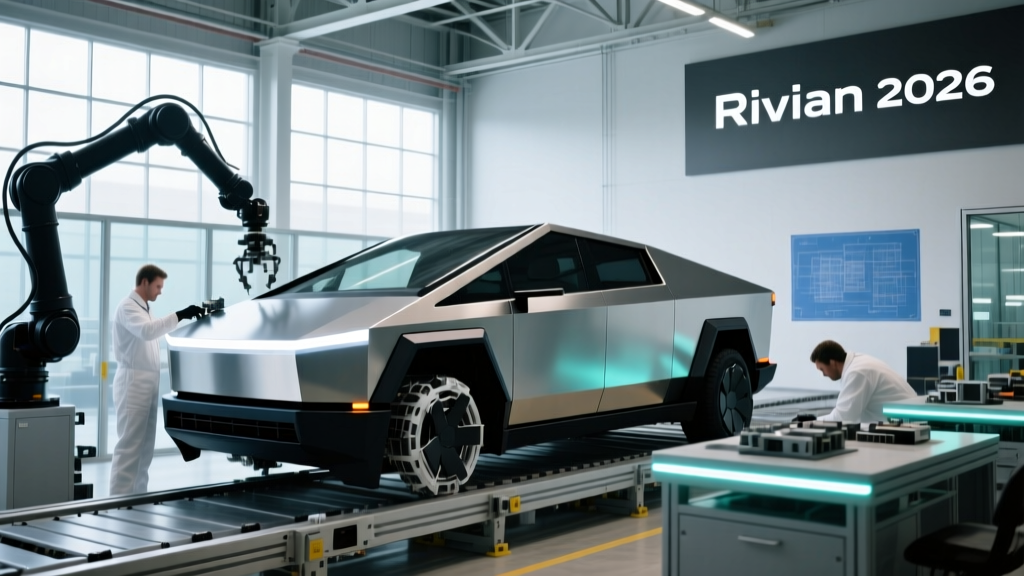
When shoppers search for Rivian factories, they're usually trying to answer two questions: where are Rivian vehicles actually made, and does U.S. manufacturing translate into better quality control, faster service, or federal tax-credit eligibility? The short answer is that Rivian's entire production footprint sits in Normal, Illinois — a 3.3-million-square-foot former Mitsubishi plant that the company retooled starting in 2017. As of 2026, it remains Rivian's sole vehicle assembly site, producing the R1T pickup, R1S SUV, and the EDV (Electric Delivery Van) fleet for Amazon.
A second facility is under construction in Stanton, Georgia, announced in late 2024 to build Rivian's upcoming midsize R2 platform. That plant is expected to come online for the 2028 model year, so for now, every R1T and R1S rolling onto American roads still originates from the Normal line. Let's use that factory context to ground a detailed 2026 R1T review — the vehicle that put Rivian on the map and remains one of the most capable electric pickups on the market.
2026 Rivian R1T at a Glance: Specs That Matter
| Spec | Value |
|---|---|
| EPA Range (Standard Pack) | 270 miles |
| EPA Range (Large Pack) | 352 miles |
| EPA Range (Max Pack) | 420 miles |
| Battery Capacity (usable) | 95 kWh / 128 kWh / 149 kWh |
| Battery Chemistry | NMC (Nickel Manganese Cobalt) — Samsung SDI cells |
| Drivetrain | Dual-Motor AWD (Standard); Quad-Motor AWD (available) |
| Horsepower | 533 hp (Dual); 1,025 hp (Quad) |
| 0-60 mph | 4.5 sec (Dual); 3.0 sec (Quad) |
| Max DC Fast Charge | 220 kW (Large/Max); ~190 kW (Standard) |
| 10-80% DC Time | ~21 min (Large); ~24 min (Max) |
| Level 2 Home Charge | 11.5 kW onboard (~25 mi/hr) |
| Towing Capacity | 11,000 lbs (Dual); 10,000 lbs (Quad) |
| Base MSRP (Dual Standard) | $69,900 |
| Battery/Powertrain Warranty | 8 years / 175,000 miles (70% retention) |
Source: Rivian R1T specifications, fueleconomy.gov.
Real-World Range: What the EPA Sticker Doesn't Tell You
EPA 352 miles (Large Pack, Dual-Motor) — expect roughly 280–310 miles at sustained 70-80 mph highway speeds, and as low as 230–260 miles in sub-30°F winter conditions with the cabin heater active. The Max Pack's 420-mile EPA figure stretches closer to 340–370 real-world highway miles.
Rivian's R1T is a heavy, boxy, aerodynamically challenged pickup, and physics shows up on long trips. In warm-weather mixed driving (city + suburban), owners consistently report landing within 5–8% of the EPA sticker. Highway efficiency drops to roughly 48–52 kWh/100 mi (about 2.0–2.1 mi/kWh) at 75 mph, which is where the gap between sticker and reality widens. If you tow — say a 5,000-lb camper — expect range to halve, landing around 150–180 miles on the Large Pack. That's not unique to Rivian; it's the reality of electric towing in 2026.
The R1T's heat pump (standard on Gen 2 models from 2025 onward) noticeably mitigates cold-weather losses compared to the original Gen 1 trucks. Preconditioning the battery via the app before arriving at a DC fast charger also remains essential — without it, your first 10 minutes of charging will ramp slowly as the pack warms.
Charging Speed: DC Fast, Level 2, and the Curve Reality
| Charging Method | Power | Miles Added per Hour | Notes |
|---|---|---|---|
| Level 1 (120V outlet) | ~1.4 kW | ~3 mi/hr | Emergency/trickle only |
| Level 2 (240V, 48A home wall connector) | 11.5 kW | ~25 mi/hr | Full charge overnight (~12 hrs for Max Pack) |
| DC Fast (peak, Large/Max Pack) | 220 kW | ~550 mi/hr (at peak) | 10-80% in ~21 min (Large) |
| DC Fast (above 80% SoC) | ~40-60 kW | Varies | Charge curve tapers sharply past 80% |
Rivian uses the NACS (Tesla-style) connector natively on all 2025+ models, which means direct access to the Tesla Supercharger network without an adapter — a major practical advantage over CCS-only trucks like the Ford F-150 Lightning (which requires a NACS adapter as of 2026). At Electrify America or EVgo stations, the R1T's 220 kW peak is competitive but not class-leading; the Hyundai Ioniq 5 and Kia EV9 push 250+ kW on 800V architectures.
The charge curve matters more than peak numbers. The R1T sustains roughly 180–200 kW from 10–50% SoC, then steps down to ~120 kW through 65%, and drops sharply above 80%. If you're road-tripping, plan to charge to 80% and go — the final 20% can add 25+ minutes for minimal range gain.
Performance, Efficiency, and Daily Livability
The Dual-Motor R1T with the Standard Pack hits 60 mph in 4.5 seconds with 533 horsepower — brisk for a 7,000-lb truck. The Quad-Motor variant's 3.0-second run is supercar territory and largely a party trick; the Dual-Motor is the rational choice for 95% of buyers. Both use a single-speed reduction gear, so acceleration is linear and silent, with strong one-pedal regen that can nearly bring the truck to a stop without touching the brake.
Efficiency lands around 48 kWh/100 miles (combined), translating to roughly 70 MPGe per EPA data. That's thirstier than a Tesla Model Y (28 kWh/100 mi) but expected for a body-on-frame truck with all-terrain tires and a flatbed.
Interior space is generous: 41.5 inches of front legroom, 38.2 inches rear, and a 4.5-foot bed with a lockable tonneau. The Gear Tunnel — a pass-through storage compartment behind the rear seats — adds 11 cubic feet of sealed, lockable cargo space unique to the R1T. The frunk (front trunk) contributes another 11 cu ft with a drain plug, making it functional as a cooler. Total passenger volume is competitive with midsize gas trucks like the Toyota Tacoma, though the bed is shorter than a full-size F-150's 5.5-foot option.
Pricing, Trim Levels, and Federal Tax Credit Eligibility
| Trim | MSRP | Est. After §30D Credit | Credit Eligible? |
|---|---|---|---|
| Dual-Motor Standard | $69,900 | $62,400 | Yes (under $80k truck cap) |
| Dual-Motor Large | $75,900 | $68,400 | Yes |
| Dual-Motor Max | $84,900 | $84,900 | No — exceeds $80k MSRP cap |
| Quad-Motor Large | $87,900 | $87,900 | No — exceeds $80k MSRP cap |
The federal EV tax credit under IRS §30D has strict rules in 2026:
- MSRP cap: $80,000 for trucks/SUVs. The Standard and Large packs qualify; Max and Quad-Motor trims do not.
- Buyer income cap: $150,000 single / $300,000 joint AGI.
- Battery sourcing: Critical minerals and battery components must meet escalating domestic-content thresholds. Rivian's Samsung SDI cells and U.S. assembly in Normal, IL generally satisfy 2026 requirements, but always confirm at point of sale.
- Point-of-sale transfer: Eligible buyers can apply the up-to-$7,500 credit as an instant rebate at the dealer, reducing the financed amount.
Because Rivian assembles every R1T at its Illinois factory, the "made in North America" requirement is unambiguous — a detail that matters more as competitors like some Toyota and Hyundai EVs navigate sourcing rules tied to their own factory locations.
Tech, Driver Assistance, and Ownership Experience
The R1T runs Rivian's in-house software stack on a 15.6-inch landscape touchscreen with a separate 12.3-inch driver cluster. Wireless Apple CarPlay and Android Auto are standard. Over-the-air updates arrive regularly — Rivian added a improved highway-assist mode and camp-speaker feature in late 2025. The infotainment is clean and responsive, though some owners note the lack of native Spotify integration and occasional nav-routing quirks compared to Apple Maps or Google Maps.
Rivian's Driver+ system is a Level 2 driver-assist suite (per SAE definitions) combining adaptive cruise control and lane-centering on divided highways. It is not self-driving; hands must remain on the wheel and eyes on the road. Unlike GM's Super Cruise or Ford's BlueCruise, Rivian does not yet offer a hands-off, eyes-on system on mapped highways — that capability is on Rivian's roadmap but not shipping as of early 2026.
ADAS Reality Check: Rivian Driver+ is a Level 2 system. You are the driver at all times. It will not stop for stopped traffic outside its detection envelope, merge autonomously, or navigate unmapped construction zones. Treat it as fatigue reduction, not automation.
The warranty package is strong: 8 years / 175,000 miles on the battery and drive units, with a 70% capacity retention floor. That's 25,000 miles more coverage than Tesla's 8/150k on the Model 3/Y, and it reflects confidence in the Samsung SDI NMC cells. Bumper-to-bumper runs 5 years / 60,000 miles. Rivian's service model uses its own service centers (expanding but still concentrated in metro areas) plus mobile service vans for software and minor hardware issues. Owners in rural areas should check service-center proximity before buying.
Pros, Cons, and Who the R1T Is Actually For
Pros
- Class-leading off-road capability (air suspension, tank turns on Quad)
- Unique Gear Tunnel and drainable frunk for adventure use
- Built in the USA — simplifies §30D credit eligibility
- Strong OTA update cadence and responsive in-house software
- 11,000-lb towing capacity (Dual-Motor)
Cons
- Heavy and aerodynamically inefficient — real-world highway range drops
- Max Pack and Quad trims ineligible for federal credit
- Service center network still thin outside major metros
- Driver+ is capable but behind BlueCruise/Super Cruise in hands-off capability
- Premium pricing — a well-optioned Large Pack approaches $85k before credit
Who it's for: The R1T fits outdoor-oriented buyers who want a daily-drivable pickup with genuine off-road chops, a usable bed for gear (not job-site lumber), and the environmental profile of a BEV. It's ideal for ski-town commuters, overlanders, and weekend boaters who can charge at home. It's less ideal for fleet buyers needing maximum bed length, budget-focused shoppers (the Ford F-150 Lightning undercuts on price), or anyone whose primary use case is long-haul towing.
R1T vs. the Competition: Is It Worth It?
Against the Ford F-150 Lightning, the R1T is more expensive, smaller in bed length, but far more capable off-road and more feature-dense. The Lightning wins on value and full-size utility. Against the Chevrolet Silverado EV, the R1T is more refined inside but offers less range on comparable trims and less towing headroom. Against the Tesla Cybertruck, the R1T is more conventional, easier to service, and available now without a multi-year wait — though the Cybertruck's stainless body and 48V architecture offer their own appeal.
If the Rivian factory story matters to you — U.S. jobs, domestic assembly, simplified tax-credit sourcing — the R1T is one of the cleanest "built in America" stories in the EV space. Every truck traces back to Normal, Illinois, and that traceability is increasingly valuable as global supply-chain rules tighten.
Frequently Asked Questions
Where are Rivian factories located?
Rivian's sole vehicle production facility is in Normal, Illinois (the "Normal factory"), assembling the R1T, R1S, and Amazon EDV. A second factory in Stanton, Georgia is under construction for the R2 platform, expected online for model year 2028.
What is the real-world range of the 2026 Rivian R1T?
The Large Pack Dual-Motor is EPA-rated at 352 miles. Real-world highway driving at 75 mph typically yields 280–310 miles; cold weather (below 30°F) can drop that to 230–260 miles. Towing cuts range roughly in half.
How fast does the R1T charge at home and on the road?
On a 48A Level 2 home charger, the R1T adds about 25 miles of range per hour (11.5 kW). On DC fast chargers, the Large Pack peaks at 220 kW, reaching 10-80% in approximately 21 minutes. NACS connector is standard on 2025+ models.
Does the Rivian R1T qualify for the $7,500 federal EV tax credit?
The Dual-Motor Standard ($69,900) and Dual-Motor Large ($75,900) trims qualify, provided the buyer's AGI is under $150k single / $300k joint and battery sourcing rules are met. Max Pack and Quad-Motor trims exceed the $80,000 truck MSRP cap and do not qualify. Confirm eligibility at purchase per IRS §30D rules.
Is the R1T worth buying over the F-150 Lightning or Silverado EV?
The R1T wins on off-road capability, adventure features (Gear Tunnel, frunk, air suspension), and interior refinement. The F-150 Lightning wins on price, bed size, and service network breadth. The Silverado EV competes on range. Your priority — utility vs. adventure vs. value — decides the winner.
What's the battery warranty?
Rivian covers the battery and drive units for 8 years or 175,000 miles, whichever comes first, with a 70% capacity retention threshold. Bumper-to-bumper coverage is 5 years / 60,000 miles.