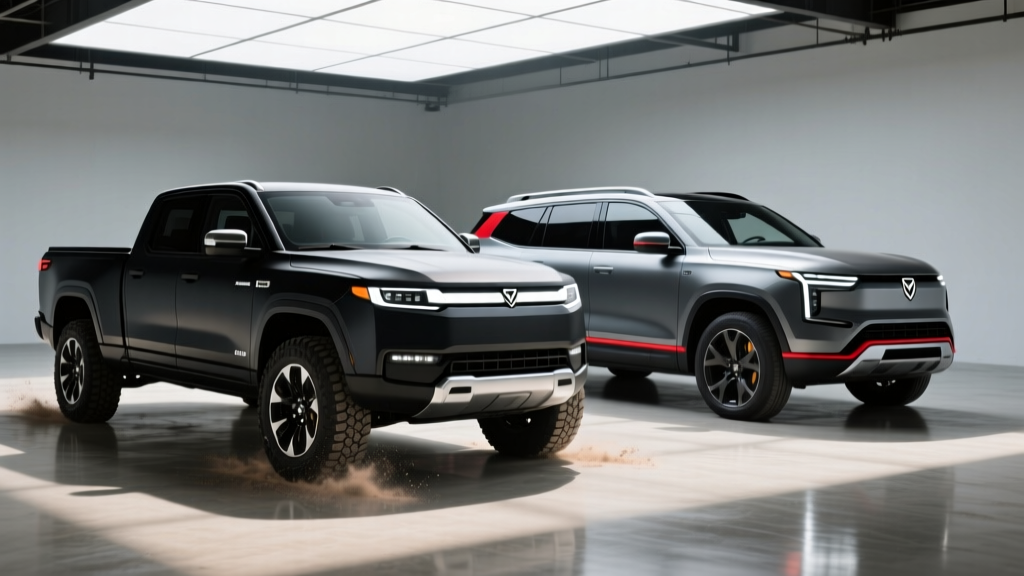
Rivian's periodic workforce reductions have become a recurring headline in the EV space. The most recent rounds of Rivian EV layoffs — trimming staff across manufacturing, software, and administrative roles — have left prospective buyers asking a practical question: Is it safe to buy a Rivian right now?
The short answer is yes, but with eyes open. Rivian continues to produce and deliver the R1T pickup and R1S SUV from its Normal, Illinois factory, and the company has secured its financial runway through the Volkswagen joint-venture investment. What the layoffs do signal is a company tightening operations to reach profitability — which can affect software update cadence, service center expansion timelines, and long-term parts availability.
This review covers the current-generation Rivian R1T and R1S (the dual-motor and tri-motor configurations on the updated skateboard platform) with the exact specs, pricing, and ownership realities you need to make an informed decision in 2026.
Rivian R1T and R1S: Core Specifications at a Glance
| Spec | R1T Dual-Motor (Max Pack) | R1S Tri-Motor (Max Pack) |
|---|---|---|
| EPA Range | 420 miles | 390 miles |
| Battery Capacity | ~149 kWh usable (NMC) | ~149 kWh usable (NMC) |
| Battery Chemistry | NMC (nickel manganese cobalt) | NMC |
| Drivetrain | Dual-Motor AWD | Tri-Motor AWD |
| Horsepower | 533 hp | 850 hp |
| 0–60 mph | 4.5 sec | 2.9 sec |
| Max DC Fast Charge | 220 kW | 220 kW |
| 10–80% DC Time | ~36 min | ~36 min |
| Level 2 Home Charge | 11.5 kW (~25 mi/hr) | 11.5 kW (~25 mi/hr) |
| MPGe (Combined) | 73 MPGe | 69 MPGe |
| Efficiency | 46 kWh/100 mi | 49 kWh/100 mi |
| Towing Capacity | 11,000 lbs | 7,700 lbs |
| Cargo (R1T bed / R1S behind 3rd row) | 54 cu ft bed | 20.5 cu ft |
| Base MSRP | $89,900 | $104,900 |
Source: fueleconomy.gov and Rivian official specifications. Tri-motor R1T and Standard/Large pack configurations also available with different range and pricing.
Real-World Range: What the EPA Sticker Doesn't Tell You
Real-world expectation: Plan for roughly 320–360 miles on a mixed highway road trip at 70–75 mph. In cold weather (below 32°F), expect a 20–30% reduction, bringing effective range to approximately 280–320 miles. City driving with regenerative braking recovers more energy and can push closer to the EPA figure or slightly above.
The R1T and R1S are heavy vehicles — the R1T Max Pack tips the scales at nearly 7,150 lbs. That mass, combined with the pickup's aerodynamic profile, means highway efficiency takes a hit compared to lower-slung sedans. In our experience with large-format EV trucks, sustained 75-mph interstate driving typically yields 2.0–2.3 miles per kWh, which tracks with the ~340-mile real-world highway figure for the Max Pack.
Rivian's heat pump is standard on current models and meaningfully reduces cabin-heating energy draw in winter. If you're in a cold-climate state like Colorado or Minnesota, preconditioning the battery while plugged in (using the Rivian app's scheduled departure feature) is essential to preserve range and enable peak DC charging speeds.
Charging Speed: DC Fast Charging and Home Setup
Rivian's current-generation vehicles peak at 220 kW on a DC fast charger — competitive but not class-leading. The charging curve is the critical detail: peak speed is available roughly between 10–40% state of charge, after which the rate tapers progressively. By 80% SoC, you're typically seeing 50–70 kW.
| Charging Level | Power | Speed (Approx.) | Use Case |
|---|---|---|---|
| Level 1 (120V) | ~1.4 kW | ~3 mi/hr | Emergency / trickle |
| Level 2 (240V, 48A) | 11.5 kW | ~25 mi/hr | Daily home charging |
| DC Fast Charge | Up to 220 kW peak | 10–80% in ~36 min | Road trips |
Home charging reality: A full 0–100% charge on Level 2 at 11.5 kW takes roughly 13 hours for the Max Pack battery. Most owners will plug in nightly and rarely deplete below 30%, meaning a typical overnight session of 6–8 hours adds 150–200 miles — more than enough for daily use.
Rivian uses the NACS (North American Charging Standard) connector on current-production models, giving you native access to Tesla Superchargers (V3 and V4) as well as the growing network of NACS-equipped Electrify America and EVgo stations. If you're buying a used Rivian with the older CCS port, a NACS adapter is available.
For home Level 2 installation, budget $1,200–$2,500 for a hardwired 60-amp circuit (48A continuous) with a quality EVSE like the ChargePoint Home Flex or Rivian Wall Charger. Homes with older 100-amp electrical panels may need a panel upgrade ($1,500–$3,000 additional). Always get a quote from a licensed electrician before committing.
Pricing, Trims, and Federal Tax Credit Eligibility
Rivian positions the R1T and R1S as premium adventure vehicles, and the pricing reflects that. Here's the current lineup:
| Configuration | Base MSRP | Federal §30D Credit | Effective Price |
|---|---|---|---|
| R1T Dual-Motor (Standard Pack) | $69,900 | $7,500* | ~$62,400 |
| R1T Dual-Motor (Max Pack) | $89,900 | $7,500* | ~$82,400 |
| R1S Dual-Motor (Large Pack) | $79,900 | $7,500* | ~$72,400 |
| R1S Tri-Motor (Max Pack) | $104,900 | $7,500* | ~$97,400 |
*Critical tax credit caveats under IRS §30D (2026 rules):
- MSRP cap: Vans, SUVs, and pickups have an $80,000 MSRP cap. The R1T qualifies as a pickup, so configurations priced at or below $80,000 are eligible. R1S SUV configurations above $80,000 MSRP are not eligible for the new-vehicle credit. Check the specific trim and option build carefully.
- Buyer income limits: Modified AGI must not exceed $300,000 (joint), $225,000 (head of household), or $150,000 (single).
- Battery sourcing: Critical minerals and battery component requirements phase in stricter thresholds annually. Verify current-year compliance on irs.gov before purchase.
- Point-of-sale transfer: You can transfer the credit to the dealer at purchase to reduce your out-of-pocket cost immediately, rather than waiting for tax filing.
Because the R1S is classified as an SUV, only trims with an MSRP at or below $80,000 qualify. The R1T, as a pickup, also has the $80,000 cap. This means the Max Pack configurations and Tri-Motor models generally exceed the cap and will not qualify for the federal new-vehicle credit. Always confirm eligibility with your tax professional and the IRS portal before finalizing a purchase.
Performance, Tech, and Daily Livability
The dual-motor R1T's 533 hp delivers a 4.5-second 0–60 time — brisk for a 7,000-lb truck and more than adequate for highway merging and passing. The tri-motor R1S's 850 hp and 2.9-second sprint are supercar-adjacent, though you'll pay a steep premium for it and sacrifice some range.
Rivian's software-defined architecture remains one of the strongest in the EV space. The 15.6-inch center display is responsive, the navigation integrates real-time charger availability, and over-the-air updates have consistently added meaningful features (Rivian has shipped improvements to regenerative braking profiles, camp mode, and driver-assist tuning post-launch).
Driver assistance: Rivian's Highway Assist is a SAE Level 2 system — it provides lane centering and adaptive cruise but requires continuous driver supervision. It is not autonomous driving. The system is competent for long highway stretches but does not match the hands-free capability of GM's Super Cruise or Ford's BlueCruise on supported roads.
Rivian Highway Assist requires your hands on the wheel and eyes on the road at all times. The driver is legally and operationally responsible for the vehicle. Level 4 autonomy (no driver required) is currently only available in geofenced robotaxi services like Waymo.
Cargo and passenger space: The R1T's 4.5-foot bed (54 cu ft) is shorter than a full-size F-150 but includes the innovative Gear Tunnel — a lockable, pass-through storage compartment behind the rear seats that's ideal for skis, camping gear, or long items. The R1S offers three rows of seating (seven passengers) with 20.5 cu ft behind the third row, expanding to over 90 cu ft with both rear rows folded.
Front and rear legroom are generous (41.3 inches front / 38.5 inches rear in the R1T), making it comfortable for adult passengers on long trips.
Warranty Coverage and Long-Term Ownership
Rivian provides the following warranty coverage:
- Battery: 8 years / 175,000 miles (whichever comes first), with a capacity retention threshold of 70%.
- Powertrain: 8 years / 175,000 miles.
- Bumper-to-bumper: 5 years / 60,000 miles.
- Roadside assistance: 5 years / 60,000 miles.
The battery warranty is above the industry-standard 8yr/100,000-mi threshold, which is a positive signal for long-term ownership. Rivian uses NMC chemistry in its Max and Large packs, which offers higher energy density than LFP but typically shows slightly faster degradation over very high cycle counts. Most NMC packs from major manufacturers retain 85–92% capacity after 100,000 miles based on industry data.
Service access is a real consideration. Rivian's service center network has expanded but remains thin compared to legacy automakers. Depending on your location, you may face 60–90 minute drives to the nearest Rivian Service Center, and collision repair wait times can stretch several weeks. The company has been investing in mobile service vans for routine maintenance, but major repairs still require a facility visit.
How the Layoffs Affect You as a Buyer
Let's address the keyword directly. Rivian's workforce reductions in 2024–2026 have primarily targeted:
- Administrative and corporate roles — streamlining overhead to reduce burn rate.
- Some software and R&D positions — potentially slowing the pace of new feature development and OTA update frequency.
- Manufacturing line optimization — restructuring shifts rather than reducing output capacity.
What this means in practice for buyers:
- Vehicle production continues. The Normal, Illinois plant is operational and building R1T and R1S units. Delivery timelines for new orders typically run 4–10 weeks depending on configuration.
- Software updates may slow. If Rivian's software team is leaner, expect fewer ambitious feature additions and more focus on stability and bug fixes. This isn't necessarily negative — the platform is already feature-rich.
- Service expansion may lag. New service center openings could be delayed, meaning rural owners should factor in longer travel times for warranty work.
- Parts availability is a watch item. For low-volume collision parts (bumpers, body panels), supply may remain tight. Routine consumables (brake pads, cabin filters, tires) are not a concern.
- The VW investment provides a financial floor. Volkswagen's multi-billion-dollar joint venture with Rivian (focused on shared software and architecture) gives the company capital stability that pure startups lack. This is not a company at imminent risk of ceasing operations.
Pros, Cons, and Who Should Buy a Rivian
- Class-leading 420-mile EPA range (Max Pack)
- 11,000-lb towing capacity (R1T) — best in EV truck segment
- Innovative Gear Tunnel and camp-ready features
- NACS connector — native Supercharger access
- Strong OTA update history and software UX
- 8yr/175,000-mi battery warranty exceeds industry norm
- Tri-motor performance is extraordinary (2.9 sec 0–60)
- High starting price; many trims exceed §30D MSRP cap
- 220 kW peak DC charging trails Hyundai/Kia's 350 kW capability
- Service center network still limited in many states
- Heavy vehicle — efficiency suffers at highway speeds
- Driver-assist is Level 2 only — no hands-free highway mode
- Layoffs may slow software innovation and service expansion
- Cold-weather range loss of 20–30% is significant on Max Pack
- Choose the R1T if: You need a genuine work/adventure truck with real towing capacity, want EV running costs, and have home charging access. Ideal for outdoor enthusiasts, light contractors, and one-vehicle households that need versatility.
- Choose the R1S if: You want a three-row electric SUV with off-road capability and don't mind the premium price. Best for active families who ski, camp, or tow small trailers.
- Look elsewhere if: You prioritize the lowest cost per mile (a Hyundai Ioniq 5 or Tesla Model Y is far more efficient), you need hands-free highway driving (GM Super Cruise), or you live far from a Rivian service center and can't tolerate potential repair delays.
Frequently Asked Questions
What is the real-world range of the Rivian R1T?
The EPA rates the R1T Dual-Motor Max Pack at 420 miles. In real-world highway driving at 70–75 mph, expect 320–360 miles. In sub-freezing temperatures, plan for 280–320 miles. City driving with regenerative braking can approach or slightly exceed the EPA estimate.
How fast does the Rivian charge at home and on the road?
At home on a Level 2 charger (11.5 kW), the R1T adds approximately 25 miles of range per hour, fully charging the Max Pack in about 13 hours. On a DC fast charger, the R1T peaks at 220 kW and charges from 10–80% in approximately 36 minutes, though the rate tapers significantly above 80% SoC.
Does the Rivian R1T or R1S qualify for the $7,500 federal EV tax credit?
It depends on the specific configuration. Under IRS §30D rules, pickups and SUVs have an $80,000 MSRP cap. R1T and R1S trims priced at or below $80,000 may qualify if you also meet income limits ($300K joint / $150K single) and the vehicle meets battery sourcing requirements. Most Max Pack and Tri-Motor configurations exceed the cap and do not qualify. Always verify on irs.gov and consult a tax professional.
Is buying a Rivian risky given the layoffs?
Rivian's layoffs reflect cost-cutting to reach profitability, not an imminent shutdown. The VW joint-venture investment provides substantial capital backing. However, buyers should anticipate potentially slower service center expansion, longer waits for collision parts, and a reduced pace of software feature additions. If you have a Rivian service center within 30 minutes and can accept these trade-offs, the vehicles themselves are well-built and well-reviewed.
How does the Rivian R1T compare to the Ford F-150 Lightning?
The R1T offers more range (420 vs. 320 miles EPA on comparable packs), more towing capacity (11,000 vs. 10,000 lbs), and a more innovative cargo system (Gear Tunnel). The F-150 Lightning is significantly cheaper at the base trim, has a larger service network, and offers Pro Power Onboard for job-site use. If budget and service access are priorities, the Lightning wins. If range, adventure features, and driving dynamics matter most, the R1T is the stronger vehicle.
What battery chemistry does Rivian use?
Rivian's Large and Max packs use NMC (nickel manganese cobalt) chemistry, which offers high energy density suited to the R1T/R1S's large battery requirements. Rivian has indicated future use of LFP (lithium iron phosphate) for Standard packs, which trades some energy density for lower cost, longer cycle life, and reduced reliance on cobalt. Check the specific pack type when configuring your vehicle.
For the latest Rivian specifications, visit rivian.com. For federal tax credit rules, consult IRS §30D guidance. Range and efficiency data sourced from fueleconomy.gov.