The Rivian El Segundo Story: What We Know Before Launch
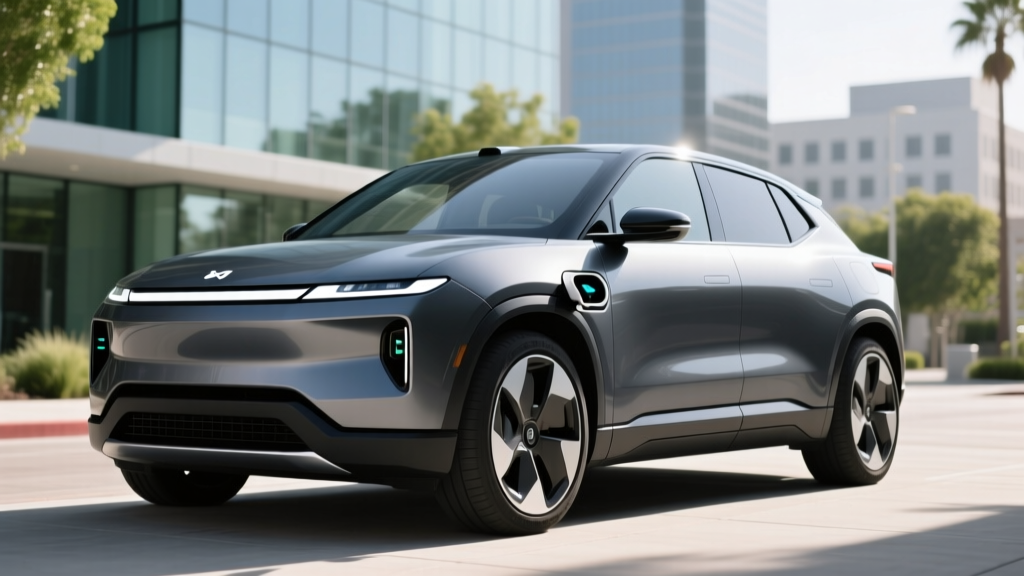
"Rivian El Segundo" isn't a trim level or a special edition — it's the internal codename for Rivian's next-generation compact electric SUV, a vehicle the company has confirmed is in development and expected to slot below the R1S and R1T in both size and price. Named after the Southern California city where Rivian maintains a design and engineering studio, the El Segundo project represents the brand's bid to crack the high-volume mainstream EV market that Tesla's Model Y, Hyundai's Ioniq 5, and Ford's Mustang Mach-E currently fight over.
As of early 2026, Rivian has not opened reservations or published a final spec sheet for this vehicle. What follows is a synthesis of confirmed statements from CEO RJ Scaringe, regulatory filings, supply-chain reporting, and Rivian's own platform disclosures — clearly labeled as preliminary where appropriate. If you're researching the Rivian El Segundo to decide whether to wait or buy now, this guide separates fact from speculation.
Platform and Powertrain: What Rivian Has Confirmed
Rivian has stated that its next-generation vehicles will ride on a new, more cost-efficient platform designed for higher-volume manufacturing at the company's Normal, Illinois factory and the planned Georgia facility. Key engineering details shared publicly include:
- Drive-unit architecture: Rivian's in-house developed "end-to-end" drive units, which integrate the motor, inverter, and reduction gearbox into a single compact housing — a design the company claims reduces part count and cost significantly versus the R1 generation.
- Dual-motor and single-motor options: The compact SUV is expected to offer both a single-motor rear-wheel-drive (RWD) variant for maximum range and affordability, and a dual-motor all-wheel-drive (AWD) variant for performance and traction.
- Structural battery pack: Rivian has indicated the new platform will use a cell-to-pack or cell-to-chassis approach, reducing weight and improving packaging efficiency.
- NACS charging port: All new Rivians will ship with the North American Charging Standard (NACS) connector, granting native access to Tesla's Supercharger network without an adapter.
Rivian has not confirmed battery chemistry for the compact SUV, but the company's recent pivot toward LFP (lithium iron phosphate) batteries in Standard Pack R1 models suggests the base compact variant could use LFP for its lower cost and longer cycle life, while higher trims may adopt NMC (nickel manganese cobalt) for greater energy density.
Estimated Range, Battery, and Efficiency
Without an official EPA certification, range figures remain speculative. However, Rivian's public statements have targeted a starting price point around or below $45,000 for the compact SUV — which constrains the battery size the company can package profitably.
| Variant | Est. Battery (kWh usable) | Est. EPA Range | Est. Efficiency |
|---|---|---|---|
| Single-Motor RWD (Standard) | ~70–80 kWh (LFP) | ~250–280 mi | ~3.0–3.5 mi/kWh |
| Dual-Motor AWD (Standard) | ~70–80 kWh (LFP) | ~230–260 mi | ~2.8–3.2 mi/kWh |
| Dual-Motor AWD (Large Pack, if offered) | ~95–110 kWh (NMC) | ~300–330 mi | ~2.8–3.1 mi/kWh |
Charging Speed: DC Fast and Level 2 Projections
Charging speed is where Rivian's next-generation platform could differentiate. The current R1 generation (Dual-Motor with Large Pack) peaks around 220 kW on a DC fast charger, achieving a 10–80% charge in approximately 25–30 minutes. Rivian has signaled that its new drive units and battery architecture will support faster charging rates.
| Charging Level | Estimated Spec | Practical Expectation |
|---|---|---|
| Level 1 (120V household) | ~1.4 kW | ~3–5 miles per hour — emergency/trickle only |
| Level 2 (240V home, 48A) | ~11.5 kW | ~28–35 miles per hour; full overnight charge |
| DC Fast Charge (peak) | ~200–250 kW (est.) | 10–80% in est. 20–28 minutes; peak rate sustained only to ~50–60% SoC, then tapering |
A critical note on DC fast charging: the advertised peak kW figure is not sustained across the entire charging session. Lithium-ion batteries accept charge fastest at low states of charge and progressively taper as the battery fills — a phenomenon called the charge curve. A vehicle peaking at 250 kW might sustain that rate only from 10% to roughly 40–50% SoC, then gradually reduce to 100 kW or below past 70%. The 10–80% time is the more practical metric, and it's what Rivian will need to optimize to stay competitive with Hyundai/Kia's E-GMP platform (which achieves 10–80% in ~18 minutes at 350 kW-capable chargers).
With the native NACS port, Rivian compact SUV owners will be able to use Tesla Superchargers, Electrify America, EVgo, and other networks that support NACS — significantly expanding fast-charging access compared to the legacy CCS-only R1 fleet.
Performance, Dimensions, and Practicality
Rivian's compact SUV is expected to target the same segment as the Tesla Model Y, Hyundai Ioniq 5, and upcoming Volvo EX40 — a two-row crossover seating five, with emphasis on interior space efficiency and everyday drivability rather than extreme off-road capability (that role belongs to the R1S).
| Metric | Single-Motor RWD | Dual-Motor AWD |
|---|---|---|
| Horsepower (est.) | ~275–325 hp | ~500–600 hp |
| 0–60 mph (est.) | ~6.0–7.0 sec | ~3.5–4.5 sec |
| Drivetrain | Rear-wheel drive | Dual-motor AWD |
| Cargo volume (est., rear seats up) | ~30–35 cu ft | |
| Cargo volume (est., rear seats folded) | ~65–72 cu ft | |
| Frunk (front trunk) | Expected — size TBD | |
| Seating | 5 passengers (2-row) | |
Tech and Driver Assistance
Rivian's current infotainment system — a 15.6-inch landscape touchscreen running a custom Android-based OS — has been well-reviewed for responsiveness and over-the-air (OTA) update cadence. The compact SUV is expected to ship with a next-generation version of this system, likely including:
- Rivian Driver+ (Level 2 ADAS): Adaptive cruise control with lane centering, automatic emergency braking, blind-spot monitoring, and highway assist. This is an SAE Level 2 driver-assist system — the driver must remain engaged and hands-on (or eyes-on, depending on implementation) at all times. It is not autonomous driving.
- Phone-as-key and OTA updates: Rivian's software-first approach means feature additions and performance tweaks arrive wirelessly, a pattern established with the R1 fleet.
- Native NACS navigation with charge routing: Trip planning that automatically routes through compatible fast chargers and preconditions the battery for optimal charge speed on arrival.
- Potential V2L (Vehicle-to-Load): The R1 platform already supports V2L via a accessory outlet; the compact SUV is expected to continue this, enabling campsite or emergency power use.
Pricing, Trims, and Federal Tax Credit Eligibility
Rivian CEO RJ Scaringe has publicly targeted a starting MSRP in the low-to-mid $40,000 range for the compact SUV, with higher trims and the dual-motor AWD option pushing into the $50,000s. This pricing is critical because it positions the vehicle within the federal tax credit thresholds.
| Trim / Configuration | Est. MSRP | Est. After §30D Credit |
|---|---|---|
| Base RWD (Standard Pack) | ~$42,000–$45,000 | ~$34,500–$37,500* |
| AWD Dual-Motor (Standard Pack) | ~$48,000–$52,000 | ~$40,500–$44,500* |
| AWD Dual-Motor (Large Pack, if offered) | ~$55,000–$58,000 | ~$47,500–$50,500* |
*Tax-credit-adjusted prices assume full $7,500 §30D eligibility. Actual credit depends on battery sourcing, buyer income, and MSRP caps. See checklist below.
IRS §30D Federal Tax Credit Checklist
The federal clean vehicle credit under IRS §30D can provide up to $7,500, but eligibility for the Rivian compact SUV will depend on several factors that won't be finalized until production begins:
- MSRP cap: SUVs must have an MSRP at or below $80,000. All expected trims of the compact SUV should clear this easily.
- Buyer income cap: Modified adjusted gross income (MAGI) must not exceed $150,000 (single), $225,000 (head of household), or $300,000 (joint). This is a hard ceiling — exceed it by $1 and you lose the entire credit.
- Battery component sourcing: A percentage of battery components must be manufactured or assembled in North America (the threshold increases annually under the Inflation Reduction Act). Rivian's US-based manufacturing is a strong advantage here.
- Critical minerals sourcing: A percentage of critical minerals in the battery must be sourced from the US or a free-trade-agreement country. This is the requirement most likely to affect eligibility — Rivian's supply-chain decisions for the compact SUV's LFP cells (many LFP cells are currently sourced from China) could make or break the $3,750 critical-minerals half of the credit.
- Point-of-sale transfer: Under current rules, buyers can transfer the credit to the dealer at purchase, effectively reducing the out-of-pocket price by up to $7,500 at the time of sale rather than waiting for tax filing.
- Foreign Entity of Concern (FEOC) exclusion: Vehicles with battery components or critical minerals from a FEOC (primarily China, Russia, North Korea, Iran) may be disqualified. LFP battery sourcing is the key risk factor here.
Because the compact SUV is not yet in production, tax credit eligibility cannot be confirmed. Rivian has publicly stated it is engineering the vehicle to maximize §30D eligibility, but final determination rests with the IRS and the supply chain at time of delivery. Always verify current-year rules at irs.gov and consult a tax professional before making a purchase decision based on credit assumptions.
Warranty and Ownership Considerations
Rivian's current R1 warranty provides a useful baseline for what the compact SUV may offer:
- Battery & drive units: 8 years / 175,000 miles (current R1 Standard and Large Pack) — among the most generous in the industry, exceeding the federal minimum of 8 years / 100,000 miles.
- Bumper-to-bumper: 5 years / 60,000 miles.
- Capacity retention guarantee: Rivian has not published a specific percentage threshold (e.g., 70% SoH at 8 years) as some competitors do. This is worth monitoring when official warranty terms are released.
For the compact SUV, Rivian may adjust warranty terms to balance cost competitiveness with buyer confidence. LFP batteries, if used in the base model, typically exhibit slower degradation than NMC — often retaining 80%+ capacity after 2,000+ charge cycles — which could reduce long-term ownership anxiety even without an explicit capacity guarantee.
Insurance, Maintenance, and Total Cost
EV insurance premiums tend to run 10–25% higher than comparable gas vehicles due to repair costs and parts pricing. Rivian's direct-to-consumer model and growing service network (mobile service vans and fixed service centers) aim to keep maintenance costs low — EVs have no oil changes, spark plugs, or transmission fluid to worry about. Brake pad life is also extended thanks to regenerative braking. Expect annual maintenance to run $200–$400 versus $600–$1,200 for a gas compact SUV.
Who the Rivian El Segundo Compact SUV Is For
- Budget-conscious EV buyers who want a Rivian but can't justify the $75,000+ R1S — the compact SUV targets the $42K–$55K window.
- Urban and suburban commuters who need a practical two-row crossover with home Level 2 charging and 250+ miles of daily range.
- Tech-forward buyers who value OTA updates, a strong software experience, and Rivian's adventure-brand identity.
- First-time EV buyers who want a NACS-equipped vehicle with broad Supercharger access and a straightforward ownership model.
- You need three-row seating or serious off-road capability — that's the R1S's role.
- You need a vehicle now — the compact SUV is not yet in production, and delivery timelines remain unconfirmed.
- You require maximum fast-charging speed — Hyundai/Kia's 800V E-GMP platform currently leads the segment in 10–80% charge time.
- You want confirmed LFP tax-credit eligibility — until Rivian discloses its cell supply chain, the critical-minerals half of the §30D credit remains uncertain.
How It Stacks Up Against the Competition
The compact SUV segment is crowded and getting more so. Here's how the Rivian El Segundo project compares to current or near-term rivals on key purchase criteria:
| Vehicle | EPA Range | Peak DC kW | 10–80% Time | Base MSRP |
|---|---|---|---|---|
| Rivian Compact SUV (est.) | ~250–330 mi | ~200–250 kW | ~20–28 min | ~$42,000 |
| Tesla Model Y (Long Range AWD) | 320 mi | 250 kW | ~25 min | ~$48,000 |
| Hyundai Ioniq 5 (Long Range AWD) | 290 mi | ~240 kW (800V) | ~18 min | ~$47,000 |
| Ford Mustang Mach-E (Extended Range) | 312 mi | ~150 kW | ~36 min | ~$43,000 |
The Rivian's potential advantages are brand cachet, software quality, NACS-native Supercharger access, and a possible price undercut if the base RWD model lands near $42,000. Its challenges will be matching Hyundai's charging speed and Tesla's Supercharger network maturity, plus proving build quality at volume — something Rivian has struggled with during R1 ramp-up.
Pros and Cons at a Glance
✓ Pros
- Targeted sub-$45K starting price in a premium package
- Native NACS port for Supercharger access
- Rivian's strong software/OTA track record
- Generous expected battery warranty (8 yr / 175K mi baseline)
- LFP option for longevity and lower cost
- US manufacturing supports §30D component sourcing
- Adventure brand identity with potential V2L capability
✗ Cons
- Not yet in production — no confirmed delivery date
- All specs are preliminary and subject to change
- LFP battery sourcing may jeopardize critical-minerals tax credit
- Rivian's volume manufacturing track record is unproven
- Charging speed may lag Hyundai/Kia's 800V platform
- No three-row or serious off-road variant expected
- Service network still expanding — coverage gaps in some regions
Frequently Asked Questions
What is the real-world range of the Rivian El Segundo compact SUV?
Official EPA figures are not yet published. Based on Rivian's platform disclosures, expect an EPA range of roughly 250–330 miles depending on variant. Real-world highway driving at 75 mph typically reduces that by 10–15%, and cold weather (below freezing) can cut range by 15–30%. An EPA-estimated 280-mile variant might deliver 220–250 miles on a winter road trip.
How fast does it charge at home and on the road?
Preliminary estimates suggest Level 2 home charging at ~11.5 kW (48A, 240V), adding roughly 30 miles of range per hour — enough for a full overnight charge. DC fast charging is expected to peak around 200–250 kW, with a 10–80% session taking approximately 20–28 minutes. The native NACS port means direct Tesla Supercharger compatibility.
How much will the Rivian compact SUV cost after tax credits?
If the base RWD model starts near $42,000–$45,000 and qualifies for the full $7,500 §30D credit, the effective price could land around $34,500–$37,500. However, eligibility depends on buyer income (MAGI caps), battery critical-minerals sourcing (LFP supply chain is the key variable), and MSRP compliance. Confirm eligibility at irs.gov before committing.
Does the Rivian El Segundo compact SUV qualify for the $7,500 federal tax credit?
It's too early to confirm. The vehicle's expected MSRP is well under the $80,000 SUV cap, and Rivian's US manufacturing helps with the battery-component requirement. The critical question is whether the battery's critical minerals — especially if LFP cells are sourced from China-linked supply chains — will satisfy the FEOC and free-trade-agreement sourcing rules. Final eligibility will be determined when the vehicle enters production and the IRS reviews its supply-chain documentation.
Is it worth waiting for vs. buying a Tesla Model Y or Hyundai Ioniq 5 now?
If you need a vehicle within 6–12 months, the Model Y and Ioniq 5 are proven, available, and currently eligible for varying degrees of tax credit. If your timeline is flexible (18–24+ months), the Rivian compact SUV could offer a more distinctive design, Rivian's software experience, and potentially aggressive pricing. The risk is production delays — Rivian's R1 ramp took longer than expected, and the Georgia factory timeline has already shifted multiple times.
When will the Rivian compact SUV be available?
Rivian has not announced a firm on-sale date. Industry reporting and the company's own production timelines suggest late 2026 or 2027 for initial deliveries, with volume ramp extending into 2028. Reservations have not opened as of early 2026. Monitor rivian.com for official updates.