Quick Verdict: The Rivian EDV700 at a Glance
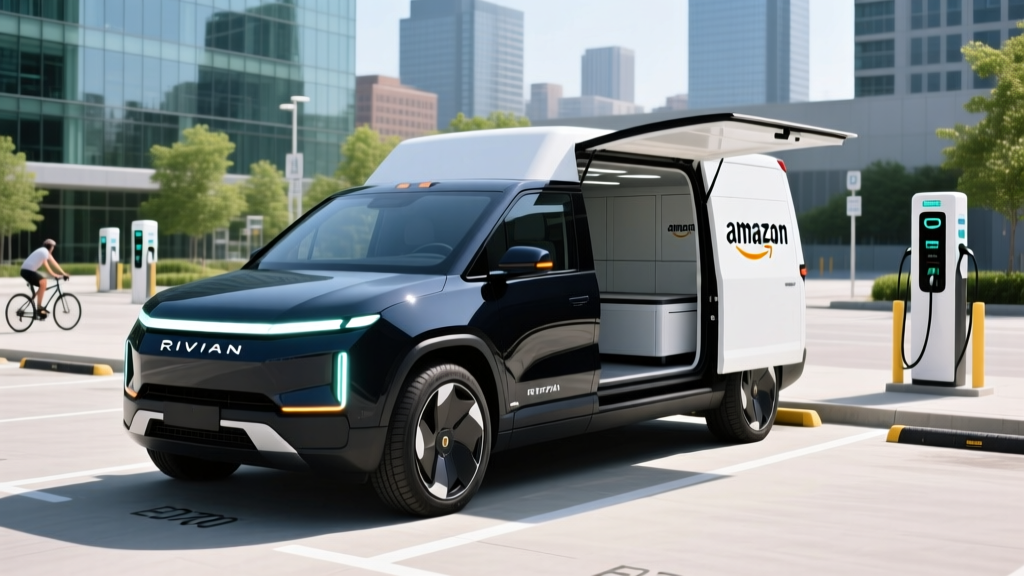
The Rivian EDV700 (Electric Delivery Van, 700 cubic feet of cargo volume) is a purpose-built commercial electric van designed exclusively for Amazon's last-mile delivery fleet. Unlike the consumer-facing R1T pickup or R1S SUV, the EDV700 is not available for individual purchase — it is a business-to-business product built under a landmark agreement between Rivian and Amazon, which holds exclusive rights to the vehicle through 2026 and has ordered 100,000 units. That said, the EDV700's engineering, battery technology, and charging architecture offer valuable insights for fleet operators, commercial EV buyers, and anyone tracking how electric vans are reshaping urban logistics. This profile covers the EDV700's known specifications, real-world performance data from fleet deployment, and the technology that underpins it.
| Specification | Value |
|---|---|
| EPA Estimated Range | ~150 miles (loaded, urban cycle) |
| Battery Capacity | 135 kWh usable (NMC lithium-ion) |
| Drivetrain | Single-motor front-wheel drive |
| Horsepower / Torque | ~275 hp / 350 lb-ft (est.) |
| 0-60 mph | Not officially rated (commercial vehicle) |
| Cargo Volume | 700 cu ft (EDV700 variant) |
| Payload Capacity | ~2,500 lbs (est.) |
| Max DC Fast Charge | ~125 kW peak |
| 10-80% DC Charge Time | ~45-55 minutes (est.) |
| Level 2 AC Charging | ~11.5 kW (~18-22 mi/hr) |
| Efficiency | ~2.0-2.5 kWh/mile (loaded) |
| Availability | Fleet-only (Amazon exclusive through 2026) |
Range and Efficiency: Real-World Fleet Data
The EDV700 does not carry a traditional EPA window-sticker range rating the way consumer vehicles do, as it is classified as a commercial medium-duty vehicle. However, fleet telemetry and Amazon's public disclosures indicate a practical range of approximately 150 miles on a full charge under typical urban delivery loads. In lighter-load or suburban-route conditions, drivers have reported up to 170+ miles. In cold-weather markets (Chicago, Detroit, Minneapolis), expect range to drop to 110-130 miles due to battery thermal losses and cabin/cargo heating demands.
Efficiency in the EDV700 is heavily load-dependent. An empty van on a highway transfer route will consume roughly 1.8 kWh/mile, while a fully loaded van on a stop-and-go urban route with frequent door openings can consume 2.5 kWh/mile or more. Amazon has designed delivery routes around the van's range envelope, with most urban routes covering 80-120 miles per day — leaving a comfortable buffer even in adverse conditions.
The 135 kWh battery pack uses NMC (nickel manganese cobalt) chemistry, selected for its higher energy density compared to LFP. This was a deliberate trade-off: NMC provides the range and payload margin Amazon needed for longer suburban routes, though it requires more careful thermal management and avoids the ultra-high cycle life of LFP packs. Rivian's battery thermal management system includes active liquid cooling and heating to maintain optimal cell temperatures during fast charging and extreme-weather operation.
Charging Speed: Depot-Based DC and Level 2
The EDV700 is designed primarily for depot charging, not public fast-charging networks. Amazon has invested heavily in installing Level 2 and DC fast-charging infrastructure at its delivery stations across North America. Here's what the charging profile looks like:
| Charging Level | Power | Speed (Approx.) | Use Case |
|---|---|---|---|
| Level 1 (120V) | ~1.4 kW | ~2 mi/hr | Not practical for fleet use |
| Level 2 (240V AC) | 11.5 kW | ~18-22 mi/hr | Overnight depot charging (primary) |
| DC Fast Charge | ~125 kW peak | ~150 mi/hr (peak) | Mid-day top-ups, route extensions |
Level 2 overnight charging is the backbone of the EDV700's energy strategy. Vans return to Amazon delivery stations in the evening, plug into wall-mounted or pedestal Level 2 chargers, and are fully replenished by morning. A full 0-100% Level 2 charge takes approximately 12-14 hours — more than adequate for overnight turnaround.
DC fast charging at up to 125 kW is available for mid-day top-ups or when a van needs to extend its route. The charge curve tapers significantly above 80% state of charge, which is why fleet managers typically target 10-80% charges for speed. Expect a 10-80% session to take approximately 45-55 minutes under optimal thermal conditions. In cold weather, preconditioning the battery is critical to achieving peak charge rates — without it, the initial charge rate may be limited to 40-60 kW until cells warm up.
The EDV700 uses a CCS1 connector for DC fast charging, consistent with most North American commercial EVs. Amazon's depot chargers are managed via fleet software that schedules charging to optimize electricity rates and grid demand charges.
Performance and Drivetrain
The EDV700 uses a single front-mounted electric motor producing an estimated 275 horsepower and 350 lb-ft of torque. Unlike Rivian's consumer vehicles, which offer dual- and quad-motor AWD configurations, the EDV700 is front-wheel drive only. This simplification reduces cost, weight, and maintenance — appropriate for a vehicle that rarely leaves paved urban and suburban roads.
Acceleration is adequate for commercial use. The van's substantial curb weight (estimated 7,000-8,000 lbs empty) and tall profile mean 0-60 mph times are not a priority, but the instant torque delivery makes the EDV700 responsive in stop-and-go traffic and quick off the line at intersections — a meaningful safety and efficiency advantage over diesel vans in urban delivery work.
Regenerative braking is aggressive by default, enabling near one-pedal driving in city conditions. This reduces brake wear significantly — a major operating-cost advantage for fleet operators, as delivery vans traditionally burn through brake pads and rotors at high rates due to constant stopping.
Cargo Space, Interior, and Driver Technology
The EDV700's defining feature is its 700 cubic feet of cargo volume — hence the name. The van is approximately 27 feet long, with a low load floor and wide rear doors designed for rapid package sorting and retrieval. The cargo area features integrated shelving systems, LED lighting, and a bulkhead separating the driver compartment from the load area.
Rivian designed three EDV variants for Amazon:
- EDV500 — 500 cu ft cargo (shorter wheelbase)
- EDV700 — 700 cu ft cargo (mid-length, most common)
- EDV900 — 900 cu ft cargo (extended, for high-volume routes)
The driver compartment is spartan but functional, with a large central touchscreen running Rivian's commercial fleet software (not the consumer R1 infotainment system). Key driver-assist features include:
- 360-degree camera system for tight urban maneuvering
- Automatic emergency braking and forward collision warning
- Lane departure warning
- Blind-spot monitoring with trailer/cargo-area awareness
- Integrated route optimization tied to Amazon's logistics platform
These features fall under SAE Level 1-2 driver assistance — they support the driver but do not automate driving. The driver must remain fully engaged at all times. There is no "self-driving" capability in the EDV700.
Pricing, Fleet Economics, and Tax Credit Context
The Rivian EDV700 is not available for individual retail purchase. Amazon has an exclusive agreement with Rivian through at least 2026, meaning no other fleet operator can buy the EDV700 new. After the exclusivity period expires, Rivian has indicated it may offer the EDV platform to other commercial customers, though pricing has not been announced.
For context on commercial EV pricing, the estimated per-unit cost of the EDV700 (based on industry analysis of the Amazon-Rivian contract) is in the $70,000-$90,000 range before incentives — comparable to or slightly above a diesel Sprinter-class van, but with significantly lower fuel and maintenance costs over the vehicle's lifetime.
| Credit Type | Amount | Applicability to EDV700 |
|---|---|---|
| IRC §30D (Consumer Clean Vehicle Credit) | Up to $7,500 | NOT applicable — commercial/fleet vehicle, exceeds MSRP caps, not retail-sold |
| IRC §45W (Commercial Clean Vehicle Credit) | Up to $7,500 (under 14,000 lb GVWR) or $40,000 (over 14,000 lb GVWR) | Potentially applicable for fleet buyers post-exclusivity; subject to IRS rules on commercial vehicle classification |
| IRA Fleet/Infrastructure Grants | Varies by program | Available to Amazon and future fleet buyers for depot charging infrastructure |
Key tax credit note: The consumer-facing §30D federal tax credit (up to $7,500 with point-of-sale transfer) does not apply to the EDV700, as it is a commercial fleet vehicle not available for retail purchase. The IRS §30D rules include MSRP caps ($80,000 for vans/SUVs/trucks), buyer income limits, and battery critical-mineral sourcing requirements — all designed for consumer vehicles. Commercial fleet operators instead look to the IRC §45W Commercial Clean Vehicle Credit and various state/federal fleet electrification grants. Consult a tax professional for current eligibility.
Battery Longevity, Warranty, and Total Cost of Ownership
Rivian provides a battery and powertrain warranty for the EDV platform, though specific commercial terms differ from consumer warranties. Based on Rivian's consumer vehicle warranties and industry norms for commercial EVs:
- Battery warranty: 8 years / 100,000 miles (minimum 70% capacity retention)
- Powertrain warranty: 8 years / 100,000 miles
- Bumper-to-bumper: 5 years / 60,000 miles (commercial terms may vary)
For Amazon's delivery routes averaging 20,000-30,000 miles per year, the battery warranty provides coverage for approximately 3-5 years of operation. However, NMC battery degradation data from similar commercial EVs suggests the 135 kWh pack should retain 80%+ capacity well beyond 150,000 miles under normal operating conditions, particularly because fleet charging is managed to avoid extreme states of charge (vans rarely sit at 100% or drop to 0%).
The total cost of ownership (TCO) advantage of the EDV700 over a comparable diesel van is substantial for high-mileage urban routes:
- Fuel savings: Electricity at commercial depot rates ($0.08-$0.15/kWh) costs roughly $0.16-$0.38 per mile vs. $0.45-$0.65 per mile for diesel at current prices
- Maintenance savings: No oil changes, no diesel exhaust fluid, dramatically reduced brake wear from regen, fewer moving parts
- Estimated annual savings: $4,000-$8,000 per vehicle per year vs. diesel equivalent
Who the Rivian EDV700 Suits — And Who It Doesn't
The EDV700 is a specialized tool for a specific job. Here's who benefits from its design:
- Massive 700 cu ft cargo volume with optimized shelving
- Low operating cost vs. diesel (fuel + maintenance)
- Regenerative braking extends brake life significantly
- Purpose-built for urban delivery (tight turning radius, 360° cameras)
- Integrated with Amazon's route optimization software
- Zero tailpipe emissions in dense urban neighborhoods
- Quiet operation reduces noise pollution on early-morning routes
- Not available for retail purchase (Amazon exclusive through 2026)
- Range limited to ~150 miles — not suited for long-haul or rural routes
- Cold-weather range loss of 15-25% impacts winter route planning
- DC fast charging at 125 kW is slower than many consumer EVs
- No AWD option — limited traction in snow/ice without winter tires
- High upfront cost requires depot charging infrastructure investment
- Single-motor FWD limits performance on steep grades when loaded
Best fit: High-volume urban and suburban last-mile delivery fleets operating fixed routes under 130 miles per day with access to overnight depot charging. The EDV700 excels in stop-and-go city environments where regenerative braking, zero emissions, and low operating costs deliver maximum advantage.
Not a fit: Long-haul logistics, rural delivery routes exceeding 150 miles, fleet operators without depot charging infrastructure, or any individual consumer buyer (currently unavailable). After Amazon's exclusivity window closes, the EDV platform may interest UPS, FedEx, USPS, and regional delivery carriers — but not private buyers.
Competitive Landscape: How the EDV700 Compares
The commercial electric van market is growing rapidly. Here's how the EDV700 stacks up against announced and available competitors:
| Vehicle | Cargo Volume | Range (Est.) | Battery | Max DC Charge | Status |
|---|---|---|---|---|---|
| Rivian EDV700 | 700 cu ft | ~150 mi | 135 kWh NMC | ~125 kW | In production (Amazon exclusive) |
| Ford E-Transit | 487 cu ft | 126 mi (EPA) | 68 kWh NMC | 115 kW | Available to all fleets |
| Mercedes eSprinter | 533 cu ft | ~200 mi (est.) | 113 kWh NMC | ~115 kW | Available in US |
| BrightDrop Zevo 600 | 600 cu ft | ~250 mi (est.) | ~140 kWh | ~120 kW | Limited production |
The EDV700's 700 cu ft cargo volume and 135 kWh battery place it among the largest and longest-range electric delivery vans in production. The Ford E-Transit is more widely available but offers less range and cargo space. The Mercedes eSprinter offers competitive range but at a higher price point. The EDV700's main advantage is its deep integration with Amazon's logistics ecosystem — something no competitor can replicate for that specific customer.
Frequently Asked Questions
Can I buy a Rivian EDV700 for personal use?
No. The EDV700 is a commercial fleet vehicle built exclusively for Amazon under a contract that grants Amazon exclusivity through at least 2026. Rivian has not announced plans to sell the EDV to individual consumers, and the vehicle lacks the interior appointments, safety certifications, and retail distribution needed for private ownership.
What is the real-world range of the Rivian EDV700?
Approximately 150 miles under typical loaded urban delivery conditions. Lighter loads and suburban routes can extend this to 170+ miles. Cold weather (below 30°F) reduces range by 15-25%, bringing it down to roughly 110-130 miles. Amazon plans delivery routes within this envelope to ensure vans return to depot with adequate charge reserve.
How fast does the EDV700 charge?
On Level 2 (240V AC at 11.5 kW), the EDV700 gains approximately 18-22 miles of range per hour, with a full 0-100% charge taking 12-14 hours — ideal for overnight depot charging. On DC fast charge (~125 kW peak), a 10-80% session takes approximately 45-55 minutes, though cold-weather charging may be slower without adequate battery preconditioning.
Does the Rivian EDV700 qualify for the federal EV tax credit?
The consumer §30D tax credit (up to $7,500) does not apply — the EDV700 is a commercial fleet vehicle, not a retail consumer purchase. However, fleet operators may qualify for the IRC §45W Commercial Clean Vehicle Credit, which offers up to $7,500 for vehicles under 14,000 lb GVWR or up to $40,000 for heavier vehicles, subject to IRS rules and domestic-content requirements. Always consult a tax professional for current eligibility.
Is the EDV700 self-driving?
No. The EDV700 includes Level 1-2 driver-assistance features (automatic emergency braking, lane departure warning, 360° cameras) per SAE automation definitions. The driver must remain fully engaged and in control at all times. There is no autonomous driving capability.
What battery chemistry does the EDV700 use, and how long will it last?
The EDV700 uses a 135 kWh NMC (nickel manganese cobalt) lithium-ion battery. NMC offers higher energy density than LFP, which was necessary to achieve the van's range targets within weight constraints. With fleet-managed charging (avoiding extreme states of charge), the battery is expected to retain 80%+ capacity beyond 150,000 miles. Rivian's warranty covers the battery for 8 years / 100,000 miles at a minimum 70% capacity retention threshold.
Will Rivian sell the EDV to other fleets after Amazon's exclusivity ends?
Rivian has indicated interest in offering commercial van platforms to other fleet operators after Amazon's exclusivity period. However, no pricing, availability timeline, or specific customer announcements have been made as of 2026. Competitors like the Ford E-Transit and Mercedes eSprinter are already available to all fleet buyers today.