The Short Answer on the Electric Amazon Truck
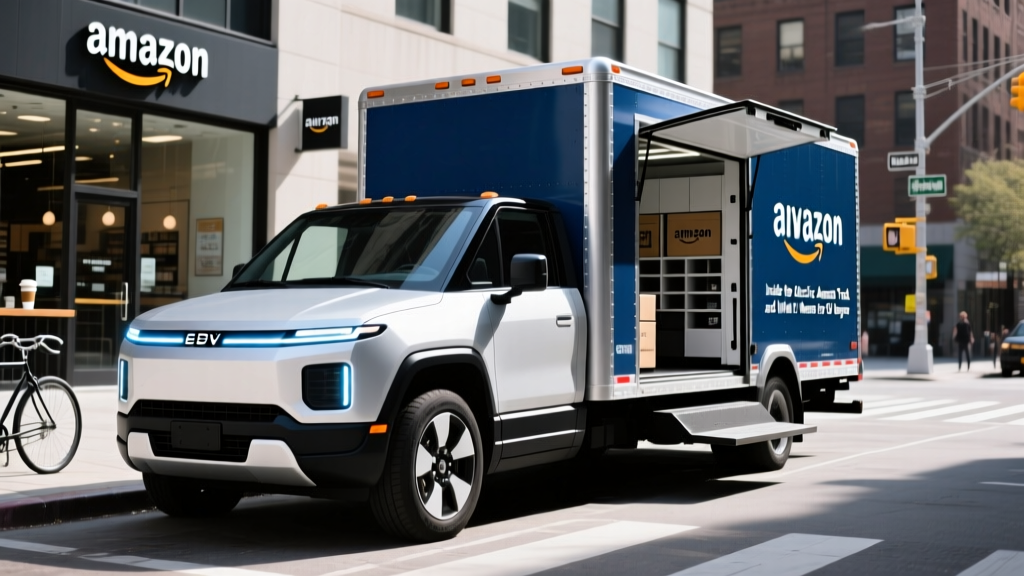
The "electric Amazon truck" refers to the Rivian EDV (Electric Delivery Van), a purpose-built commercial vehicle designed and manufactured exclusively for Amazon's delivery fleet. As of 2026, you cannot buy one as a consumer — it is a fleet-only vehicle. However, the EDV program has directly shaped Rivian's consumer lineup (R1T pickup, R1S SUV) by validating battery durability, thermal management, and high-mileage drivetrain reliability. If you're researching the EDV because you're considering a Rivian R1T or R1S, or you're simply curious how fleet EVs influence consumer models, this guide covers the specs, real-world data, and ownership economics that matter.
What Is the Electric Amazon Truck (Rivian EDV)?
Amazon ordered 100,000 custom electric delivery vans from Rivian in 2019, and by late 2025, the company had deployed over 25,000 EDVs across North American and European metro delivery routes. The EDV comes in three body configurations — a 500-cubic-foot cargo variant (EDV-500), a 700-cubic-foot version (EDV-700), and the largest EDV-900 — all sharing a common skateboard platform with variations in wheelbase and battery pack size.
Unlike consumer EVs, the EDV is engineered for a specific duty cycle: 150-200 stop-and-go deliveries per day, frequent door openings, low average speeds (25-35 mph), and depot-based overnight charging. This duty cycle is actually ideal for EVs — regenerative braking recovers significant energy in stop-and-go traffic, and the predictable route length eliminates range anxiety.
| Spec | EDV-500 | EDV-700 | EDV-900 |
|---|---|---|---|
| Usable Battery Capacity | ~90 kWh (LFP) | ~120 kWh (LFP) | ~150 kWh (LFP) |
| EPA-Estimated Range | ~120 miles | ~150 miles | ~161 miles |
| Peak DC Fast Charge Rate | ~125 kW | ~150 kW | ~150 kW |
| Level 2 Depot Charging | 19.2 kW (AC) | 19.2 kW (AC) | 19.2 kW (AC) |
| Motor Output | ~275 HP | ~335 HP | ~335 HP |
| Cargo Volume | 500 cu ft | 700 cu ft | 900 cu ft |
| Payload Capacity | ~2,500 lbs | ~3,200 lbs | ~3,800 lbs |
Rivian uses LFP (lithium iron phosphate) chemistry for the EDV packs. This is a deliberate fleet choice: LFP cells tolerate daily 100% charging without the accelerated degradation that NMC (nickel manganese cobalt) chemistry experiences at high states of charge. For a van that charges every night and runs every day, cycle life matters far more than energy density. According to Rivian's corporate disclosures, EDV packs are warrantied for 8 years or 250,000 miles — a reflection of LFP's durability.
How the EDV Compares to a Gas Delivery Van
Before the EDV, Amazon's fleet relied heavily on vehicles like the Ram ProMaster and Mercedes-Benz Sprinter — both available in gasoline and diesel configurations. The cost and emissions case for electrification is where the EDV makes its strongest argument, but there are real trade-offs.
| Metric | Rivian EDV-700 | Gas Van (ProMaster 2500) |
|---|---|---|
| Estimated Base Price (Fleet) | ~$75,000–$85,000 | ~$45,000–$52,000 |
| Fuel/Energy Cost per Mile | ~$0.10–$0.14 (electricity) | ~$0.22–$0.28 (gasoline) |
| Maintenance Cost per Mile | ~$0.04–$0.06 | ~$0.10–$0.15 |
| Estimated 5-Year / 150k Mile TCO | ~$115,000–$130,000 | ~$130,000–$155,000 |
| Tailpipe CO₂ per Mile | 0 lbs | ~0.85 lbs |
| Refuel/Recharge Time | ~8 hrs (depot L2 overnight) | ~10 min (gas station) |
| Cold-Weather Range Loss | ~20–30% at 20°F | Negligible |
The EDV's higher upfront cost is offset within 3-4 years of fleet operation through lower per-mile energy and maintenance costs. Electric motors have no oil changes, no transmission fluid, no spark plugs, and regenerative braking extends brake pad life by 50-70%. For a fleet vehicle covering 30,000-40,000 miles per year, these savings compound quickly.
However, the cold-weather range penalty is real. In northern markets like Minneapolis or Chicago, an EDV-700 rated at 150 miles may deliver only 105-120 miles on a 20°F winter day due to cabin heating demands and reduced battery efficiency. Amazon mitigates this through route optimization software that adjusts delivery assignments based on temperature and battery state of charge.
Why the EDV Matters for Consumer EV Buyers
You might wonder why a consumer guide site is covering a fleet-only van. Here's why it matters: the EDV program has been a massive real-world validation lab for Rivian's core EV technology — and that technology flows directly into vehicles you can buy.
Battery Durability Data You Can Trust
By the end of 2025, Amazon's EDV fleet had accumulated over 2 billion electric miles. That's an extraordinary dataset for LFP battery degradation in commercial use. Rivian has reported that EDV packs retain approximately 92-95% of original capacity after 150,000 miles of daily cycling — a figure that directly informs the warranty and longevity expectations for Rivian's consumer vehicles, the R1T and R1S, which now also offer LFP pack options for standard-range trims.
Thermal Management Lessons
The EDV's liquid-cooled battery thermal management system, tested across Phoenix summers and Minnesota winters, has driven refinements in Rivian's consumer heat pump architecture. The 2026 R1T and R1S benefit from improved cold-weather preconditioning algorithms that were validated on EDV depot-charging data.
Charging Infrastructure Spillover
Amazon has installed tens of thousands of Level 2 depot chargers across the U.S. to support the EDV fleet, often working with utilities on grid upgrades and demand-response programs. This infrastructure investment has accelerated public charging buildout in metro areas — the same cities where consumer EV owners charge.
Can You Buy an Electric Amazon Truck? (Availability and the Consumer Path)
No. As of 2026, the Rivian EDV is manufactured exclusively for Amazon under a contractual agreement that grants Amazon priority allocation through the 100,000-unit order. Rivian has indicated it may eventually offer the EDV platform to other commercial fleets, but no timeline has been announced, and consumer sales are not on the roadmap.
If you're drawn to the EDV's concept — a practical, durable, high-torque electric vehicle — here's how Rivian's consumer lineup maps to similar needs:
| Model | Starting MSRP | EPA Range | Battery (kWh) | 0-60 mph | Federal Tax Credit (§30D) |
|---|---|---|---|---|---|
| Rivian R1T (Dual-Motor, LFP Standard) | $69,900 | 270 mi | ~95 kWh (LFP) | 4.5 sec | Eligibility varies* |
| Rivian R1T (Dual-Motor, Max Pack) | $83,900 | 410 mi | ~149 kWh (NMC) | 4.5 sec | Eligibility varies* |
| Rivian R1S (Dual-Motor, LFP Standard) | $75,900 | 260 mi | ~95 kWh (LFP) | 4.7 sec | Eligibility varies* |
| Rivian EDV (Fleet Only) | N/A | 120–161 mi | 90–150 kWh (LFP) | N/A | Commercial credit (§45W) |
*Federal §30D tax credit eligibility depends on MSRP caps ($80,000 for trucks/vans), buyer income limits ($150K single / $300K joint), and battery critical-mineral sourcing requirements. Rules are subject to change — consult IRS.gov guidance on clean vehicle credits or a tax professional before purchasing.
Real-World Ownership Considerations: What Fleet Data Teaches Consumer Buyers
The EDV program has surfaced several ownership realities that apply to any EV buyer, not just fleet managers.
Home Charging Access Is Non-Negotiable for Most Owners
Amazon's EDVs charge at depots — guaranteed, dedicated Level 2 infrastructure every night. Consumer EV owners need the same reliability at home. If you lack access to a garage, driveway, or workplace charger where you can install a 240V Level 2 circuit (typically 32-48 amps / 7.7-11.5 kW), daily EV ownership becomes significantly more inconvenient. Budget $500-$2,500 for a home Level 2 installation depending on your electrical panel capacity and run length. If your panel needs a 200-amp upgrade, add $1,500-$3,500.
Daily Charging to 100% Is Fine with LFP — Not with NMC
The EDV charges to 100% nightly because LFP chemistry tolerates it. If you buy a consumer EV with an NMC pack (most long-range models), manufacturers recommend daily charging to 80% and only going to 100% for road trips. This effectively reduces your usable daily range by ~20%. LFP-equipped vehicles like the standard-range R1T or Tesla Model Y RWD don't have this limitation — a key ownership nuance that many buyers overlook.
Cold Weather Is the Real Range Test
EDV route data confirms what consumer EV owners report: at 20°F, expect 20-30% range loss compared to EPA ratings. At 0°F, loss can reach 35-40%. This is driven by cabin heating (resistive or heat pump), battery internal resistance increase, and reduced regenerative braking efficiency. If you live in a cold climate and your daily driving exceeds 70% of your EV's EPA-rated range, you'll need to plan for mid-day top-ups or choose a larger battery pack.
Common Misconceptions About the Electric Amazon Truck
| Myth | Fact |
|---|---|
| "I can buy a used EDV from Amazon." | Amazon has not decommissioned or resold EDVs as of 2026. The fleet is still growing toward the 100,000-unit target, and early units remain in active service. |
| "The EDV uses the same battery as the R1T." | They share platform architecture and cell-supply chains, but EDV packs are optimized for LFP daily cycling, while R1T Max Pack uses NMC for higher energy density. |
| "Electric delivery vans can't handle real routes." | EDVs average 150-200 deliveries per day on a single charge. The duty cycle — low speed, frequent stops — is where EVs are most efficient, not least. |
| "Amazon's EV fleet is just a PR stunt." | With 25,000+ vans deployed and 2+ billion electric miles, the EDV program has reduced Amazon's last-mile delivery emissions by an estimated 20-25% per package in metro areas, according to the company's 2025 sustainability report. |
Decision Framework: Should You Buy a Rivian (or Wait for Fleet Tech to Trickle Down)?
Choose a Rivian R1T or R1S now if:
- You need a capable electric truck/SUV today with proven hardware validated by billions of fleet miles
- You have home Level 2 charging access (or can install it)
- You qualify for the §30D federal tax credit (check income, MSRP, and sourcing rules on IRS.gov)
- You value LFP chemistry for daily 100% charging without degradation anxiety
Wait or consider alternatives if:
- You were hoping to purchase an actual EDV — it's fleet-only with no consumer path announced
- Your daily commute exceeds 200 miles one-way (consider the Max Pack at 410 mi EPA, but at $83,900+)
- You lack home or workplace charging and live in an area with sparse public DC fast charging
- You're waiting for Rivian's mid-size R2 platform (expected 2026-2027 at ~$45,000 starting MSRP) for a more affordable entry point
What First-Time EV Buyers Should Know (Lessons from the Fleet)
Fleet operators like Amazon make EV purchasing decisions based on total cost of ownership over 5-7 years and 150,000+ miles. Consumer buyers should apply the same rigor:
- Calculate your real cost per mile. Electricity at $0.14/kWh and 2.5 mi/kWh efficiency = ~$0.056/mile. Gas at $3.40/gallon and 22 MPG = ~$0.155/mile. That's nearly a 3x difference in energy cost alone.
- Factor in insurance. EV insurance premiums run 15-25% higher than comparable gas vehicles due to repair costs and battery replacement exposure. Get quotes before purchasing.
- Budget for home charging installation. A Level 2 home charger ($400-$700 for hardware) plus electrician labor ($500-$2,500) is a one-time cost that pays for itself within 1-2 years versus public charging.
- Understand battery warranty. Federal law mandates a minimum 8-year/100,000-mile battery warranty for EVs. Rivian covers its packs for 8 years/175,000 miles (consumer) and guarantees at least 70% capacity retention over that period.
- Plan for cold weather. If you live where winters drop below freezing, buy 20-30% more range than you think you need, or choose a vehicle with a heat pump (standard on 2026 R1T/R1S) to reduce cabin-heating energy draw.
Frequently Asked Questions
Who manufactures the electric Amazon truck?
Rivian Automotive manufactures the EDV (Electric Delivery Van) at its Normal, Illinois factory. Amazon holds exclusive rights to the vehicle through its 100,000-unit purchase agreement signed in 2019.
How many electric Amazon trucks are on the road in 2026?
Amazon has deployed over 25,000 EDVs as of late 2025, with the fleet continuing to scale toward the 100,000-unit target. The vans operate in over 100 metro areas across the U.S. and Europe.
What is the range of the electric Amazon truck?
Depending on the body configuration, the EDV achieves between 120 and 161 miles of EPA-estimated range. Real-world range in cold weather (below 30°F) drops by approximately 20-30%, bringing effective range to roughly 85-130 miles.
Can I buy a Rivian EDV for personal use?
No. The EDV is not available for consumer purchase. Rivian's consumer vehicles — the R1T pickup and R1S SUV — share underlying platform technology and are available through direct order at rivian.com.
Does the electric Amazon truck qualify for a tax credit?
The EDV qualifies for the commercial clean vehicle credit (§45W) when purchased by a business, not the consumer §30D credit. Fleet buyers should consult a tax professional for eligibility details, as commercial credit rules differ from consumer incentives.
What battery chemistry does the EDV use, and why does it matter?
The EDV uses LFP (lithium iron phosphate) cells. LFP is chosen for fleet use because it supports daily 100% charging with minimal degradation, has a longer cycle life than NMC, and uses no cobalt or nickel. The trade-off is lower energy density (more weight for the same range), which is acceptable for short-route delivery vans.