What Is the Rivian Delivery Truck (EDV)?
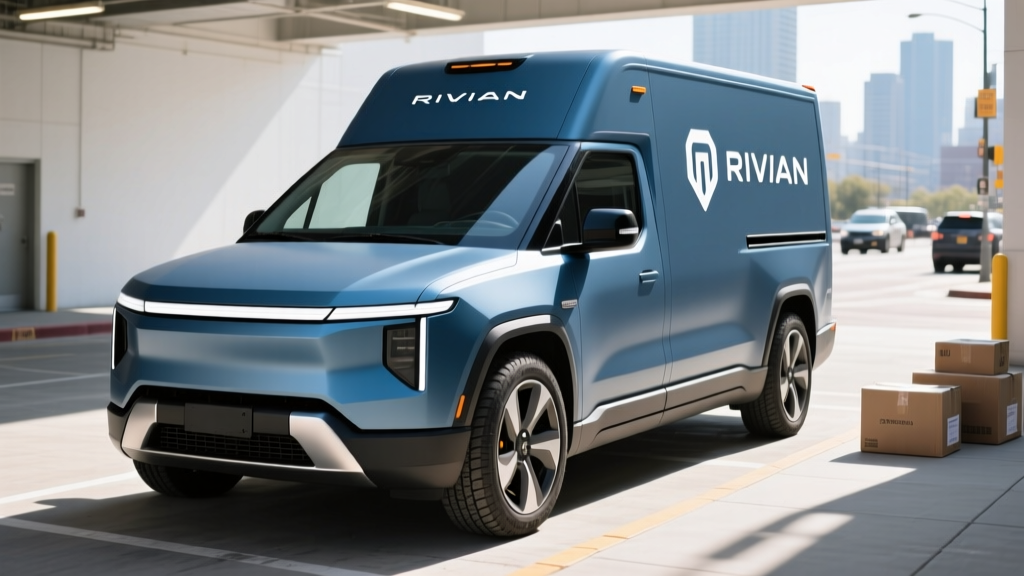
The Rivian delivery truck — officially known as the Rivian Electric Delivery Van (EDV) — is a purpose-built commercial electric vehicle designed in exclusive partnership with Amazon. Unlike consumer EVs you can walk into a dealership and purchase, the EDV exists primarily as a fleet vehicle, with Amazon holding exclusive rights to the design through 2026 and ordering over 100,000 units. Rivian has also begun exploring sales to other commercial fleets under specific conditions, but individual consumers cannot buy one new.
Still, the EDV matters to EV shoppers and enthusiasts because it represents one of the largest electric commercial vehicle deployments in history and directly influences Rivian's manufacturing scale, battery supply chain, and financial health — all of which affect the R1T and R1S you can buy. Here's everything we know about the specs, capabilities, and real-world performance of the Rivian delivery truck as of 2026.
Rivian EDV Specifications at a Glance
| Specification | EDV-700 (Short Wheelbase) | EDV-900 (Long Wheelbase) |
|---|---|---|
| EPA Estimated Range | ~150 miles | ~120-150 miles |
| Battery Capacity (Usable) | ~105 kWh (estimated) | ~135 kWh (estimated) |
| Battery Chemistry | NMC (Nickel Manganese Cobalt) | NMC |
| Drivetrain | Single-motor FWD | Single-motor FWD |
| Horsepower | ~250 hp (estimated) | ~250 hp (estimated) |
| 0-60 mph | Not officially published (~8-10 sec est.) | Not officially published |
| Cargo Volume | ~520 cu ft | ~660 cu ft |
| Payload Capacity | ~2,500 lbs | ~3,500 lbs |
| Max DC Fast Charge | ~125 kW (estimated) | ~125 kW (estimated) |
| 10-80% DC Charge Time | ~45 minutes (estimated) | ~55 minutes (estimated) |
| Level 2 Charge Rate | ~11.5 kW | ~11.5 kW |
| Efficiency | ~2.0-2.2 kWh/mile | ~2.2-2.5 kWh/mile |
| Availability | Fleet only (Amazon / approved fleets) | Fleet only |
Note: Rivian does not publish full consumer-facing spec sheets for the EDV. Figures above are compiled from fleet operator reports, Rivian investor disclosures, and third-party fleet testing data. Exact specs may vary by production batch and model year.
Range and Real-World Efficiency
EPA Estimated: ~150 miles (EDV-700)
Real-World Expectation: 110-140 miles in mixed urban/highway delivery routes; 90-110 miles in cold weather (below 32°F) with cabin heating and frequent stop-start cycles.
Why the gap? Delivery vans face worst-case EV efficiency scenarios: heavy payloads, constant acceleration from stops, low-speed urban driving with regenerative braking benefits partially offset by HVAC loads and idling at delivery stops.
The Rivian delivery truck was designed for last-mile routes, not highway cruising. Amazon's typical delivery route covers 70-120 miles per day, which means the EDV's ~150-mile range provides a comfortable buffer for most urban and suburban routes. However, fleet operators in cold-weather markets like Chicago, Minneapolis, and Boston have reported range reductions of 25-35% during winter months — consistent with what we see across all EVs when battery thermal management and cabin heating draw from the same pack.
The EDV's efficiency hovers around 2.0-2.5 kWh per mile depending on payload and route profile. That translates to roughly the equivalent of 1.3-1.6 MPGe in energy terms — or, more usefully, about $0.25-$0.35 per mile in electricity cost at commercial charging rates ($0.12-$0.15/kWh). Compared to a gasoline delivery van averaging 10-12 mpg, the operating cost savings are substantial: roughly $0.55-$0.75 per mile less in energy alone.
Charging Speed and Infrastructure
The Rivian EDV supports DC fast charging at an estimated peak rate of ~125 kW, which is modest compared to consumer EVs like the Hyundai Ioniq 5 (240 kW) or Tesla Cybertruck (350 kW). However, for a fleet vehicle that charges overnight at a depot, peak DC speed matters less than reliable Level 2 throughput.
| Charging Level | Power (kW) | Estimated Time (10-80%) | Miles Added Per Hour |
|---|---|---|---|
| Level 1 (120V) | ~1.4 kW | Not practical for fleet use | ~3-4 mi/hr |
| Level 2 (240V, depot) | ~11.5 kW | ~7-8 hours (full charge) | ~25-30 mi/hr |
| DC Fast Charge | ~125 kW peak | ~45-55 min (10-80%) | ~100-120 mi/hr (peak) |
Amazon has invested heavily in depot-level charging infrastructure, installing thousands of Level 2 chargers at delivery stations across the U.S. The typical EDV arrives at the depot with 20-40% state of charge and needs a full overnight charge — easily achievable with 11.5 kW Level 2 over an 8-hour window. The DC fast-charge capability serves as a midday top-up option for longer or unexpected routes, though the charge curve tapers significantly above 80% SoC, as is standard with NMC battery chemistry.
One important note: the EDV uses a CCS1 connector for DC fast charging, consistent with Rivian's commercial fleet strategy and Amazon's depot charger installations. This differs from Rivian's consumer vehicles (R1T/R1S), which have transitioned to NACS for Tesla Supercharger access.
Performance, Drivetrain, and Cargo Capacity
The EDV is a front-wheel-drive, single-motor van — a deliberate choice that prioritizes efficiency, cost, and interior packaging over the dual-motor AWD performance Rivian offers in its consumer trucks. Estimated output is around 250 horsepower, which is adequate for a vehicle designed to cruise at 35-55 mph between delivery stops, not win drag races.
Rivian has not officially published 0-60 times, but fleet testing and driver reports suggest the EDV-700 reaches 60 mph in roughly 8-10 seconds — perfectly acceptable for a commercial van with a gross vehicle weight rating (GVWR) near 9,000-10,000 lbs. The instant torque from the electric motor is actually a significant advantage in stop-and-go urban delivery routes, where the van pulls away from stops more briskly than comparable diesel or gasoline vans.
Cargo space is where the EDV truly shines. Rivian designed three variants:
- EDV-500 (compact): ~370 cu ft cargo volume — for dense urban routes
- EDV-700 (standard): ~520 cu ft — the most common Amazon variant
- EDV-900 (extended): ~660 cu ft — for high-volume suburban routes
The cargo area features a low, flat load floor (the battery pack sits beneath it), wide-opening rear doors, and a passenger-side curbside door for quick access. Amazon drivers consistently report that the interior layout — designed with direct input from delivery associates — reduces package handling time compared to traditional step vans. The driver's compartment includes a digital instrument cluster, a large central touchscreen with route navigation, and Rivian's driver-assistance features.
Driver Assistance and Technology
The EDV comes equipped with a suite of ADAS (Advanced Driver Assistance Systems) tailored for delivery work:
- Automatic Emergency Braking (AEB) with pedestrian detection
- Lane Keeping Assist and lane departure warning
- Adaptive Cruise Control for highway segments between routes
- 360-degree camera system for tight urban maneuvering
- Blind-spot monitoring with rear cross-traffic alert
The Rivian EDV's driver-assistance features are classified as SAE Level 1-2. The driver must remain fully engaged, hands on the wheel, and eyes on the road at all times. This is not a self-driving or autonomous delivery vehicle. Companies like Waymo (Level 4) are pursuing autonomous last-mile delivery separately, but the EDV requires a human driver for every route.
The infotainment system includes integrated route optimization software that communicates directly with Amazon's logistics platform, showing the driver's next stop, turn-by-turn navigation, and package location within the cargo hold. This tight software integration is one reason the EDV is more than just an electric van — it's a node in Amazon's delivery network.
Pricing, Fleet Cost, and Tax Credit Eligibility
Because the Rivian delivery truck is not sold through traditional retail channels, there is no consumer MSRP. However, industry analysts estimate the per-unit fleet cost at $65,000-$80,000 depending on variant and volume, which is competitive with — or slightly above — comparable internal-combustion delivery vans like the Ford E-Transit (~$55,000-$65,000 base) and Mercedes-Benz eSprinter (~$70,000+).
For fleet buyers exploring the EDV or similar commercial electric vans, the federal tax credit landscape is relevant:
Unlike consumer EVs that qualify under IRS §30D (up to $7,500 with MSRP caps, income limits, and battery-sourcing rules), commercial electric vehicles like the EDV fall under §45W — the Commercial Clean Vehicle Credit. Key rules:
- Credit equals up to $7,500 for vehicles under 14,000 lbs GVWR, or $40,000 for heavier vehicles
- No MSRP cap or buyer income cap (unlike §30D)
- Battery component and critical mineral sourcing requirements still apply
- The credit applies to the business/fleet, not an individual consumer
- Consult a tax professional and review current IRS guidance for eligibility
For Amazon specifically, the EDV purchase is part of a broader sustainability commitment and fleet electrification strategy that also factors in lower per-mile operating costs, reduced maintenance (no oil changes, fewer brake replacements thanks to regenerative braking), and compliance with tightening urban emissions regulations in cities like Los Angeles and New York.
Warranty and Battery Longevity
Rivian provides fleet-specific warranty terms for the EDV that differ from its consumer vehicle warranties. Based on available fleet documentation:
- Battery Pack: 8 years / 100,000 miles (with a capacity retention threshold of approximately 70%)
- Electric Powertrain: 8 years / 100,000 miles
- Bumper-to-Bumper: 5 years / 60,000 miles
The NMC battery chemistry in the EDV offers high energy density — important for maximizing range in a large van — but is more susceptible to degradation from frequent DC fast charging and extreme temperatures compared to LFP (lithium iron phosphate) chemistry. Fleet operators mitigate this by relying primarily on overnight Level 2 charging, which is gentler on the battery, and by using Rivian's thermal management system to precondition the pack before fast charging.
Real-world degradation data from early Amazon EDV deployments (2022-2024 models) suggests approximately 8-12% capacity loss over the first 80,000-100,000 miles of delivery use — within the warranty threshold and consistent with NMC packs in high-cycle commercial applications.
Rivian EDV vs. Competitors: How Does It Stack Up?
| Feature | Rivian EDV-700 | Ford E-Transit | Mercedes eSprinter |
|---|---|---|---|
| EPA Range | ~150 mi | 126 mi | ~150-200 mi (varies by config) |
| Battery (usable) | ~105 kWh | 68 kWh | ~113 kWh |
| DC Fast Charge | ~125 kW | 115 kW | ~115 kW |
| Cargo Volume | ~520 cu ft | ~487 cu ft (high-roof) | ~530 cu ft |
| Payload | ~2,500 lbs | ~3,880 lbs | ~2,600 lbs |
| Starting Fleet Price | ~$70,000 (est.) | ~$55,000 | ~$70,000+ |
| Purpose-Built for Delivery | Yes (Amazon co-design) | Adapted from ICE Transit | Adapted from ICE Sprinter |
The EDV's biggest advantage is that it was designed from the ground up as an electric delivery vehicle, not adapted from a gasoline platform. This gives it a lower, flatter load floor, better weight distribution, and interior features purpose-built for package delivery. The Ford E-Transit, while cheaper and available through standard commercial channels, carries the compromises of a converted ICE platform — including a higher floor and less optimized cargo layout.
The Mercedes eSprinter offers competitive range and cargo volume but at a premium price and with less integrated delivery-specific technology. For fleets that aren't Amazon, the E-Transit remains the most accessible electric delivery van on the market.
Who Is the Rivian Delivery Truck For?
- Large-scale last-mile delivery fleets with dedicated depot charging
- Urban and suburban routes under 120 miles per day
- Operators prioritizing driver ergonomics and package handling efficiency
- Fleets in cities with zero-emission vehicle mandates
- Individual consumers (not available for retail purchase)
- Long-haul or intercity routes exceeding 150 miles
- Fleets without access to overnight Level 2 depot charging
- Operators needing heavy payload capacity above 3,500 lbs
The Biggest Pros and Cons
- Purpose-built EV delivery design — not a converted ICE van
- Low, flat cargo floor with excellent interior ergonomics
- Significantly lower per-mile energy cost vs. gasoline/diesel vans
- Regenerative braking reduces brake wear in stop-and-go routes
- Integrated delivery software and route optimization
- Quiet operation improves driver comfort and neighborhood noise
- Strong ADAS suite for urban driving safety
- Not available for individual consumer purchase
- Range limited to ~150 miles — tight for longer or rural routes
- DC fast charge speed (~125 kW) lags behind modern consumer EVs
- NMC battery may degrade faster than LFP in high-cycle use
- Cold-weather range loss of 25-35% impacts winter operations
- Estimated fleet price (~$70K+) is higher than Ford E-Transit
- Exclusive Amazon design limits availability to approved fleets
Frequently Asked Questions
Can I buy a Rivian delivery truck as a private consumer?
No. The Rivian EDV is currently available only to Amazon and select approved commercial fleet partners. Amazon held exclusive rights to the EDV design through at least 2026. Individual consumers cannot purchase a new EDV through any retail channel. Used EDVs may eventually appear on the secondary market as fleets cycle vehicles, but this remains uncommon as of 2026.
What is the real-world range of the Rivian EDV?
The EPA-estimated range is approximately 150 miles for the EDV-700 variant. In real-world delivery use, expect 110-140 miles on typical urban routes with moderate payloads. In cold weather (below freezing), range can drop to 90-110 miles due to battery thermal management demands, cabin heating, and reduced regenerative braking efficiency.
How fast does the Rivian delivery truck charge?
The EDV supports DC fast charging at an estimated peak rate of ~125 kW, achieving a 10-80% charge in roughly 45-55 minutes depending on variant and battery size. For fleet operations, the primary charging method is overnight Level 2 at ~11.5 kW, which fully recharges the pack in 7-8 hours — sufficient for daily depot-based operations.
Does the Rivian EDV qualify for a federal EV tax credit?
The EDV qualifies under the §45W Commercial Clean Vehicle Credit (not the consumer §30D credit). Eligible commercial fleets can claim up to $7,500 for vehicles under 14,000 lbs GVWR. Battery component and critical mineral sourcing requirements apply. There is no MSRP cap or buyer income cap under §45W, unlike the consumer credit. Always verify current rules at IRS.gov and consult a tax professional.
Is the Rivian EDV better than the Ford E-Transit?
It depends on your use case. The EDV offers a purpose-built electric design with better cargo ergonomics, a lower load floor, and deeper software integration for delivery workflows. The Ford E-Transit costs less (~$55K vs. ~$70K+ estimated), is widely available through Ford Pro commercial dealers, and offers a higher payload capacity (~3,880 lbs). For non-Amazon fleets, the E-Transit is currently the more accessible and practical choice. For purpose-built delivery efficiency, the EDV leads — if you can get one.
What battery chemistry does the Rivian EDV use?
The EDV uses NMC (Nickel Manganese Cobalt) lithium-ion battery cells, which offer higher energy density than LFP (lithium iron phosphate) — important for maximizing range in a large commercial van. The trade-off is that NMC is somewhat more sensitive to degradation from frequent DC fast charging and extreme temperatures. Fleet operators mitigate this through depot-based Level 2 charging and Rivian's active thermal management system.
How does the EDV affect Rivian's consumer vehicles?
The Amazon EDV contract has been critical to Rivian's financial survival and manufacturing scale. Revenue from EDV production at Rivian's Normal, Illinois factory helps fund R&D for the R1T, R1S, and future consumer platforms. However, the exclusive Amazon partnership has also constrained Rivian's ability to sell commercial vans to other fleets, a tension the company continues to navigate. The EDV's battery and drivetrain learnings also feed into Rivian's consumer vehicle engineering.
Sources: Rivian Commercial, EPA Fuel Economy, IRS Clean Vehicle Credits