Quick Verdict: Built for Routes, Not Road Trips
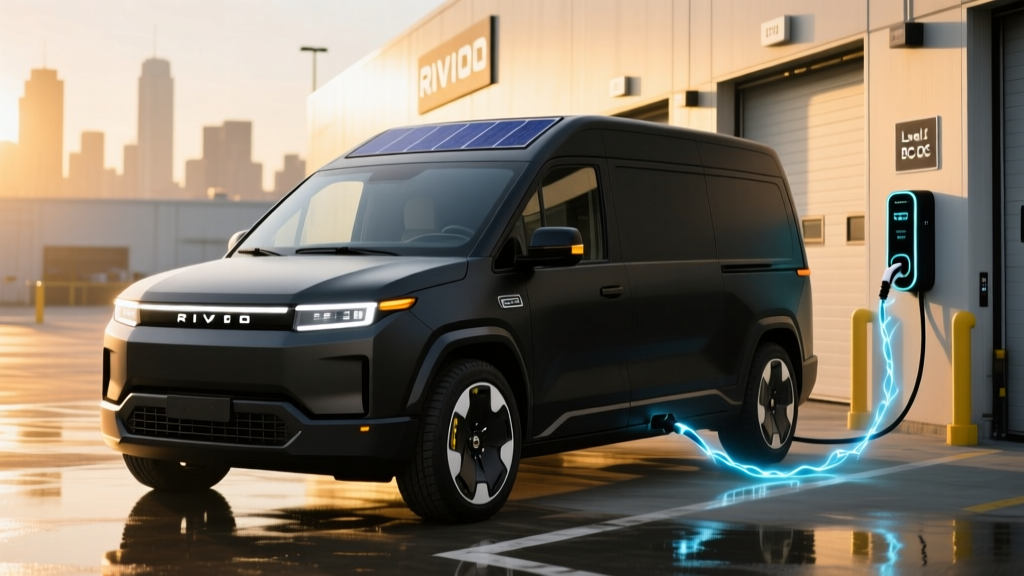
The Rivian cargo van — officially the Electric Delivery Van (EDV) — is not a consumer vehicle you can walk into a dealership and buy. It is a purpose-built commercial fleet platform designed under an exclusive agreement with Amazon, though Rivian has begun opening sales to other fleet operators as of late 2025. If you're a fleet manager researching the Rivian cargo van for last-mile delivery, this profile gives you the exact range, charging, payload, and cost data you need to evaluate it against the Ford E-Transit and GM BrightDrop Zevo 600.
The EDV prioritizes maneuverability, cargo ergonomics, and depot-based charging over highway range. It excels in stop-and-go urban routes but is not engineered for long-haul or interstate logistics.
Range, Efficiency, and the Real-World Delivery Reality
The Rivian EDV is offered in multiple body configurations, with the most common being the EDV-700 (approximately 700 cubic feet of cargo volume). EPA range figures vary by configuration and payload:
Real-World Expectation: Fleet operators report 120–140 miles on dense urban routes with frequent stops, regenerative braking recapture, and moderate HVAC use. In cold-weather climates (below 32°F), expect a 20–30% reduction, dropping effective range to roughly 90–115 miles. Highway-speed driving at 65+ mph further reduces range due to the van's boxy aerodynamics.
This range envelope is deliberate. Amazon's delivery routes average 70–120 miles per day, meaning the EDV returns to depot with buffer remaining. For fleets with longer or highway-heavy routes, the Ford E-Transit (126 miles EPA, but available in extended-range configurations) or the BrightDrop Zevo 600 (up to 250 miles) may be more appropriate.
| Spec | Value |
|---|---|
| EPA Range | ~150 miles |
| Battery Capacity | ~105 kWh usable (NMC chemistry) |
| Efficiency | ~2.0 kWh/mile (varies by payload) |
| Max DC Fast Charge | 150 kW (peak) |
| 10–80% DC Charge Time | ~45 minutes |
| Level 2 Charge Rate | ~11.5 kW (~22 miles/hr) |
| Drivetrain | Rear-wheel drive, single motor |
| Horsepower | ~250 hp |
| 0–60 mph | Not officially published (~8 sec est.) |
| Cargo Volume | ~660 cu ft (EDV-700) |
| Payload Capacity | ~2,500 lbs |
| Base MSRP | Not publicly listed; fleet contract pricing |
| Federal Tax Credit | Commercial Clean Vehicle Credit (§45W), up to $40,000 |
| Battery Warranty | 8 years / 100,000 miles |
Battery Chemistry and Longevity
The Rivian EDV uses an NMC (nickel manganese cobalt) lithium-ion battery pack with approximately 105 kWh of usable capacity. NMC offers higher energy density than LFP, which matters in a van where cargo volume and payload are paramount — every pound of battery is a pound less payload.
NMC packs typically experience slightly faster degradation than LFP over thousands of cycles, but for a depot-charged delivery van that rarely sees 100% state of charge and operates in a moderate charge band (20–90% SoC), degradation should remain manageable within the warranty period. Rivian warrants the battery for 8 years or 100,000 miles, retaining at least 70% of original capacity — a standard commercial-vehicle threshold. Fleet operators who charge daily to 80% and avoid DC fast-charging every cycle can expect slower degradation curves.
Charging Speed: Depot-Optimized, Not Road-Trip Fast
| Level | Power | Speed | Use Case |
|---|---|---|---|
| Level 1 (120V) | ~1.4 kW | ~3 miles/hr | Not practical for fleet use |
| Level 2 (240V) | ~11.5 kW | ~22 miles/hr | Overnight depot charging (primary) |
| DC Fast Charge | 150 kW peak | 10–80% in ~45 min | Mid-route top-up or rapid depot turnover |
The 150 kW peak DC rate is modest compared to passenger EVs like the Hyundai Ioniq 5 (350 kW peak), but it aligns with fleet depot infrastructure. Most delivery vans charge overnight on Level 2, where 11.5 kW fully replenishes the pack in roughly 9–10 hours — ideal for a van that returns to base by evening and departs at dawn.
The charge curve tapers noticeably above 80% SoC, as is typical with NMC packs. Fleet managers should configure depot chargers to hold at 80–85% for daily use, reserving 100% charges for longer scheduled routes. This practice extends battery life and avoids the slowest portion of the charge curve.
Performance and Drivetrain
The EDV uses a single rear-mounted motor producing approximately 250 horsepower. Rear-wheel drive is standard — an intentional choice that simplifies the drivetrain, reduces cost, and improves efficiency for urban routes where all-wheel traction is rarely needed. The instant torque delivery makes the van surprisingly responsive from stoplights and in merging situations, even when loaded near its ~2,500-pound payload capacity.
Rivian does not publish an official 0–60 mph time for the EDV, but independent fleet testing suggests roughly 8 seconds unloaded, stretching to 10+ seconds at max payload. Top speed is electronically governed to approximately 75 mph, reinforcing its urban/suburban route design.
Cargo Space and Driver Ergonomics
The EDV was co-designed with Amazon, and the cargo area reflects deep operational thinking:
- EDV-500: ~410 cu ft cargo volume, shorter wheelbase, tighter turning radius for dense urban cores
- EDV-700: ~660 cu ft, the most common configuration, balances volume and maneuverability
- EDV-900: ~830 cu ft, longest variant for high-volume suburban routes
The driver's compartment features a low step-in height, a wide walk-through to the cargo area (no bulkhead door to fumble with), and a powered curb-side door that opens with a button press — eliminating the physical effort of sliding a heavy door hundreds of times per shift. The digital instrument cluster and central touchscreen run Rivian's proprietary fleet software, integrating route optimization, package scanning, and vehicle telemetry.
Pricing, Tax Credits, and Fleet Economics
Rivian does not publish consumer MSRP for the EDV. Pricing is negotiated through fleet contracts, and estimates place the EDV-700 in the $80,000–$100,000 range before incentives, depending on configuration and volume commitments.
The EDV does not qualify for the consumer §30D federal tax credit (which has MSRP caps of $80,000 for vans and income limits). Instead, it qualifies for the Commercial Clean Vehicle Credit (§45W), which provides up to $40,000 per vehicle for qualified commercial clean vehicles. Key §45W requirements:
- Vehicle must be used for business or income-producing activity
- Must meet IRS battery component and critical mineral sourcing requirements (phasing in through 2026)
- Credit equals the lesser of 15% of vehicle basis (30% for depreciable property) or the incremental cost over a comparable ICE vehicle
- No MSRP cap, no buyer income cap — but sourcing rules apply
Fleet buyers should consult a tax professional to confirm eligibility, as battery-sourcing compliance has tightened significantly since the Inflation Reduction Act's implementation.
Competitive Comparison: EDV vs. E-Transit vs. BrightDrop
| Spec | Rivian EDV-700 | Ford E-Transit (148" WB) | BrightDrop Zevo 600 |
|---|---|---|---|
| EPA Range | ~150 mi | ~126 mi | ~250 mi |
| Battery (kWh) | ~105 | ~68 | ~120 |
| DC Fast Charge | 150 kW | 115 kW | 120 kW |
| Cargo Volume | ~660 cu ft | ~487 cu ft | ~600 cu ft |
| Payload | ~2,500 lbs | ~3,800 lbs | ~2,500 lbs |
| Starting Price (est.) | ~$85,000+ | ~$55,000 | ~$90,000+ |
The E-Transit wins on upfront cost and dealer service network breadth. The BrightDrop Zevo 600 wins on range. The Rivian EDV wins on cargo volume efficiency, purpose-built delivery ergonomics, and integrated fleet software — but only if your route profile matches its ~120-mile real-world envelope.
Pros
- Best-in-class cargo ergonomics (walk-through, powered door, low floor)
- Purpose-built for last-mile delivery, not a converted passenger van
- Strong regenerative braking recaptures energy in stop-and-go routes
- Integrated fleet telematics and route software
- Up to $40,000 §45W commercial tax credit
Cons
- Limited to ~120–140 real-world miles — not viable for longer routes
- No consumer purchase path; fleet contracts only
- Higher estimated upfront cost than E-Transit
- Limited service network compared to Ford's commercial dealer infrastructure
- RWD only — no AWD option for snow-belt fleets
Who the Rivian Cargo Van Suits Best
The EDV is ideal for fleet operators running predictable, depot-based urban and suburban delivery routes under 120 miles per day. If your operation mirrors Amazon's last-mile model — vans leave a single depot in the morning, run a defined route, and return to charge overnight — the EDV's ergonomics and integrated software deliver measurable efficiency gains over retrofitted competitors.
It is not the right choice for: inter-city logistics, routes requiring highway-speed sustained driving, operations in extreme cold without depot preconditioning infrastructure, or small businesses that need a single van purchased through a traditional dealer.
Frequently Asked Questions
Can I buy a Rivian cargo van as a private consumer?
No. The EDV is sold exclusively through fleet and commercial contracts. Rivian has expanded availability beyond Amazon to other qualified fleet operators, but there is no retail purchase path as of 2026.
What is the real-world range of the Rivian EDV?
Expect 120–140 miles on urban delivery routes with regenerative braking active. Highway driving and cold weather (below freezing) reduce this to 90–115 miles. Plan routes with a 20% buffer below EPA estimates.
How long does it take to charge the Rivian cargo van?
On a Level 2 depot charger at 11.5 kW, a full charge takes approximately 9–10 hours (overnight). On a 150 kW DC fast charger, 10–80% takes roughly 45 minutes, with significant tapering above 80%.
Does the Rivian EDV qualify for the $7,500 federal EV tax credit?
No. The consumer §30D credit does not apply. However, the EDV qualifies for the Commercial Clean Vehicle Credit (§45W), which can provide up to $40,000 per vehicle depending on your fleet's tax situation and the vehicle's battery sourcing compliance. Consult a tax professional and review current IRS §45W guidance.
How does the Rivian EDV compare to the Ford E-Transit?
The E-Transit costs significantly less (~$55,000 vs. $85,000+), has a broader dealer service network, and offers a similar range (~126 miles EPA). The EDV offers substantially more cargo volume, better delivery-specific ergonomics, and integrated fleet software. Choose the E-Transit for budget and serviceability; choose the EDV for high-volume urban route optimization.
What is the battery warranty on the Rivian cargo van?
Rivian warrants the EDV battery and powertrain for 8 years or 100,000 miles, guaranteeing at least 70% capacity retention over that period.