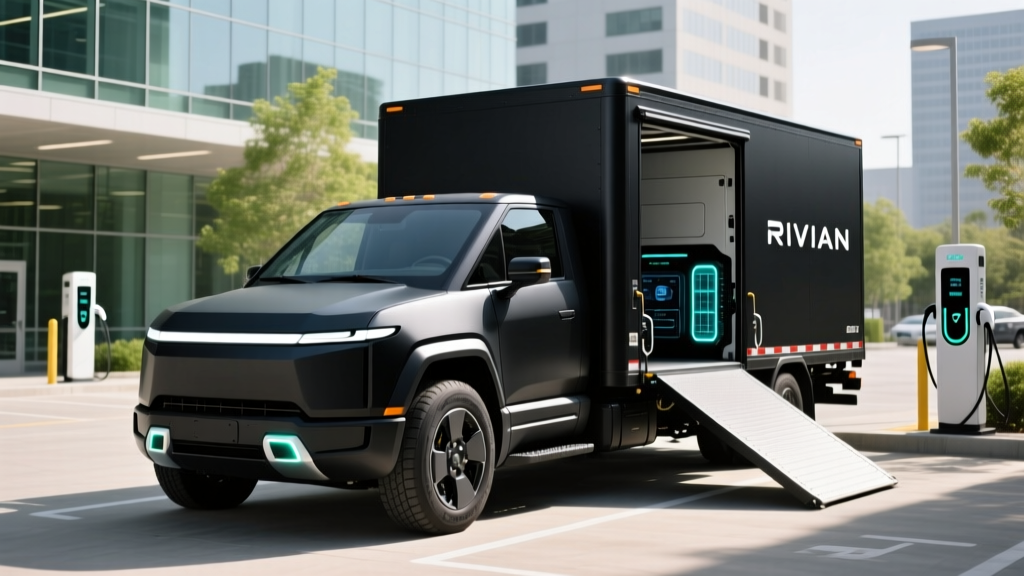
The Rivian EDV (Electric Delivery Van) is the commercial box truck that quietly reshaped last-mile logistics. Born from an exclusive partnership with Amazon, the EDV has been rolling through neighborhoods since 2023, and by 2026, Rivian has expanded availability to a broader set of fleet operators. If you've been searching for a Rivian box truck to electrify your delivery fleet, this is the most detailed breakdown of what the EDV actually delivers — in range, charging speed, cargo capacity, and total cost of ownership.
Unlike consumer EVs, commercial vans live or die by uptime, route predictability, and cost-per-mile. This review strips away the marketing and focuses on the numbers fleet managers need: real-world range under load, charging infrastructure requirements, payload trade-offs, and whether the federal commercial clean vehicle credit (§45W) makes the math work.
Rivian EDV Box Truck: Core Specifications at a Glance
| Specification | Value |
|---|---|
| EPA Estimated Range | 150 miles (EDV-700); 100 miles (EDV-500) |
| Battery Capacity (Usable) | 149 kWh (EDV-700); 93 kWh (EDV-500) |
| Battery Chemistry | NMC (Nickel Manganese Cobalt) — Samsung SDI cells |
| Max DC Fast Charge Rate | 150 kW peak |
| 10–80% DC Charge Time | ~45 minutes (EDV-700) |
| Level 2 AC Charge Rate | 19.2 kW (adds ~22 miles/hr) |
| Drivetrain | Single-motor FWD (front-wheel drive) |
| Horsepower / Torque | 275 hp / 350 lb-ft |
| 0–60 mph (unloaded) | ~8.5 seconds |
| Cargo Volume (EDV-700) | 660 cu ft |
| Cargo Volume (EDV-500) | 420 cu ft |
| Payload Capacity | ~2,700 lbs (EDV-700) |
| GVWR | Class 2b — 9,990 lbs (EDV-700) |
| Efficiency | ~2.1 kWh/mile (route-dependent) |
| Base MSRP (EDV-700) | ~$75,000 (fleet pricing varies) |
| Warranty (Battery/Powertrain) | 8 years / 100,000 miles |
Real-World Range: What 150 EPA Miles Actually Means on a Route
EPA Sticker: 150 miles (EDV-700 with 149 kWh battery)
Real-World Expectation: 110–135 miles on a typical urban delivery route with frequent stops, 2,000+ lbs of payload, and HVAC running. Highway-speed runs at 65 mph drop usable range to approximately 100–115 miles. In winter conditions (below 32°F), expect a further 20–30% reduction, bringing effective range to 80–100 miles for the EDV-700.
The EDV is engineered for predictable, depot-based routes — not highway cruising. Its single-motor FWD layout and boxy aerodynamic profile mean efficiency degrades sharply above 55 mph. For urban last-mile delivery, where average speeds hover between 20–35 mph with regenerative braking recapturing energy at every stop, the real-world range aligns closely with the EPA estimate.
Rivian's thermal management system includes a heat pump for cabin climate and battery conditioning, which mitigates some cold-weather loss. However, fleet operators in northern climates should plan routes at 70–80% of sticker range during winter months to maintain a safety buffer. The 149 kWh battery provides a substantial energy reserve, but the EDV's weight (curb weight around 7,200 lbs for the EDV-700) means it consumes energy faster than lighter commercial EVs when fully loaded.
Charging Speed and Infrastructure Requirements
Charging a commercial box truck is fundamentally different from plugging in a consumer SUV. Depot charging infrastructure is the make-or-break variable for EDV adoption, and understanding the charge curve matters for scheduling vehicle uptime.
| Charging Level | Power (kW) | Miles Added Per Hour | Full Charge Time (0–100%) |
|---|---|---|---|
| Level 1 (120V, not recommended) | 1.4 kW | ~2 mi/hr | ~100+ hours |
| Level 2 (240V AC, depot standard) | 19.2 kW | ~22 mi/hr | ~8 hours (EDV-700) |
| DC Fast Charge (CCS) | 150 kW peak | ~100 mi/hr (peak) | 10–80% in ~45 min |
The EDV-700's 150 kW peak DC charge rate is adequate for fleet operations but not class-leading. The charge curve tapers noticeably after 60% state of charge, and by 80%, the rate drops to approximately 60–70 kW. This means the 10–80% time of ~45 minutes is realistic, but charging from 80–100% adds another 30–40 minutes. For depot managers, the practical takeaway is that overnight Level 2 charging at 19.2 kW is the primary refueling strategy, with DC fast charging reserved for mid-day top-ups on extended routes.
A 19.2 kW Level 2 charger requires a dedicated 100-amp, 240-volt circuit per vehicle. Fleet depots installing 10+ chargers will likely need a commercial panel upgrade or a dedicated transformer from the utility. Expect site electrical buildout costs of $15,000–$40,000 per charger, depending on trenching distance, panel capacity, and local utility interconnection requirements. Rivian offers fleet consulting through its commercial division to scope depot infrastructure.
Performance, Drivetrain, and Driveability
The EDV uses a single front-mounted permanent-magnet motor producing 275 horsepower and 350 lb-ft of torque. Unlike Rivian's consumer vehicles (the R1T and R1S), which use dual- or quad-motor AWD configurations, the EDV is front-wheel drive only. This is a deliberate engineering choice: FWD reduces weight, complexity, and cost, while providing adequate traction for urban routes where speeds rarely exceed 55 mph.
The 0–60 mph time of approximately 8.5 seconds (unloaded) is respectable for a Class 2b commercial vehicle. Fully loaded, expect 10–12 seconds. The instant torque delivery from the electric motor makes the EDV feel quicker than the numbers suggest, particularly in stop-and-go traffic where it pulls away from intersections with minimal lag.
Ride quality is firm but compliant — tuned for cargo stability rather than passenger comfort. The steering is heavily assisted for low-speed maneuverability, and the turning radius is tighter than competing diesel box trucks of similar length, which matters on narrow urban streets. The EDV-500 (shorter wheelbase) is particularly nimble, while the EDV-700 and EDV-900 require more deliberate route planning for tight turns.
Cargo Capacity and Fleet Configuration
Rivian offers the EDV in three body lengths:
- EDV-500: 420 cu ft cargo volume, ~2,000 lbs payload, 93 kWh battery, ~100 miles EPA range
- EDV-700: 660 cu ft cargo volume, ~2,700 lbs payload, 149 kWh battery, ~150 miles EPA range
- EDV-900: 840 cu ft cargo volume, ~3,300 lbs payload, 149 kWh battery, ~130 miles EPA range (heavier GVWR reduces range)
The cargo area features a low, flat load floor with a wide rear roll-up door and a passenger-side curbside entry door — a standout feature that lets drivers access packages without walking to the rear of the van. Interior LED lighting is bright and uniform, and the bulkhead between the cab and cargo area includes a pass-through for longer items.
The cab is designed for one driver and one passenger, with a focus on ingress/egress speed. The driver's seat is positioned higher than a typical passenger vehicle, providing good forward visibility. The steering-column-mounted shifter frees up floor space, and there are multiple cupholders, a phone mount, and a tablet dock integrated into the dash.
Pricing, Tax Credits, and Total Cost of Ownership
| Model | Estimated Base Price | Federal Credit (§45W) | Net Cost After Credit |
|---|---|---|---|
| EDV-500 | ~$60,000 | Up to $7,500 | ~$52,500 |
| EDV-700 | ~$75,000 | Up to $7,500 | ~$67,500 |
| EDV-900 | ~$85,000 | Up to $7,500 | ~$77,500 |
Important tax credit distinction: The EDV qualifies for the Commercial Clean Vehicle Credit (§45W), not the consumer §30D credit. The §45W credit provides up to $7,500 for vehicles under 14,000 lbs GVWR (the EDV-500 and EDV-700 qualify; the EDV-900 may exceed the threshold depending on configuration). Unlike the consumer credit, §45W has no MSRP cap, no buyer income cap, and no critical-mineral sourcing requirement — but the vehicle must be purchased for business use and placed in service in the United States. Consult a tax professional to confirm eligibility for your specific fleet structure.
On a total-cost-of-ownership basis, the EDV makes compelling economic sense for routes under 120 miles per day. Electricity costs for commercial fleets average $0.10–$0.15 per kWh (varies by utility and time-of-use rates). At 2.1 kWh/mile, the EDV's energy cost is approximately $0.21–$0.32 per mile. A comparable diesel box truck (e.g., Ford E-Transit is the closest EV competitor, but a diesel Sprinter averages 18–20 mpg) costs $0.45–$0.60 per mile in fuel alone at $3.80/gallon diesel.
Maintenance savings are significant: no oil changes, no transmission fluid, no diesel particulate filter regeneration, and regenerative braking extends brake pad life to 100,000+ miles in many fleet applications. Rivian's 8-year/100,000-mile battery and powertrain warranty covers capacity degradation below 70% of original capacity, which is standard for commercial EVs.
Technology, Driver Assists, and Fleet Management
The EDV's cab features an 11.6-inch central touchscreen running Rivian's commercial-specific software. Unlike the consumer R1T/R1S interface, the EDV system prioritizes fleet management integration: route optimization, battery state-of-charge monitoring, and telematics data export compatible with major fleet management platforms (Samsara, Geotab, Fleetio).
Driver assistance features include:
- Forward Collision Warning with Automatic Emergency Braking — calibrated for urban speeds and pedestrian detection
- Lane Departure Warning — alerts rather than active lane-keeping, appropriate for a commercial vehicle where the driver maintains full control
- Blind Spot Monitoring — critical given the EDV's large cargo box and limited rear visibility
- 360-Degree Camera System — aids low-speed maneuvering in tight loading docks
- Rear Cross-Traffic Alert — warns of approaching vehicles when reversing
The Rivian EDV's driver-assist features are classified as SAE Level 1 — they provide warnings and limited intervention (AEB) but do not offer sustained steering or acceleration control. The driver must remain fully engaged at all times. This is not a self-driving or semi-autonomous vehicle. There is no adaptive cruise control or lane-centering assist in the current EDV configuration, a deliberate choice by Rivian and Amazon to keep the driver focused on route execution and package delivery.
One standout feature is the curbside entry door on the passenger side, which opens directly into the cargo area. This eliminates the need for drivers to walk around to the rear doors in traffic, reducing delivery time per stop and improving safety on busy streets. Amazon's influence on the EDV's ergonomic design is evident throughout the cab and cargo area.
Rivian EDV vs. Ford E-Transit vs. BrightDrop Zevo 600
The commercial electric van market in 2026 has three primary contenders. Here's how the EDV-700 stacks up against its most relevant competitors:
| Attribute | Rivian EDV-700 | Ford E-Transit (High Roof) | BrightDrop Zevo 600 |
|---|---|---|---|
| EPA Range | 150 miles | 126 miles | 160 miles |
| Battery (Usable) | 149 kWh | 68 kWh | 120 kWh |
| Cargo Volume | 660 cu ft | 487 cu ft | 615 cu ft |
| DC Fast Charge (Peak) | 150 kW | 115 kW | 120 kW |
| 10–80% Charge Time | ~45 min | ~45 min | ~50 min |
| Payload Capacity | ~2,700 lbs | ~3,800 lbs | ~2,600 lbs |
| Horsepower | 275 hp | 266 hp | 300 hp |
| Est. Base Price | ~$75,000 | ~$55,000 | ~$72,000 |
The Ford E-Transit wins on price and dealer network breadth, but its 126-mile range and smaller cargo volume make it less suitable for high-volume routes. The BrightDrop Zevo 600 (a GM subsidiary) offers competitive range and cargo space but has a more limited service network. The Rivian EDV-700 leads in battery capacity, cargo volume, and the purpose-built curbside door, but commands a premium price and is sold primarily through direct fleet agreements rather than traditional dealerships.
Pros and Cons: The Honest Verdict
✅ Pros
- Class-leading 149 kWh battery provides genuine 120+ mile real-world range on urban routes
- 660 cu ft cargo volume (EDV-700) exceeds Ford E-Transit and most diesel equivalents
- Curbside entry door is a significant ergonomic and safety advantage
- Regenerative braking and zero idle emissions reduce operating costs substantially vs. diesel
- Fleet telematics integration built in — no aftermarket hardware needed
- 8-year/100,000-mile battery warranty with 70% capacity retention threshold
❌ Cons
- 150 kW peak DC charge rate is slower than some competitors; 45-minute 10–80% time limits mid-day turnaround
- FWD only — no AWD option for snow-belt fleets
- Premium pricing (~$75,000 for EDV-700) requires route volume to justify ROI
- Limited service network outside major metro areas; Rivian's commercial service footprint is still expanding
- No adaptive cruise or lane-centering — drivers accustomed to Level 2 assists in personal vehicles may notice the gap
- Depot charging infrastructure investment ($15K–$40K per stall) is a significant upfront barrier
Who Should Buy the Rivian EDV Box Truck?
Choose the Rivian EDV-700 if:
- Your routes are under 120 miles per day and primarily urban/suburban
- You operate a depot with overnight parking and can install Level 2 charging
- High cargo volume matters more than maximum payload weight
- You want purpose-built delivery ergonomics (curbside door, low load floor, bright cargo lighting)
- Your fleet qualifies for the §45W commercial clean vehicle credit
Look at the Ford E-Transit or BrightDrop Zevo instead if:
- Your routes are under 80 miles and budget is the primary driver (E-Transit is ~$20K less)
- You need AWD for mountain or heavy-snow routes (neither the EDV nor E-Transit offers this — consider a PHEV or diesel in that case)
- You need a traditional dealer service network with nationwide coverage (Ford wins here)
Frequently Asked Questions
What is the real-world range of the Rivian EDV box truck?
The EDV-700's EPA-estimated range is 150 miles. In real-world urban delivery use with payload and HVAC, expect 110–135 miles. Highway driving and cold weather reduce this further to approximately 80–115 miles depending on conditions.
How fast does the Rivian EDV charge?
On a DC fast charger, the EDV peaks at 150 kW and charges from 10–80% in approximately 45 minutes. On a depot Level 2 charger at 19.2 kW, it adds about 22 miles of range per hour, achieving a full charge in roughly 8 hours.
Does the Rivian EDV qualify for a federal tax credit?
Yes, but under the §45W Commercial Clean Vehicle Credit, not the consumer §30D credit. The §45W credit provides up to $7,500 for qualifying vehicles under 14,000 lbs GVWR purchased for business use. There is no MSRP cap or income limit, but the vehicle must meet business-use requirements. Consult a tax professional for your specific situation.
Can individual consumers buy the Rivian EDV?
The EDV is a commercial vehicle sold primarily to fleet operators through direct agreements with Rivian. As of 2026, Rivian has expanded availability beyond Amazon to other qualified fleets, but it is not sold through consumer dealerships or available for individual retail purchase in the same way as the R1T or R1S.
What is the battery warranty on the Rivian EDV?
Rivian provides an 8-year/100,000-mile warranty on the battery pack and powertrain, covering defects and capacity degradation below 70% of the original usable capacity. This is consistent with commercial EV industry standards.
How does the Rivian EDV compare to a diesel box truck on cost per mile?
The EDV's energy cost is approximately $0.21–$0.32 per mile (at commercial electricity rates of $0.10–$0.15/kWh and 2.1 kWh/mile efficiency). A comparable diesel box truck costs $0.45–$0.60 per mile in fuel alone. Over 100,000 miles, the EDV saves an estimated $20,000–$35,000 in fuel costs, not including reduced maintenance expenses.
Is the Rivian EDV self-driving?
No. The EDV features SAE Level 1 driver-assist systems (forward collision warning, AEB, blind spot monitoring). The driver must remain fully engaged and in control at all times. There is no autonomous or semi-autonomous driving capability.
Sources: Rivian Commercial Fleet, IRS §45W Commercial Clean Vehicle Credit, U.S. Department of Energy / fueleconomy.gov