Quick Answer: What Is the EV Amazon Van?
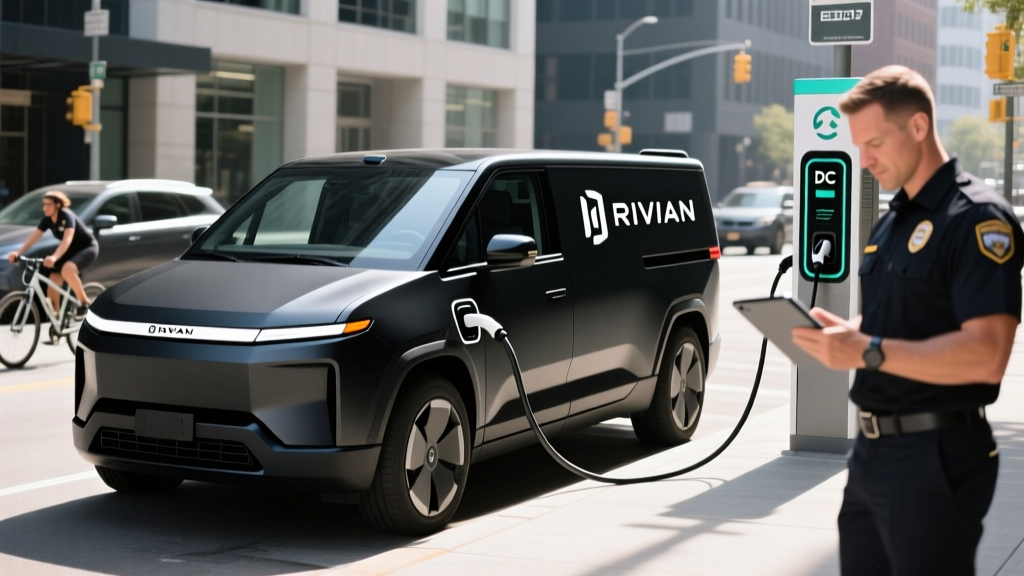
The "EV Amazon van" is the Rivian EDV (Electric Delivery Van), a purpose-built battery-electric commercial vehicle developed exclusively for Amazon's last-mile delivery fleet. As of early 2026, Rivian has delivered over 20,000 EDVs to Amazon across three sizes — the EDV-500, EDV-700, and EDV-900 — with the EDV-700 being the most common. The van offers an EPA-estimated up to 161 miles of range (EDV-700), a 135 kWh NMC lithium-ion battery, and DC fast charging at up to 125 kW. It is not currently available for consumer purchase; it's sold only to Amazon under an exclusive contract that was amended in 2024 to allow Rivian to sell variants to other fleets starting in 2026.
EDV Specs: Range, Battery, Charging & Performance
The Rivian EDV comes in three configurations, named for their approximate cargo volume in cubic feet. All share the same fundamental electric architecture but differ in wheelbase, roof height, and payload capacity.
| Spec | EDV-500 | EDV-700 | EDV-900 |
|---|---|---|---|
| Battery (usable) | ~90 kWh (NMC) | ~135 kWh (NMC) | ~135 kWh (NMC) |
| EPA Range | ~120 mi | ~161 mi | ~150 mi |
| Peak DC Fast Charge | 125 kW | 125 kW | 125 kW |
| 10–80% DC Charge Time | ~35 min | ~45 min | ~45 min |
| Level 2 AC Charging | ~11 kW | ~11 kW | ~11 kW |
| Motor Output | ~250 hp | ~250 hp | ~250 hp |
| Cargo Volume | ~500 cu ft | ~700 cu ft | ~900 cu ft |
| Payload Capacity | ~2,500 lb | ~2,700 lb | ~2,800 lb |
Real-World Range Reality
The EDV-700's EPA-estimated 161 miles assumes a mix of stop-and-go urban driving, which is actually favorable for EVs thanks to regenerative braking. In real-world fleet testing, Amazon drivers report 130–150 miles on a full charge in temperate climates with a typical delivery route load. In cold weather (below 30°F), expect 15–25% range reduction, bringing usable range down to approximately 100–125 miles. This is sufficient for most urban last-mile routes (typically 60–100 miles/day) but requires careful route planning in northern climates during winter.
Why Amazon Chose Rivian — and What It Means for Other Fleets
Amazon ordered 100,000 EDVs from Rivian in 2019, making it the largest single EV fleet order in history at the time. The exclusivity clause locked out competitors like FedEx, UPS, and smaller logistics companies. However, in late 2024, Rivian and Amazon renegotiated the agreement, allowing Rivian to begin selling EDV variants to other commercial fleets starting in 2026.
This matters because the commercial van market is enormous. The U.S. sees roughly 1.2 million commercial van sales annually, and fleet operators are under increasing pressure to reduce emissions — especially in states with clean-fleet mandates like California's Advanced Clean Trucks regulation. The EDV competes against:
- Ford E-Transit: EPA range ~126 mi, 68 kWh battery, MSRP ~$48,000–$55,000 (widely available)
- Mercedes-Benz eSprinter: EPA range ~200+ mi (estimated), 113 kWh battery, starting ~$70,000+
- BrightDrop Zevo 600 (GM): EPA range ~250 mi, ~120 kWh battery (limited availability)
| Cost Factor | Rivian EDV-700 (EV) | Ford Transit 250 (Gas) | Difference |
|---|---|---|---|
| Fuel/Energy (25,000 mi/yr) | ~$2,250 (at $0.13/kWh avg) | ~$4,500 (at $3.50/gal, 14 MPG) | EV saves ~$2,250/yr |
| Maintenance | ~$600/yr | ~$1,800/yr | EV saves ~$1,200/yr |
| Insurance | ~$2,400/yr | ~$1,900/yr | EV costs ~$500/yr more |
| Depreciation (5-yr est.) | ~$8,000/yr | ~$5,500/yr | EV costs ~$2,500/yr more |
| Net Annual Cost Difference | EV saves ~$450/yr net | ||
The savings narrow significantly when you factor in higher upfront purchase price and steeper depreciation on commercial EVs, which have less established resale markets. Fleet operators running 30,000+ miles per year see the best economics, while low-mileage routes may not justify the premium.
Charging Infrastructure: The Hidden Cost for Fleet Buyers
The EDV charges at up to 125 kW DC, which is moderate by 2026 passenger-EV standards but appropriate for overnight depot charging and midday top-ups. Here's what that means in practice:
| Level | Power (kW) | Miles Added per Hour | Typical Use Case |
|---|---|---|---|
| Level 1 (120V) | ~1.4 kW | ~4 mi/hr | Not practical for fleet use |
| Level 2 (240V, 48A) | ~11 kW | ~32 mi/hr | Overnight depot charging (~12–14 hrs for full charge) |
| DC Fast Charge | Up to 125 kW (peak) | ~180 mi/hr (at peak) | Midday top-up; 10–80% in ~45 min |
For fleet operators, the real infrastructure question is depot charging. Installing 10–20 Level 2 chargers at a distribution center can cost $50,000–$200,000+ depending on whether the facility needs a panel upgrade or transformer replacement. Many utilities offer commercial EV charging incentives and demand-management tariffs that can reduce operating costs significantly.
The EDV uses the CCS1 connector for DC fast charging and a J1772 inlet for Level 2. Rivian has indicated that future EDV variants may adopt the NACS (Tesla-style) connector as the industry standardizes on it, but current production models remain CCS1.
Total Cost of Ownership: 5-Year Fleet Breakdown
| Category | Rivian EDV-700 | Ford Transit 250 Gas |
|---|---|---|
| Purchase Price (est. fleet) | $70,000–$80,000 | $42,000–$48,000 |
| Federal Tax Credit (§30D commercial) | Up to $7,500* | $0 |
| Fuel/Energy (5 yr) | $11,250 | $22,500 |
| Maintenance (5 yr) | $3,000 | $9,000 |
| Insurance (5 yr) | $12,000 | $9,500 |
| Depreciation (5 yr) | $40,000 | $27,500 |
| Charging Infrastructure (amortized per van) | $5,000–$10,000 | $0 |
| Estimated 5-Year TCO | $143,750–$153,750 | $110,500 |
*Commercial clean vehicle credit under IRC §45W (not §30D) applies to fleet purchases; see IRS guidance on the commercial clean vehicle credit. Eligibility depends on battery sourcing, vehicle weight, and MSRP caps. Consult a tax professional.
The numbers show that the EDV carries a significant upfront premium — roughly $25,000–$40,000 more than a gas Transit over five years, even after fuel and maintenance savings. The economics improve with higher annual mileage (30,000+ mi/yr), lower electricity rates (under $0.10/kWh in some utility districts), and available state/fleet incentives. California's Clean Transportation Program, for example, has offered vouchers of $20,000–$75,000 per commercial EV in past funding rounds.
Common Misconceptions About the Amazon EV Van
| Myth | Fact |
|---|---|
| "You can buy an Amazon EV van for personal use." | As of 2026, the Rivian EDV is sold only to commercial fleets. Amazon's exclusivity has loosened, but consumer sales are not available. If you want a Rivian, the R1S (SUV) and R1T (truck) are the consumer options. |
| "The van has 300+ miles of range like a Tesla." | The EDV-700 achieves ~161 miles EPA. Commercial vans prioritize cargo volume and payload over range. Most last-mile routes cover 60–100 miles daily, making this sufficient with proper route planning. |
| "EV vans break down less because they have fewer parts." | While EVs eliminate oil changes, transmissions, and exhaust systems, the EDV has faced real-world issues including software glitches, suspension wear under heavy payloads, and thermal management challenges in extreme heat. Fleet maintenance is lower but not zero. |
| "Charging takes too long for delivery schedules." | Most fleet EDVs charge overnight at Level 2 (10–14 hours for a full charge). Midday DC fast charging adds ~100 miles in ~30 minutes. Route design typically accounts for this, with vans returning to depot during lunch breaks or shift changes. |
| "The Amazon van drives itself." | The EDV includes SAE Level 2 driver-assistance features — adaptive cruise control, lane-keeping, and automatic emergency braking. The driver must remain fully engaged at all times. It is not autonomous or self-driving. |
Driver-Assistance ≠ Self-Driving
The Rivian EDV's driver-assistance suite is SAE Level 2 — meaning the system can assist with steering and acceleration simultaneously, but the human driver must monitor the road and be prepared to take over instantly. This is the same level as Tesla Autopilot, Ford BlueCruise, and GM Super Cruise. Only fully driverless services like Waymo operate at Level 4. Fleet managers should train drivers on proper use and limitations of these systems.
Battery Longevity and Warranty for Commercial Use
Rivian equips the EDV with an NMC (nickel manganese cobalt) lithium-ion battery, chosen for its high energy density — important in a van where cargo volume and payload are at a premium. The battery warranty covers 8 years or 200,000 miles (whichever comes first) with a guaranteed minimum of 70% capacity retention. This is more generous than typical consumer EV warranties because commercial vehicles accumulate mileage rapidly.
Real-world degradation data from early Amazon fleet deployments (2022–2025) suggests the EDV battery loses approximately 8–12% capacity over the first 100,000 miles, which is consistent with NMC chemistry under frequent DC fast-charging cycles. Fleets that primarily use Level 2 overnight charging report slightly better retention (closer to 8–9% loss at 100k miles).
Battery replacement cost, should it be needed out of warranty, is estimated at $15,000–$22,000 for the 135 kWh pack — a significant expense that fleet operators should factor into long-term planning.
Decision Framework: Is the Rivian EDV Right for Your Fleet?
Choose the Rivian EDV If:
- Your daily routes are under 120 miles (accounting for cold-weather range loss)
- You operate in a state with clean-fleet mandates or strong commercial EV incentives (CA, NY, WA, NJ)
- You have depot or warehouse space where Level 2 chargers can be installed
- Your fleet runs 25,000+ miles per vehicle annually (fuel savings offset the purchase premium)
- You want to lock in lower and more predictable energy costs vs. volatile diesel/gas prices
Stick With Gas/Diesel Vans (or Wait) If:
- Your routes regularly exceed 150 miles per day or include long rural stretches
- You operate in extreme cold climates (northern MN, MT, AK) where range loss is severe and charging infrastructure is sparse
- You lack access to depot charging and cannot install it (leased facility, utility capacity limits)
- Your vehicles are driven under 15,000 miles/year — the fuel savings won't offset the price premium
- You need a van immediately — EDV availability for non-Amazon fleets is still ramping up in 2026
What First-Time Commercial EV Buyers Should Know
If you're evaluating the EDV or any commercial EV for the first time, here are the non-obvious realities:
- Utility coordination takes months. Before ordering vans, contact your utility about commercial EV charging rates and infrastructure requirements. Transformer upgrades can take 6–12 months and cost $20,000–$100,000+.
- kW vs. kWh matters. Your battery stores energy in kWh (kilowatt-hours — think "gallons in the tank"). Your charger delivers power in kW (kilowatts — think "flow rate of the pump"). A 125 kW charger fills a 135 kWh battery faster than an 11 kW Level 2, but the charge rate tapers as the battery approaches full — so peak kW is never sustained for the entire session.
- Preconditioning is critical. The EDV can precondition its battery before a DC fast-charge session, warming the cells to an optimal temperature for faster charging. In cold weather, skipping preconditioning can double your charge time.
- The §45W commercial clean vehicle credit (not the consumer §30D credit) applies to fleet purchases. It offers up to $7,500 for vehicles under 14,000 lb GVWR and up to $40,000 for heavier vehicles. Eligibility depends on battery component sourcing and critical mineral requirements — check current IRS §45W guidance and consult a tax professional.
- Insurance costs more. Commercial EV insurance premiums run 15–30% higher than equivalent gas vehicles, driven by higher repair costs and limited body-shop familiarity with EV high-voltage systems. Get quotes before committing.
Frequently Asked Questions
Can I buy the Amazon EV van as a private consumer?
No. As of 2026, the Rivian EDV is available only to commercial fleet operators. Amazon's exclusivity agreement has been amended to allow Rivian to sell to other fleets, but there is no consumer variant planned. If you want a Rivian for personal use, the R1S SUV (starting ~$75,900) and R1T truck (starting ~$69,900) are the available options.
How does the EDV compare to the Ford E-Transit?
The Ford E-Transit offers a lower entry price (~$48,000–$55,000 vs. $70,000–$80,000 for the EDV) and wider dealer availability, but significantly less range (EPA ~126 miles vs. ~161 miles for the EDV-700) and a smaller 68 kWh battery. The E-Transit is a better fit for shorter, predictable urban routes. The EDV offers more cargo volume, more range, and a purpose-built design (vs. the E-Transit's adapted ICE chassis).
What is the real-world range in winter?
Expect 100–125 miles from the EDV-700 in temperatures below 30°F, a 15–25% reduction from the 161-mile EPA estimate. Cold weather increases cabin heating demand and slows battery chemistry. Fleets in cold climates should plan routes conservatively and ensure access to midday charging for longer routes.
How long does it take to fully charge the EDV?
On a Level 2 charger (11 kW), a full charge from empty takes approximately 12–14 hours — ideal for overnight depot charging. On a 125 kW DC fast charger, a 10–80% charge takes about 45 minutes. Charging above 80% slows significantly to protect battery health (the "charge curve taper"), so an 80–100% top-up on DC can add another 30+ minutes.
Does the Amazon van qualify for the federal EV tax credit?
Fleet purchases of the EDV may qualify for the IRC §45W Commercial Clean Vehicle Credit (not the consumer §30D credit). The credit is up to $7,500 for vehicles under 14,000 lb GVWR. Eligibility depends on battery sourcing requirements, and the rules are subject to change. Always verify current requirements on IRS.gov and consult a qualified tax professional before making purchase decisions based on credit availability.
Is the Rivian EDV reliable for daily commercial use?
Amazon has deployed over 20,000 EDVs and accumulated hundreds of millions of delivery miles. Publicly reported issues include software bugs (largely addressed via over-the-air updates), some suspension component wear under heavy loads, and isolated thermal management concerns in extreme desert heat. Overall, fleet uptime rates are reportedly above 90%, which is competitive with diesel vans but still below the 95%+ uptime some legacy fleet operators expect. Reliability continues to improve with software updates and design revisions in newer production batches.