The Quick Answer: What Electric Van Does Amazon Use?
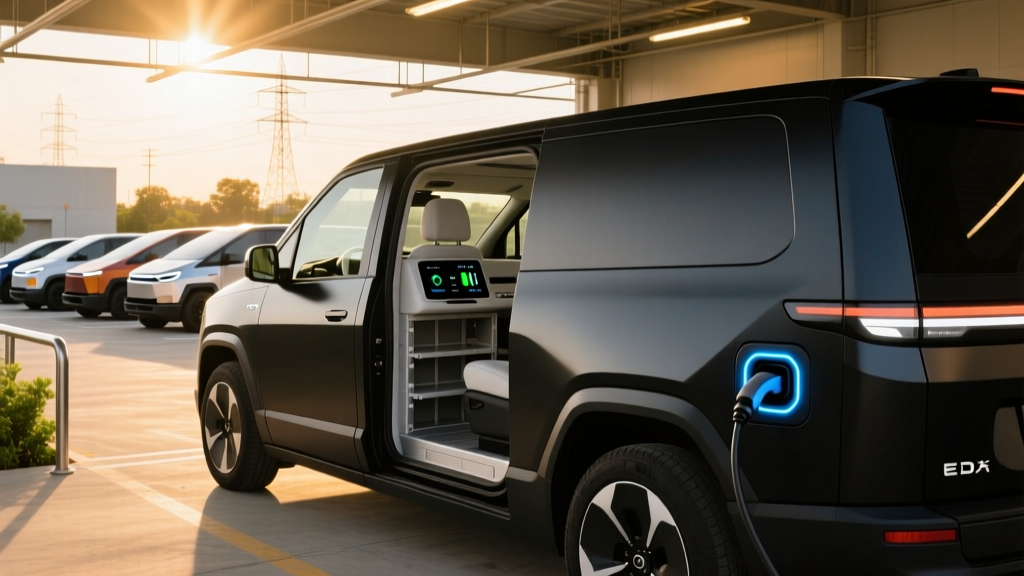
Amazon's electric delivery van is the Rivian EDV (Electric Delivery Van), custom-built by Rivian and deployed across U.S. cities since 2022. As of 2026, Amazon has taken delivery of over 15,000 EDVs as part of its order for 100,000 units by 2030. The EDV is a purpose-built, right-hand-drive commercial vehicle with an EPA-estimated range of approximately 150 miles, a ~115 kWh usable battery pack (LFP chemistry in newer builds), and DC fast charging capability up to 125 kW. It is not available for consumer purchase — it is built exclusively for Amazon's delivery fleet.
If you've seen a boxy, blue-and-smile-grille van gliding through your neighborhood dropping packages, you've seen the Rivian EDV in action. Amazon's massive commitment to electrifying its last-mile delivery network is the single largest commercial EV fleet order in history, and the EDV sits at the center of that strategy. But what exactly are the specs, how does it perform in real-world delivery conditions, and what does its existence tell us about the broader trajectory of commercial EVs? Let's break it down with real numbers.
Rivian EDV Specifications: Battery, Range, and Charging
| Specification | Rivian EDV (2026 Fleet Data) |
|---|---|
| Battery Capacity (usable) | ~115 kWh (LFP chemistry, newer builds) |
| EPA-Estimated Range | ~150 miles |
| Real-World Range (stop-and-go urban) | 130–160 miles depending on climate and load |
| Peak DC Fast Charge Rate | 125 kW |
| 10–80% DC Charge Time | ~45 minutes |
| Level 2 AC Charging | ~11.5 kW (overnight depot charging) |
| Motor / Drivetrain | Single motor, front-wheel drive |
| Horsepower | ~285 hp |
| Cargo Volume | Up to 640 cu ft (EDV-700 variant) |
| Payload Capacity | ~2,500 lbs |
| Body Variants | EDV-500, EDV-700, EDV-900 (cargo length designations) |
| Availability | Fleet-only (Amazon exclusive contract through 2030) |
Rivian originally launched the EDV with NMC (nickel manganese cobalt) battery chemistry but has transitioned newer production to LFP (lithium iron phosphate) cells. The trade-off is instructive: LFP offers lower energy density (slightly less range per pound) but superior cycle life — critical for a vehicle expected to run 6 days a week, 300+ days a year. LFP also tolerates repeated charging to 100% State of Charge without the same degradation concerns as NMC, which is ideal for depot-charged fleet vehicles that top off every night.
Real-World Range Reality: The EDV's ~150-mile EPA estimate holds up reasonably well in urban stop-and-go delivery routes, where regenerative braking recovers energy at each stop. In hot climates like Phoenix or Dallas with A/C running and a full cargo load, expect closer to 130 miles. In cold northern routes (Chicago, Minneapolis in winter), range can drop 15–25%, landing around 115–130 miles. Amazon mitigates this by sizing routes to stay within the van's reliable range envelope and charging at depots overnight.
Why Amazon Chose Rivian: The Fleet Economics
Amazon's $1.8 billion+ investment in Rivian wasn't just an environmental gesture — it was a total-cost-of-ownership calculation. Last-mile delivery vans run 70–100 miles per day on average, with hundreds of stops. That usage pattern makes the economics of electrification compelling.
| Cost Factor | Rivian EDV (Electric) | Conventional Diesel/Gas Van (e.g., Mercedes Sprinter) |
|---|---|---|
| Estimated Vehicle Cost | ~$65,000–$75,000 (fleet contract, undisclosed) | $45,000–$55,000 |
| Fuel/Energy Cost per Mile | $0.08–$0.12 (depot electricity at ~$0.12/kWh) | $0.22–$0.30 (diesel at ~$3.80/gal, 15 MPG) |
| Annual Fuel/Energy (20,000 mi/yr) | $1,600–$2,400 | $4,400–$6,000 |
| Maintenance Cost per Mile | $0.05–$0.08 (no oil, fewer brake replacements via regen) | $0.15–$0.20 (oil changes, transmission, brakes, DEF fluid) |
| Annual Maintenance (20,000 mi/yr) | $1,000–$1,600 | $3,000–$4,000 |
| Estimated 5-Year Operating Cost | $13,000–$20,000 | $37,000–$50,000 |
The math is stark: even with a higher upfront purchase price, the EDV saves Amazon an estimated $4,000–$6,000 per vehicle per year in fuel and maintenance alone. Over a 10-year fleet lifecycle and 100,000 vehicles, that's billions in operational savings. This is the core economic argument for commercial fleet electrification — the savings scale with utilization. A delivery van that never sits idle is the ideal EV use case.
Amazon also benefits from the Commercial Clean Vehicle Credit (§45W), which provides up to $7,500 for qualifying commercial EVs under 14,000 lbs GVWR and up to $40,000 for heavier vehicles. Fleet purchasers have different eligibility rules than consumer buyers under §30D, and Amazon's tax position allows it to monetize these credits fully.
How the EDV Compares to Gas and Diesel Delivery Vans
| Attribute | Rivian EDV | Ford E-Transit | Mercedes Sprinter (Diesel) |
|---|---|---|---|
| Powertrain | Battery Electric (LFP) | Battery Electric (NMC) | Turbodiesel I4 |
| Battery / Tank | ~115 kWh | 68 kWh usable | 24.5-gal diesel tank |
| Range | ~150 mi | ~126 mi (EPA) | ~370 mi |
| Peak DC Charge | 125 kW | 115 kW | N/A (5-min refuel) |
| 10–80% Charge | ~45 min | ~45 min | N/A |
| Cargo Volume | Up to 640 cu ft | Up to 487 cu ft | Up to 533 cu ft |
| Maintenance Complexity | Low | Low | High |
| Tailpipe Emissions | Zero | Zero | NOx, particulates, CO₂ |
The Ford E-Transit is the EDV's closest public-market competitor, but it carries a smaller battery and shorter range, making it better suited for shorter urban routes. The Sprinter's range advantage is real and relevant for rural or long-haul routes — EVs have not yet conquered the 300+ mile daily route. But for the dense urban and suburban last-mile routes that define Amazon's delivery network, the EDV's 150 miles is sufficient, and the per-mile operating cost advantage is decisive.
Real-World Ownership: What Makes Fleet EVs Work (and Where They Struggle)
What Works
- Depot charging eliminates public charging dependence. Amazon installs Level 2 chargers at its delivery stations. Vans return each evening, plug in, and are full by morning. No public charging network reliability issues, no broken stalls, no app friction.
- Predictable routes match predictable range. Delivery routes are planned algorithmically. Amazon can ensure routes stay within the EDV's range envelope, accounting for weather and load.
- Regenerative braking extends brake life dramatically. In stop-and-go urban delivery (hundreds of stops per day), regen braking means the friction brakes are barely used. Some fleet operators report brake pad life extending 3–5x compared to diesel vans.
- Driver experience. Rivian designed the EDV with extensive driver input: a right-hand-drive layout for curb-side delivery, a low step-in height, a walk-through bulkhead, and a large windshield for visibility. Drivers consistently report preferring the EDV over legacy vans.
Where Limitations Persist
- Cold-weather range loss is real. In northern U.S. markets, winter range drops of 15–25% require route adjustments or mid-day opportunity charging. The EDV uses a heat pump for cabin heating (more efficient than resistive heating), but battery chemistry itself is less efficient in cold temperatures.
- Charging infrastructure buildout is expensive. Equipping a single delivery depot with 50+ Level 2 chargers requires significant electrical infrastructure upgrades — potentially new transformers, switchgear, and utility service upgrades. Amazon has absorbed this cost, but smaller fleets may find it prohibitive.
- Rural and long-distance routes remain diesel territory. If a route exceeds 160–180 miles or lacks depot charging access, the EDV isn't the right tool. Amazon still relies on conventional vehicles for these routes.
- Battery degradation over high-cycle use. Daily charging and discharging at high utilization means the battery will experience more cycles than a consumer EV. LFP chemistry mitigates this (3,000+ cycles to 80% State of Health), but eventual battery replacement or refurbishment at 8–10 years is a fleet cost factor.
What Amazon's EDV Signals for the Broader EV Market
Amazon's EDV program is a real-world laboratory for commercial EV adoption at scale, and several lessons apply directly to the consumer and small-business EV market:
- LFP is the fleet chemistry of choice. When cycle life and cost matter more than maximum range, LFP wins. This is why Tesla, Ford, and Rivian have all moved to LFP for standard-range consumer models as well.
- Depot/home charging is the backbone. The fleets that succeed with EVs are those that control their charging. The same logic applies to consumers: if you can install a Level 2 home charger, EV ownership is dramatically simpler and cheaper than relying on public charging.
- Electric drivetrains simplify maintenance. No oil changes, no transmission fluid, no exhaust system, no DEF fluid, fewer brake replacements. The maintenance savings that Amazon realizes at fleet scale are available to individual EV owners too.
- Range needs are often less than we think. The average American drives ~37 miles per day (FHWA data). The EDV proves that even a 150-mile range is sufficient for a full day of demanding commercial work — most consumer daily needs are far lower.
Decision Framework: Is an Electric Van or Commercial EV Right for Your Fleet?
Choose an electric commercial van (like the Ford E-Transit or BrightDrop Zevo) if:
- Your daily routes are under 120 miles round-trip
- You have depot or warehouse space where Level 2 chargers can be installed
- Your routes are urban/suburban with frequent stops (maximizing regen braking savings)
- You plan to hold vehicles 5+ years (to recoup higher upfront cost through operating savings)
- You can leverage the §45W Commercial Clean Vehicle Credit or state fleet incentives
Stick with gas/diesel vans (or consider PHEV options) if:
- Your routes regularly exceed 180 miles per day
- You operate in extreme cold climates without route flexibility
- You lack access to depot charging and cannot invest in infrastructure
- Your fleet turns over vehicles in under 3 years (insufficient time to recoup EV premium)
- You serve rural areas with no charging infrastructure and long distances between stops
For small business owners eyeing commercial EVs, the Ford E-Transit (starting ~$45,000 MSRP in 2026) remains the most accessible electric cargo van on the market. The BrightDrop Zevo 600 (formerly backed by GM) offers a larger 250-mile range option for qualifying fleets. Neither matches the EDV's custom Amazon-specific design, but both apply the same economic principles.
Common Misconceptions About Amazon's Electric Vans
| Myth | Fact |
|---|---|
| "You can buy the Amazon Rivian van." | The EDV is built exclusively for Amazon under a contractual agreement through 2030. Rivian has signaled it may offer a commercial van to other fleets after the exclusivity period, but no consumer version exists. |
| "Electric vans can't handle real delivery workloads." | The EDV handles 150+ stops per day, carries up to 2,500 lbs of payload, and operates in Phoenix heat and Minneapolis cold. Over 15,000 units are in active daily service as of 2026. |
| "Amazon's EV push is just greenwashing." | The economic case is primary: $4,000–$6,000 annual savings per vehicle in fuel and maintenance. The emissions reduction is a genuine co-benefit, but the TCO math drives the decision. |
| "The EDV uses Tesla Superchargers." | The EDV charges at Amazon's private depot charging infrastructure using CCS1 connectors. It does not use the public Supercharger network. |
| "Electric vans are slower and less capable." | The EDV produces ~285 hp with instant electric torque, making it quicker off the line than most diesel cargo vans. Its low center of gravity (battery pack under the floor) improves stability. |
Frequently Asked Questions
Can I buy the Rivian EDV that Amazon uses?
No. The Rivian EDV is built under an exclusive contract with Amazon through at least 2030. Rivian has indicated it may develop a commercial van for broader fleet sales in the future, but as of 2026, the EDV is Amazon-only. Consumers interested in Rivian's vehicles can purchase the R1S (SUV) or R1T (pickup truck).
How much does it cost Amazon to charge an EDV per day?
Assuming a daily consumption of ~100 kWh (covering ~100 miles of stop-and-go delivery) and depot electricity costs of $0.10–$0.14/kWh (commercial rates vary by region), daily charging costs approximately $10–$14 per vehicle. Compare that to $25–$35 per day in diesel for a comparable Sprinter covering the same route.
What happens if an EDV runs out of charge on a route?
Amazon's route-planning algorithms are designed to keep vans well within their range envelope. However, if an EDV does deplete its battery, Amazon has roadside assistance protocols in place, and some delivery stations have DC fast chargers for mid-day opportunity charging. The 125 kW DC fast charging capability can add ~60 miles of range in roughly 20 minutes.
Does the Rivian EDV have autonomous driving features?
The EDV is equipped with driver-assistance features consistent with SAE Level 2 automation — including adaptive cruise control and lane-keeping assist. It is not a self-driving vehicle. The driver must remain fully engaged at all times. This is the same automation level found in consumer vehicles with features like Tesla Autopilot or Ford BlueCruise.
How long will the EDV's battery last before needing replacement?
With LFP chemistry, the EDV's battery is rated for approximately 3,000+ full charge cycles before degrading to 80% of original capacity. At one cycle per day, 300 days per year, that translates to roughly 10 years of service before significant capacity loss. Rivian's commercial battery warranty covers 8 years or 200,000 miles (whichever comes first), though exact fleet contract terms are not public.
What other companies use electric delivery vans?
Beyond Amazon, FedEx has deployed BrightDrop Zevo vans and Ford E-Transits, UPS has ordered electric vans from multiple manufacturers including Arrival (before its financial difficulties) and Workhorse, and USPS is receiving the first of its Next Generation Delivery Vehicles from Oshkosh Defense, which includes a mix of electric and low-emission ICE vehicles. The commercial last-mile electrification trend is accelerating across all major carriers.