The Quick Verdict: Rivian's Purpose-Built Delivery Workhorse
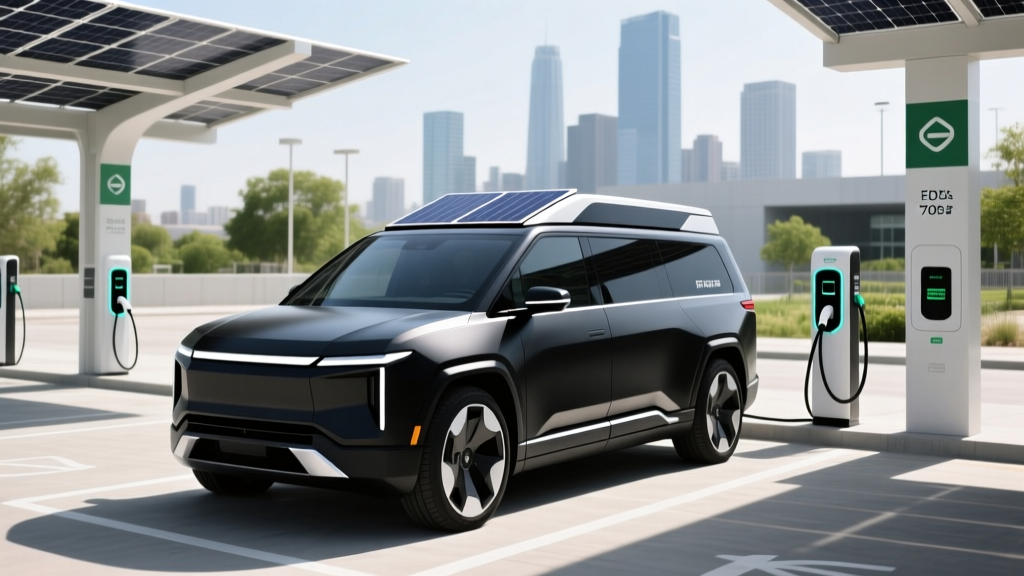
The Rivian Electric Delivery Van (EDV) 700 is not a consumer vehicle — it is a ground-up commercial platform engineered exclusively for last-mile logistics. Born from a massive partnership with Amazon, the EDV 700 has become the backbone of one of the largest electric fleet deployments in North America, with thousands of units already on the road as of 2026. For fleet operators evaluating electrification, the EDV 700 offers a compelling blend of practical cargo volume, predictable urban range, and purpose-built ergonomics. But it also comes with constraints: limited availability outside of anchor partnerships, a range envelope that demands route discipline, and charging infrastructure requirements that can make or break adoption.
This profile breaks down every specification fleet managers need to evaluate — from real-world range and charging curves to cargo dimensions and total cost of ownership. Whether you're managing a 50-vehicle delivery operation or researching the commercial EV landscape, here's what the EDV 700 actually delivers.
Range, Battery & Real-World Efficiency
The EDV 700 carries a lithium-ion battery pack with approximately 90.5 kWh of usable capacity. The chemistry is an NMC (nickel-manganese-cobalt) formulation optimized for the high-cycle-duty demands of daily delivery routes — prioritizing longevity and thermal stability over maximum energy density. The EPA-estimated range sits at roughly 150 miles on a full charge, though Rivian has also referenced up to 161 miles depending on configuration and payload.
EPA Estimate: ~150 miles
Urban delivery route (stop-and-go, regen-heavy): 140–155 miles — regenerative braking recovers meaningful energy in low-speed environments
Highway/sustained 55+ mph: 110–125 miles — aerodynamic drag from the box-van profile is significant
Cold weather (below 32°F / 0°C): 100–120 miles — battery chemistry efficiency drops and cabin/cargo heating draws additional power
Fleet operators should plan routes around a conservative 120-mile usable window to preserve a 20% state-of-charge buffer for battery longevity and unexpected detours.
| Attribute | Specification |
|---|---|
| EPA Estimated Range | ~150 miles |
| Battery Capacity (Usable) | ~90.5 kWh |
| Battery Chemistry | NMC (nickel-manganese-cobalt) |
| Max DC Fast Charge Rate | ~125 kW peak |
| 10–80% DC Fast Charge Time | ~40–45 minutes |
| Level 2 Charge Rate | ~11.5 kW (approx. 25–30 mi/hr) |
| Drivetrain | Single-motor FWD (front-wheel drive) |
| Horsepower | ~275 hp |
| 0–60 mph | Not published (not a performance focus) |
| Efficiency | ~2.0–2.2 kWh/mile (urban delivery cycle) |
| Cargo Volume | ~540 cu ft (EDV 700 configuration) |
| Payload Capacity | ~2,500 lbs (approx.) |
| Battery/Powertrain Warranty | 8 years / 100,000 miles (estimated fleet terms) |
Charging: DC Fast, Depot Level 2 & Infrastructure Needs
For fleet operations, charging strategy is everything. The EDV 700 supports DC fast charging at up to approximately 125 kW peak. In practice, the charge curve is relatively flat through the mid-state-of-charge range, then tapers noticeably above 80% to protect cell health. A 10–80% session takes roughly 40–45 minutes at a capable charger — fast enough for mid-shift top-ups but designed primarily for overnight depot charging.
| Charging Method | Power (kW) | Time / Rate | Use Case |
|---|---|---|---|
| DC Fast Charge (peak) | ~125 kW | 10–80% in ~40–45 min | Mid-shift top-up, route extension |
| Level 2 (Depot / Warehouse) | ~11.5 kW | ~25–30 miles per hour of charging | Overnight full charge (~8–10 hours) |
| Level 1 (120V — emergency) | ~1.4 kW | ~3–4 miles per hour | Not practical for fleet ops |
Most EDV 700 fleet deployments rely on depot-based Level 2 infrastructure — typically 11.5 kW wall connectors or pedestal chargers installed at delivery stations. A full overnight charge from 10% to 100% takes approximately 8–10 hours, which aligns well with standard fleet downtime. For operators considering DC fast charging, plan for CCS1 connector compatibility (the EDV 700 uses the CCS standard, not NACS).
Infrastructure note: Depot electrification for a fleet of EDV 700s requires significant electrical service upgrades. A 50-vehicle depot charging at 11.5 kW per vehicle simultaneously demands roughly 575 kW of continuous power — a commercial-grade service that may require utility coordination, transformer upgrades, and potentially demand-charge management strategies. Work with a licensed electrical engineer and your utility provider early in the planning process.
Performance, Drivetrain & Driving Dynamics
The EDV 700 is a single-motor, front-wheel-drive platform producing approximately 275 horsepower. Rivian has not published an official 0–60 mph time, and acceleration performance is not a design priority — this is a vehicle optimized for low-speed urban maneuverability, cargo access, and driver comfort over hundreds of daily stops.
What matters more in practice:
- Regenerative braking: Strong regen enables near one-pedal driving in stop-and-go traffic, reducing brake wear and recovering energy. Fleet operators report significantly lower brake maintenance costs compared to ICE equivalents.
- Turning radius: The EDV 700 is designed for tight urban streets and loading docks. The wheelbase and steering geometry prioritize maneuverability over highway stability.
- Ride height and step-in: Low step-in height and a flat load floor reduce driver fatigue — a critical ergonomics factor for drivers making 150+ stops per day.
- Noise: The electric powertrain is dramatically quieter than a gas or diesel step-van, reducing driver fatigue and enabling early-morning or late-evening deliveries in noise-sensitive neighborhoods.
Cargo Space, Dimensions & Fleet Ergonomics
The EDV 700 sits in the middle of Rivian's three-van EDV lineup (the EDV 500 is smaller; the EDV 900 is larger). The 700 configuration offers approximately 540 cubic feet of cargo volume with a payload capacity around 2,500 pounds. The cargo area features:
- Flat, low load floor for easy cart and pallet access
- Wide rear door opening for standardized delivery bins
- Integrated shelving and bin mounting points designed alongside Amazon's delivery workflow
- Driver-side curb-side entry with low step-in height
- Climate-controlled driver compartment separated from the cargo area
The cabin is spartan but functional — a large central touchscreen handles navigation, route management, and vehicle settings. The instrument cluster is minimal, with a focus on state-of-charge, range, and delivery-route integration. Rivian's driver-assistance suite includes adaptive cruise control, lane-keeping assist, automatic emergency braking, and a 360-degree camera system — all SAE Level 2 features that require active driver supervision.
Pricing, Total Cost of Ownership & Tax Credit Eligibility
The EDV 700 is not available for individual consumer purchase. It is sold exclusively through fleet and commercial channels, with Amazon as the anchor customer. Pricing is negotiated through fleet contracts and is not publicly listed on a traditional MSRP basis. Industry estimates place the per-unit cost in the range of $70,000–$90,000+ depending on configuration, volume, and contract terms — competitive with a comparably equipped ICE step-van when total cost of ownership is factored in.
| Cost Factor | EDV 700 (Electric) | Comparable ICE Step-Van |
|---|---|---|
| Estimated Purchase Price | $75,000–$85,000 | $55,000–$65,000 |
| Fuel / Energy (5 yr, 75k mi) | $6,000–$9,000 (electricity) | $18,000–$24,000 (gas/diesel) |
| Maintenance (5 yr) | $3,000–$5,000 | $8,000–$12,000 |
| Estimated 5-Year Total | $84,000–$99,000 | $81,000–$101,000 |
Federal tax credit note: The IRS §30D clean vehicle credit applies primarily to light-duty consumer vehicles with specific MSRP caps ($80,000 for vans/SUVs/pickups), buyer income limits, and battery-sourcing/critical-mineral requirements. Commercial fleet purchases may instead qualify under the §45W commercial clean vehicle credit, which offers up to $40,000 for qualifying commercial vehicles — but eligibility depends on vehicle weight, use classification, and sourcing rules. Fleet buyers should consult a tax professional and review current IRS guidance before modeling incentives into their business case. Rules are subject to change annually.
Warranty, Reliability & Fleet Support
Rivian provides fleet-oriented warranty coverage estimated at 8 years / 100,000 miles for the battery pack and electric powertrain — consistent with industry norms for commercial EVs. The battery warranty typically guarantees a minimum capacity retention threshold (commonly 70% state-of-health) over the coverage period.
For fleet operators, Rivian offers dedicated commercial support including:
- Over-the-air (OTA) software updates for performance optimization and feature additions
- Fleet management integration APIs for route planning and state-of-charge monitoring
- Mobile service and depot-based maintenance support
- Telematics and driver behavior data
Reliability data is still maturing — the EDV platform launched in 2022–2023, so long-term durability beyond 150,000+ miles is projected but not yet widely validated in public data. Early fleet reports suggest the electric drivetrain itself is robust, with the primary maintenance savings coming from eliminated oil changes, reduced brake wear, and fewer moving parts.
Who the EDV 700 Suits — and Who Should Look Elsewhere
- Purpose-built for high-stop-count urban delivery — ergonomics are class-leading
- Significant fuel and maintenance cost savings vs. ICE step-vans over 5+ years
- Quiet operation enables extended delivery windows in residential areas
- Strong regenerative braking reduces brake wear and energy consumption
- OTA updates and fleet telematics integration
- Zero tailpipe emissions — supports corporate sustainability mandates
- Not available for individual consumer purchase — fleet/contract only
- ~150-mile range limits route flexibility; requires disciplined planning
- Depot charging infrastructure investment is substantial for multi-vehicle fleets
- Cold-weather range loss of 20–30% can disrupt winter route schedules
- Long-term reliability data still limited (platform is ~3 years old as of 2026)
- DC fast charge speed (~125 kW) is moderate — not designed for rapid mid-route charging
Look elsewhere if: Your routes regularly exceed 150 miles, you operate in extreme cold climates without garage parking, or you need a vehicle available for individual/small-business purchase without a fleet contract.
Competitive Landscape: EDV 700 vs. Alternatives
The EDV 700's direct competitive set is narrow — purpose-built electric delivery vans are still an emerging category:
- BrightDrop Zevo 600 (GM): Similar cargo class, ~250-mile EPA range, broader commercial availability. A strong alternative for operators needing longer range.
- Mercedes-Benz eSprinter: ~200-mile range, widely available, but less purpose-built for high-stop delivery workflows.
- Ford E-Transit: ~126-mile EPA range, lower price point, broadly available. A practical option for shorter routes with lower upfront investment.
- Canoo Lifestyle Delivery Vehicle: Still ramping production; limited availability and unproven at scale.
The EDV 700's edge is its workflow integration — particularly for operations modeled on Amazon's delivery station approach. For independent fleet operators, the BrightDrop Zevo 600 or Ford E-Transit may offer better availability and range flexibility.
Frequently Asked Questions
What is the real-world range of the Rivian EDV 700?
The EPA estimate is approximately 150 miles. In real-world urban delivery use with frequent stops and regenerative braking, expect 140–155 miles. Highway driving reduces this to 110–125 miles, and cold weather can drop range to 100–120 miles. Fleet planners should budget around a 120-mile usable window to preserve battery health.
How fast does the EDV 700 charge?
DC fast charging peaks at approximately 125 kW, reaching 10–80% in about 40–45 minutes. Level 2 depot charging at 11.5 kW adds roughly 25–30 miles of range per hour, with a full overnight charge taking 8–10 hours. The EDV 700 uses a CCS1 connector.
Does the Rivian EDV 700 qualify for the federal EV tax credit?
The standard §30D consumer credit has MSRP, income, and sourcing caps that may not apply to commercial fleet purchases. However, the §45W commercial clean vehicle credit may provide up to $40,000 per qualifying vehicle. Eligibility depends on weight classification, use, and battery sourcing rules. Consult a tax professional for your specific fleet structure.
Can I buy a Rivian EDV 700 as an individual?
No. The EDV 700 is sold exclusively through commercial fleet channels. Individual consumers cannot purchase one through Rivian's standard retail process. Amazon remains the largest customer, though Rivian has indicated interest in expanding fleet sales to other commercial operators.
What is the biggest drawback of the EDV 700?
Range and availability. The ~150-mile EPA range requires disciplined route planning, especially in cold weather or for highway-heavy routes. Additionally, the vehicle is not broadly available to small fleets or individual buyers — it remains primarily tied to large-scale commercial contracts.
How does the EDV 700 compare to the Ford E-Transit?
The Ford E-Transit offers a lower EPA range (~126 miles) but at a significantly lower purchase price and with broader dealer availability. The EDV 700 is more purpose-built for high-stop delivery workflows with superior cargo ergonomics, while the E-Transit is a more versatile, widely accessible option for shorter routes.