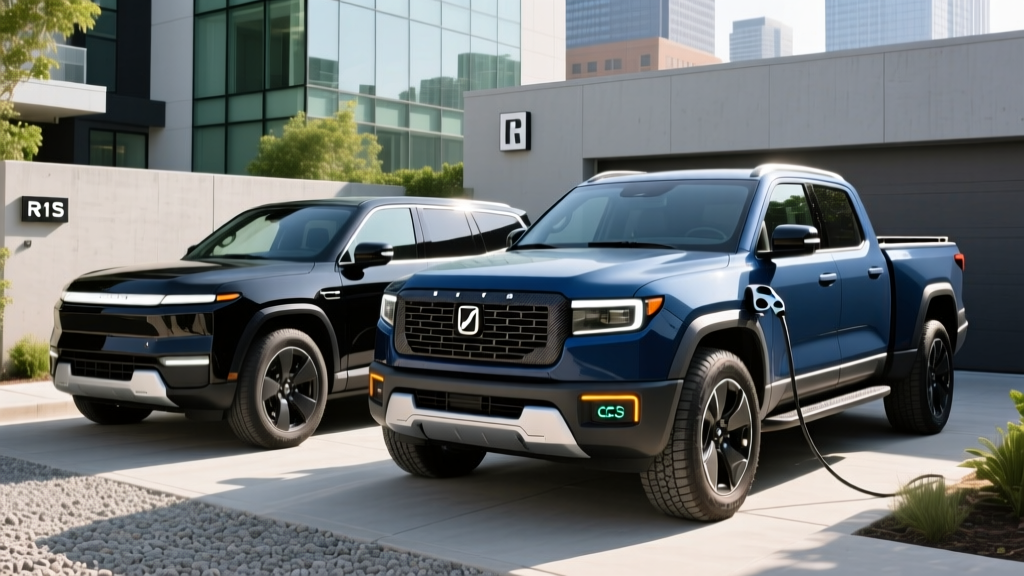
The Rivian Dual Motor powertrain has become the default choice for most R1S SUV and R1T truck buyers, and for good reason. It delivers all-wheel-drive capability, sub-5-second 0-60 mph acceleration, and over 300 miles of EPA range — all while undercutting the quad- and tri-motor variants by tens of thousands of dollars. But spec sheets only tell part of the story. After extensive time with the Gen 2 Rivian Dual Motor platform, here's the data-driven breakdown of what real ownership actually looks like in 2026.
Quick Verdict: Who the Rivian Dual Motor Is For
The Dual Motor R1S and R1T are built for outdoors-oriented families and adventurers who need genuine off-road capability, usable towing capacity (up to 7,700 lbs for the R1T), and enough range for multi-state road trips — without paying the premium for Rivian's tri- or quad-motor powertrains. If you're a daily commuter who also wants weekend trail access, this is the sweet spot in the lineup. If you primarily need a luxury urban cruiser with no towing or off-pavement plans, competitors like the BMW iX or Cadillac Lyriq may offer a quieter, more refined on-road experience at a lower entry price.
Rivian Dual Motor Spec Table: R1S vs R1T at a Glance
| Specification | R1S Dual Motor (Standard) | R1S Dual Motor (Max) | R1T Dual Motor (Standard) | R1T Dual Motor (Max) |
|---|---|---|---|---|
| EPA Range | ~330 miles | ~410 miles | ~330 miles | ~420 miles |
| Battery (Usable) | ~106 kWh (NMC) | ~141 kWh (NMC) | ~106 kWh (NMC) | ~141 kWh (NMC) |
| Horsepower | 533 hp | 533 hp | 533 hp | 533 hp |
| Torque | 610 lb-ft | 610 lb-ft | 610 lb-ft | 610 lb-ft |
| 0-60 mph | ~4.5 sec | ~4.6 sec | ~4.5 sec | ~4.6 sec |
| Max DC Fast Charge | ~220 kW | ~220 kW | ~220 kW | ~220 kW |
| 10-80% DC Time | ~21 min | ~42 min | ~21 min | ~42 min |
| Level 2 Home Charging | 11.5 kW (~25 mi/hr) | 11.5 kW (~25 mi/hr) | 11.5 kW (~25 mi/hr) | 11.5 kW (~25 mi/hr) |
| MPGe (Combined) | ~73 MPGe | ~70 MPGe | ~73 MPGe | ~70 MPGe |
| Towing Capacity | 7,700 lbs | 7,700 lbs | 7,700 lbs | 7,700 lbs |
| Base MSRP (2026) | $75,900 | $83,900 | $69,900 | $77,900 |
Note: Specs reflect the Gen 2 platform. Rivian periodically updates configurations; verify exact figures on Rivian's official R1S page or fueleconomy.gov before ordering.
Real-World Range: What the EPA Sticker Doesn't Tell You
EPA Estimate: 330 miles (Standard Battery) / 410 miles (Max Battery)
Real-World Expectation: 260–290 miles highway at 75 mph in mild weather; 210–240 miles in sub-freezing temperatures. Max pack owners can expect 320–360 miles highway in favorable conditions.
Rivian's EPA range figures for the Dual Motor are competitive, but large, heavy, boxy vehicles pay a steep efficiency penalty at highway speeds and in cold weather. In our experience, the Standard Battery Dual Motor R1S delivers roughly 2.2–2.4 kWh/mile at 70–75 mph on flat terrain in 65°F weather. That translates to about 260–290 real-world highway miles before you'd want to find a charger.
Cold weather compounds the loss. Without preconditioning the battery, sub-30°F temperatures can cut range by 25–35%, partly due to cabin heating demands and partly due to increased battery internal resistance. The R1S and R1T do include a heat pump, which helps mitigate cabin heating energy draw, but physics still wins in extreme cold. If you live in the northern tier and plan regular winter road trips, the Max Battery pack is strongly recommended — its 141 kWh usable capacity provides a much larger buffer.
Efficiency hovers around 73 MPGe combined for the Standard pack, which translates to roughly 46 kWh per 100 miles. That's less efficient than a Tesla Model Y (about 28 kWh/100mi) but typical for a 6,000+ lb adventure vehicle. You're trading efficiency for ground clearance, wading depth, and genuine off-road hardware.
Charging Speed: DC Fast Charging and Home Setup
Charging speed is where the Gen 2 Dual Motor shows meaningful improvement over early Rivian deliveries, but it still trails the fastest-charging competitors like the Hyundai Ioniq 5 (which peaks at 350 kW on 800V architecture).
| Charging Level | Power / Rate | Time / Miles Added | Notes |
|---|---|---|---|
| Level 1 (120V) | ~1.4 kW | ~3 miles per hour | Emergency / trickle only |
| Level 2 (240V, 48A) | 11.5 kW | ~25 miles per hour | Full Standard charge in ~10 hrs; Max in ~14 hrs |
| DC Fast Charge (Standard) | Peak ~220 kW | 10-80% in ~21 min | Curve tapers significantly above 80% |
| DC Fast Charge (Max) | Peak ~220 kW | 10-80% in ~42 min | Larger pack = longer absolute charge time |
The 220 kW peak charge rate on the Gen 2 platform is solid for road trips. On a 350 kW Electrify America or Tesla Supercharger (with NACS adapter), the Standard Battery pack will pull close to peak rate from roughly 10–50% SoC before tapering. Expect to add about 140–160 miles in a 15-minute stop with the Standard pack. The Max Battery, while offering far more total range, takes longer to charge in absolute terms — a 10-80% session takes roughly 42 minutes due to the larger energy volume, even at the same peak kW.
Home charging reality: At 11.5 kW on a Level 2 wall connector (requiring a 60A circuit), you'll recover about 25 miles of range per hour. For Standard pack owners who drive 40–60 miles daily, an overnight charge easily replenishes the battery. Max pack owners may want to ensure their home electrical panel can support the full 48A draw; a panel upgrade from 100A to 200A service can add $1,500–$3,500 to installation costs. Always consult a licensed electrician for final specifications.
Performance and Driving Dynamics
The Dual Motor setup puts one electric motor on each axle, delivering true all-wheel drive with torque vectoring capability. At 533 horsepower and 610 lb-ft of torque, the Dual Motor R1S and R1T hit 0-60 mph in approximately 4.5 seconds — quick enough to merge onto any freeway with authority and genuinely surprising for a vehicle weighing over 6,500 pounds.
Where the Dual Motor distinguishes itself from competitors is off-pavement. The air suspension provides up to 14.9 inches of ground clearance, and the vehicle can wade through 3+ feet of water. Rivian's quad-motor tank turns get the headlines, but the Dual Motor's brake-based torque vectoring and dedicated off-road drive modes (All-Purpose, All-Terrain, Snow, Sport) handle moderate trails, forest roads, and sand with genuine competence.
On-road, the ride is composed but firm. The air suspension soaks up rough pavement well, and the steering is precise if not particularly communicative. Road noise is noticeable at highway speeds — more so than in a BMW iX or Mercedes EQS SUV — a trade-off for the R1's rugged construction and all-terrain tire options. If you opt for the available all-terrain tires, expect a 10–15 mile reduction in real-world range compared to the standard all-season rubber.
Pricing, Trims, and Federal Tax Credit Eligibility
Rivian has streamlined its pricing structure for 2026, though the Dual Motor lineup still spans a wide range depending on battery pack and options.
| Configuration | Base MSRP | As-Tested (Typical) | §30D Credit Eligible? |
|---|---|---|---|
| R1T Dual Motor Standard | $69,900 | $73,000–$78,000 | Yes (if under MSRP cap) |
| R1T Dual Motor Max | $77,900 | $82,000–$88,000 | Yes (truck MSRP cap is $80,000) |
| R1S Dual Motor Standard | $75,900 | $79,000–$85,000 | Check — SUV MSRP cap is $80,000 |
| R1S Dual Motor Max | $83,900 | $89,000–$96,000 | Likely exceeds $80K SUV cap |
Federal §30D Tax Credit — Key Rules for 2026:
- MSRP Cap: $80,000 for trucks (R1T); $80,000 for SUVs/vans (R1S). Vehicles exceeding this cap are ineligible.
- Income Cap: $150,000 single / $225,000 head of household / $300,000 married filing jointly (modified AGI).
- Battery Sourcing: Critical minerals and battery components must meet phased-in domestic/free-trade sourcing thresholds. Rivian has worked to qualify, but eligibility can vary by build date and supply chain changes.
- Point-of-Sale Transfer: Buyers can transfer the credit to the dealer at purchase for an upfront price reduction, rather than waiting to claim it on their tax return.
- Verify before ordering: Check the latest eligibility list on IRS.gov clean vehicle credit page or consult a tax professional.
The R1T Dual Motor Standard is the clearest path to the full $7,500 credit, as its base MSRP of $69,900 sits comfortably under the $80,000 truck cap even with moderate options. The R1S Dual Motor Standard can qualify at base price, but popular option packages (Adventure package, premium interior, larger wheels) can push the MSRP above $80,000, disqualifying the vehicle. The Max Battery R1S at $83,900 base almost certainly exceeds the SUV cap. Always confirm the exact MSRP of your build configuration against the current IRS threshold.
Cargo, Passenger Space, and Daily Practicality
Both the R1S and R1T offer excellent practicality, though in different ways.
R1S (3-row SUV):
- Cargo behind 3rd row: ~10 cu ft
- Cargo behind 2nd row (3rd row folded): ~47 cu ft
- Cargo behind 1st row (all rear seats folded): ~84 cu ft
- Front trunk (frunk): ~11 cu ft
- 3rd-row legroom: ~30 inches (best for children on longer trips)
The R1S third row is usable for adults on short trips but tight for long drives. With all rows in use, cargo space is modest — a week's groceries for a family of five, but not much more. Fold the third row and you have a spacious two-row SUV with a large frunk for gear you want to keep separate from the cabin.
R1T (pickup truck):
- Bed length: ~4.5 feet (54 inches)
- Gear Tunnel (lockable, pass-through): ~11 cu ft
- Frunk: ~11 cu ft
- Max payload: ~1,760 lbs
The R1T's Gear Tunnel — a lockable compartment spanning the width of the vehicle between the cabin and bed — is a standout feature that no competitor offers. It's ideal for skis, camping gear, or muddy boots, and can be accessed from either side. The bed is shorter than a traditional midsize truck, but the combination of bed, Gear Tunnel, and frunk gives the R1T more total enclosed storage than any rival electric truck.
Tech, Driver Assistance, and Notable Drawbacks
Rivian's infotainment system runs on a custom 15.6-inch landscape touchscreen with a clean, responsive interface. Wireless Apple CarPlay and Android Auto are not supported — Rivian uses its own native software for navigation, media, and vehicle controls. The built-in navigation is solid and includes route planning with automatic charging stops, but the absence of CarPlay/Android Auto remains a pain point for buyers who prefer their phone's ecosystem.
Driver Assistance (SAE Level 2): Rivian's Driver+ system combines adaptive cruise control with lane centering on divided highways. It's a competent Level 2 system — meaning the driver must remain fully engaged and keep hands on the wheel. It is not autonomous driving. The system works well on long highway stretches but doesn't match the hands-free capability of GM's Super Cruise or Ford's BlueCruise on approved roads. Automatic lane changes require driver confirmation.
Important: Rivian Driver+ is an SAE Level 2 driver-assistance system. The driver must remain attentive, keep hands on the steering wheel, and be prepared to take over at all times. It is not self-driving. No production Rivian vehicle offers autonomous (Level 4) capability.
Notable drawbacks:
- No Apple CarPlay or Android Auto
- Rear-seat entertainment screens are not available
- Service center network is still expanding — rural owners may face long tow distances for warranty work
- Insurance premiums tend to run 15–25% higher than comparable non-electric SUVs/trucks
- Max Battery pack adds roughly 400 lbs, slightly reducing efficiency and increasing tire wear
How It Stacks Up Against Key Competitors
The Rivian Dual Motor doesn't have a direct rival — no other EV combines this level of off-road capability, towing, and range in a single package. But buyers cross-shop it against several alternatives:
- Tesla Model X: More range (up to 348 miles), faster Supercharger network, available third row. But less ground clearance, no serious off-road capability, and a polarizing interior.
- BMW iX xDrive50: Quieter, more refined on-road, excellent interior quality. But no off-road pretensions, less cargo space, and a higher starting price for AWD.
- Kia EV9 (AWD): Significantly cheaper (starting ~$60K), three rows, decent range (~280 mi AWD). But less power, no air suspension, and limited off-road ability.
- Ford F-150 Lightning: More traditional truck feel, larger bed, lower starting price. But less range (Standard Range ~240 mi), and the Lightning is being phased out in favor of Ford's next-gen platform.
If your priority is a do-everything adventure vehicle with genuine trail-riding chops and enough range for 300-mile road trips, the Rivian Dual Motor stands alone in its niche.
Warranty and Long-Term Ownership
Rivian provides the following coverage on the R1S and R1T:
- Battery & Drive Unit: 8 years / 175,000 miles (whichever comes first), with a minimum 70% capacity retention threshold during the warranty period.
- Vehicle Limited Warranty: 5 years / 60,000 miles bumper-to-bumper.
- Corrosion Perforation: 12 years, unlimited miles.
The 8-year/175,000-mile battery warranty is competitive and reflects confidence in the NMC cell chemistry and thermal management system. Rivian uses a liquid-cooled and heated battery pack with active thermal management, which helps mitigate degradation from fast charging and extreme temperatures. Industry data suggests NMC packs in well-managed systems retain 85–90% capacity after 100,000 miles, though individual results vary with charging habits and climate.
One ownership consideration: Rivian's service center footprint is growing but still limited compared to legacy automakers. If you live in a major metro area, service access is generally good. In rural regions, mobile service or long-distance towing to a center may be necessary for anything beyond basic maintenance.
Pros
- 330–420 miles EPA range depending on pack
- Genuine off-road capability with air suspension
- 7,700-lb towing capacity
- Unique Gear Tunnel (R1T) and large frunk
- Sub-5-second 0-60 mph in a 6,500+ lb vehicle
- Over-the-air updates continuously add features
- R1T Standard qualifies for §30D credit at base MSRP
Cons
- No Apple CarPlay / Android Auto
- Max Battery 10-80% charge takes ~42 minutes
- Highway efficiency lags car-based EV crossovers
- R1S Max Battery likely exceeds §30D MSRP cap
- Limited service center network in rural areas
- Insurance costs 15–25% above segment average
- Third row (R1S) is tight for adults on long trips
Frequently Asked Questions
What is the real-world range of the Rivian Dual Motor?
The EPA rates the Standard Battery Dual Motor at approximately 330 miles and the Max Battery at 410–420 miles. In real-world highway driving at 70–75 mph in mild weather, expect 260–290 miles (Standard) or 320–360 miles (Max). Cold weather below freezing can reduce these figures by 25–35%.
How fast does the Rivian Dual Motor charge?
On a DC fast charger, the Gen 2 Dual Motor peaks at approximately 220 kW. The Standard Battery reaches 10-80% in about 21 minutes; the Max Battery takes roughly 42 minutes due to its larger capacity. At home on Level 2 (11.5 kW), expect about 25 miles of range per hour of charging.
How much does the Rivian Dual Motor cost after tax credits?
The R1T Dual Motor Standard starts at $69,900 and is eligible for the full $7,500 §30D federal credit (subject to income and battery sourcing rules), bringing the effective price to approximately $62,400. The R1S Dual Motor Standard starts at $75,900 and may qualify at base MSRP, but options that push MSRP above $80,000 disqualify it. Max Battery R1S configurations at $83,900+ likely exceed the SUV MSRP cap.
Does the Rivian Dual Motor qualify for the federal EV tax credit?
The R1T Dual Motor Standard qualifies at base MSRP ($69,900 < $80,000 truck cap). The R1S Dual Motor Standard qualifies at base MSRP ($75,900 < $80,000 SUV cap) but may not if options push the price over $80,000. The R1S Max Battery ($83,900 base) likely exceeds the SUV cap. All configurations require the buyer to meet IRS income limits ($150K single / $300K joint) and the vehicle must meet battery component and critical mineral sourcing requirements. Verify current eligibility on IRS.gov before purchasing.
Is the Rivian Dual Motor worth buying vs. competitors?
If you need a three-row electric SUV or electric truck with genuine off-road capability, air suspension, and 330+ miles of range, the Rivian Dual Motor has no direct competitor in its niche. If you primarily drive on pavement and don't need towing or trail capability, the Tesla Model X, BMW iX, or Kia EV9 may offer better on-road refinement or lower cost. The Rivian wins on versatility; it loses on highway efficiency and service network breadth.
What battery chemistry does the Rivian Dual Motor use?
Rivian's Gen 2 Dual Motor vehicles use NMC (nickel manganese cobalt) lithium-ion cells with liquid thermal management. NMC offers higher energy density than LFP chemistry, which is important for achieving 410+ miles of range in the Max Battery pack. The trade-off is that NMC cells are generally recommended to be charged to 80–90% for daily use (rather than 100%) to maximize long-term longevity, reserving full charges for road trips.