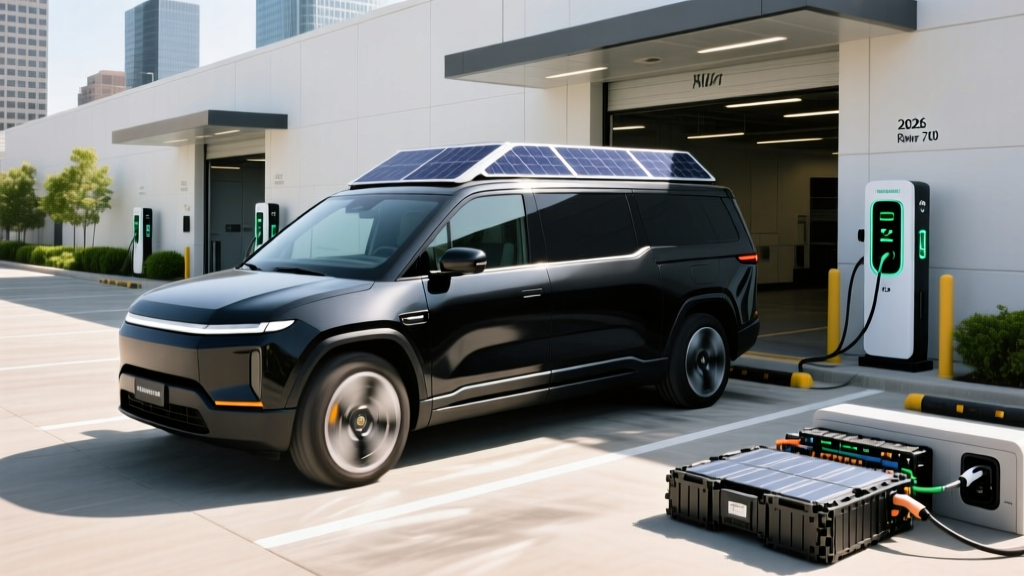
Rivian's commercial van lineup expanded for 2026 with the Delivery 700, a step between the compact EDV 500 and the full-size EDV 900 that targets last-mile fleets needing more cargo volume without the footprint of a Sprinter-class hauler. Built on the same Amazon-partnered Electric Delivery Van (EDV) platform but now available to a broader range of commercial buyers, the Delivery 700 is Rivian's play for bakeries, pharmacies, courier services, and municipal fleets that outgrew the EDV 500 but don't need 900 cubic feet of cargo space.
After spending time with the specs and early fleet-operator reports, here's the data-driven breakdown every commercial EV buyer needs before signing a purchase order.
Rivian Delivery 700: Core Specifications at a Glance
| Specification | Value |
|---|---|
| EPA Estimated Range | 161 miles |
| Battery Capacity (Usable) | 135 kWh |
| Battery Chemistry | NMC (Nickel Manganese Cobalt) |
| Drivetrain | Rear-wheel drive, single motor |
| Horsepower | 288 hp |
| 0-60 mph | ~6.8 seconds (unladen) |
| Max DC Fast Charge Rate | 150 kW |
| 10-80% DC Charge Time | ~42 minutes |
| Level 2 Charge Rate | 11.5 kW (~25 miles/hr) |
| MPGe (Combined) | 2.0 kWh/mile (~168 MPGe) |
| Cargo Volume | 700 cu ft |
| Payload Capacity | ~2,530 lbs |
| Base MSRP (Fleet) | ~$73,000 (estimated fleet pricing) |
| Battery/Powertrain Warranty | 8 years / 100,000 miles |
Real-World Range: What 161 EPA Miles Actually Means for Routes
Real-World Expectation: 125-145 miles with a mixed urban/suburban delivery route at moderate payload; 100-115 miles in sustained highway driving (65+ mph) or cold weather below 30°F.
The 161-mile EPA figure is competitive for a van this size, but fleet managers need to plan routes around the real-world number. Urban stop-and-go delivery driving actually benefits from regenerative braking — the Delivery 700 recaptures meaningful energy between stops, which is why city-heavy routes can approach 145 miles on a full charge. Highway cruising at 65-70 mph, however, is where aerodynamics and the van's boxy profile punish efficiency, dropping usable range to roughly 110-120 miles.
Cold weather is the bigger variable. NMC chemistry performs better than LFP in freezing temperatures, but fleet operators in northern climates should budget a 20-30% range reduction when temperatures drop below 30°F. The Delivery 700 includes a battery thermal management system with preconditioning, which helps — but only if the van is plugged in when preconditioning activates. A depot-charged van that sits unplugged overnight in January will start its route with less usable energy.
For most last-mile delivery routes under 100 miles round-trip, the Delivery 700 provides a comfortable buffer. Routes exceeding 120 miles with highway segments or heavy HVAC use will require opportunity charging or a route redesign.
Charging Speed: Depot and DC Fast-Charge Reality
| Charging Level | Power | Speed (Miles Added/Hour) | Notes |
|---|---|---|---|
| Level 1 (120V) | 1.4 kW | ~3 mi/hr | Emergency/trickle only |
| Level 2 (240V, 48A) | 11.5 kW | ~25 mi/hr | Full charge in ~12-14 hours |
| DC Fast Charge | 150 kW (peak) | ~180 mi/hr (peak) | 10-80% in ~42 min; tapers significantly above 80% |
The 150 kW peak DC charge rate is the critical number for fleet planners. At a 150 kW (or higher) charger, the Delivery 700 will pull near-peak power from roughly 10% to 50% state of charge, then the charge curve tapers. The 10-80% time of approximately 42 minutes is realistic based on the 135 kWh pack size — you're adding about 94 kWh in that window, which averages to roughly 135 kW sustained. Above 80%, expect the rate to drop below 50 kW as the battery management system protects cell longevity.
For depot charging, the 11.5 kW Level 2 rate is standard for commercial EVs. A full overnight charge from 10% takes roughly 12-14 hours, which fits most fleet schedules where vans return by 6 PM and deploy by 7 AM. Fleet operators should plan for dedicated 60-amp circuits per van — consult a licensed commercial electrician for depot buildout, as panel upgrades and conduit runs for multi-van installations can add $5,000-$15,000+ per charger to infrastructure costs.
The Delivery 700 uses the CCS1 connector standard, which is widely supported at Electrify America, EVgo, and most commercial DC networks. Fleets with existing NACS (Tesla Supercharger) access will need an adapter — Rivian's consumer vehicles have transitioned to NACS, but the commercial EDV line retained CCS1 for 2026 to maintain compatibility with established fleet-charging networks.
Performance and Drivetrain: Adequate for the Mission
The single-motor rear-wheel-drive layout producing 288 horsepower might sound modest for a vehicle with a gross vehicle weight rating (GVWR) approaching 10,000 pounds, but electric torque delivery makes it work. The instant 300+ lb-ft of torque at zero RPM means the Delivery 700 pulls away from stops confidently even when loaded near its ~2,530-pound payload capacity. The 0-60 mph time of roughly 6.8 seconds unladen stretches to approximately 9-10 seconds at full payload — perfectly adequate for urban and suburban driving where you're rarely merging onto highways at speed.
The rear-wheel-drive configuration was a deliberate choice for efficiency and cost. An AWD variant has not been announced for the Delivery 700 as of early 2026. For most delivery routes on paved roads, RWD with traction control is sufficient. Fleets operating in regions with frequent ice or unpaved rural routes may want to consider whether the EDV 900's available AWD option better suits their needs.
Pricing, Trims, and Federal Tax Credit Eligibility
Rivian prices the Delivery 700 through its commercial sales channel, and fleet pricing differs from consumer MSRP conventions. The estimated base price of approximately $73,000 positions it between the smaller EDV 500 (~$65,000) and the EDV 900 (~$83,000). Options like shelving packages, upfitted cargo management, and enhanced telematics can push the as-tested price toward $80,000-$85,000.
| Item | Amount |
|---|---|
| Estimated Base Price | ~$73,000 |
| Federal §30D Tax Credit (if eligible) | Up to $7,500 |
| Commercial Clean Vehicle Credit (§45W) | Up to $7,500 (vehicles under 14,000 lbs GVWR) |
| Estimated Net Cost After Federal Credit | ~$65,500 |
Tax credit nuance for commercial buyers: Fleet purchasers typically claim the Commercial Clean Vehicle Credit (§45W) rather than the consumer §30D credit. The §45W credit provides up to $7,500 for vehicles under 14,000 pounds GVWR (which the Delivery 700 qualifies for) and up to $40,000 for heavier vehicles. Unlike §30D, the §45W credit does not have buyer income caps or MSRP caps, but it does have battery-sourcing and critical-minerals requirements that phase in through 2026. Consult a tax professional to confirm eligibility for your specific fleet purchase — Rivian's commercial team can provide battery-component and critical-minerals sourcing documentation required for the credit application.
Additionally, many states and utilities offer commercial EV incentives on top of federal credits. Check AFDC's incentive database for state-specific programs in your operating area.
Cargo Space, Interior, and Fleet-Focused Tech
The 700 cubic feet of cargo volume is the headline number, and it translates to roughly three standard pallet positions with ample vertical clearance for stacked totes. The load floor is flat and low, with a curb-height step-in that reduces driver fatigue over a 150-stop route. Rear doors open 270 degrees for dock-height loading, and the bulkhead between the cab and cargo area is configurable with pass-through options for long items.
The cab is purpose-built for delivery work: a single driver's seat with a fold-down passenger seat (not a bench), a large tablet-style infotainment screen integrated with Rivian's fleet telematics platform, and physical HVAC controls that drivers can operate with gloves on. The infotainment system supports route optimization, real-time battery monitoring, and depot-management integration — features that matter more to a fleet dispatcher than Apple CarPlay.
Driver assistance includes automatic emergency braking, lane-departure warning, blind-spot monitoring, and a 360-degree camera system. These are SAE Level 0-1 features — there is no hands-free or semi-autonomous driving system offered on the Delivery 700. For a commercial vehicle, this is appropriate: fleet insurers and liability considerations make Level 2 driver-assist systems a complicated proposition for commercial use.
Efficiency and Operating Cost vs. Diesel Competitors
At approximately 2.0 kWh per mile (equivalent to roughly 168 MPGe), the Delivery 700 is efficient for its class. At a commercial electricity rate of $0.14/kWh (a reasonable national average for depot charging), that translates to about $0.28 per mile in energy cost. Compare that to a diesel Sprinter-class van averaging 18 mpg at $3.80/gallon — roughly $0.21 per mile. The per-mile energy cost is slightly higher for the EV, but the total cost of ownership equation shifts dramatically when you factor in:
- No oil changes, fuel filters, or DEF fluid
- Regenerative braking extends brake-pad life significantly (many EV fleets report 80,000+ miles on original pads)
- Fewer moving parts in the drivetrain — no transmission, no exhaust system, no turbocharger
- Reduced idle time and associated engine wear
Most fleet TCO models show the Delivery 700 reaching cost parity with a comparable diesel van within 3-5 years depending on annual mileage, local electricity rates, and maintenance contract terms.
Pros, Cons, and the Bottom Line for Fleet Buyers
- 161-mile EPA range covers most last-mile routes with buffer
- 700 cu ft cargo volume hits the sweet spot between EDV 500 and 900
- Low step-in height and 270-degree rear doors optimize driver efficiency
- Fleet telematics and route optimization built in
- 8-year/100,000-mile battery warranty reduces long-term risk
- Eligible for up to $7,500 federal commercial EV credit (§45W)
- 150 kW peak DC charge rate is modest — 42-min 10-80% limits mid-route top-ups
- RWD only — no AWD option for snow-belt or rural fleets
- Real-world range drops to ~100-115 mi in cold weather or highway use
- CCS1 connector may require adapters at NACS-only networks
- No crew-cab or multi-passenger configuration available
- Fleet pricing is not consumer-transparent — requires commercial sales engagement
Who Should Buy the Rivian Delivery 700?
The Delivery 700 is purpose-built for a specific use case, and it excels when that use case matches your operation:
- Urban/suburban last-mile delivery: Routes under 100 miles with frequent stops are the ideal scenario. Regenerative braking maximizes efficiency, and overnight depot charging eliminates range concerns.
- Fleet operators with depot charging infrastructure: If you can install Level 2 chargers at your base, the Delivery 700's 11.5 kW onboard charger fills the pack overnight reliably.
- Businesses pursuing sustainability mandates: Municipal fleets, B-corp certified companies, and contractors responding to green-procurement RFPs will find the Delivery 700 checks the electrification box without sacrificing cargo capability.
This van is not the right choice for long-haul regional delivery (consider a Class 6+ electric truck), rural routes with unpaved roads and no charging access, or operations in extreme cold climates where range loss would push daily mileage beyond the pack's capability.
Frequently Asked Questions
What is the real-world range of the Rivian Delivery 700?
The EPA estimates 161 miles, but real-world fleet operation typically yields 125-145 miles on urban delivery routes. Highway driving, heavy payloads, and cold weather below 30°F can reduce that to 100-115 miles. Plan routes with a 20% buffer below the EPA number for reliable daily operation.
How fast does the Delivery 700 charge at home and on DC fast chargers?
At a 150 kW DC fast charger, the 10-80% charge takes approximately 42 minutes, with peak power sustained through roughly 50% state of charge before tapering. On a Level 2 depot charger (11.5 kW), a full charge from 10% takes about 12-14 hours — suitable for overnight fleet schedules.
Does the Rivian Delivery 700 qualify for the federal EV tax credit?
Commercial fleet purchasers typically claim the §45W Commercial Clean Vehicle Credit rather than the consumer §30D credit. The §45W credit offers up to $7,500 for vehicles under 14,000 lbs GVWR. Eligibility depends on battery-sourcing and critical-minerals requirements that tighten through 2026. Consult a tax professional and request Rivian's sourcing documentation for your purchase. Check IRS guidelines for current rules.
Is the Delivery 700 worth buying vs. a diesel Sprinter or Ford E-Transit?
Against the Ford E-Transit (126-mile EPA range, ~$55,000 base), the Delivery 700 offers significantly more range and cargo volume at a higher price. Against a diesel Mercedes Sprinter, the upfront cost is higher but operating costs are lower, with TCO parity typically reached in 3-5 years. The right choice depends on your route length, depot charging capability, and how long you plan to keep the vehicle.
What are the biggest drawbacks of the Delivery 700?
The 150 kW peak charge rate means mid-route DC fast charging is slow for a 135 kWh pack — 42 minutes is a long downtime window during a delivery shift. The RWD-only drivetrain limits use in severe winter climates, and the CCS1 connector may require adapters as the industry shifts toward NACS.
What battery warranty does Rivian offer on the Delivery 700?
Rivian covers the battery and powertrain for 8 years or 100,000 miles, whichever comes first. This is consistent with industry standards for commercial EVs and provides reasonable protection against premature degradation for typical fleet duty cycles.