Search for "Rivian definition" and you'll get a dictionary entry for a company name. But for EV shoppers in 2026, the real Rivian definition is about what the brand actually delivers on the road: a dual-motor adventure platform with serious range, fast charging, and a price tag that still demands scrutiny. This profile breaks down the current Rivian lineup — the R1S SUV and R1T pickup — with the exact numbers buyers need before signing a reservation.
Quick Verdict: What Rivian Actually Is in 2026
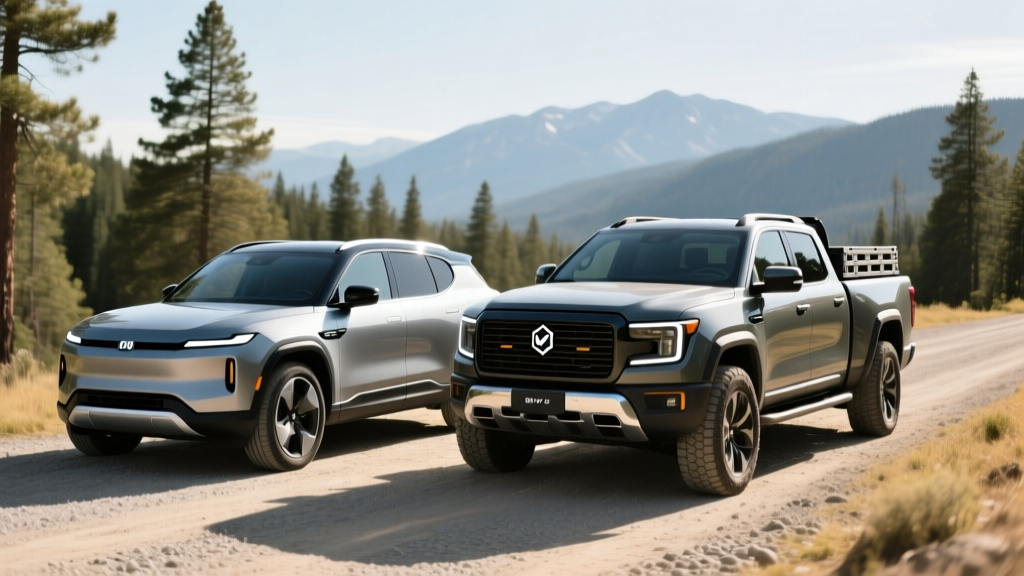
Rivian is an American EV manufacturer headquartered in Irvine, California, producing two core vehicles on its proprietary skateboard platform: the R1S (a three-row, seven-passenger SUV) and the R1T (a four-door crew-cab pickup). Both share the same dual-motor AWD architecture, battery options, and software stack. Rivian positions itself as an adventure-lifestyle brand — think Land Rover meets Tesla — but the real story is in the engineering: a 106-kWh Large battery pack, peak DC fast charging up to 200+ kW, and a software-defined vehicle that improves via over-the-air updates.
For 2026, Rivian has streamlined its lineup around the Dual-Motor and Performance Dual-Motor configurations, with the Standard battery (LFP chemistry) and Large battery (NMC chemistry) as the two pack choices. The brand has also reached price points where federal tax credit eligibility becomes a real factor for qualifying buyers.
Range, Battery, and Real-World Efficiency
Rivian offers two battery packs across the R1S and R1T for the 2026 model year. Understanding the chemistry and real-world implications is critical — the EPA sticker is only the starting point.
| Spec | Standard Pack (LFP) | Large Pack (NMC) |
|---|---|---|
| Battery Chemistry | LFP (Lithium Iron Phosphate) | NMC (Nickel Manganese Cobalt) |
| Usable Capacity | ~92 kWh | ~106 kWh |
| EPA Range (R1S Dual-Motor) | ~270 mi | ~352 mi |
| EPA Range (R1T Dual-Motor) | ~270 mi | ~352 mi |
| EPA Efficiency (R1S) | ~2.0 kWh/mi (76 MPGe) | ~2.0 kWh/mi (76 MPGe) |
| Battery Warranty | 8 years / 120,000 miles | 8 years / 120,000 miles |
The LFP Standard Pack has a key advantage: LFP chemistry tolerates regular 100% charging without the degradation concerns of NMC. Rivian recommends daily charging to 100% for LFP owners, which effectively narrows the real-world range gap. NMC Large Pack owners should follow the 80% daily limit, reserving 100% for road trips — meaning daily usable range on the Large Pack is closer to 280 miles at an 80% state of charge.
Charging Speed: DC Fast, Level 2, and Connector Details
Rivian's charging architecture has matured significantly since launch. The 2026 R1S and R1T support DC fast charging at up to 200+ kW peak on the Large Pack, with the Standard LFP pack peaking around 150 kW. Rivian vehicles now ship with the NACS (North American Charging Standard) port, granting native access to Tesla Superchargers via Rivian's integrated navigation and plug-and-charge support.
| Charging Level | Power / Rate | R1S/R1T Result |
|---|---|---|
| Level 1 (120V household) | ~1.4 kW | ~3–4 miles per hour |
| Level 2 (240V home, 48A) | ~11.5 kW | ~25–28 miles per hour; full charge in ~10–12 hrs |
| DC Fast Charge (Large Pack) | Peak 200+ kW | 10–80% in ~28 minutes |
| DC Fast Charge (Standard LFP) | Peak ~150 kW | 10–80% in ~32 minutes |
Charging curve reality: Rivian's peak 200+ kW rate is not sustained across the entire session. The charge curve tapers noticeably above 60% state of charge, and drops sharply past 80%. A typical 10–80% session on a 350-kW Electrify America or Tesla V4 Supercharger will average around 130–150 kW sustained. Plan road-trip charging stops around the 25–30 minute mark for the Large Pack. Preconditioning the battery via the navigation system (by routing to a charger) is essential for hitting peak rates in cool weather — skip it and your first 10 minutes may be limited to under 80 kW.
For home charging, Rivian's Wall Charger delivers up to 11.5 kW (48 amps) on a 240V / 60A circuit. Most owners report overnight replenishment of 200+ miles — more than enough for daily driving. Budget $500–$1,500 for professional Level 2 installation depending on panel proximity and whether a 200A service upgrade is needed.
Performance and Drivetrain
Every 2026 Rivian comes with dual-motor all-wheel drive. The platform generates substantial power regardless of trim, and the instant torque delivery makes these vehicles feel quicker than their curb weight (roughly 6,800–7,100 lbs) would suggest.
| Spec | Dual-Motor | Performance Dual-Motor |
|---|---|---|
| Horsepower | 533 hp | 665 hp |
| Torque | 610 lb-ft | 829 lb-ft |
| 0–60 mph | ~4.5 sec | ~3.4 sec |
| Drivetrain | Dual-Motor AWD | Dual-Motor AWD |
| Towing Capacity | 7,700 lbs (R1T) / 7,700 lbs (R1S) | 7,700 lbs |
| Ground Clearance | Up to 14.9 in (max) | Up to 14.9 in (max) |
Rivian's quad-motor variants, available in prior model years, have been consolidated into the Performance Dual-Motor for 2026. The air suspension system offers adjustable ride height with up to 14.9 inches of ground clearance — genuine off-road capability that few electric SUVs or trucks can match. Water fording depth is rated at over 3 feet for the R1T.
Interior Space, Cargo, and Practicality
The R1S and R1T diverge most in their cargo and passenger configurations. Here are the concrete dimensions that matter for daily life:
R1S (Three-Row SUV)
- Seating: 7 passengers (2-3-2 configuration)
- Cargo (behind 3rd row): ~10.4 cu ft
- Cargo (behind 2nd row): ~46.7 cu ft
- Cargo (max, all rows folded): ~104.7 cu ft
- Front trunk (frunk): ~11.0 cu ft — fits a carry-on or charging cables
- Second-row legroom: ~36.5 in
- Third-row legroom: ~30.4 in (best for children)
R1T (Crew-Cab Pickup)
- Seating: 5 passengers
- Bed length: 4.5 ft (extends to ~6.5 ft with Gear Tunnel access)
- Gear Tunnel: ~11.7 cu ft cross-vehicle storage (unique to Rivian)
- Frunk: ~11.0 cu ft
- Rear-seat legroom: ~38.2 in
The Gear Tunnel on the R1T is a genuine differentiator — a pass-through compartment spanning the width of the vehicle between the cab and bed, ideal for skis, camping gear, or groceries. No competitor offers an equivalent feature.
Pricing, Trims, and Federal Tax Credit Eligibility
Rivian's pricing has come down from early reservation-holder sticker shock. For 2026, the lineup is structured around battery size and motor configuration, with the Adventure and Ascend trim packages adding cosmetic and convenience features.
| Model / Configuration | Base MSRP | Est. After §30D Credit* |
|---|---|---|
| R1S Dual-Motor Standard Pack | $69,900 | ~$62,400 |
| R1S Dual-Motor Large Pack | $75,900 | ~$68,400 |
| R1T Dual-Motor Standard Pack | $67,900 | ~$60,400 |
| R1T Dual-Motor Large Pack | $73,900 | ~$66,400 |
| Performance Dual-Motor (either) | Add ~$5,000 | Varies |
*Federal tax credit estimates are illustrative. Actual eligibility depends on current-year IRS §30D rules.
- MSRP Cap: SUVs/pickups must be at or below $80,000 MSRP to qualify. Most Rivian configurations clear this threshold, but fully loaded Ascend trims with Large Pack may exceed it.
- Income Cap: Modified AGI must not exceed $150,000 (single), $225,000 (head of household), or $300,000 (joint filers).
- Battery Sourcing: Critical minerals and battery component requirements tighten annually. Verify current-year compliance on IRS.gov before purchasing.
- Point-of-Sale Transfer: Eligible buyers can transfer the credit to the dealer at purchase, reducing the upfront price rather than waiting for a tax refund.
- Assembly: Must be assembled in North America (Rivian manufactures in Normal, Illinois — qualifying).
Consult a tax professional and verify against the latest IRS guidance on clean vehicle credits before finalizing your purchase. Credit rules change, and battery-sourcing compliance can shift model year to model year.
Tech, Driver Assistance, and Software
Rivian runs a proprietary software stack on a 15.6-inch center touchscreen with a clean, responsive interface. Key technology features include:
- Rivian Driver+: A Level 2 driver-assistance system combining adaptive cruise control, lane centering, and automatic lane changes on divided highways. This is not autonomous driving — the driver must remain engaged with hands on the wheel at all times (SAE Level 2).
- Over-the-Air Updates: Rivian regularly deploys feature additions, efficiency improvements, and UI refinements wirelessly.
- Camp Mode & Pet Mode: Climate-control presets that maintain cabin temperature while parked — useful for camping or leaving pets briefly.
- Powered Tonneau (R1T): Electric retractable bed cover integrated into the vehicle's software.
- Vehicle-to-Everything Prep: Rivian has indicated future V2L (vehicle-to-load) capability via software/hardware updates, though availability should be confirmed at purchase.
Pros and Cons
- Genuine off-road capability with air suspension and 14.9" ground clearance
- Unique Gear Tunnel (R1T) and spacious frunk on both models
- NACS port with native Supercharger access
- Strong real-world range on Large Pack (~280–310 mi highway)
- LFP Standard Pack allows daily 100% charging without degradation concern
- Quick 0–60 times (3.4 sec Performance Dual-Motor)
- 7,700-lb towing capacity
- Over-the-air updates continuously improve the vehicle
- Base price still above $67,000 — premium segment
- DC fast charging peaks at ~200 kW, trailing Hyundai/Kia's 800V architecture (~240+ kW)
- Third-row space in R1S is tight for adults
- Efficiency (~2.0 kWh/mi) means higher electricity costs vs. lighter EVs
- Service center network still expanding — rural owners may face long tow distances
- Fully loaded configurations can exceed the $80,000 MSRP tax-credit cap
Who Should Buy a Rivian — and Who Shouldn't
- You need a genuine adventure vehicle — off-road trails, camping, towing a boat or trailer
- You want a three-row electric SUV (R1S) or an electric pickup (R1T) with no direct equivalent
- You value the Gear Tunnel, frunk, and flexible cargo solutions
- You plan to charge at home and use DC fast charging for road trips 3–5 times per year
- Your priority is maximum efficiency and lowest cost per mile (consider Hyundai Ioniq 5 or Tesla Model Y)
- You need the fastest possible DC charging (Hyundai/Kia E-GMP platform charges 10–80% in ~18 min)
- You're on a budget below $55,000 (consider used EV market or upcoming more affordable models)
- You live far from a Rivian service center and cannot tolerate potential mail-in or mobile-service delays
Frequently Asked Questions
What is the real-world range of a Rivian?
The EPA rates the Large Pack R1S and R1T at approximately 352 miles. In real-world highway driving at 70–75 mph, expect 280–310 miles. In cold weather below freezing, plan for 230–265 miles. The Standard LFP Pack delivers roughly 215–240 highway miles in moderate temperatures.
How fast does a Rivian charge at home and on the road?
At home on a 240V Level 2 charger (48A), a Rivian adds roughly 25–28 miles per hour, fully charging overnight in 10–12 hours. On DC fast chargers, the Large Pack peaks at 200+ kW, reaching 10–80% in about 28 minutes. The Standard LFP Pack peaks at ~150 kW with a 10–80% time around 32 minutes.
Does the Rivian qualify for the federal EV tax credit?
Most Rivian configurations fall under the $80,000 MSRP cap for SUVs and pickups and are assembled in the U.S., meeting the North American assembly requirement. Eligibility depends on your income (AGI caps apply), the specific battery-sourcing compliance for the model year, and the final MSRP of your configuration. Verify at IRS.gov and with a tax professional.
Is a Rivian worth buying vs. a Tesla Model X or Ford F-150 Lightning?
Against the Model X, Rivian offers superior off-road capability, a more practical interior layout, and a standard NACS port. Against the F-150 Lightning, the R1T has a smaller bed but the unique Gear Tunnel and a more refined ride thanks to air suspension. If you need maximum bed length or the lowest truck price, the Lightning wins. If you want a premium adventure truck, the R1T is the stronger choice.
What are the biggest pros and cons of owning a Rivian?
Top pros: off-road capability, unique cargo features (Gear Tunnel, frunk), strong range on the Large Pack, NACS Supercharger access, and continuous OTA improvements. Top cons: premium pricing, charging speed trails 800V competitors, third-row space is limited (R1S), and the service network is still growing.
How long will the Rivian battery last?
Rivian warrants its battery pack for 8 years or 120,000 miles against defects and excessive degradation (typically below 70% state of health). NMC Large Packs should retain 85–90% capacity at 100,000 miles with proper charging habits (80% daily limit). LFP Standard Packs are inherently more durable and tolerate 100% daily charging, often showing minimal degradation over the same period.
Sources: EPA Fuel Economy, IRS Clean Vehicle Credits, Rivian official specifications.