Rivian de Dónde Es: The Short Answer
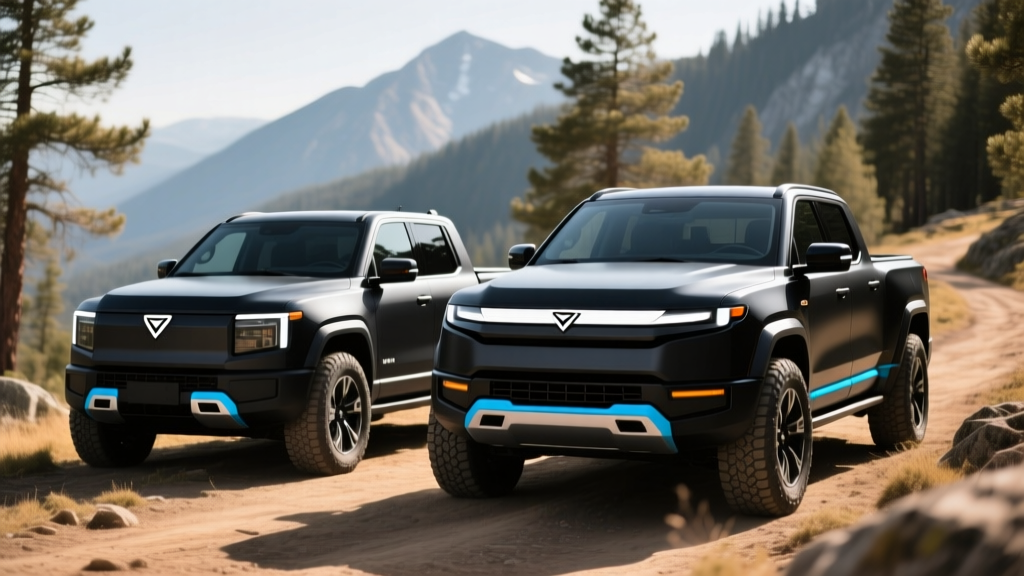
Si estás buscando Rivian de dónde es — where Rivian is from — the answer is straightforward: Rivian Automotive is an American electric vehicle manufacturer headquartered in Irvine, California, with its primary production facility in Normal, Illinois. Founded in 2009 by MIT graduate RJ Scaringe (originally as Mainstream Motors, later renamed Rivian), the company has grown into one of the most significant U.S.-based EV startups, producing the R1T electric pickup and R1S electric SUV alongside commercial delivery vans for Amazon.
Every Rivian vehicle sold in North America is assembled at the Normal, Illinois plant — a former Mitsubishi factory that Rivian converted into a state-of-the-art EV production campus. Battery packs are assembled on-site, and Rivian has invested heavily in domestic supply-chain localization, including a joint-venture battery cell plant with Samsung SDI planned for Georgia (expected online by 2027). So when you ask "Rivian de dónde es," the full answer is: American-designed in California, American-built in Illinois.
2026 Rivian R1T & R1S: Full Spec Breakdown
For the 2026 model year, Rivian offers the R1T (pickup) and R1S (three-row SUV) across three main configurations: Dual-Motor, Performance Dual-Motor, and the newly updated Tri-Motor. The second-generation platform introduced for 2025 brought significant powertrain, battery, and software upgrades that carry forward into 2026.
| Specification | Dual-Motor | Performance Dual-Motor | Tri-Motor |
|---|---|---|---|
| Battery (usable) | 92 kWh (Standard) | 109 kWh (Large) | 149 kWh (Max) |
| Chemistry | NMC (Nickel Manganese Cobalt) | NMC | NMC (2170 cells) |
| EPA Range | 270 mi (R1T) | 352 mi (R1T) | 420 mi (R1T est.) |
| Horsepower | 533 hp | 665 hp | 850 hp |
| 0-60 mph | 4.5 sec | 3.4 sec | 2.9 sec |
| Drivetrain | AWD (dual-motor) | AWD (dual-motor) | AWD (tri-motor) |
| Max DC Fast Charge | 200 kW | 220 kW | 220 kW |
| 10-80% DC Time | ~28 min | ~24 min | ~36 min |
| Level 2 Rate | 11.5 kW (~25 mi/hr) | 11.5 kW (~25 mi/hr) | 11.5 kW (~25 mi/hr) |
| Towing Capacity | 11,000 lb | 11,000 lb | 11,000 lb |
| Base MSRP (R1T) | $69,900 | $79,900 | $99,900 |
| Base MSRP (R1S) | $74,900 | $84,900 | $104,900 |
| Efficiency (MPGe) | 73 MPGe combined | 70 MPGe combined | ~65 MPGe combined |
Source: EPA fueleconomy.gov, Rivian official specifications. Tri-Motor Max range is manufacturer-estimated pending final EPA certification.
Real-World Range: What the EPA Sticker Doesn't Tell You
EPA vs. Reality — R1T Dual-Motor (Standard Pack, 270 mi EPA)
Highway driving at 70-75 mph: expect ~225-240 miles. The R1T's boxy pickup profile generates substantial aerodynamic drag, and efficiency drops noticeably above 65 mph. Combined city/highway mixed driving typically yields 245-260 miles.
Cold-weather impact (below 32°F / 0°C): Expect a 15-25% range reduction depending on severity. At 20°F, the 270-mile EPA Dual-Motor may deliver only 200-220 miles of real range. Rivian's heat pump (standard on 2025+ models) helps mitigate cabin-heating energy draw, but battery chemistry itself loses efficiency in cold.
Tri-Motor Max Pack (420 mi EPA est.): The 149 kWh battery gives genuine cross-country capability, but its weight (over 9,000 lb curb weight) means efficiency suffers under heavy loads. Real-world road-trip range with highway speeds and moderate climate use: ~340-370 miles.
Rivian's range estimates are generally more conservative than some competitors, which works in the owner's favor — many R1T owners report meeting or slightly exceeding EPA figures in moderate city driving. But if your use case is sustained 80-mph highway travel in winter, plan your charging stops around 65-70% of the sticker number.
Charging Speed: DC Fast Charging and Home Setup
Charging speed is one of the most critical ownership factors for any EV, and Rivian's second-generation architecture delivers competitive — though not class-leading — performance.
| Charging Level | Power | Connector | Miles Added per Hour | Notes |
|---|---|---|---|---|
| Level 1 (120V outlet) | ~1.4 kW | J1772 / NACS | ~3 mi/hr | Emergency/trickle only |
| Level 2 (240V home) | 11.5 kW | NACS (2025+ models) | ~25 mi/hr | Full charge in ~9-13 hours |
| DC Fast Charge | Up to 220 kW | NACS (native) | ~140-180 mi in 20 min | Peak rate to ~55% SoC, then taper |
| Tesla Supercharger | Up to 250 kW (shared) | NACS (native) | ~150-190 mi in 20 min | Native access via NACS port (2025+) |
Understanding the charge curve: Rivian's peak 220 kW rate is sustained roughly from 10% to 55% State of Charge (SoC). After 55%, the rate tapers progressively — dropping to ~100 kW by 70% and ~50 kW above 85%. This is why the 10-80% time (24-36 minutes depending on pack size) is a more useful metric than peak kW alone. For road-trip planning, plan 20-25 minute stops to go from 15% to 75%, which is the practical sweet spot.
Home charging reality: The 11.5 kW onboard charger means a full overnight charge is realistic for any pack size. A standard NEMA 14-50 outlet (240V/50A) delivers ~9.6 kW, adding roughly 21 miles per hour. For the full 11.5 kW rate, you'll need a hardwired Level 2 wall connector on a 60A circuit. Expect $800-$2,500 for professional home installation depending on your electrical panel capacity and distance from the panel to your parking spot. If your home has a 100A service panel, a panel upgrade to 200A ($1,500-$3,000) may be necessary.
Starting with 2025 models, Rivian adopted the NACS (North American Charging Standard) connector natively, meaning direct access to the Tesla Supercharger network without an adapter — a significant advantage over CCS-only vehicles. Rivian owners now have access to over 25,000 Supercharger stalls across North America, which remain the most reliable DC fast-charging network in real-world testing.
Performance and Driving Dynamics
The R1T and R1S are genuinely quick vehicles. Even the base Dual-Motor's 4.5-second 0-60 mph time outpaces most gas-powered trucks, and the Tri-Motor's 2.9-second sprint puts it in supercar territory — in a vehicle with an 11,000-pound towing rating.
Rivian's quad-motor variant (discontinued after 2024) has been replaced by the Tri-Motor configuration for 2025-2026, which uses a front motor and two rear motors with a mechanical disconnect clutch on one rear motor for efficiency. The system delivers torque vectoring across the rear axle, improving both on-road handling and off-road traction.
Off-road capability remains a genuine Rivian differentiator. Available air suspension provides up to 14.9 inches of ground clearance, a wading depth of over 3 feet, and approach/departure angles competitive with body-on-frame off-roaders. The R1T's gear tunnel (a full-width pass-through storage compartment behind the cab) and available camp kitchen are unique utility features no competitor offers.
Drive modes: All-Purpose, Sport, Conserve (extends range by limiting power and adjusting suspension height), Snow, Off-Road, and Tow — each adjusts throttle mapping, suspension height, regen behavior, and stability control thresholds.
Pricing, Trims, and Federal Tax Credit Eligibility
| Configuration | R1T MSRP | R1S MSRP | Est. §30D Credit | Effective Price (after credit) |
|---|---|---|---|---|
| Dual-Motor Standard | $69,900 | $74,900 | Up to $7,500* | ~$62,400 / ~$67,400 |
| Performance Dual-Motor | $79,900 | $84,900 | Up to $7,500* | ~$72,400 / ~$77,400 |
| Tri-Motor Max | $99,900 | $104,900 | Varies* | ~$92,400+ / ~$97,400+ |
*Federal EV tax credit (§30D) eligibility is subject to multiple requirements. Always verify current rules at IRS.gov.
Key §30D tax credit rules for 2026:
- MSRP cap: Trucks, vans, and SUVs must have an MSRP ≤ $80,000. The R1T Dual-Motor and Performance Dual-Motor qualify; the R1T Tri-Motor at $99,900 exceeds the cap. The R1S (classified as an SUV) also has an $80,000 cap — only the Dual-Motor trim qualifies.
- Buyer income limits: Modified adjusted gross income must not exceed $300,000 (joint), $225,000 (head of household), or $150,000 (single).
- Battery sourcing: A percentage of critical minerals and battery components must be sourced from the U.S. or free-trade-agreement countries. Rivian's battery supply chain has been progressively localizing, but eligibility for the full $7,500 vs. a partial $3,750 credit can vary by production batch. Check the specific VIN on fueleconomy.gov before purchasing.
- Point-of-sale transfer: As of 2024, eligible buyers can transfer the credit to the dealer at purchase, receiving the discount immediately rather than waiting to claim it on their tax return.
Interior, Cargo, and Technology
R1T cargo capacity: The 4.5-foot bed (54 inches) is shorter than a full-size truck's, but the gear tunnel adds ~11 cubic feet of secure, weatherproof storage. The front trunk (frunk) provides ~11 cu ft of additional sealed storage. Combined, the R1T offers more lockable cargo volume than many midsize SUVs when you factor in all compartments.
R1S passenger and cargo space: Three rows seat up to seven. Third-row legroom is ~30.2 inches (tight for adults on long trips but adequate for children). Cargo behind the third row: ~10.7 cu ft. Fold the third row for ~46 cu ft, and fold both rear rows for ~92 cu ft — competitive with midsize SUVs like the Toyota Highlander.
Infotainment: Rivian runs a custom Linux-based operating system on a 15.6-inch center touchscreen. The system is responsive and well-designed, with native navigation that integrates charging stops and battery preconditioning. Wireless Apple CarPlay and Android Auto are supported. The 2025+ models feature an upgraded processor and improved voice assistant.
Driver assistance: Rivian's Driver+ system is a SAE Level 2 driver-assistance suite combining adaptive cruise control, lane-centering, and automated lane changes on divided highways. It is not autonomous driving — the driver must remain attentive with hands on the wheel (or demonstrate engagement via the driver-monitoring camera). It's competent for highway cruising but less aggressive in urban cut-in scenarios compared to GM's Super Cruise or Ford's BlueCruise.
SAE Level 2 — Driver Assistance, Not Self-Driving: Rivian's Driver+ system requires continuous driver supervision. The vehicle can steer, accelerate, and brake under specific conditions, but the human driver is legally and operationally responsible at all times. This is the same automation level as Tesla Autopilot, Ford BlueCruise, and GM Super Cruise. True driverless operation (Level 4) is currently limited to geofenced robotaxi services like Waymo.
Pros, Cons, and the Verdict
Pros
- Best-in-class off-road capability for an EV pickup/SUV
- Native NACS access to Tesla Supercharger network (2025+)
- Unique utility features: gear tunnel, camp kitchen, frunk
- Genuine 11,000-lb towing capacity with integrated trailer software
- American-built (Normal, Illinois) — strong domestic manufacturing story
- Over-the-air updates continuously add features and improvements
- 8-year/175,000-mile battery and powertrain warranty
Cons
- High starting price — Dual-Motor R1T begins at $69,900 before options
- Real-world highway range drops significantly due to aerodynamic drag
- DC fast-charging speed (220 kW peak) trails Hyundai Ioniq 5/Kia EV9 (350 kW-class)
- Third row in R1S is tight for adults
- Service center network still expanding — wait times in some regions
- Tri-Motor Max trims exceed the $80K MSRP cap for the federal tax credit
Who Should Buy a Rivian?
Choose the Rivian R1T if: You need a capable electric pickup for outdoor recreation, light-to-moderate towing, and off-road use — and you value American manufacturing. It's ideal for adventure-oriented buyers who want EV efficiency for daily driving but truck utility on weekends. The Dual-Motor Standard Pack is the value sweet spot if you can charge at home and most trips are under 200 miles.
Choose the Rivian R1S if: You want a three-row electric SUV with genuine off-road chops and don't want a Tesla Model X or Cadillac Escalade IQ. Best for families who camp, ski, or tow boats/trailers. The Large Pack (Performance Dual-Motor) offers the best balance of range, performance, and tax-credit eligibility.
Look elsewhere if: You prioritize maximum fast-charging speed (Hyundai Ioniq 5 or Kia EV9 charge faster), you need a full-size truck bed (Rivian's 4.5-foot bed is short), or you're on a budget below $60,000 (consider the Chevrolet Silverado EV Work Truck or wait for Rivian's upcoming R2 platform, expected 2026-2027 at ~$45,000).
Warranty and Long-Term Ownership
Rivian provides an 8-year / 175,000-mile battery and drive unit warranty, which is among the most generous in the industry (most competitors offer 8-year/100,000-mile). The vehicle limited warranty is 5 years / 60,000 miles, and roadside assistance is included for 5 years / unlimited miles.
The NMC battery chemistry in Rivian's packs is proven but does experience gradual capacity loss. Industry data for similar NMC packs suggests ~10-15% degradation over 150,000 miles under normal use. Rivian's warranty guarantees the battery will retain at least 70% of original capacity during the coverage period — if it drops below that threshold, Rivian will repair or replace it.
Ownership cost note: Insurance premiums for Rivian vehicles tend to run 20-35% higher than comparable gas-powered trucks, reflecting repair costs for aluminum-intensive bodies and high-voltage components. Get an insurance quote before committing to a purchase.
Frequently Asked Questions
¿Rivian de dónde es? ¿Es una empresa mexicana o española?
No. Rivian es una empresa estadounidense. Su sede central está en Irvine, California, y su fábrica de producción está en Normal, Illinois. Todos los vehículos Rivian se fabrican en Estados Unidos. El nombre "Rivian" proviene del apellido del fundador, RJ Scaringe (originalmente inspirado en la palabra "river" — río — y su conexión con la naturaleza y la aventura al aire libre).
What is the real-world range of the Rivian R1T?
The EPA-rated range varies from 270 miles (Dual-Motor Standard) to an estimated 420 miles (Tri-Motor Max). In real-world highway driving at 70-75 mph, expect roughly 80-85% of the EPA figure — so about 225-240 miles for the Standard Pack and 340-370 miles for the Max Pack. Cold weather (below freezing) can reduce range an additional 15-25%.
How fast does the Rivian R1T charge?
On a DC fast charger, the R1T peaks at 200-220 kW (depending on pack size), achieving a 10-80% charge in approximately 24-36 minutes. At home on a Level 2 (240V) charger, the 11.5 kW onboard charger adds about 25 miles of range per hour, fully recharging overnight. Rivian's native NACS port gives direct access to Tesla Superchargers.
Does the Rivian R1T qualify for the federal EV tax credit?
The R1T Dual-Motor ($69,900) and Performance Dual-Motor ($79,900) fall under the $80,000 MSRP cap for trucks/SUVs and may qualify for up to $7,500 under IRS §30D — subject to buyer income limits ($150K single / $300K joint) and battery-sourcing requirements. The Tri-Motor at $99,900 exceeds the MSRP cap and does not qualify. Always verify your specific VIN's eligibility at IRS.gov before purchase.
Is the Rivian R1T worth buying vs. the Ford F-150 Lightning or Chevy Silverado EV?
The R1T excels in off-road capability, premium interior quality, and adventure-oriented features (gear tunnel, camp kitchen). The F-150 Lightning offers a full-size 5.5-6.5 foot bed, Pro Power Onboard, and a lower starting price. The Silverado EV provides the longest range (up to 440 mi EPA on the 4WT trim) and a larger bed. If you prioritize off-road performance and unique utility, the R1T wins. If you need a work truck with a full-size bed and lower cost, the Lightning or Silverado EV may be better fits.
How reliable are Rivian vehicles?
Early-production (2022-2023) R1T and R1S vehicles had notable build-quality issues including panel gaps, software glitches, and suspension component noise. The second-generation platform (2025+) addressed many of these with revised manufacturing processes and updated components. Rivian's Normal plant has improved output quality significantly, though as a younger automaker, long-term reliability data beyond 4-5 years is still limited. The 8-year/175,000-mile powertrain warranty provides substantial coverage.