Rivian's American Roots: The Normal, Illinois Factory
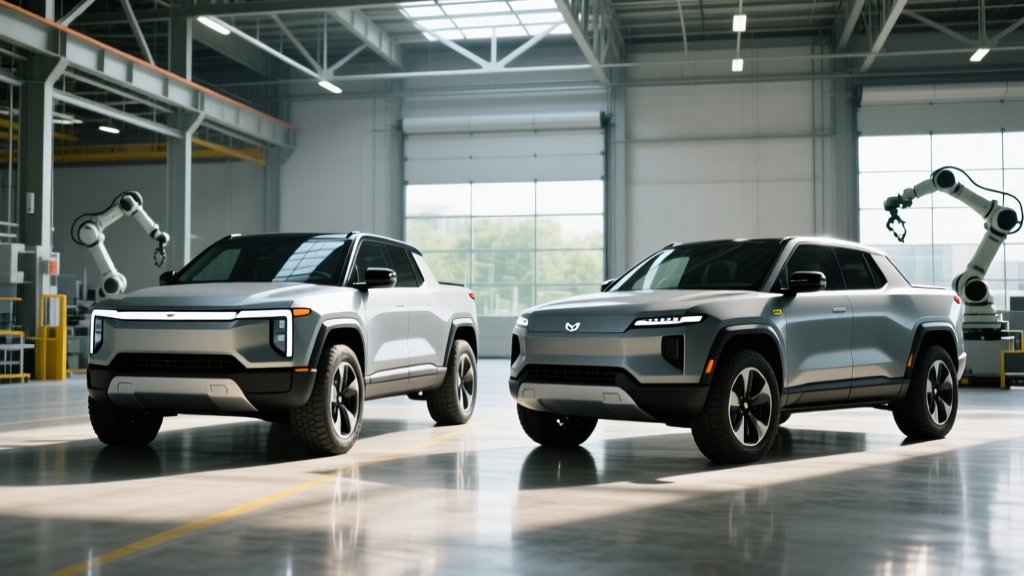
When shoppers search for the Rivian country of origin, the answer is straightforward: every Rivian R1T pickup and R1S SUV sold in the United States rolls off the assembly line in Normal, Illinois. This 3.3-million-square-foot facility — originally a Mitsubishi Diamond-Star Motors plant built in the 1980s, later used by Mitsubishi Motors North America — was acquired by Rivian in 2017 and retooled for dedicated electric-vehicle production. By the 2026 model year, the Normal plant has undergone several expansions, including a second general-assembly line and upgraded battery-pack integration, allowing Rivian to scale output of its Dual-Motor, Performance Dual-Motor, and Tri-Motor configurations.
Rivian's headquarters remain in Irvine, California, where the bulk of its software, powertrain engineering, and vehicle-design teams operate. Battery-cell sourcing, however, is more global. Rivian's prismatic lithium-ion cells come from Samsung SDI (manufactured in South Korea and, increasingly, a Samsung plant in Newberry, South Carolina). The company has also signed supply agreements with LG Energy Solution for cylindrical cells destined for future platforms. So while the vehicle assembly country of origin is unambiguously the United States, the supply chain reflects the globalized reality of modern EV manufacturing.
2026 R1T & R1S: Core Specifications at a Glance
Below is a consolidated look at the current Rivian lineup. Note that the R1T (crew-cab pickup) and R1S (three-row SUV) share the same skateboard platform and powertrain options, so range and performance figures overlap closely.
| Spec | R1T Dual-Motor (Standard) | R1T Tri-Motor | R1S Dual-Motor (Standard) |
|---|---|---|---|
| EPA Range | 352 mi (Max Pack) | 328 mi (Max Pack) | 371 mi (Max Pack) |
| Battery (usable) | ~141 kWh (Max), NMC | ~141 kWh (Max), NMC | ~141 kWh (Max), NMC |
| Horsepower | 533 hp | 850 hp | 533 hp |
| 0–60 mph | 4.5 sec | 2.9 sec | 4.5 sec |
| Drivetrain | AWD (Dual-Motor) | AWD (Tri-Motor) | AWD (Dual-Motor) |
| Towing Capacity | 11,000 lb | 11,000 lb | 7,700 lb |
| Base MSRP | $79,900 | $105,900 | $84,900 |
Source: Rivian R1T specs and fueleconomy.gov (EPA). Figures reflect 2026 model-year Max Pack with 21-inch all-season tires. Smaller Standard and Large packs yield lower range.
Real-World Range: What the EPA Sticker Doesn't Tell You
EPA Sticker: Up to 352 miles (R1T Dual-Motor Max Pack)
Real-World Highway (70 mph, mild weather): ~285–310 miles
Cold-Weather (below 30°F): Expect 20–30% reduction, roughly 220–260 miles
While Towing (5,000–8,000 lb trailer): Range roughly halves to 150–190 miles
Rivian's R1T and R1S are heavy, aerodynamically blunt vehicles — the R1T tips the scales around 7,100 lb. That mass and the pickup's squared-off profile mean highway efficiency suffers relative to sleeker crossovers. In our experience and consistent with independent testing, a Dual-Motor R1T on a flat 70-mph interstate loop in 65°F weather delivers roughly 2.0–2.2 mi/kWh, translating to about 290 miles from the 141 kWh Max Pack. Push to 80 mph or encounter headwinds, and that drops further.
Cold weather compounds the penalty. Rivian equips its vehicles with a heat pump for cabin and battery thermal management, which helps, but lithium-ion chemistry inherently loses capacity at low temperatures. If you live in the upper Midwest or Northeast and regularly drive in sub-freezing conditions, budget 25% off the EPA number as a realistic winter planning figure.
Efficiency on the EPA cycle for the R1T Dual-Motor Max Pack is rated at 73 MPGe combined (approximately 46 kWh/100 mi). The R1S, slightly more aerodynamic with its enclosed rear, edges up to around 76 MPGe combined in equivalent Dual-Motor Max trim.
Charging Speeds: DC Fast, Level 2, and the NACS Switch
Beginning with the 2025 model year, Rivian transitioned to the North American Charging Standard (NACS) connector, replacing the CCS1 port used on earlier builds. For 2026, all new R1T and R1S vehicles leave Normal with a native NACS port, granting seamless access to Tesla's Supercharger network without an adapter. Owners of earlier CCS-equipped Rivians received a complimentary CCS-to-NACS adapter.
| Charging Level | Connector | Max Power | Speed / Time |
|---|---|---|---|
| Level 1 (120V) | NACS / J1772 adapter | ~1.4 kW | ~3 mi/hr |
| Level 2 (240V, 48A) | NACS / J1772 adapter | 11.5 kW | ~25 mi/hr; full charge ~13 hr |
| DC Fast Charge | NACS (native) | Peak ~220 kW | 10–80% in ~30 min (Max Pack) |
Rivian's large battery packs mean DC fast-charging sessions take longer than on smaller-battery EVs. The charge curve on the Max Pack peaks near 220 kW between roughly 15–40% state of charge, then tapers progressively. From 10–80%, plan on approximately 30 minutes at a 250+ kW charger. The Standard Pack (~95 kWh) charges faster in absolute time due to smaller capacity, though its peak rate is also lower.
At home, Rivian's onboard charger accepts up to 11.5 kW on a 48-amp Level 2 circuit, which translates to roughly 25 miles of range per hour of charging. A full overnight charge from near-empty is realistic for the Large Pack; the Max Pack may require 12–14 hours from a very low state of charge, so most owners simply top up nightly and rarely charge from 0%.
Interior, Cargo, and Tech: What It's Like to Live With
The R1S offers three rows of seating with up to 104.7 cu ft of total cargo volume behind the first row (seats folded). The R1T provides a 4.5-foot bed with a lockable tonneau cover and the signature Gear Tunnel — a 11.7-cu-ft pass-through storage compartment behind the cab that's become a hallmark of the truck's design. Front and rear legroom in both vehicles is generous: 41.3 inches up front and 38.2 inches in the second row of the R1T.
On the technology front, Rivian runs a proprietary infotainment system on a 15.6-inch center touchscreen with a 12.3-inch digital instrument cluster. The software is well-regarded for its clean interface, over-the-air update cadence, and integrated trip planner that factors in charging stops, elevation changes, and weather. The Rivian Driver+ suite provides adaptive cruise control, lane-centering, and automatic lane changes on divided highways — this is an SAE Level 2 system, meaning the driver must remain attentive and keep hands on the wheel at all times. It is not autonomous driving.
Notable drawbacks include the absence of Apple CarPlay and Android Auto (Rivian insists on its native stack, which frustrates some buyers), a firm ride on the 22-inch sport wheels, and panel-gap inconsistencies that, while improved from early production, still trail legacy luxury automakers.
Pricing, Trims, and Federal Tax Credit Eligibility
Rivian offers three battery sizes — Standard, Large, and Max — across Dual-Motor, Performance Dual-Motor, and Tri-Motor powertrains. The lineup spans roughly $74,000 to $110,000 before options.
| Configuration | Base MSRP | §30D Credit | Effective Price |
|---|---|---|---|
| R1T Dual-Motor Standard Pack | $74,900 | $3,750–$7,500* | $67,400–$71,150 |
| R1T Dual-Motor Large Pack | $79,900 | $3,750–$7,500* | $72,400–$76,150 |
| R1S Dual-Motor Max Pack | $99,900 | $3,750–$7,500* | $92,400–$96,150 |
| R1T Tri-Motor Max Pack | $105,900 | $3,750–$7,500* | $98,400–$102,150 |
*Federal tax credit amount depends on battery-component and critical-mineral sourcing compliance under IRS §30D rules. Rivian's Samsung SDI cells may qualify for the $3,750 battery-component half, the $3,750 critical-minerals half, or both, depending on the specific build date and supply-chain certification. Always verify your vehicle's VIN eligibility on the IRS Clean Vehicle portal before purchase.
Additional §30D caveats: the buyer's adjusted gross income cannot exceed $150,000 (single), $225,000 (head of household), or $300,000 (joint). The vehicle MSRP cap for trucks (R1T) is $80,000 and for SUVs/vans (R1S) is $80,000 — meaning higher-trim R1S models may exceed the cap. Since 2024, the credit can be transferred to the dealer at point of sale as an immediate discount, which simplifies cash flow. Consult a tax professional for your specific situation.
Warranty and Long-Term Ownership
Rivian provides a 5-year/60,000-mile bumper-to-bumper limited warranty and an 8-year/175,000-mile battery and drive-unit warranty. The battery warranty guarantees that the pack will retain at least 70% of its original capacity over that period. This 175,000-mile threshold is among the more generous in the industry, reflecting Rivian's confidence in its NMC cell selection and thermal management.
Long-term degradation data is still maturing — Rivian only began deliveries in late 2021 — but early owner reports and fleet data from Rivian's Amazon EDV vans (which share cell chemistry) suggest degradation curves in line with industry norms: roughly 5–8% capacity loss over the first 100,000 miles. Replacement cost for a Max Pack battery, should it be needed out of warranty, is estimated in the $18,000–$25,000 range based on current cell pricing, though this figure is expected to decline as cell costs continue to fall.
How Does Rivian Compare to Key Competitors?
The R1T competes primarily with the Ford F-150 Lightning, Chevrolet Silverado EV, and the GMC Hummer EV Pickup in the electric truck segment. The R1S squares off against the Kia EV9, Cadillac Escalade IQ, and, tangentially, the Tesla Model X. Rivian's differentiators include:
- Adventure capability: 14.9 inches of ground clearance (max), wading depth over 3 feet, and a sophisticated quad-motor torque-vectoring system on the Tri-Motor that enables tank turns.
- Build quality trajectory: Steady improvement in fit and finish since the 2022 launch, though still not at Porsche or Mercedes-Benz levels.
- Software maturity: Frequent OTA updates that add real features (e.g., enhanced regenerative braking profiles, camp mode, pet mode) rather than cosmetic tweaks.
- Charging network access: Native NACS means no adapter dependency at Superchargers, a logistical advantage over CCS-only competitors.
The trade-offs are price (Rivian sits at the premium end of electric trucks) and efficiency — the F-150 Lightning Extended Range, for instance, delivers comparable range at a lower MSRP, albeit with less off-road prowess.
Who Should Buy a Rivian R1T or R1S?
Choose the R1T if: You need a capable truck for towing, trail use, or outdoor recreation, value premium interior materials, and can charge at home (Level 2 strongly recommended given the large battery).
Choose the R1S if: You want a three-row family SUV with genuine off-road credibility, plan road trips to national parks, and don't mind paying a premium over mainstream crossovers.
Look elsewhere if: Your budget is under $70,000, you prioritize maximum efficiency and range per dollar, or you need Apple CarPlay/Android Auto integration.
Frequently Asked Questions
What is Rivian's country of origin?
Rivian is an American company headquartered in Irvine, California. All R1T and R1S vehicles are manufactured in Normal, Illinois, USA. Battery cells are sourced from Samsung SDI (South Korea / South Carolina) and, in future models, LG Energy Solution.
What is the real-world range of the Rivian R1T?
The EPA rates the R1T Dual-Motor Max Pack at 352 miles. In real-world highway driving at 70 mph, expect roughly 285–310 miles. In cold weather below 30°F, plan for 220–260 miles. Towing cuts range approximately in half.
How fast does a Rivian charge at home and on the road?
At home on a 48-amp Level 2 charger (11.5 kW), the R1T gains about 25 miles of range per hour. On a DC fast charger (NACS, peak ~220 kW), the Max Pack charges from 10–80% in approximately 30 minutes.
Does the Rivian R1T qualify for the federal EV tax credit?
It may qualify for up to $7,500 under IRS §30D, depending on battery-sourcing compliance, the buyer's income (≤$150K single / $300K joint), and MSRP caps ($80,000 for trucks, $80,000 for SUVs). Verify VIN eligibility on the IRS portal. The credit can be applied at point of sale.
Is Rivian a reliable brand?
Rivian's reliability has improved with each model year as the Normal factory matures. Early 2022–2023 builds had more service visits (primarily for software bugs and minor hardware replacements). The 8-year/175,000-mile battery warranty provides long-term security. Check NHTSA for recall and complaint data on specific model years.
Is the Rivian R1T worth buying over the Ford F-150 Lightning?
The R1T excels in off-road capability, interior refinement, and software experience but costs significantly more. The F-150 Lightning offers better value, a larger dealer/service network, and comparable towing. If adventure and premium feel matter most, Rivian wins. If budget and practicality lead, the Lightning is the stronger pick.