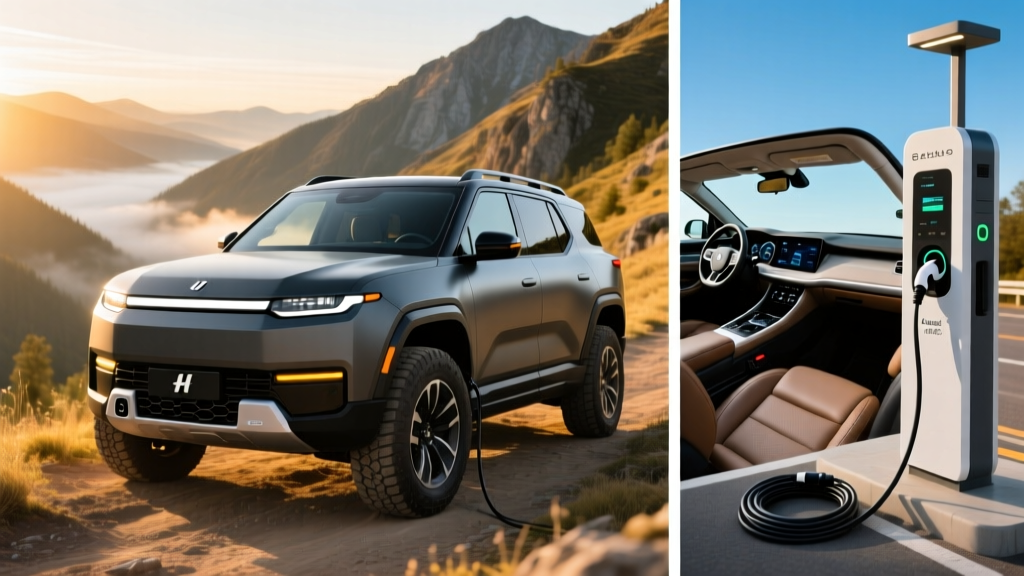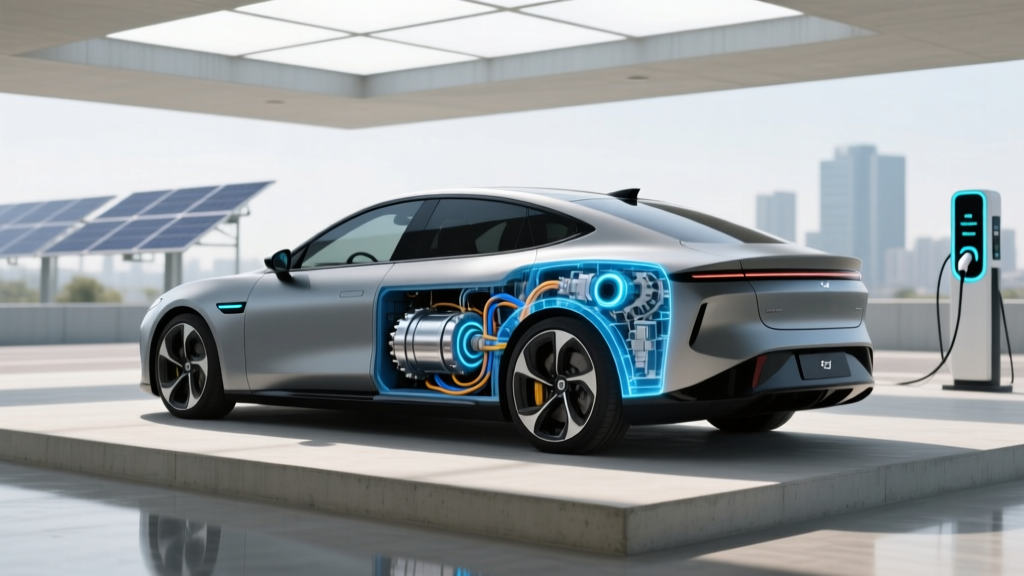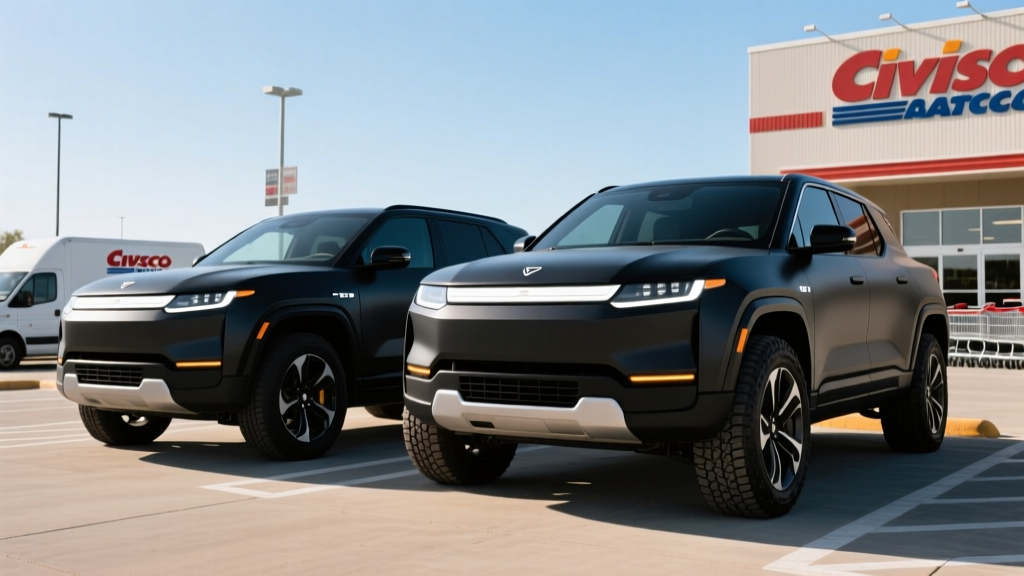
If you've searched "Rivian Costco" recently, you're likely one of the millions of Costco members wondering whether the warehouse giant's Auto Program offers any real savings on Rivian's R1S SUV or R1T pickup. The short answer: the Costco Auto Program has historically not included Rivian in its roster of participating manufacturers, and as of early 2026, that remains the case. Rivian sells direct-to-consumer, bypassing the dealership network that Costco's program relies on.
But that doesn't mean Costco members are out of luck — and it certainly doesn't mean you shouldn't buy a Rivian. Below, we break down exactly what the R1S and R1T cost in 2026, how the federal tax credit factors in, real-world range and charging data, and alternative ways Costco members can stack savings on an EV purchase.
The Costco Auto Program and Rivian: What You Need to Know
The Costco Auto Program works by connecting members with participating franchised dealerships that agree to pre-negotiated, no-haggle pricing on new and select used vehicles. Because Rivian operates a direct-sales model — similar to Tesla and Lucid — there are no franchised dealers to negotiate with, and Rivian has not partnered with Costco for member pricing as of the 2026 model year.
This means you won't find a Costco member price sheet for the R1S or R1T. Pricing is uniform across all buyers, configured through Rivian's website or at a Rivian Space (their retail showrooms). However, Costco members can still benefit from other EV purchasing strategies, which we cover in the pricing section below.
2026 Rivian R1S and R1T: Quick Spec Overview
For the 2026 model year, Rivian offers both the R1S (three-row SUV) and R1T (crew-cab pickup) across multiple battery and drivetrain configurations. The second-generation (Gen 2) platform introduced for 2025 brought a new electrical architecture, tri-motor option, and updated battery chemistry. Here's the core spec matrix:
| Spec | R1S Dual-Motor (Standard) | R1S Dual-Motor (Max) | R1T Tri-Motor (Max) |
|---|---|---|---|
| EPA Range | 270 mi | 380 mi (est.) | 350 mi (est.) |
| Battery (usable) | ~92 kWh (LFP) | ~141 kWh (NMC) | ~141 kWh (NMC) |
| Horsepower | 533 hp | 533 hp | 850 hp |
| 0–60 mph | 4.5 sec | 4.5 sec | 2.9 sec |
| Drivetrain | AWD (dual-motor) | AWD (dual-motor) | AWD (tri-motor) |
| Max DC Fast Charge | 200 kW | 220 kW | 220 kW |
| 10–80% DCFC Time | ~28 min | ~36 min | ~36 min |
| Level 2 Home Charge | 11.5 kW (~25 mi/hr) | 11.5 kW (~25 mi/hr) | 11.5 kW (~25 mi/hr) |
| MPGe (combined) | 73 MPGe | 70 MPGe | 68 MPGe |
| Towing Capacity | 7,700 lb | 7,700 lb | 11,000 lb |
| Base MSRP | $75,900 | $89,900 | $99,900 |
Note: Max Pack and Tri-Motor EPA figures are preliminary estimates based on Rivian's published data and prior model-year testing. Confirm at fueleconomy.gov before purchase.
Real-World Range: What the EPA Sticker Doesn't Tell You
EPA estimate: 270 miles
Real-world highway (70 mph, 75°F): ~230–245 miles
Cold-weather (30°F, highway): ~195–215 miles
Towing (5,000 lb trailer): ~140–160 miles
The R1S and R1T are large, heavy, and boxy — all of which work against highway efficiency. In independent testing and owner reports, the Dual-Motor Standard Pack consistently delivers 85–90% of its EPA rating at sustained highway speeds in mild weather. That's typical for a body-on-frame EV of this size.
Cold weather compounds the penalty. The R1 platform uses a heat pump for cabin and battery thermal management, which mitigates some loss, but expect a 20–25% range reduction at freezing temperatures during highway driving. If your commute is mostly city driving with regenerative braking opportunities, you'll see numbers much closer to — or even slightly above — the EPA sticker.
The Max Pack's larger NMC battery provides a buffer that makes real-world highway trips of 300+ miles feasible in mild conditions, but the physics of a 7,000-lb vehicle means efficiency will never match a sedan or crossover. Plan charging stops accordingly on road trips.
Charging Speed: DC Fast Charging and Home Level 2
Rivian's Gen 2 platform supports NACS (Tesla's North American Charging Standard) natively, meaning R1S and R1T owners can access the Tesla Supercharger network — over 20,000 stalls in North America — without an adapter. This is a significant practical advantage for road-trip charging.
| Charging Level | Power (kW) | Miles Added per Hour | Notes |
|---|---|---|---|
| Level 1 (120V household) | ~1.4 kW | ~3 mi/hr | Emergency/top-up only |
| Level 2 (240V, 48A home) | 11.5 kW | ~25 mi/hr | Full charge overnight (~10 hrs for Standard) |
| DC Fast Charge (Standard Pack) | 200 kW peak | ~140 mi in 20 min | Tapers above 80% SoC |
| DC Fast Charge (Max Pack) | 220 kW peak | ~150 mi in 20 min | Larger battery = longer 10–80% time |
Charging curve reality: The published peak kW figure (200 or 220 kW) is the maximum the battery accepts at a low state of charge — typically between 10–30% SoC. As the battery fills, the rate tapers to protect cell health. Expect the 10–80% session to average roughly 150–170 kW on the Standard Pack and 140–160 kW on the Max Pack, even though peak rates are higher. This is normal physics, not a defect.
For home charging, Rivian recommends installing a Wall Connector or equivalent Level 2 EVSE on a 60A circuit (delivering 48A continuous to the vehicle). Budget $800–$2,500 for a professional installation depending on your electrical panel's proximity to the garage and whether a panel upgrade is needed.
Pricing, Tax Credits, and the Costco Member Strategy
Since the Costco Auto Program doesn't cover Rivian, here's what 2026 pricing actually looks like and how to maximize savings:
| Configuration | Base MSRP | Federal §30D Credit | Effective Price |
|---|---|---|---|
| R1S Dual-Motor Standard | $75,900 | $0 (MSRP cap exceeded*) | $75,900 |
| R1T Dual-Motor Standard | $69,900 | Up to $7,500 | $62,400 |
| R1T Dual-Motor Max | $83,900 | $0 (MSRP cap exceeded*) | $83,900 |
| R1T Tri-Motor Max | $99,900 | $0 (MSRP cap exceeded*) | $99,900 |
*MSRP cap rules: Under IRS §30D, the federal EV tax credit applies only to SUVs with an MSRP at or below $80,000 and trucks/vans at or below $80,000. The R1S (classified as an SUV) exceeds this cap on most trims. The R1T (classified as a truck) qualifies on the Standard Pack Dual-Motor trim at $69,900, but additional options can push it over.
Additional §30D requirements:
- Income caps: Modified AGI must not exceed $150,000 (single), $225,000 (head of household), or $300,000 (joint filers).
- Battery sourcing: Critical minerals and battery component requirements phase in annually; verify current-year compliance on Rivian's website or the IRS qualified vehicles list.
- Point-of-sale transfer: As of 2024+, you can transfer the credit to the dealer (or in Rivian's case, apply it at purchase) to reduce the upfront price rather than waiting for tax filing.
Costco member workaround: While there's no Costco-specific discount, members can use the Costco Anywhere Visa® Card by Citi, which earns 4% cash back on eligible EV charging purchases and 3% on restaurants and eligible travel. Some members also leverage Costco's partnership programs for auto insurance quotes, which can sometimes yield competitive rates for EV owners. Additionally, check whether your state offers a separate EV rebate — these stack with the federal credit and aren't subject to the same MSRP caps.
Cargo, Passenger Space, and Daily Practicality
The R1S offers three rows of seating with room for up to seven passengers:
- Cargo (behind 3rd row): 10.4 cu ft
- Cargo (3rd row folded): 46.7 cu ft
- Cargo (all rows folded): 91.6 cu ft
- Front trunk (frunk): 11.0 cu ft
- 2nd-row legroom: 38.2 in
- 3rd-row legroom: 30.4 in (best for children or short trips)
The R1T, as a crew-cab pickup, offers a 4.5-foot bed with the innovative Gear Tunnel — a lockable, pass-through storage compartment spanning the width of the truck behind the rear seats. The bed includes a powered tonneau cover and integrated tie-downs. Towing capacity reaches 11,000 lb on the Tri-Motor Max configuration, though towing at max capacity will cut range roughly in half.
Tech, Driver Assistance, and Software
Rivian's software platform is proprietary and receives regular over-the-air (OTA) updates. Key technology features include:
- 15.6-inch center touchscreen with navigation, media, and vehicle controls
- Driver+ (Level 2 ADAS): Adaptive cruise control with lane centering on supported highways — this is a hands-on, eyes-on system, not autonomous driving
- Highway Assist: Adds automatic lane changes on divided highways when the driver confirms via turn signal
- Phone-as-a-key with BLE proximity detection
- Camp Kitchen accessory (R1T): slide-out induction cooktop and kitchen kit integrated into the Gear Tunnel
- Powered tonneau, air suspension with adjustable ride height (up to 14.9 in ground clearance)
Pros, Cons, and the Verdict
Pros
- Best-in-class off-road capability for an EV (quad-motor torque vectoring, air suspension, tank turns on Tri-Motor)
- Native NACS access to Tesla Supercharger network
- Class-leading build quality and interior materials
- Gear Tunnel (R1T) is genuinely innovative storage
- Regular OTA updates adding real features post-purchase
- Strong towing capacity (up to 11,000 lb)
Cons
- High starting price — most trims exceed the $80K federal tax credit cap
- No Costco Auto Program discount available
- Real-world highway range significantly below EPA for Standard Pack
- Third row in R1S is tight for adults
- Service center network still expanding — wait times in some regions
- Heavy vehicle = higher tire wear and electricity cost per mile
Who Should Buy the Rivian R1S or R1T?
The Rivian platform is best suited for buyers who need genuine truck/SUV utility — towing, off-road capability, cargo hauling — and want it electrified. If your use case is primarily commuting and school drop-offs, a lighter, more efficient EV like the Hyundai Ioniq 5 or Tesla Model Y will cost less and deliver more real-world range per kWh.
The R1T makes sense for outdoor enthusiasts, contractors, or anyone who tows a boat or camper on weekends and wants to eliminate gas costs for daily driving. The R1S fits active families who need three rows and cargo space but don't want a minivan.
Costco members specifically: you won't get a warehouse discount, but the R1T Dual-Motor Standard at $69,900 (before the $7,500 federal credit) remains one of the most compelling electric trucks on the market. Stack state incentives where available, and the effective price drops further.
Frequently Asked Questions
Does Costco sell Rivians through the Auto Program?
No. As of 2026, Rivian does not participate in the Costco Auto Program. Rivian sells direct-to-consumer through its website and Rivian Space showrooms, which is incompatible with Costco's dealership-based model.
What is the real-world range of the Rivian R1S?
The EPA rates the R1S Dual-Motor Standard Pack at 270 miles. In real-world highway driving at 70 mph, expect 230–245 miles. In cold weather (below freezing), plan for 195–215 miles.
How fast does the Rivian R1T charge?
The R1T Standard Pack peaks at 200 kW DC fast charging, reaching 10–80% in approximately 28 minutes. At home on a Level 2 charger (11.5 kW), a full charge takes about 8–10 hours depending on battery size.
Does the Rivian R1T qualify for the federal EV tax credit?
The R1T Dual-Motor Standard Pack qualifies for up to $7,500 under IRS §30D, as its $69,900 MSRP is under the $80,000 truck cap. Buyer income limits and battery sourcing requirements also apply. Verify eligibility at IRS.gov before purchasing.
Is the Rivian worth it compared to the Ford F-150 Lightning or Tesla Cybertruck?
The R1T offers superior off-road capability, interior quality, and the Gear Tunnel compared to the F-150 Lightning, but at a higher price point. Against the Cybertruck, the R1T has a more conventional (and practical) design, better service infrastructure, and broader charging access via NACS. If budget is the priority, the Lightning is cheaper. If adventure capability and build quality matter most, the R1T leads.
Can I use my Costco membership to save on EV charging?
While Costco doesn't operate chargers, the Costco Anywhere Visa® Card earns 4% cash back on eligible EV charging purchases, which can offset public charging costs over time.