Rivian Automotive has carved a distinct niche in the electric-vehicle market with its adventure-focused trucks and SUVs. While the company's manufacturing footprint lives in Normal, Illinois, its strategic brain — the Rivian corporate headquarters — sits in Irvine, California. Understanding where and how Rivian engineers its vehicles gives buyers useful context for the specs, software updates, and ownership experience that flow from the company's Southern California base.
This profile examines the R1T and R1S lineup from the perspective of what Rivian's headquarters operations produce: real-world range, charging architecture, pricing, and the tech stack that defines these EVs for the 2026 model year.
Rivian's Irvine Headquarters and What It Means for Buyers
Rivian's corporate headquarters is located at 15736 Laguna Canyon Road, Irvine, CA 92618. The Irvine campus houses the company's engineering, design, software development, and executive leadership teams. While vehicle assembly takes place at the Normal, Illinois production facility, Irvine is where battery pack architecture, motor calibration, driver-assistance software, and over-the-air update roadmaps originate.
For prospective buyers, the headquarters location matters in practical terms: Rivian's Silicon Valley-adjacent engineering culture shows up in the vehicles' software-first architecture, frequent OTA improvements, and vertically integrated approach to powertrain and battery management. The company also maintains additional engineering and design studios in Palo Alto, CA; Plymouth, MI; and Woking, UK (advanced engineering).
2026 Rivian R1T and R1S: Range, Battery, and Real-World Efficiency
Rivian offers the R1T (truck) and R1S (three-row SUV) on the same platform with largely shared powertrain options for the 2026 model year. Both vehicles are available with Standard, Large, and Max battery packs, using different cell chemistries depending on the pack.
| Specification | R1T (Dual-Motor, Large Pack) | R1S (Dual-Motor, Large Pack) |
|---|---|---|
| EPA Estimated Range | ~352 miles | ~341 miles |
| Usable Battery Capacity | ~109 kWh (NMC) | ~109 kWh (NMC) |
| Battery Chemistry | NMC (Large/Max); LFP (Standard) | NMC (Large/Max); LFP (Standard) |
| MPGe (Combined) | ~73 MPGe | ~71 MPGe |
| Efficiency | ~46 kWh/100 mi | ~48 kWh/100 mi |
| 0–60 mph | ~4.5 seconds | ~4.7 seconds |
| Horsepower | 533 hp | 533 hp |
| Drivetrain | Dual-Motor AWD | Dual-Motor AWD |
| Max Towing Capacity | 11,000 lbs | 7,700 lbs |
| Base MSRP | ~$71,700 | ~$77,700 |
| Battery/Powertrain Warranty | 8 yr / 175,000 mi | 8 yr / 175,000 mi |
Source: fueleconomy.gov and Rivian official specifications. Specs vary by trim, wheel size, and model year. Confirm exact figures at purchase.
The EPA sticker on a Dual-Motor R1T with the Large Pack reads approximately 352 miles. In real-world highway driving at 70–75 mph, expect roughly 280–310 miles before needing a charge. Cold-weather operation (below 30°F) can reduce effective range by 20–30%, bringing usable range down to 240–270 miles in winter conditions. Choosing 22-inch wheels over the standard 20-inch all-terrains reduces range by roughly 15–25 miles EPA. The Standard Pack (LFP chemistry) drops EPA range to approximately 270 miles for the R1T.
Charging Speed: DC Fast Charging and Home Level 2
Rivian's charging architecture has evolved with the second-generation R1 platform. Max Pack vehicles support peak DC fast-charge rates up to approximately 220 kW, while the Large Pack peaks around 200 kW. The Standard Pack (LFP) peaks at a lower rate, roughly 180 kW. These are peak figures — sustained rates depend on state of charge, battery temperature, and ambient conditions.
| Charging Level | Power (kW) | Rate / Time |
|---|---|---|
| Level 1 (120V household) | ~1.4 kW | ~3–4 miles per hour |
| Level 2 (240V home, 48A) | ~11.5 kW | ~25–27 miles per hour |
| Level 2 (240V, Rivian Wall Charger, 48A) | ~11.5 kW | ~25–27 miles per hour |
| DC Fast Charge (peak) | ~200 kW | 10–80% in ~30 minutes |
| DC Fast Charge (sustained avg) | ~130–150 kW | Varies by SoC and temp |
Rivian vehicles use the NACS (North American Charging Standard) connector on newer production runs, granting access to Tesla Supercharger stations via Rivian's integrated navigation and plug-and-charge capability. Earlier models shipped with CCS1 and can use Superchargers with a Rivian-approved adapter.
On a DC fast charger, the charge curve tapers noticeably above 80% state of charge. The 10–80% sprint in roughly 30 minutes assumes a preconditioned battery and a charger capable of sustaining the vehicle's peak rate. In practice, Electrify America or Tesla V3/V4 stalls deliver reliable speeds; older 50–150 kW chargers will extend session times significantly.
Performance, Drivetrain Options, and Capability
Rivian offers multiple drivetrain configurations from its Irvine-engineered platform:
- Dual-Motor AWD: Two motors (one front, one rear), 533 hp, ~4.5-second 0–60. The volume seller and best balance of range and capability.
- Performance Dual-Motor: Software-enhanced output, ~665 hp, ~3.4-second 0–60. Trades a small amount of range for acceleration.
- Quad-Motor AWD: Independent motor per wheel, ~1,025 hp, ~2.6-second 0–60. Available only with the Max Pack. Extreme performance at a premium price and reduced range.
All configurations feature Rivian's air suspension with adjustable ride height (up to 14.9 inches of ground clearance on the R1T), enabling genuine off-road capability. The R1T's 11,000-pound max towing capacity is best-in-class for electric pickups, though towing at max capacity cuts range roughly in half — expect 150–180 miles on a full charge when pulling a heavy trailer.
Cargo Space, Interior Dimensions, and Practicality
The R1T's bed is 4.5 feet long (extending to ~6.5 feet with the Gear Tunnel open) and includes the signature Gear Tunnel — a lockable, pass-through storage compartment behind the cab that holds roughly 11 cubic feet. The front trunk (frunk) adds approximately 11 cubic feet of sealed, drainable storage.
| Dimension | R1T | R1S |
|---|---|---|
| Frunk Volume | ~11 cu ft | ~11 cu ft |
| Bed / Rear Cargo (behind 3rd row) | ~4.5 ft bed + 11 cu ft Gear Tunnel | ~20.8 cu ft |
| Cargo (behind 2nd row, seats folded) | N/A | ~59.2 cu ft |
| Max Cargo (all seats folded) | N/A | ~104.7 cu ft |
| Front Legroom | ~41.3 in | ~41.3 in |
| Second-Row Legroom | ~38.2 in | ~38.2 in |
| Third-Row Legroom (R1S) | N/A | ~30.4 in |
The R1S's third row is best suited for children or short trips — adults will find the 30.4-inch legroom tight. For families needing regular three-row use, the R1S works for younger kids but falls short of a minivan's third-row comfort.
Pricing, Trim Levels, and Federal Tax Credit Eligibility
Rivian's pricing has shifted as the company scales production and adjusts to market conditions. For 2026, approximate base MSRPs are:
- R1T Dual-Motor (Standard Pack): ~$61,700
- R1T Dual-Motor (Large Pack): ~$71,700
- R1S Dual-Motor (Standard Pack): ~$67,700
- R1S Dual-Motor (Large Pack): ~$77,700
- R1T Quad-Motor (Max Pack): ~$99,000+
As-tested prices with popular options (22-inch wheels, premium interior, forest green or other premium paint) typically add $5,000–$12,000 to the base MSRP.
| Requirement | Rule (2026) | Rivian R1T/R1S Status |
|---|---|---|
| Vehicle MSRP Cap (SUVs/Pickups) | ≤ $80,000 | Most Dual-Motor trims qualify; Quad-Motor/Max Pack may exceed cap |
| Buyer Income Cap (Joint) | ≤ $300,000 AGI | Buyer-dependent |
| Buyer Income Cap (Single) | ≤ $150,000 AGI | Buyer-dependent |
| Battery Component Sourcing | North American assembly required (phasing thresholds) | Check current-year IRS eligible vehicle list |
| Critical Minerals Sourcing | Percentage thresholds increase annually | Confirm on IRS list at time of purchase |
| Max Credit | $7,500 | Partial or full depending on sourcing compliance |
| Point-of-Sale Transfer | Available — apply credit at purchase | Yes, if eligible |
Critical: Tax credit eligibility depends on battery sourcing requirements that change annually. Always verify the specific vehicle's VIN on the IRS eligible vehicle list before purchase. Consult a tax professional for personal eligibility. Source: IRS.gov §30D.
Technology, Driver Assistance, and Standout Features
Rivian's Irvine-based software team delivers a distinctly tech-forward ownership experience:
- Infotainment: 15.6-inch center touchscreen running Rivian's proprietary OS. No Apple CarPlay or Android Auto — a deliberate choice that frustrates some buyers but enables deep vehicle integration.
- Driver Assistance (Rivian Driver+): Adaptive cruise control, lane centering, and highway assist. This is an SAE Level 2 system — the driver must remain engaged with hands on the wheel at all times. It is not autonomous driving.
- Over-the-Air Updates: Regular software releases that add features, improve efficiency, and refine driving dynamics. Rivian's OTA cadence is among the most active in the industry.
- Adventure Network: Rivian's own destination charging network at trailheads, parks, and adventure locations — a unique perk for the brand's outdoor-oriented buyer base.
- Gear Guard: Integrated bed storage system with a powered tonneau cover and security monitoring.
- Camp Kitchen: Optional slide-out kitchen module for the Gear Tunnel (R1T).
Rivian Driver+ is an SAE Level 2 driver-assistance system. It provides steering and speed support on highways but requires continuous driver supervision. It does not handle city streets autonomously, does not respond to all traffic scenarios, and is not a substitute for an attentive driver. Keep your hands on the wheel and eyes on the road.
Rivian R1T vs. Key Competitors: Is It Worth Buying?
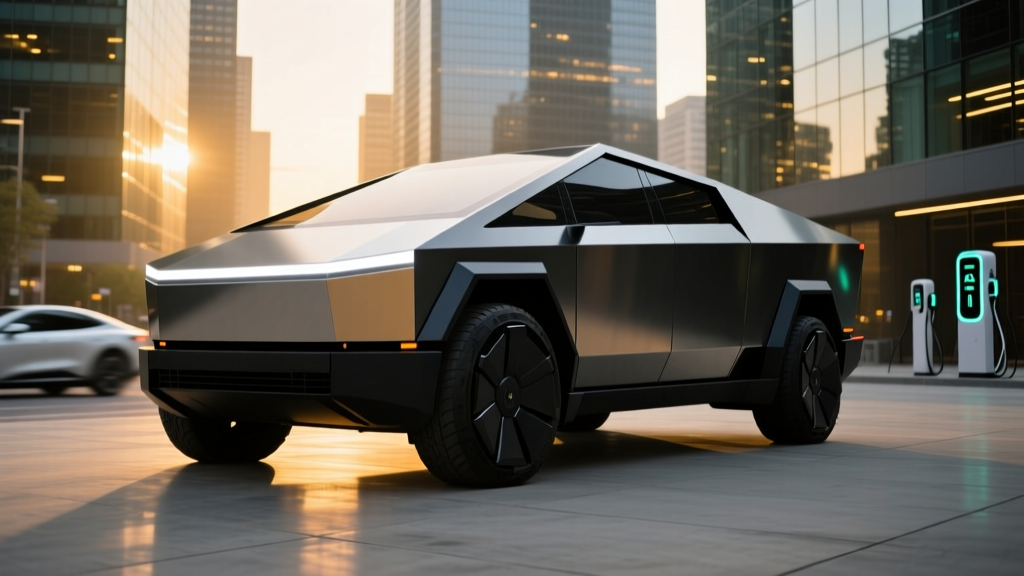
The R1T competes primarily with the Ford F-150 Lightning, Chevrolet Silverado EV, and Tesla Cybertruck. Here's how it stacks up on the metrics that matter:
| Attribute | Rivian R1T (Dual-Motor, Large) | Ford F-150 Lightning (Ext. Range) | Tesla Cybertruck (AWD) |
|---|---|---|---|
| EPA Range | ~352 mi | ~320 mi | ~340 mi |
| 0–60 mph | ~4.5 sec | ~3.8 sec | ~4.1 sec |
| Max Tow | 11,000 lbs | 10,000 lbs | 11,000 lbs |
| Base MSRP | ~$71,700 | ~$65,000 | ~$80,000 |
| Unique Feature | Gear Tunnel + Adventure Network | Pro Power Onboard (V2H capable) | Stainless exoskeleton, 48V arch. |
| Off-Road Capability | Excellent (air susp., 14.9" clearance) | Moderate | Good (adaptive air susp.) |
- You prioritize off-road capability and adventure-ready design
- You value the Gear Tunnel and integrated storage solutions
- You want a premium, software-rich EV truck experience
- You plan to use Rivian's Adventure Network for destination charging
- Lower entry price is a priority
- You need full-size truck bed dimensions (5.5 ft standard vs. R1T's 4.5 ft)
- You want Apple CarPlay / Android Auto
- You want Tesla Supercharger network native access without adapters
- Stainless-steel styling appeals to you
- You prioritize acceleration in a truck form factor
Pros, Cons, and Who Should Buy
- Best-in-class off-road capability with air suspension
- Gear Tunnel is a genuinely innovative storage solution
- Strong DC fast-charging speeds (~200 kW peak)
- Frequent, meaningful OTA software updates
- 11,000-lb towing capacity
- 8-year / 175,000-mile battery warranty exceeds many competitors
- No Apple CarPlay or Android Auto
- Compact 4.5-foot bed limits utility vs. full-size trucks
- Third row (R1S) is tight for adults
- Premium pricing — well-equipped models approach or exceed $80K MSRP cap
- Real-world highway range falls ~15–20% below EPA estimates
- Tax credit eligibility uncertain due to battery sourcing rules
Best for: Outdoor enthusiasts, adventure travelers, and tech-savvy truck buyers who value off-road capability and integrated software over traditional truck dimensions. The R1S suits families with younger children who need occasional three-row seating but don't require minivan-level passenger space.
Not ideal for: Commercial fleet buyers needing full-size beds, buyers who depend on Apple CarPlay, or budget-conscious shoppers where the F-150 Lightning's lower entry price is decisive.
Frequently Asked Questions
What is the real-world range of the Rivian R1T?
The EPA estimates approximately 352 miles for the Dual-Motor R1T with the Large Pack. In real-world highway driving, expect 280–310 miles. Cold weather (below 30°F) can reduce that to 240–270 miles. Wheel choice, terrain, and driving style all affect results.
How fast does the Rivian R1T charge?
On a DC fast charger, the Large Pack peaks at approximately 200 kW and charges from 10–80% in about 30 minutes with a preconditioned battery. At home on a Level 2 (240V, 48A) charger, you'll add roughly 25–27 miles of range per hour — a full overnight charge from 20% to 100% takes about 9–10 hours.
How much does a Rivian R1T cost after tax credits?
A Dual-Motor R1T with the Large Pack starts around $71,700 MSRP. If you qualify for the full $7,500 federal tax credit under §30D (subject to income, MSRP cap, and battery sourcing rules), the effective price drops to approximately $64,200. Eligibility is not guaranteed — verify your specific vehicle's VIN on the IRS eligible vehicle list before purchasing.
Does the Rivian R1T qualify for the federal EV tax credit?
It depends. The R1T is assembled in the USA (Normal, IL), which helps, but the §30D credit also requires meeting battery component and critical minerals sourcing thresholds that tighten each year. Many Dual-Motor trims fall under the $80,000 MSRP cap for trucks. Always check the current IRS eligible vehicle list and consult a tax professional.
Is the Rivian R1T worth buying vs. the F-150 Lightning?
If off-road capability, premium software, and the Gear Tunnel matter to you, the R1T justifies its premium. If you need a full-size bed, lower entry price, or CarPlay/Android Auto, the F-150 Lightning is the stronger choice. Both are capable electric trucks — the right pick depends on your use case.
Where is Rivian headquartered, and does that affect my ownership experience?
Rivian's corporate headquarters is in Irvine, California, where engineering, design, and software teams are based. Manufacturing happens in Normal, Illinois. The Irvine engineering culture drives Rivian's strong OTA update cadence and software-first approach, which directly impacts your ownership experience with regular feature additions and refinements.
What is Rivian's battery warranty?
Rivian provides an 8-year / 175,000-mile warranty on the battery pack and drive unit, which is more generous than many competitors' 8-year / 100,000-mile coverage. The warranty covers defects and capacity loss below a specified retention threshold — confirm the exact percentage with Rivian at purchase.