From MIT Thesis to American EV Automaker: The Rivian Origin Story
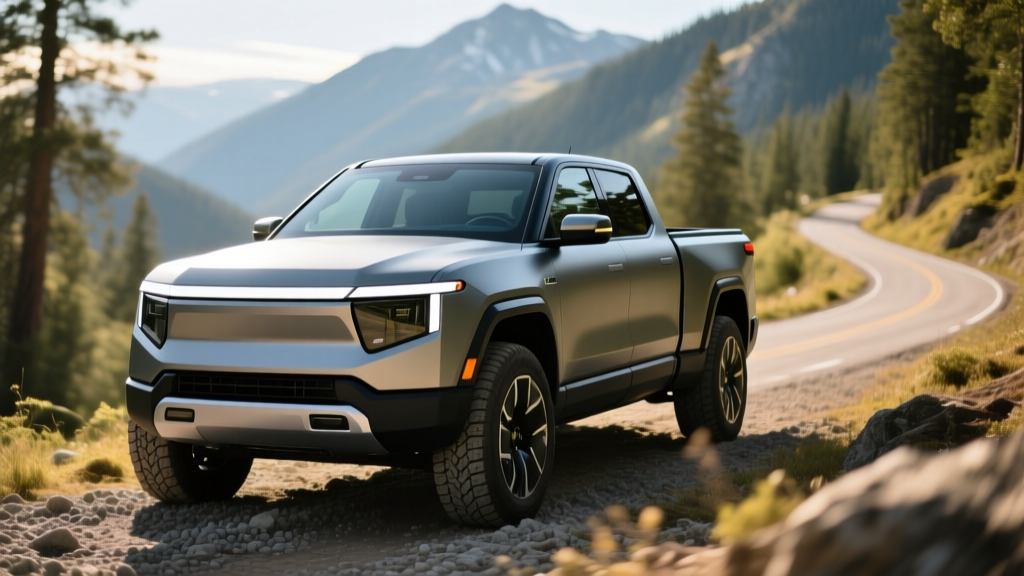
Before the R1T became the first electric pickup to cross the Rubicon Trail, and before Amazon parked 10,000 EDV delivery vans on its balance sheet, Rivian was a graduate-school idea. In 2009, MIT mechanical-engineering student RJ Scaringe founded what was then called Mainstream Motors, later renamed Avera Automotive, and finally Rivian Automotive in 2011. Scaringe's original thesis focused on a hybrid sports car, but by 2012 the company pivoted to a purpose-built electric "skateboard" platform — a low-slung battery pack with integrated drive units that could underpin anything from a pickup to a delivery van.
That skateboard architecture remains the DNA of every Rivian on the road in 2026. The Normal, Illinois assembly plant (a former Mitsubishi factory retooled in 2017) now produces the second-generation R1T pickup, R1S three-row SUV, and the upcoming R2 midsize platform scheduled for 2026-2027 production. A second plant in Stanton, Georgia is under construction for R2/R3 volume. Understanding this origin matters for buyers: Rivian's vertical integration — it designs its own motors, battery packs, and software stack in-house — is rare outside of Tesla, and it directly shapes the ownership experience you'll read about below.
2026 Rivian R1T & R1S: The Spec Sheet Buyers Actually Need
For 2026, Rivian offers the second-generation R1 (internally "Gen 2") across Dual-Motor, Performance Dual-Motor, and Tri-Motor configurations, with Standard (LFP), Large (NMC), and Max (NMC) battery packs. The R1S SUV shares the same platform with slightly lower range due to aerodynamics and weight. Here is the consolidated spec table for the R1T lineup; R1S figures are noted where they diverge.
| Spec | Dual-Motor Standard | Dual-Motor Large | Tri-Motor Max |
|---|---|---|---|
| EPA Range (R1T) | 270 mi | 352 mi | 420 mi |
| EPA Range (R1S) | 260 mi | 340 mi | 410 mi |
| Battery Usable Capacity | 95 kWh (LFP) | 128 kWh (NMC) | 149 kWh (NMC) |
| Drivetrain | AWD (dual motor) | AWD (dual motor) | AWD (tri motor) |
| Horsepower | 533 hp | 665 hp | 850 hp |
| 0-60 mph | 4.5 sec | 3.5 sec | 2.9 sec |
| Max DC Fast Charge | 200 kW | 220 kW | 220 kW |
| 10-80% DC Time | ~28 min | ~27 min | ~30 min |
| Level 2 Home Rate | 11.5 kW (~25 mi/hr) | 11.5 kW (~25 mi/hr) | 11.5 kW (~25 mi/hr) |
| MPGe (Combined) | 73 MPGe | 70 MPGe | 68 MPGe |
| Efficiency (kWh/100 mi) | 46 | 48 | 50 |
| Tow Rating | 11,000 lb | 11,000 lb | 11,000 lb |
| Base MSRP (R1T) | $69,900 | $83,900 | $99,900 |
| Battery/Powertrain Warranty | 8 yr / 175,000 mi | 8 yr / 175,000 mi | 8 yr / 175,000 mi |
Sources: fueleconomy.gov, Rivian 2026 spec sheets.
Real-World Range: What the EPA Sticker Doesn't Tell You
- Mixed suburban/highway (65-70 mph, 70°F): ~360-380 mi
- Sustained 80 mph interstate: ~320-340 mi
- Cold weather (25°F, heater on): ~280-310 mi
- Towing 7,000 lb trailer (flat terrain, 65 mph): ~180-210 mi
Rivian's heat pump and active thermal management help mitigate winter loss compared to first-gen models, but the R1T's brick-like 0.36 Cd drag coefficient still punishes highway speeds. Expect ~15% range loss at sustained 80 mph, and 30-35% loss in sub-freezing conditions. For the Dual-Motor Standard (LFP), multiply these percentages against the 270-mi EPA figure — that pack is best suited for regional driving, not cross-country hauls.
The LFP Standard pack deserves a specific callout. Lithium iron phosphate chemistry trades energy density for longevity and cost — Rivian recommends you charge LFP to 100% regularly (unlike NMC, which prefers an 80% daily ceiling). If your commute is under 150 miles round-trip and you have home charging, the Standard pack's lower upfront cost and longer cycle life make it the pragmatic pick.
Charging Speed: DC Fast, Level 2, and the NACS Switch
Rivian adopted the Tesla NACS charge port as standard on all 2025+ models, ending its CCS1 era. That gives Rivian owners native access to the Tesla Supercharger network (over 25,000 stalls in North America) without an adapter — the single biggest charging-infrastructure advantage any non-Tesla EV currently has.
| Level | Power / Voltage | Miles Added Per Hour | Notes |
|---|---|---|---|
| Level 1 (120V) | ~1.4 kW | ~3 mi/hr | Emergency/top-up only |
| Level 2 (240V, 48A) | 11.5 kW | ~25 mi/hr | Full overnight charge in 10-13 hr |
| DC Fast (NACS, V3 Supercharger) | Peak 220 kW | ~210 mi in 20 min (10-60%) | Taper above 80% SoC |
| DC Fast (CCS via adapter, legacy) | Up to 180 kW | ~170 mi in 20 min | Adapter included with pre-2025 models |
Charging-curve reality: the Tri-Motor Max pack peaks at 220 kW only between roughly 15-35% state of charge. From 35-65%, it sustains 160-180 kW, then tapers to ~90 kW by 80%, and crawls past 90%. A 10-80% session takes roughly 30 minutes on a 350 kW-capable stall; on a 150 kW Electrify America unit, expect 40-45 minutes. The LFP Standard pack's curve is flatter (less taper) but its peak is lower at 200 kW.
For home charging, Rivian sells the Wall Charger at 11.5 kW (48A on a 60A circuit). A licensed electrician will typically quote $800-$2,200 for a 240V/60A install assuming your panel has capacity — older homes with 100A service may need a $1,500-$3,000 panel upgrade. Budget accordingly.
Performance, Cargo, and the Gear Tunnel Question
The Tri-Motor R1T's 2.9-second 0-60 time makes it quicker than a Porsche 911 Carrera — an absurd statement for a 7,000-lb pickup, but the instantaneous torque of three permanent-magnet motors (one front, two rear) with torque vectoring makes it real. The Dual-Motor's 4.5-second run is still supercar-adjacent for a truck. More relevant for daily driving: the single-speed reduction gear and aggressive regen (up to 0.3g deceleration) enable near-one-pedal operation in "Everyday" drive mode.
Cargo is where the R1T's skateboard origin pays off:
- Bed: 4.5 ft (54 in) with tailgate up; 5.5 ft with tailgate down. The 4.5-ft bed is a genuine limitation versus the F-150 Lightning's 5.5-ft box.
- Gear Tunnel: 11 cu ft of lockable, pass-through storage behind the rear seats — unique to Rivian, ideal for skis, camera gear, or charging cables.
- Frunk: 11 cu ft, drainable (can double as a cooler).
- R1S Cargo (behind 3rd row): 10.4 cu ft; 57 cu ft with 3rd row folded; 104 cu ft max.
- Legroom: 41.3 in front, 39.5 in rear (R1T); R1S adds a usable 32.7-in third row (best for kids).
Pricing, Trims, and Federal Tax Credit Eligibility
Rivian prices the R1T/R1S in three tiers: Adventure (base), Ascend (premium interior/tech), and Ascend Tri-Motor (flagship). As-tested pricing with common options (camp kitchen, tonneau cover, 22-inch wheels) easily adds $8,000-$14,000 to the sticker.
| Configuration | Base MSRP | Typical As-Tested | §30D Credit Eligibility |
|---|---|---|---|
| R1T Dual-Motor Standard Adventure | $69,900 | $74,000 | Likely $3,750-$7,500 (see below) |
| R1T Dual-Motor Large Ascend | $83,900 | $92,000 | $0 (MSRP exceeds $80,000 truck cap) |
| R1T Tri-Motor Max Ascend | $99,900 | $110,000 | $0 (MSRP exceeds $80,000 truck cap) |
| R1S Dual-Motor Standard Adventure | $75,900 | $81,000 | $0 (SUV MSRP cap is $80,000 — close call) |
Tax credit caveats (IRS §30D, 2026 rules): The R1T qualifies as a truck (GVWR >6,000 lb, bed length ≥6 ft — note Rivian's 4.5-ft bed has drawn IRS scrutiny; confirm current classification). The MSRP cap is $80,000 for trucks, $80,000 for SUVs, $55,000 for sedans. Buyer AGI caps apply: $150,000 single / $300,000 joint. Critical-mineral and battery-component sourcing rules phase in annually; Rivian's LFP cells (sourced from partner Samsung SDI with some China-origin minerals) may qualify for partial ($3,750) rather than full ($7,500) credit depending on the model year's sourcing thresholds. Always verify current eligibility at IRS.gov's qualified vehicles list before purchase. Point-of-sale transfer is available, reducing your dealer price directly.
Pros, Cons, and Who Should Buy a Rivian
Pros
- Class-leading NACS Supercharger access — no adapter needed
- Tri-Motor performance (2.9s 0-60) with genuine off-road chops (8.9 in ground clearance, quad-motor tank turns on Ascend)
- Gear Tunnel + drainable frunk = unmatched adventure utility
- 8-year/175,000-mile battery warranty exceeds the industry standard 100k miles
- Over-the-air updates that materially add features (Gen 2 added highway assist improvements quarterly)
- Software and app experience consistently rated top-tier by owners
Cons
- 4.5-ft bed is shorter than F-150 Lightning, Silverado EV, and traditional compacts
- Tax credit largely unavailable on mid/high trims due to MSRP caps
- Efficiency (46-50 kWh/100 mi) lags Tesla Cybertruck and Silverado EV
- Service center network still sparse outside major metros — mobile service fills some gaps
- Driver+ (Level 2 ADAS) is competent but not class-leading vs. GM Super Cruise or Ford BlueCruise hands-free
- Insurance premiums run 20-35% above comparable gas trucks per IIHS data
Best for: Active-lifestyle households (2-3 kids, outdoor gear) with home charging, who value NACS charging-network access and want a daily-drivable adventure vehicle. The Dual-Motor Standard is the value pick; the Tri-Motor is a performance statement. Not ideal for: Commercial fleet buyers needing an 8-ft bed, budget-conscious buyers who need the full $7,500 credit, or rural owners far from Rivian's ~60 U.S. service centers.
Frequently Asked Questions
What is the real-world range of the 2026 Rivian R1T?
EPA rates the Tri-Motor Max at 420 miles, but expect 320-380 miles in real-world mixed driving, with cold weather and towing cutting that by 30-50%. The Dual-Motor Large (352 mi EPA) is the sweet spot for road-trippers balancing price and range.
How fast does the Rivian R1 charge at home and on the road?
At home on a 240V/48A Level 2, you'll add ~25 miles per hour (full charge overnight in 10-13 hours). On DC fast charging via NACS, the peak is 220 kW with a 10-80% session taking 27-30 minutes depending on pack size.
Does the Rivian R1T or R1S qualify for the federal EV tax credit?
Possibly — but only the base Dual-Motor Standard trims near or under the $80,000 MSRP cap. Mid- and high-tier configurations exceed the cap. Buyer income limits and battery-sourcing rules apply; verify on the IRS qualified vehicles list before purchase.
Is the Rivian worth buying vs. the Tesla Cybertruck or F-150 Lightning?
The R1T wins on interior quality, off-road capability, and adventure utility (gear tunnel, frunk). Cybertruck wins on efficiency, stainless-steel durability, and 48V architecture. The F-150 Lightning wins on bed length, dealer service access, and fleet pricing. Choose based on your use case, not the spec sheet alone.
What is Rivian's battery warranty and replacement cost?
Rivian covers the battery and powertrain for 8 years or 175,000 miles, with a capacity-retention threshold of 70%. Out-of-warranty pack replacement is estimated at $15,000-$22,000 depending on chemistry and labor — typical for the segment.
Where did Rivian come from, and is the company stable?
Founded in 2009 by MIT engineer RJ Scaringe, Rivian went public in November 2021 (one of the largest U.S. IPOs). Amazon holds a significant stake and is its largest commercial customer (EDV vans). As of 2026, Rivian has delivered over 200,000 vehicles and is scaling production with the R2 platform, though it has not yet posted an annual profit — a factor to weigh if you're risk-averse about long-term parts/service availability.