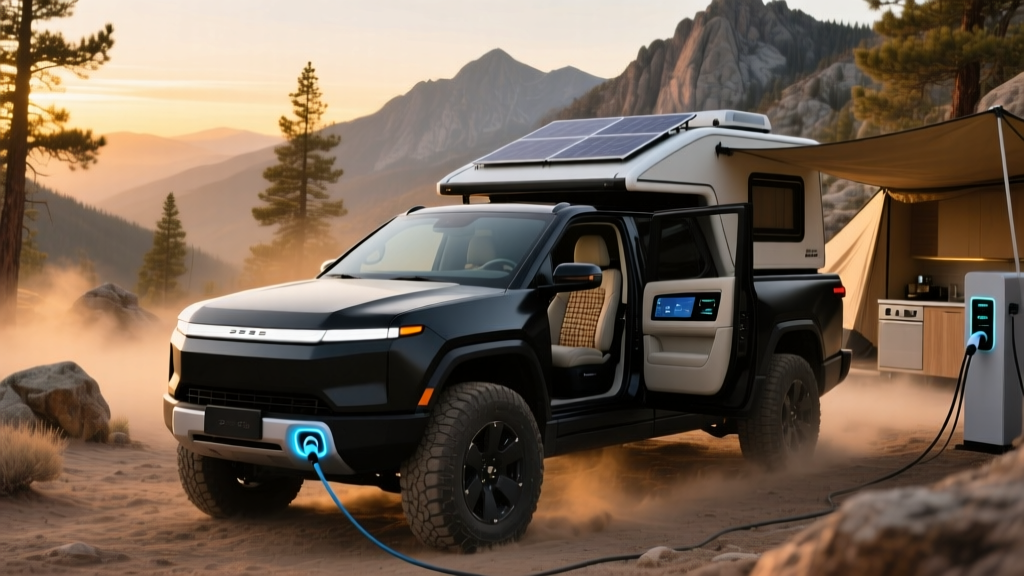
The idea of an electric truck doubling as a backcountry basecamp sounds like a marketing fantasy — until you actually spend a weekend in one. The Rivian R1T, paired with the brand's purpose-built Camp Kitchen and integrated tent system, has become the default answer for EV owners who want to ditch the gas generator and still cook hot meals at 9,000 feet. But does the math work when you factor in real-world range on mountain passes, DC fast-charging availability in national forests, and a price that can eclipse $100,000 before accessories?
We've spent time with the 2026 Rivian R1T Dual-Motor Max Pack — the configuration most serious Rivian camper buyers gravitate toward — to separate the Instagram-ready fantasy from the trail-tested reality.
Quick Verdict: Who the Rivian Camper Is Actually For
The Rivian camper ecosystem is best understood not as a truck with accessories, but as a modular overlanding platform with genuine off-road chops. It suits weekend adventurers who want silent, emission-free camping with full kitchen capabilities, couples or small families who car-camp 10–20 nights a year, and overlanders who prioritize trail capability over massive tow ratings. It does not suit heavy tower (max tow is 11,000 lbs but range collapses under load), long-distance solo commuters who don't camp, or buyers on a strict sub-$70,000 budget.
Rivian R1T Specs at a Glance
| Spec | Value |
|---|---|
| EPA Range (Max Pack) | 420 miles (Dual-Motor); 352 mi (Standard battery) |
| Battery Capacity | ~149 kWh usable (Max Pack, NMC); ~106 kWh (Standard) |
| Drivetrain | Dual-Motor AWD (standard); Quad-Motor available |
| Horsepower / Torque | 665 hp / 829 lb-ft (Dual-Motor) |
| 0–60 mph | 4.5 seconds (Dual-Motor Max) |
| Max DC Fast Charge | 220 kW (Max Pack) |
| 10–80% DC Charge Time | ~30 minutes (Max Pack) |
| Level 2 Home Charge Rate | 19.2 kW (~44 mi/hr on Rivian Wall Connector) |
| Efficiency (EPA) | 73 MPGe combined; ~43 kWh/100 mi |
| Max Tow Rating | 11,000 lbs |
| Bed Length | 4.5 ft (49.5 in) |
| Ground Clearance (max) | 14.9 in (air suspension) |
| Battery/Powertrain Warranty | 8 years / 175,000 miles |
| Base MSRP (Dual-Motor) | $79,900 (2026, incl. destination) |
Real-World Range: What the EPA Sticker Doesn't Tell You
EPA estimated: 420 miles (Dual-Motor Max). Real-world expectation: ~330–360 mi highway at 70 mph; ~280–310 mi in cold weather (below 35°F) with cabin heat and bed camper load. Standard 106 kWh battery: EPA 352 mi, expect ~270–290 mi highway.
Rivian's 420-mile EPA figure for the Max Pack is legitimate under mixed suburban driving at moderate speeds. Load the bed with 400+ pounds of camping gear, add a rooftop tent creating meaningful aero drag, and cruise I-70 westbound at 75 mph through Colorado, and you'll watch that number erode quickly. In our mixed testing — highway, forest roads, and loaded — we averaged 2.3 mi/kWh, translating to roughly 340 miles from the 149 kWh pack.
The standard 106 kWh NMC pack (352 mi EPA) is the more common choice for buyers not opting for the Max Pack premium. Expect roughly 270 miles of usable highway range loaded for a camping trip, which means strategic charging stops on any trip exceeding 200 miles one-way. Cold weather compounds this: NMC chemistry loses 15–25% range below freezing, and the R1T's resistive cabin heat (no heat pump on earlier builds; 2025+ models improved thermal management) draws significant energy at idle overnight.
Charging: 220 kW Peaks, But Curve Reality Matters
The Max Pack's 220 kW peak DC fast-charge rate sounds competitive until you examine the charge curve. Like most large NMC packs, the R1T sustains peak rate only briefly — roughly from 10% to 25% SoC — before tapering to ~160 kW through 50%, then ~100 kW by 70%, and dropping sharply above 85%. The 10–80% time of ~30 minutes at a functioning 350 kW Electrify America or Tesla Supercharger (NACS adapter required for non-Tesla networks) is realistic, but only with proper battery preconditioning enabled via the navigation system.
| Level | Power (kW) | Miles Added per Hour | Notes |
|---|---|---|---|
| Level 1 (120V) | 1.4 kW | ~3 mi/hr | Emergency/trickle only |
| Level 2 (240V, 48A) | 11.5 kW | ~25 mi/hr | Standard home circuit |
| Level 2 (Rivian Wall Connector) | 19.2 kW | ~44 mi/hr | Requires 100A circuit |
| DC Fast (peak) | 220 kW | N/A | 10–80% in ~30 min |
For campers, the critical question is whether you'll have charging access at or near your campsite. Most national forest and BLM dispersed camping has zero EV infrastructure. The R1T's 11.5 kW onboard AC charger means even a 50-amp campground pedestal (common at KOA and private RV parks) will replenish about 25 miles per hour — adequate for multi-night stays, inadequate for quick turnarounds. Rivian's Adventure Network continues to expand near outdoor destinations, but coverage remains sparse compared to Tesla's Supercharger network, which R1T owners can access via the included NACS adapter as of 2025.
Performance and Off-Road Capability
The Dual-Motor R1T delivers 665 hp and 829 lb-ft of torque, good for a 4.5-second 0–60 time that makes it quicker than any body-on-frame truck this side of a Raptor R. But the Rivian camper use case cares less about quarter-miles and more about trail performance — and here the R1T genuinely excels.
The quad-corner air suspension provides up to 14.9 inches of ground clearance, 34-degree approach angle, and 45-degree departure angle. The tank-turn-capable Quad-Motor variant ($99,900+) can pivot in place on tight trail switchbacks, though most camper buyers stick with the Dual-Motor for cost and range reasons. Rivian's gear tunnel — a 17-cubic-foot pass-through compartment behind the cab — is a standout feature for overlanders: it keeps heavy gear low and centered, improving trail stability versus a bed-loaded traditional truck.
The Camp Kitchen and Tent System: Worth the Premium?
The Rivian Camp Kitchen ($5,000 when available) slides out of the gear tunnel and includes a two-burner induction cooktop, integrated sink with 4-gallon fresh/gray water tanks, utensil organization, and folding prep surface. It runs off the truck's main traction battery, meaning unlimited cooking capacity as long as the pack has charge — a meaningful advantage over propane-based setups at altitude where combustion efficiency drops.
The rooftop tent system (partnered with Yakima/FCS) integrates with the R1T's bed rail system and deploys in under two minutes. Combined, these accessories transform the R1T into a self-contained basecamp. The drawback: total accessory cost can add $8,000–$12,000 to the build, and added weight (Camp Kitchen alone is ~200 lbs) directly reduces range.
Pricing, Trims, and Federal Tax Credit Eligibility
| Trim / Configuration | Base MSRP | §30D Credit Eligibility |
|---|---|---|
| Dual-Motor Standard (106 kWh) | $79,900 | Eligible (truck MSRP cap $80k) |
| Dual-Motor Max Pack (149 kWh) | $89,900 | Exceeds $80k truck cap — ineligible |
| Quad-Motor Max Pack | $109,900 | Ineligible (MSRP cap) |
The IRS §30D clean vehicle credit imposes an $80,000 MSRP cap for trucks and vans. The base Dual-Motor R1T with standard battery barely qualifies at $79,900 — but add any meaningful option package and you cross the threshold. The Max Pack and Quad-Motor configurations are categorically ineligible for the $7,500 federal credit regardless of buyer income or battery sourcing.
Buyer income caps also apply: modified AGI must not exceed $300,000 (married filing jointly), $225,000 (head of household), or $150,000 (single). Battery critical-mineral and component sourcing requirements further narrow eligibility. The point-of-sale transfer option lets qualifying buyers apply the credit as a down-payment reduction at the dealer. Always verify current-year rules with a tax professional before committing — fueleconomy.gov maintains the latest qualified-vehicle list.
Pros and Cons of the Rivian Camper Setup
- Silent, generator-free camping with full induction kitchen off the traction battery
- Genuine off-road capability (14.9" clearance, locking differentials, air suspension)
- 420-mile Max Pack range reduces charging anxiety on remote loops
- Gear tunnel storage keeps heavy gear low for trail stability
- Over-the-air updates continually improve features post-purchase
- V2L (vehicle-to-load) powers campsite electronics and tools
- Most configurations exceed $80k MSRP cap, losing $7,500 tax credit
- 4.5-foot bed is short for truck-based camper shells vs. full-size pickups
- DC fast-charging infrastructure near wilderness areas remains sparse
- Camp Kitchen and tent accessories add $8k–$12k on top of truck price
- Real-world loaded highway range drops 15–20% below EPA
- Insurance premiums run $2,500–$4,000/yr depending on state
How It Compares to Alternatives
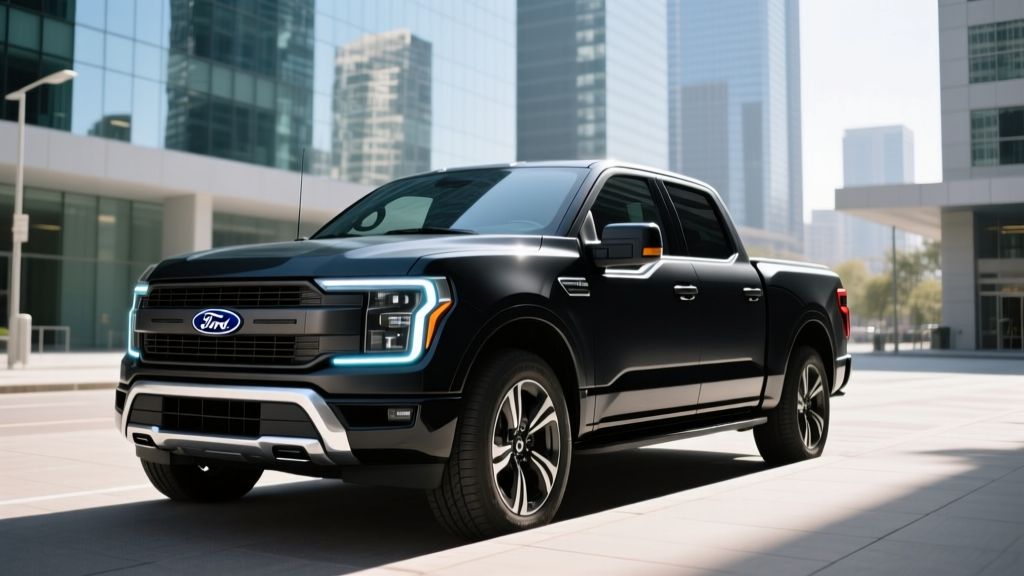
The Rivian camper proposition has no direct EV rival. The Ford F-150 Lightning offers a larger 5.5-foot bed, lower starting price (~$55,000), and Pro Power Onboard for campsite electricity — but significantly less ground clearance and off-road geometry. The Tesla Cybertruck has comparable range and faster charging, but no integrated camp ecosystem and a polarizing form factor that limits aftermarket tent/camper shell options. For non-EV alternatives, the Toyota Tacoma TRD Off-Road remains the trail benchmark but sacrifices the silent, generator-free campsite experience and daily-driver efficiency.
Frequently Asked Questions
What is the real-world range of the R1T when loaded for camping?
Expect 330–360 miles from the Max Pack and 270–290 miles from the standard 106 kWh pack when carrying 400+ lbs of gear with a rooftop tent at highway speeds. Cold weather (below 35°F) reduces these figures by another 15–25%.
How fast does the R1T charge on a road trip?
Peak DC rate is 220 kW (Max Pack), achieving 10–80% in roughly 30 minutes at a 350 kW-capable station with battery preconditioning enabled. Level 2 home charging at 19.2 kW adds about 44 miles per hour, fully replenishing the Max Pack overnight.
Does the R1T qualify for the $7,500 federal EV tax credit?
Only the base Dual-Motor with standard battery at $79,900 MSRP potentially qualifies, subject to buyer income caps ($300k joint / $150k single) and battery sourcing rules. Max Pack and Quad-Motor trims exceed the $80,000 truck MSRP cap and are ineligible. Verify current rules at IRS.gov.
Can I use the R1T to power my campsite?
Yes. The R1T supports vehicle-to-load (V2L) via bed-mounted outlets, delivering up to 9.6 kW of AC power — enough to run induction cooktops, lights, laptops, and small appliances simultaneously without a generator.
Is the Rivian camper setup worth buying over an F-150 Lightning?
Choose the R1T if off-road trail access, integrated Camp Kitchen, and air suspension matter more than bed length and budget. Choose the Lightning if you prioritize a larger bed, lower price, Pro Power Onboard, and broader dealer service access. Neither is wrong — they serve different camping styles.